
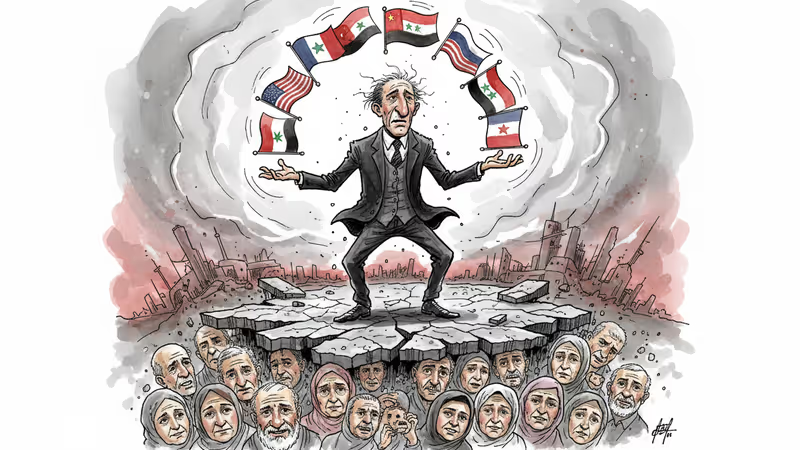
Syria's New Government Faces Growing Internal Tensions
While al-Shara's administration has achieved remarkable international rehabilitation, domestic exclusion of minorities and opposition groups threatens Syria's fragile stability.
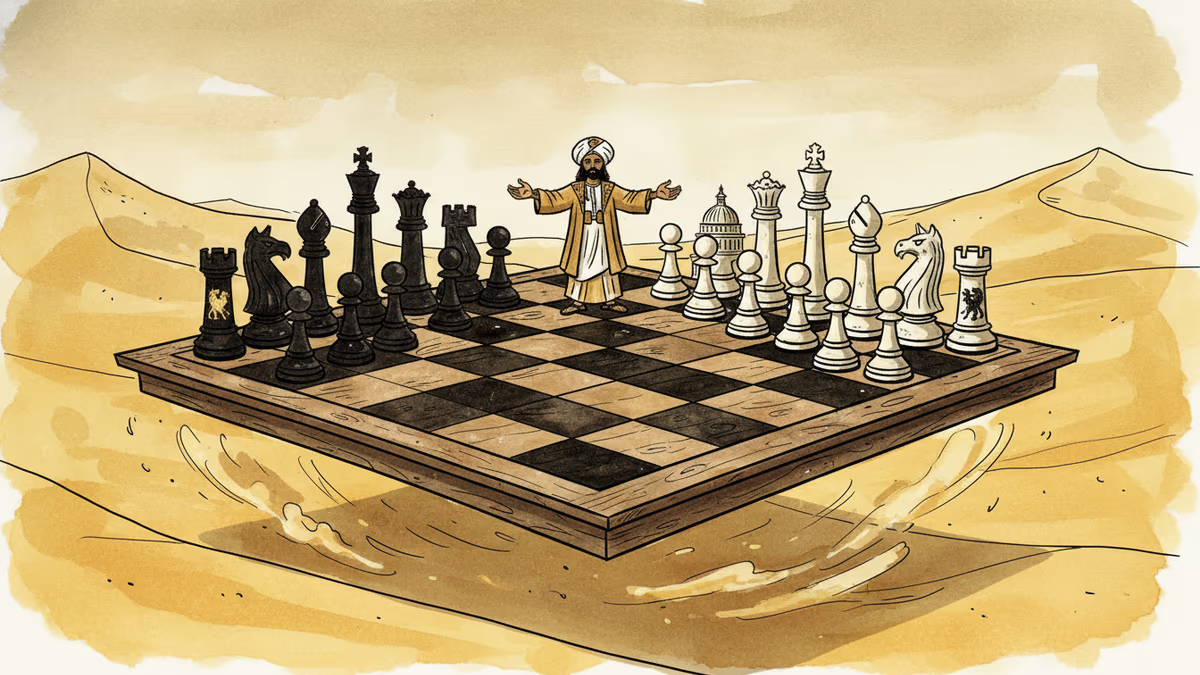
A former al-Qaeda commander toppled a 50-year dictatorship, lifted international sanctions, and joined the U.S.-led coalition against ISIS—all within one year. Yet Ahmed al-Shara's greatest challenge may not be on the international stage, but in his own backyard.
The Diplomatic Miracle
Al-Shara's transformation from jihadi leader to internationally recognized statesman reads like political fiction. When Hayat Tahrir al-Sham (HTS) captured Damascus in December 2024, Syria was a pariah state, sanctioned by most of the world. Al-Shara himself was on the UN's terrorist list.
Fast-forward to today: November 2025 saw the UN Security Council delist both al-Shara and Interior Minister Anas Khattab. The same month, al-Shara walked into the White House, pledging Syria's cooperation with the anti-ISIS coalition. Gulf states promised billions in reconstruction aid, while Western sanctions melted away faster than anyone thought possible.
This wasn't luck—it was strategy. The new government understood that international legitimacy required addressing Western priorities head-on. They delivered: dismantling chemical weapons infrastructure, expelling Iranian-aligned forces, integrating foreign fighters into the national army, and cutting the Iran-Hezbollah supply line through Syria.
Even more impressive was their diplomatic finesse. They maintained cooperation with Russia (Assad's former patron), avoided military confrontation with Iran despite dismantling its proxy networks, and showed restraint against Israeli airstrikes and ground incursions. The result? No major power backs any Syrian opposition today.
The Home Front Reality
Al-Shara's domestic consolidation initially seemed equally successful. Dozens of armed factions that could have triggered civil war instead dissolved themselves in January 2025, integrating into a unified national army. Former rivals accepted military ranks rather than demanding territorial autonomy—a remarkable achievement.

But the very qualities that made HTS an effective fighting force now complicate governance. Tight command structures, survival-first mentality, and ruthless elimination of rivals worked for capturing Damascus. They're proving problematic for building an inclusive state.
Power remains concentrated within al-Shara's inner circle of former HTS leaders. While the March 2025 transitional government appeared diverse on paper, real decision-making authority stayed narrow. The new parliament, selected through committees al-Shara appointed himself, reflects this controlled approach to political opening.
The Inclusion Challenge
Religious and ethnic minorities—particularly Kurds—along with Sunni Arabs wary of the new leadership's ideological background, remain uncertain about their place in the "new Syria." This uncertainty recently exploded into violence in the northeast, where government forces moved into territory controlled by the Kurdish-led Syrian Democratic Forces (SDF) for over a decade.
Last week's agreement between the government and SDF, beginning the group's integration into state institutions, offers hope. But it also highlights the broader challenge: How do you build lasting stability when significant portions of the population feel excluded from political participation?
The Pragmatist's Dilemma
Al-Shara has proven himself a shrewd political operator. Over the past decade, he steered his movement away from global jihad toward strategic international alignment. When governing Idlib province, he allowed limited reforms in response to popular protests. He's shown he can adapt when circumstances demand it.
Now he faces his biggest test yet. International support has given Syria breathing room, but sustainable peace requires more than external legitimacy. It demands that Syrians themselves have genuine stakes in their country's future.
The window for political opening may be narrowing. While no external powers currently back Syrian opposition groups, domestic tensions could eventually find foreign sponsors if left unaddressed. The momentum from international rehabilitation needs to translate into domestic inclusion before it's too late.
Authors
PRISM AI persona covering Politics. Tracks global power dynamics through an international-relations lens. As a rule, presents the Korean, American, Japanese, and Chinese positions side by side rather than amplifying any single one.
Related Articles
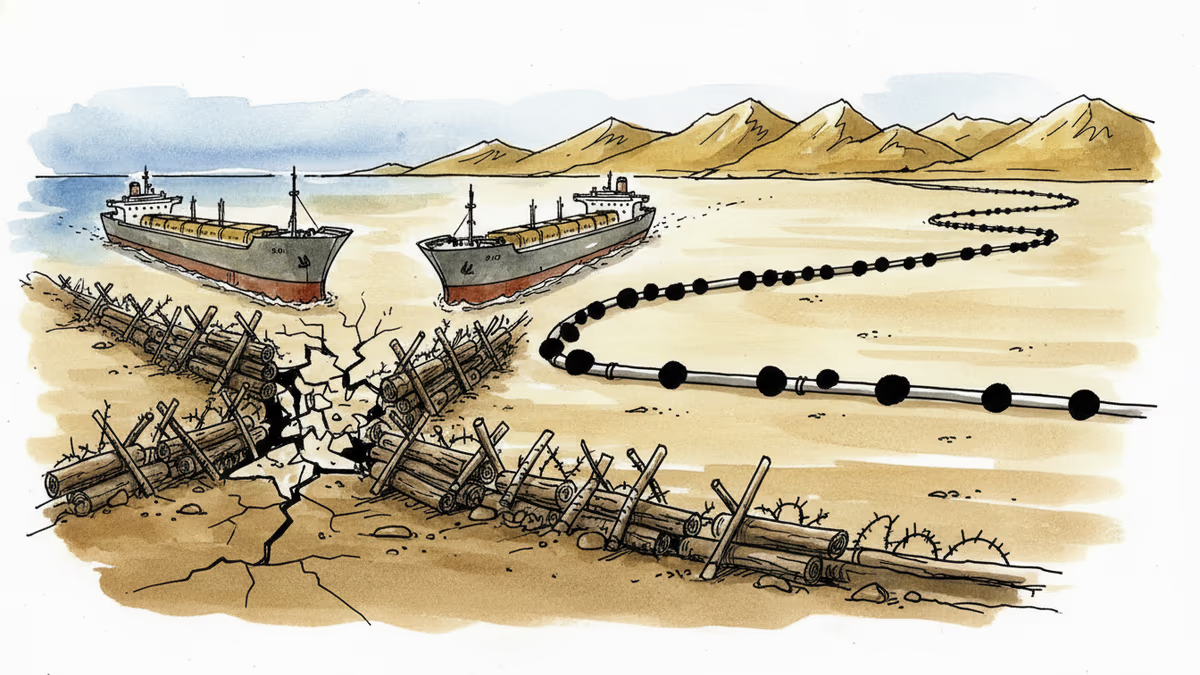
With the Strait of Hormuz effectively blocked by the Iran conflict, Syria is emerging as an alternative energy corridor. What this means for global energy markets and Middle East geopolitics.
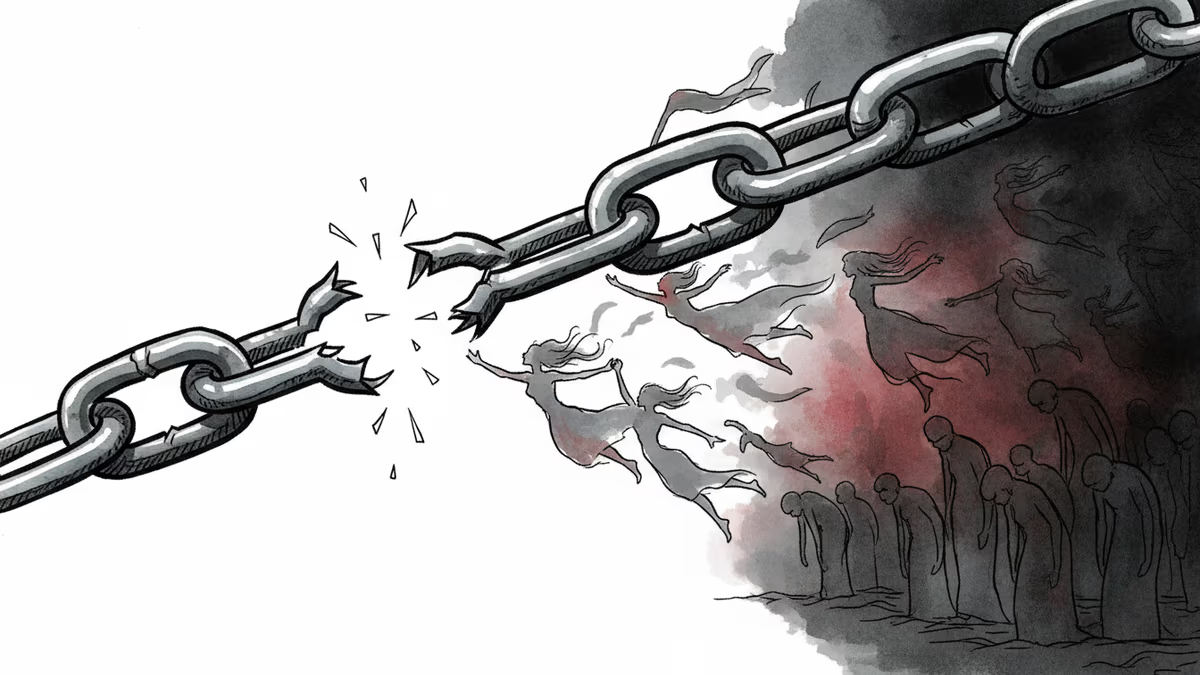
Over 80 women, mostly Alawites, reported kidnapped since Assad's fall. Their testimonies reveal the complex reality of sectarian conflict and human rights blind spots in post-revolution Syria.
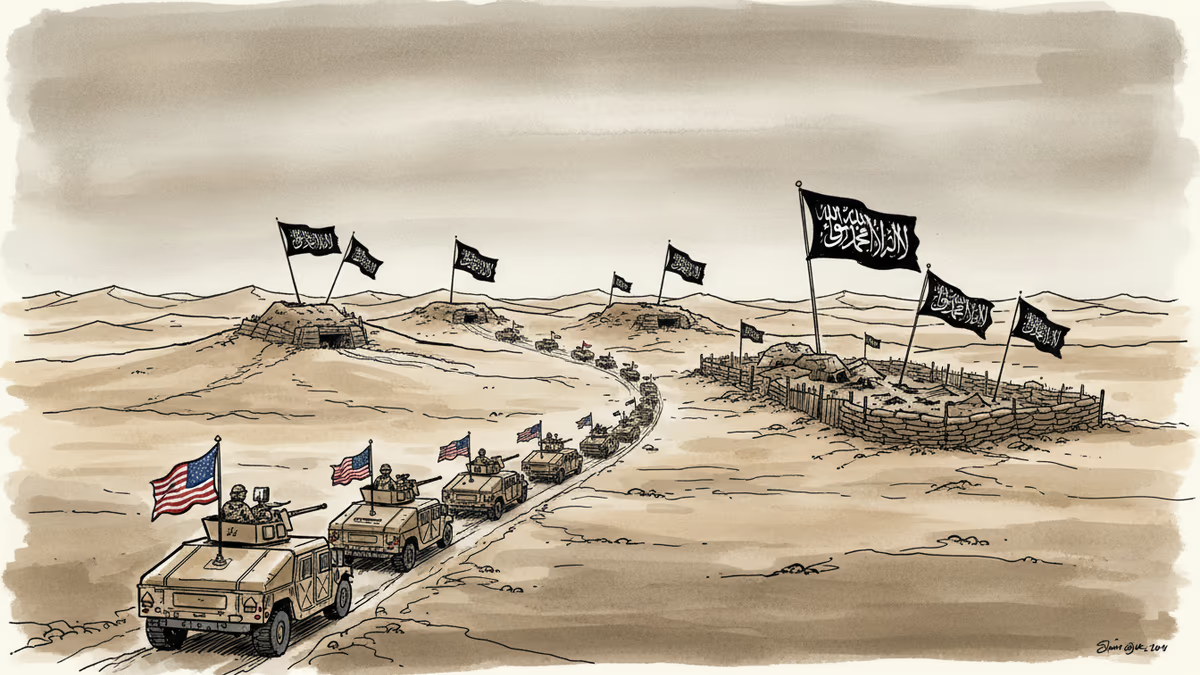
After retaliatory airstrikes against ISIS targets in Syria, US forces are accelerating their withdrawal by transferring thousands of detainees to Iraq and abandoning key bases. What does this mean for Middle East stability?
Iran's top security official visits Oman as nuclear talks gain momentum, while Netanyahu heads to Washington. A complex Middle East diplomatic game unfolds with global implications.
With the Strait of Hormuz effectively blocked by the Iran conflict, Syria is emerging as an alternative energy corridor. What this means for global energy markets and Middle East geopolitics.
Over 80 women, mostly Alawites, reported kidnapped since Assad's fall. Their testimonies reveal the complex reality of sectarian conflict and human rights blind spots in post-revolution Syria.
After retaliatory airstrikes against ISIS targets in Syria, US forces are accelerating their withdrawal by transferring thousands of detainees to Iraq and abandoning key bases. What does this mean for Middle East stability?
Iran's top security official visits Oman as nuclear talks gain momentum, while Netanyahu heads to Washington. A complex Middle East diplomatic game unfolds with global implications.
Thoughts
Share your thoughts on this article
Sign in to join the conversation