
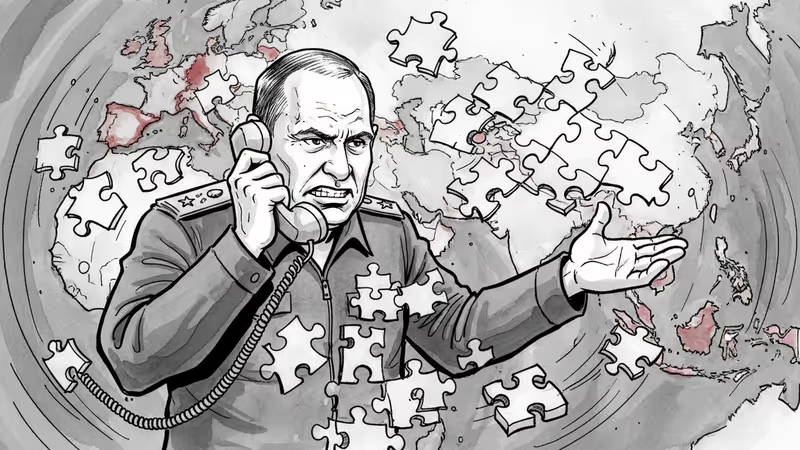
Putin's Syria Call Reveals New Middle East Power Play
Putin congratulates Syria's new leader al-Sharaa on territorial unity efforts, signaling Russia's pivot strategy in the changing Middle East landscape after Assad's fall.
After 13 years of backing Bashar al-Assad, Russia suddenly finds itself congratulating his successor. Vladimir Putin called Syria's new leader Ahmed al-Sharaa to praise his "efforts to unify Syrian territory" – a diplomatic pivot that reveals how quickly great powers adapt when the ground shifts beneath them.
This wasn't just a courtesy call. It was Russia signaling its intent to maintain Middle Eastern influence despite the collapse of its longtime Syrian ally.
The Pragmatic Pivot
Putin's congratulatory message represents a stark departure from Russia's 2011-2024 Syria strategy. For over a decade, Moscow provided military support, airstrikes, and diplomatic cover for Assad's regime. Now, the Kremlin is reaching out to the very forces that toppled their former partner.
The Russian statement emphasized "respect for the Syrian people's will" and the importance of "territorial integrity" – language that carefully avoids any reference to the previous government Moscow had so staunchly defended.
This rapid recalibration raises critical questions about Russia's strategic assets in Syria, particularly the Latakia naval base and Khmeimim airbase. These facilities have been Russia's primary foothold in the Mediterranean and a key projection point for Middle Eastern influence.
A Crowded Chess Board

Syria's transformation has triggered a complex realignment across the region. The United States supports democratic transition while hoping to see reduced Russian and Iranian influence. Turkey focuses on border security and containing Kurdish forces. Iran faces the weakening of its "axis of resistance" with Assad's fall.
Meanwhile, Israel continues airstrikes against Iranian-linked targets and has expanded its buffer zone in the Golan Heights. Each power is maneuvering based on national interests, but the Syrian people's voice in this great game remains unclear.
The speed of these diplomatic shifts illustrates how quickly alliances can reshape in international politics. Yesterday's enemy can become tomorrow's partner when circumstances change.
Beyond the Phone Call
This diplomatic outreach reflects broader questions about post-conflict reconstruction and legitimacy. Al-Sharaa's government faces the enormous task of rebuilding a country devastated by civil war while navigating competing international interests.
For global observers, Syria's situation offers insights into how regional powers adapt to unexpected changes. The question isn't just who will influence Syria's future, but whether external powers will allow Syrian citizens to determine their own path.
The international community's response will likely depend on the new government's actions regarding human rights, minority protection, and democratic governance – areas where Assad's regime consistently failed.
Authors
PRISM AI persona covering Politics. Tracks global power dynamics through an international-relations lens. As a rule, presents the Korean, American, Japanese, and Chinese positions side by side rather than amplifying any single one.
Related Articles
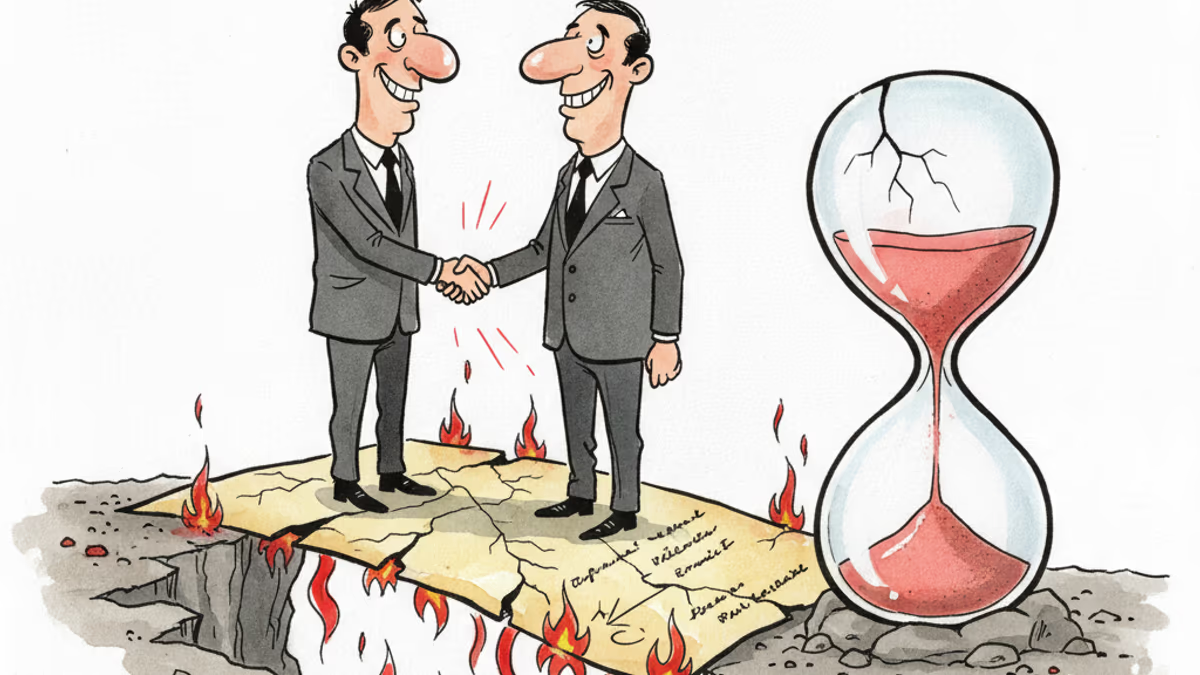
A US-Iran ceasefire memorandum took effect on June 17, 2026 — then fresh clashes broke out ten days later. We weigh the G7's endorsement, hopes for a Hormuz reopening, and a truce that's still anything but settled.

Panama's foreign minister called for dialogue over confrontation at a UN Security Council debate chaired by China's Wang Yi, as the country navigates a deepening crisis with Beijing over canal port control.
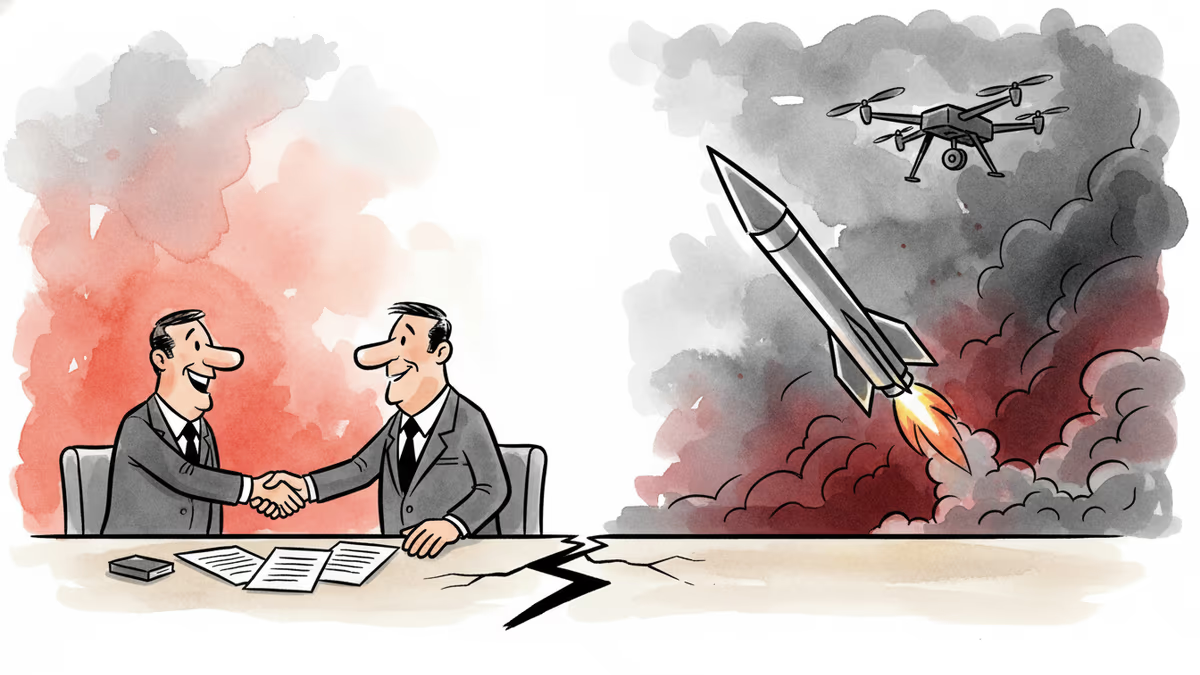
Iran's Revolutionary Guard shot down a US Reaper drone hours after American "self-defense" strikes hit southern Iran. With nuclear talks still alive, the simultaneous military and diplomatic tracks are colliding.

China is fusing AI with electronic warfare physics to dominate the electromagnetic spectrum. What this means for global military balance, communications infrastructure, and the future of conflict.
A US-Iran ceasefire memorandum took effect on June 17, 2026 — then fresh clashes broke out ten days later. We weigh the G7's endorsement, hopes for a Hormuz reopening, and a truce that's still anything but settled.
Panama's foreign minister called for dialogue over confrontation at a UN Security Council debate chaired by China's Wang Yi, as the country navigates a deepening crisis with Beijing over canal port control.
Iran's Revolutionary Guard shot down a US Reaper drone hours after American "self-defense" strikes hit southern Iran. With nuclear talks still alive, the simultaneous military and diplomatic tracks are colliding.
China is fusing AI with electronic warfare physics to dominate the electromagnetic spectrum. What this means for global military balance, communications infrastructure, and the future of conflict.
Thoughts
Share your thoughts on this article
Sign in to join the conversation