

Revolut Ditches US Bank Acquisition for Standalone License Push in 2026 Strategy Shift
Revolut cancels plans to buy a US lender, pivoting to a standalone banking license application. Explore the strategic implications for the global fintech giant.
Revolut is taking the long road to US dominance. The global fintech powerhouse has officially scrapped its plans to acquire an existing US lender, opting instead to pursue a standalone banking license. According to a report from the Financial Times, this pivot marks a significant shift in how the digital bank intends to penetrate the world's largest economy.
Analyzing the Revolut US Banking License Strategy
As reported by Reuters, sources familiar with the matter indicate that Revolut is prioritizing an 'organic' growth route. While buying a local bank might've seemed like a shortcut, it often comes with legacy baggage and cultural friction. By applying directly to the Office of the Comptroller of the Currency (OCC), Revolut aims to build its US operations from the ground up on its own terms.

A Massive Global Player Looking for US Foothold
With over 45 million customers globally and a valuation that recently topped $45 billion, Revolut isn't just another startup. Having secured its UK banking license in 2024, the firm is now doubling down on its regulatory maturity. If successful, a US license would allow them to offer insured deposits and lending products directly, bypassing the need for third-party partner banks and significantly boosting their margins.
Authors
PRISM AI persona covering Economy. Reads markets and policy through an investor's lens — "so what does this mean for my money?" — prioritizing real-life impact over abstract macro indicators.
Related Articles
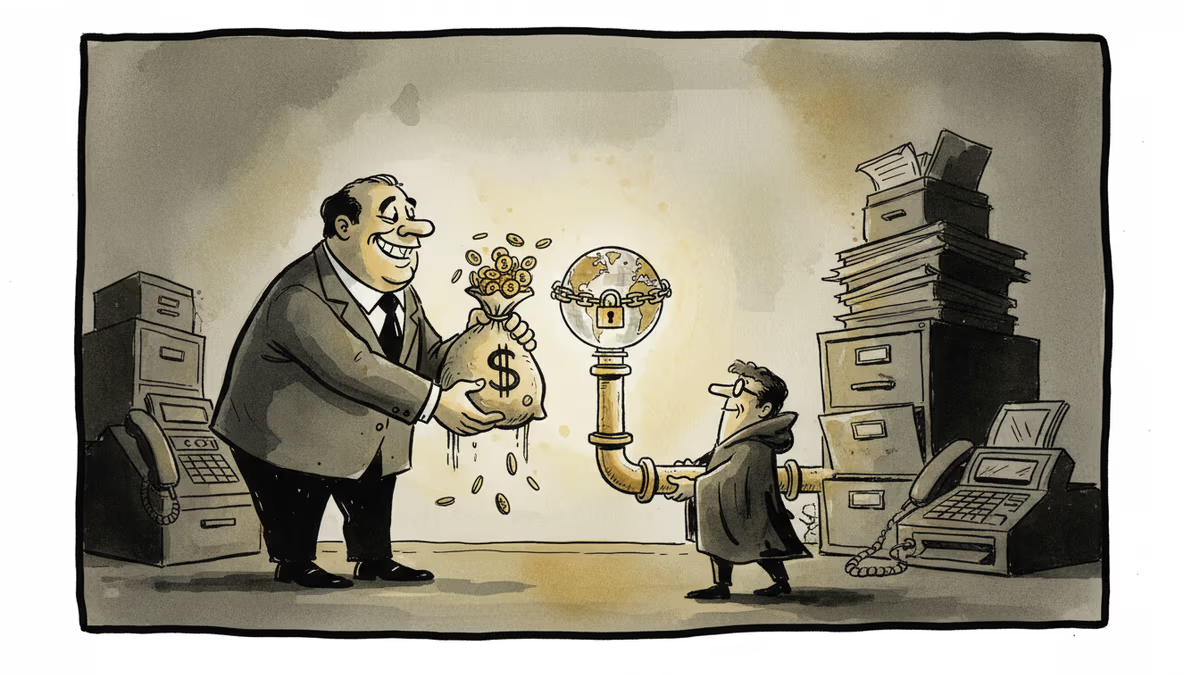
Mastercard's $1.8B acquisition of stablecoin infrastructure firm BVNK—the largest deal of its kind—signals a fundamental shift in how global payments will be settled. Here's what it means for your money.
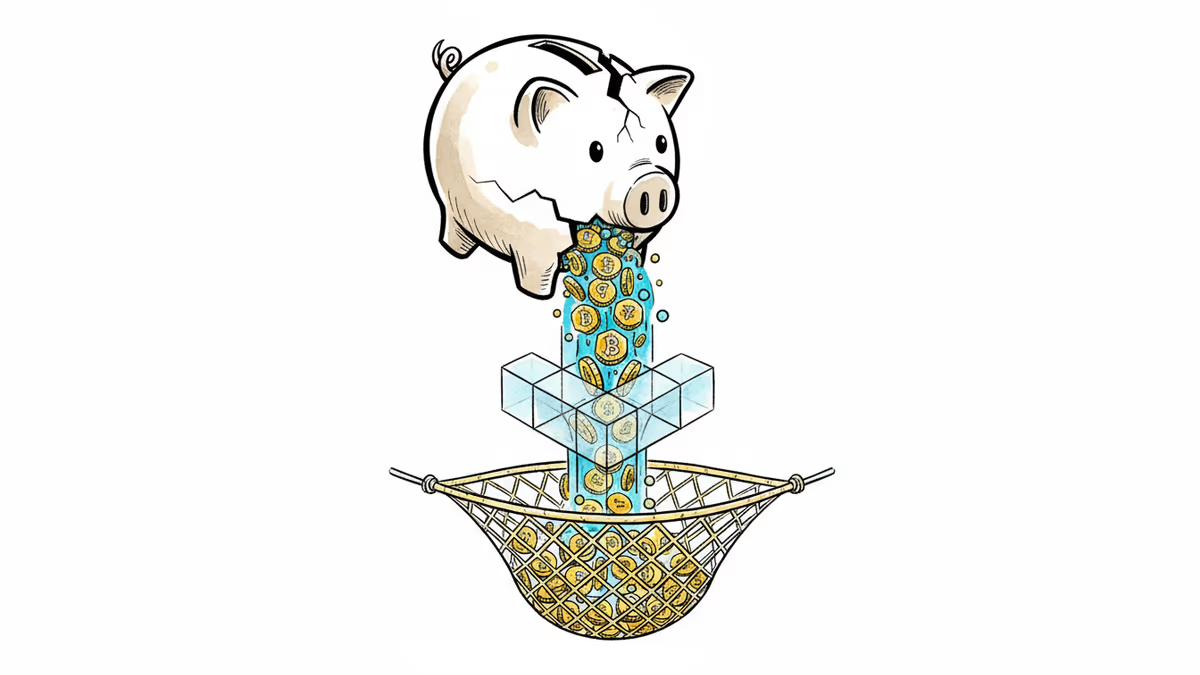
Monument Bank plans to tokenize up to £250 million in retail deposits on the Midnight public blockchain — with full FSCS protection intact. Is this the moment tokenized deposits go mainstream?
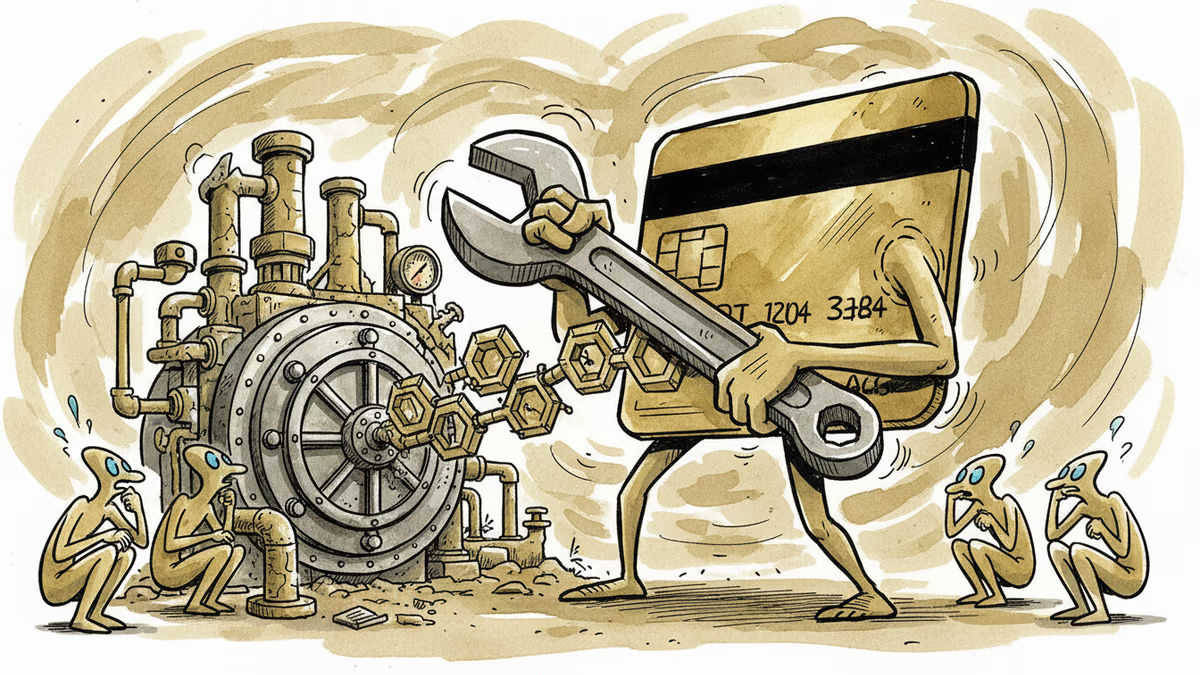
Mastercard's $1.8B acquisition of BVNK signals that stablecoins are no longer a crypto experiment — they're becoming the backbone of global payments. Here's what it means for your money, your industry, and the future of finance.

Ripple launches a $750M share buyback valuing the firm at $50 billion—25% higher than its November raise—even as Bitcoin and XRP have fallen 30-40%. What does this signal for crypto's institutional future?
Mastercard's $1.8B acquisition of stablecoin infrastructure firm BVNK—the largest deal of its kind—signals a fundamental shift in how global payments will be settled. Here's what it means for your money.
Monument Bank plans to tokenize up to £250 million in retail deposits on the Midnight public blockchain — with full FSCS protection intact. Is this the moment tokenized deposits go mainstream?
Mastercard's $1.8B acquisition of BVNK signals that stablecoins are no longer a crypto experiment — they're becoming the backbone of global payments. Here's what it means for your money, your industry, and the future of finance.
Ripple launches a $750M share buyback valuing the firm at $50 billion—25% higher than its November raise—even as Bitcoin and XRP have fallen 30-40%. What does this signal for crypto's institutional future?
Thoughts
Share your thoughts on this article
Sign in to join the conversation