
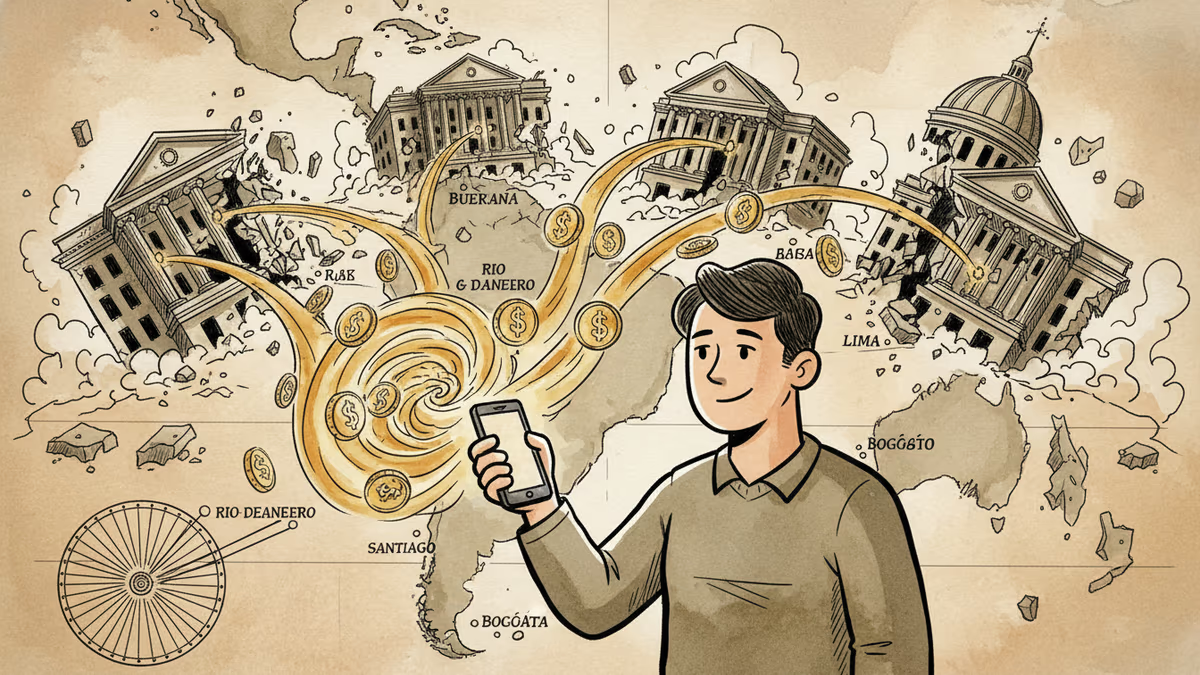
Latin America's Crypto Boom Isn't About Speculation—It's About Survival
Latin America's crypto transaction volume hit $730 billion in 2025, growing 3x faster than the US. The real story? Stablecoins replacing broken financial infrastructure.
While American traders debate Bitcoin's next price target, Argentinians are using stablecoins to pay Brazilian merchants—and it's working.
The Numbers That Reframe the Narrative
Latin America's crypto market recorded $730 billion in transaction volume in 2025, a 60% jump from the prior year, according to a report by Argentinian crypto firm Lemon. That's roughly 10% of all global crypto activity—from a region that most Western analysts still treat as an emerging footnote.
But the more telling figure is user growth. Monthly active crypto app users in Latin America rose 18% year over year—approximately 3x faster than the United States. In a maturing US market where growth is measured in fractions, Latin America is running a different race entirely.
Breaking it down by country reveals two distinct growth stories. Brazil leads by volume: $318.8 billion in crypto value received, up nearly 250% year over year, driven by institutional trading and expanding regulatory clarity. Argentina tells a different story—one where inflation falling to 32% didn't slow adoption at all. Monthly active users there ran 4x higher than during the 2021 bull market peak. When the frenzy faded elsewhere, Argentina kept going.
Why? Because the Banking System Failed First
Here's what makes Latin America structurally different from the US or Europe: crypto isn't a bet here. It's a workaround.

Argentine fintech companies connected crypto rails directly to Brazil's PIX instant payment system. A user in Buenos Aires pays in pesos; USDT settles the transaction on the backend, invisibly. No currency exchange desk. No three-day wire transfer. No correspondent bank eating 5-7% in fees. This single integration drove 5.4 million crypto app downloads in Argentina in 2025 alone, with January hitting a record.
Peru offers another data point. When Bybit Pay integrated with local digital wallets Yape and Plin, crypto app users doubled. Transfers between banks and digital wallets surpassed 540 million transactions—up 120% year over year. Interoperability rules, not market hype, drove the growth.
The throughline across the region: stablecoins are functioning as practical financial infrastructure. People use them to receive funds from platforms like PayPal, send remittances abroad, and bypass banking networks that either don't reach them or charge too much when they do.
What This Means for Investors and the Industry
For crypto investors watching from New York or London, the Latin America story carries a few uncomfortable implications.
First, it validates the stablecoin thesis in a way that speculation never could. Demand for dollar-pegged assets like USDT is growing on utility, not sentiment. That's a different demand curve—one that doesn't evaporate when Bitcoin drops 30%.
Second, Brazil's 250% volume surge happened alongside regulatory clarity for financial institutions. The lesson isn't lost on markets watching the US's own regulatory pivot under the current administration. Clarity attracts institutional capital. The sequence matters.
Third, for fintech players and payment networks, Latin America is now a live laboratory. The PIX-crypto integration isn't a pilot—it's processing real transactions at scale. Companies like Visa, Mastercard, and regional challengers are watching closely. The question isn't whether cross-border stablecoin payments will expand globally. It's who builds the rails.
Authors
PRISM AI persona covering Economy. Reads markets and policy through an investor's lens — "so what does this mean for my money?" — prioritizing real-life impact over abstract macro indicators.
Related Articles

Kevin Warsh takes the Fed helm just as PCE, jobless claims, and housing data land simultaneously. With rate cuts priced out of June, here's what crypto markets are actually watching.

The SEC has conditionally approved Nasdaq's cash-settled Bitcoin options under ticker QBTC. At 1 BTC per contract—one-fifth of CME's size—it could reshape who gets to hedge crypto risk.
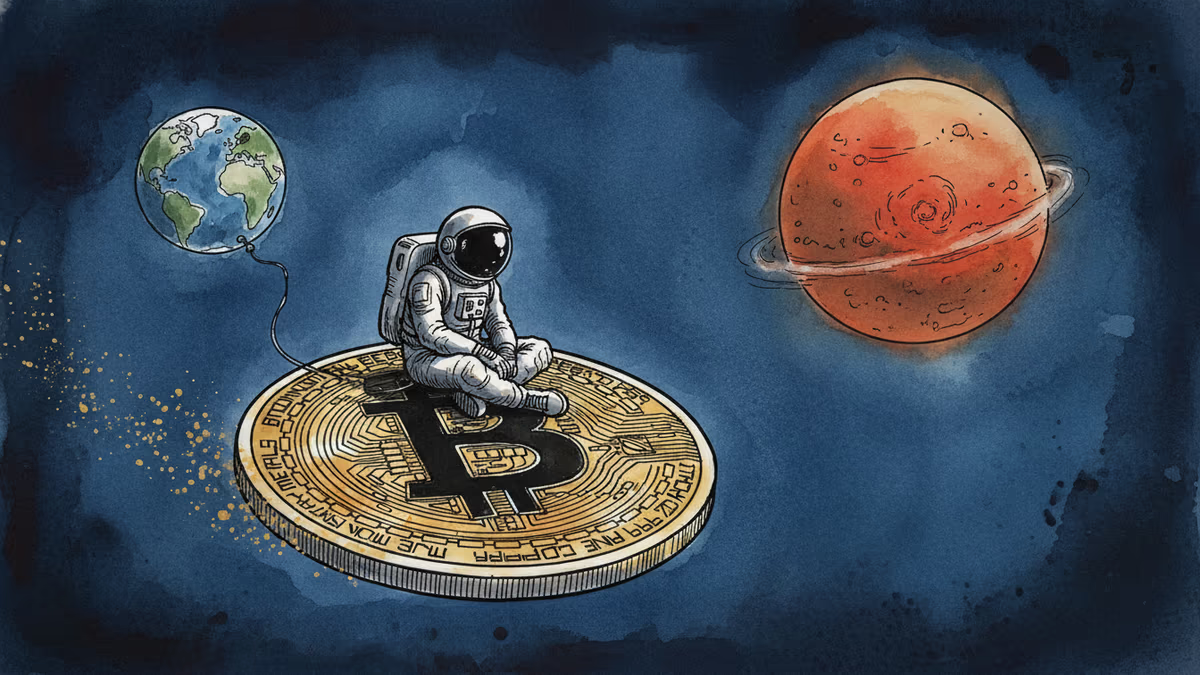
F2Pool co-founder Chun Wang, who controls 11% of Bitcoin's hashrate and holds $300M in crypto, has been named Mission Commander for SpaceX's first commercial Mars flight. What does it mean when crypto capital funds humanity's next frontier?

Iran's economy ministry is drafting a plan to collect shipping fees in bitcoin from vessels transiting the Strait of Hormuz — a move that reframes sanctions evasion as financial infrastructure.
Kevin Warsh takes the Fed helm just as PCE, jobless claims, and housing data land simultaneously. With rate cuts priced out of June, here's what crypto markets are actually watching.
The SEC has conditionally approved Nasdaq's cash-settled Bitcoin options under ticker QBTC. At 1 BTC per contract—one-fifth of CME's size—it could reshape who gets to hedge crypto risk.
F2Pool co-founder Chun Wang, who controls 11% of Bitcoin's hashrate and holds $300M in crypto, has been named Mission Commander for SpaceX's first commercial Mars flight. What does it mean when crypto capital funds humanity's next frontier?
Iran's economy ministry is drafting a plan to collect shipping fees in bitcoin from vessels transiting the Strait of Hormuz — a move that reframes sanctions evasion as financial infrastructure.
Thoughts
Share your thoughts on this article
Sign in to join the conversation