
Resident Evil at 30: Why Horror Games Keep Reinventing Fear
As Resident Evil turns 30 with the release of Requiem, we examine how the horror game industry balances legacy with innovation and what it means for gaming's future.
Nine mainline games. Countless spinoffs. Movies. A TV show. After three decades, Resident Evil has become more than a game series—it's a multimedia empire. But with Resident Evil Requiem, the franchise faces its biggest challenge yet: staying relevant while honoring its legacy.
The solution? A bold character pairing that tells us everything about where horror gaming is headed.
The Cowering Agent and the Action Hero
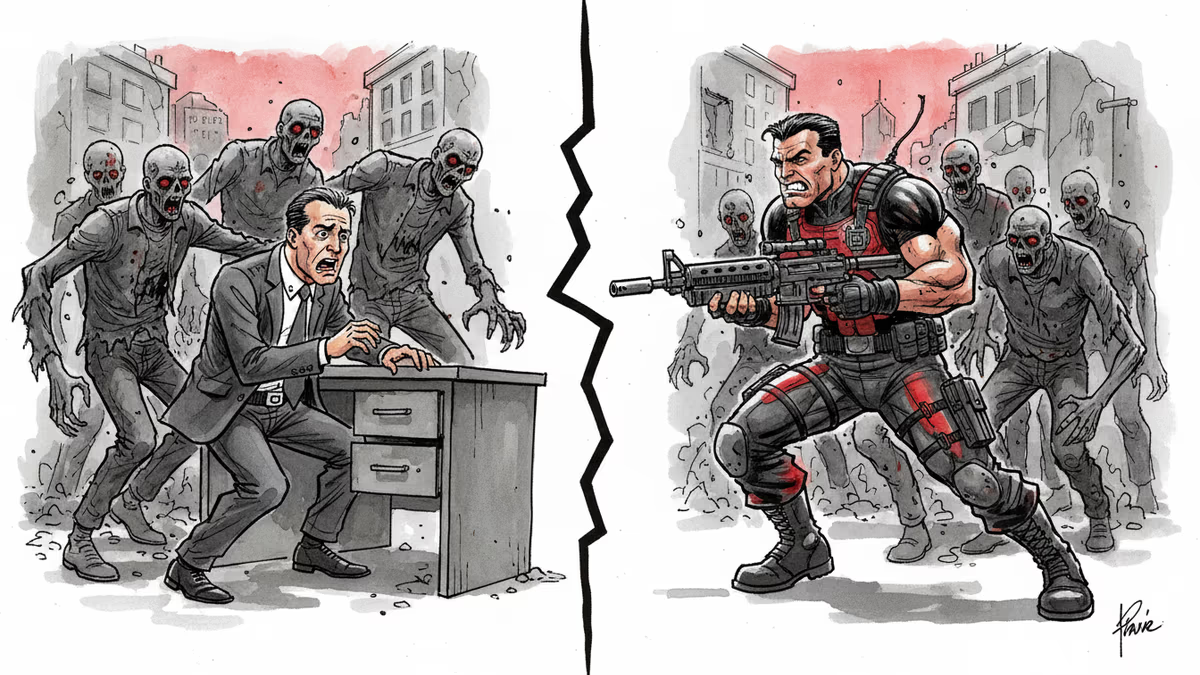
Requiem stars two protagonists who couldn't be more different. There's Leon Kennedy, the series veteran who's faced down zombies, bioweapons, and corporate conspiracies with superhuman composure. Then there's Grace Ashcroft, a new FBI agent who does something unprecedented in Resident Evil: she cowers.
This isn't just character development—it's market strategy. Leon appeals to longtime fans who've mastered the series' action-horror hybrid. Grace represents something rarer: genuine vulnerability in a genre that's increasingly dominated by power fantasies.
According to The Verge, the first half delivers "one of the freshest horror game experiences" in recent memory. But here's where it gets complicated.
The Legacy Problem
Every long-running franchise faces the same dilemma: how do you serve both newcomers and veterans? Requiem's second half reportedly stumbles under the weight of 30 years of continuity, becoming less accessible to players who haven't lived through every zombie outbreak and viral conspiracy.
This mirrors challenges across entertainment. Marvel movies spend precious screen time on exposition for new viewers while satisfying fans with deep-cut references. Star Wars constantly debates whether to honor or abandon its past. But games face a unique pressure: they must be both playable stories and interactive experiences.

The Streaming Factor
Horror games have found new life in the streaming era. Platforms like Twitch and YouTube have transformed single-player experiences into communal events. Watching someone play a horror game—and seeing their genuine reactions—has become entertainment in its own right.
This changes how developers think about their audience. They're not just designing for the person holding the controller, but for the thousands watching them play. Grace's cowering might work perfectly for streamers who want to show authentic fear, while Leon's competence serves players who prefer feeling powerful.
The Innovation Paradox
What's fascinating about Resident Evil's longevity is how it's managed to evolve without losing its identity. The series has embraced everything from tank controls to over-the-shoulder action to first-person VR, yet zombies and viral outbreaks remain constant.
Compare this to other 30-year-old game franchises. Street Fighter still revolves around one-on-one combat. Final Fantasy keeps its job systems and summons. The most successful franchises seem to understand that players want familiar comfort food served with new flavors.
What This Means for Horror Gaming
The horror game market is experiencing a renaissance. Independent developers are creating innovative scares with games like Phasmophobia and The Dark Pictures Anthology. Meanwhile, major studios are reviving classic franchises—Dead Space, System Shock, and now Resident Evil continue to find new audiences.
But there's a tension here. As graphics become more realistic and AI more sophisticated, what constitutes "scary" keeps shifting. Jump scares that worked in 1996 feel dated in 2026. Modern horror games must compete not just with other games, but with horror movies, podcasts, and social media content that's increasingly sophisticated at triggering fear responses.
The answer might lie not in the zombies we fight, but in how we choose to face them.
Authors
Related Articles
Sony is pulling its major single-player PlayStation games from PC. After six years of multiplatform expansion, the reversal raises hard questions about exclusivity, hardware sales, and who really controls gaming's future.
Xbox hardware revenue dropped 33% in Q1 2026, yet Microsoft posted $82.9B in total revenue. What this tells us about the future of gaming—and who actually loses.
Sony's PlayStation Store has been quietly A/B testing personalized game prices across 150+ titles in 68 regions. Is dynamic pricing coming to gaming — and what does that mean for players?
Pokémon Pokopia debuts exclusively on Nintendo Switch 2. This isn't just a celebration—it's a calculated move that could reshape how we think about franchise expansion.
Sony is pulling its major single-player PlayStation games from PC. After six years of multiplatform expansion, the reversal raises hard questions about exclusivity, hardware sales, and who really controls gaming's future.
Xbox hardware revenue dropped 33% in Q1 2026, yet Microsoft posted $82.9B in total revenue. What this tells us about the future of gaming—and who actually loses.
Sony's PlayStation Store has been quietly A/B testing personalized game prices across 150+ titles in 68 regions. Is dynamic pricing coming to gaming — and what does that mean for players?
Pokémon Pokopia debuts exclusively on Nintendo Switch 2. This isn't just a celebration—it's a calculated move that could reshape how we think about franchise expansion.
Thoughts
Share your thoughts on this article
Sign in to join the conversation