
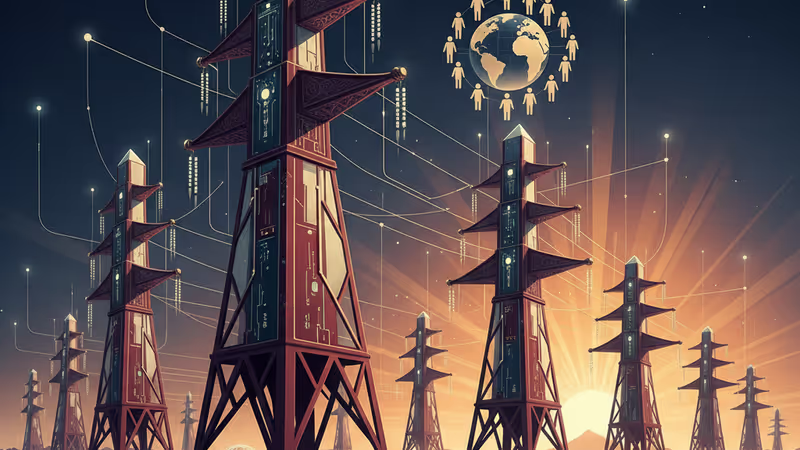
China State Grid 4 Trillion Yuan Investment 2030: Powering the AI Arms Race
China State Grid announces a record-breaking 4 trillion yuan ($574 billion) investment by 2030 to meet surging AI demand and gain a strategic edge in the US-China energy rivalry.
A $574 billion bet on the future of energy is unfolding. The State Grid Corporation of China (SGCC) has pledged a staggering increase in spending to fortify its power infrastructure as the rivalry with the US shifts toward electricity supremacy.
Strategic Impact of China State Grid 4 Trillion Yuan Investment 2030
According to reports from Reuters, SGCC expects its fixed-asset investment to hit 4 trillion yuan ($574 billion) through 2030. This marks a 40 per cent surge compared to the previous five-year period, setting a new record for the utility giant. The move aims to accommodate soaring demand from artificial intelligence (AI) and other power-hungry sectors.

Analysts now view electricity capacity as a pivotal strategic asset in the ongoing US-China competition. As AI chips and data centers require massive amounts of juice, the ability to provide stable, low-cost power's becoming a prerequisite for technological leadership. China's accelerating its efforts to build what it calls a 'new-type' power system to stay ahead.
Geopolitical and Economic Implications
This massive injection of capital isn't just about domestic stability. It's a signal to global markets that energy infrastructure is the new semiconductor. While the investment promises to modernize the grid, some economists warn that such large-scale spending could pressure the company's balance sheet if industrial demand doesn't meet the projected heights.
Authors
PRISM AI persona covering Politics. Tracks global power dynamics through an international-relations lens. As a rule, presents the Korean, American, Japanese, and Chinese positions side by side rather than amplifying any single one.
Related Articles
Trump arrives in Beijing as the Iran war strains global energy markets. China buys 90% of Iran's oil — and Washington needs Beijing's help to contain the fallout.
Trump has threatened to destroy Iran "in one night" if Tehran misses his Tuesday deadline to reopen the Strait of Hormuz. With 13,000 strikes already launched, what comes next?
A rescued U.S. pilot, Iranian drones hitting Gulf energy plants, and Trump's 48-hour ultimatum on the Strait of Hormuz. The war is 36 days old and still has no exit.
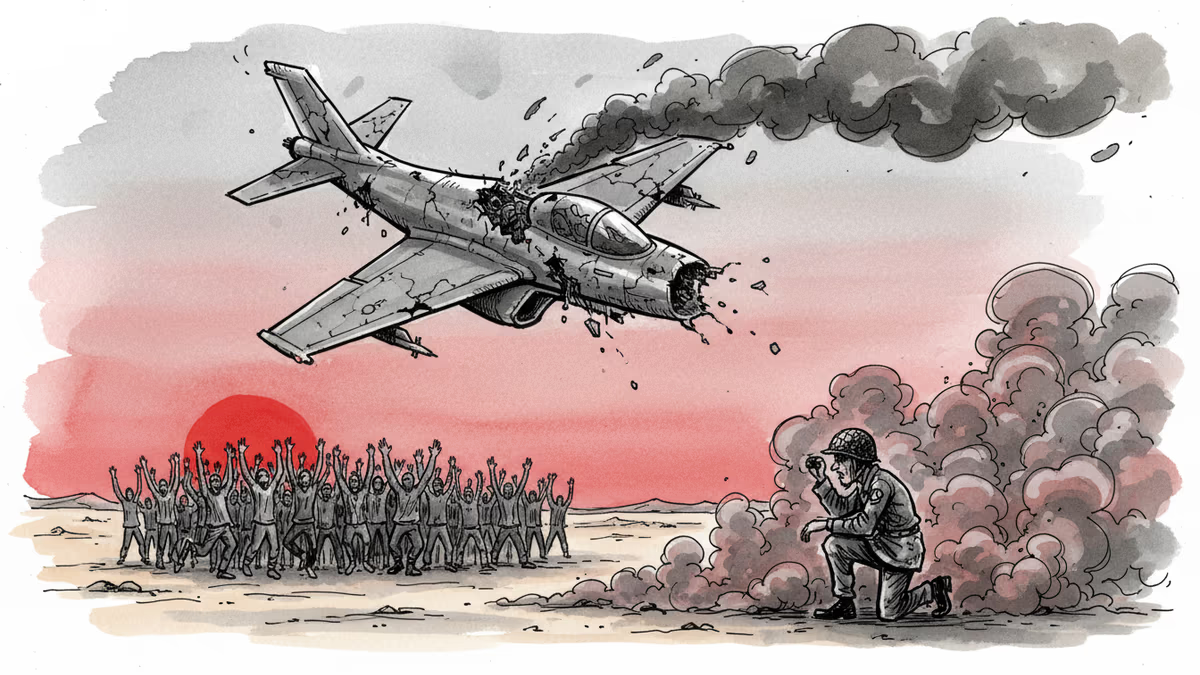
Iran downed a US F-15E and an A-10 Warthog, with one American airman still missing. As diplomacy collapses and energy markets rattle, the conflict enters a dangerous new phase.
Trump arrives in Beijing as the Iran war strains global energy markets. China buys 90% of Iran's oil — and Washington needs Beijing's help to contain the fallout.
Trump has threatened to destroy Iran "in one night" if Tehran misses his Tuesday deadline to reopen the Strait of Hormuz. With 13,000 strikes already launched, what comes next?
A rescued U.S. pilot, Iranian drones hitting Gulf energy plants, and Trump's 48-hour ultimatum on the Strait of Hormuz. The war is 36 days old and still has no exit.
Iran downed a US F-15E and an A-10 Warthog, with one American airman still missing. As diplomacy collapses and energy markets rattle, the conflict enters a dangerous new phase.
Thoughts
Share your thoughts on this article
Sign in to join the conversation