

Reid Hoffman AI Superagency: Amplifying Human Potential Amidst Political Turmoil
Reid Hoffman discusses his 2025 book Superagency, the future of AI in 2026, and his outspoken criticism of the Trump administration. Learn why he believes tech neutrality is dead.
Is AI the end of human agency or its ultimate amplifier? Reid Hoffman, the LinkedIn co-founder and Silicon Valley's resident philosopher, isn't just betting on the latter—he's writing the playbook for it. In a candid interview with WIRED, Hoffman detailed how AI will grant us 'superpowers' while simultaneously urging the tech elite to stop hiding behind a facade of political neutrality.
Reid Hoffman AI Superagency: From Assistants to Partners
Published in 2025, Hoffman's latest book, Superagency, argues that AI won't diminish human capacity but will instead provide an unprecedented boost to our productivity and creativity. He showcased this by creating a holiday album using dual AI models—one for lyrics and another for music—blending humor with tech sophistication. Hoffman believes that by 2026, the 'amazement' of AI will move beyond generic hype into specialized fields like cancer research and personalized intelligence.

Challenging the Trump Administration and Tech Neutrality
While Hoffman remains a staunch AI optimist, he's far from neutral regarding the current US administration. He hasn't pulled any punches in criticizing Donald Trump, calling out the administration for degrading American governance. Despite legal threats and calls for investigations into his past, Hoffman maintains that tech leaders have a moral obligation to speak up. 'Sanity' is his primary requirement for leadership, a value he attributes to the grit he learned shoveling manure at a Vermont farm school.
His investment philosophy remains rooted in academic philosophy. Hoffman famously noted that he invests in the 'seven deadly sins,' viewing products like LinkedIn as a tool for 'greed'—reimagined as economic empowerment—and Twitter as a platform for 'wrath' that eventually transformed into identity.
Authors
Related Articles
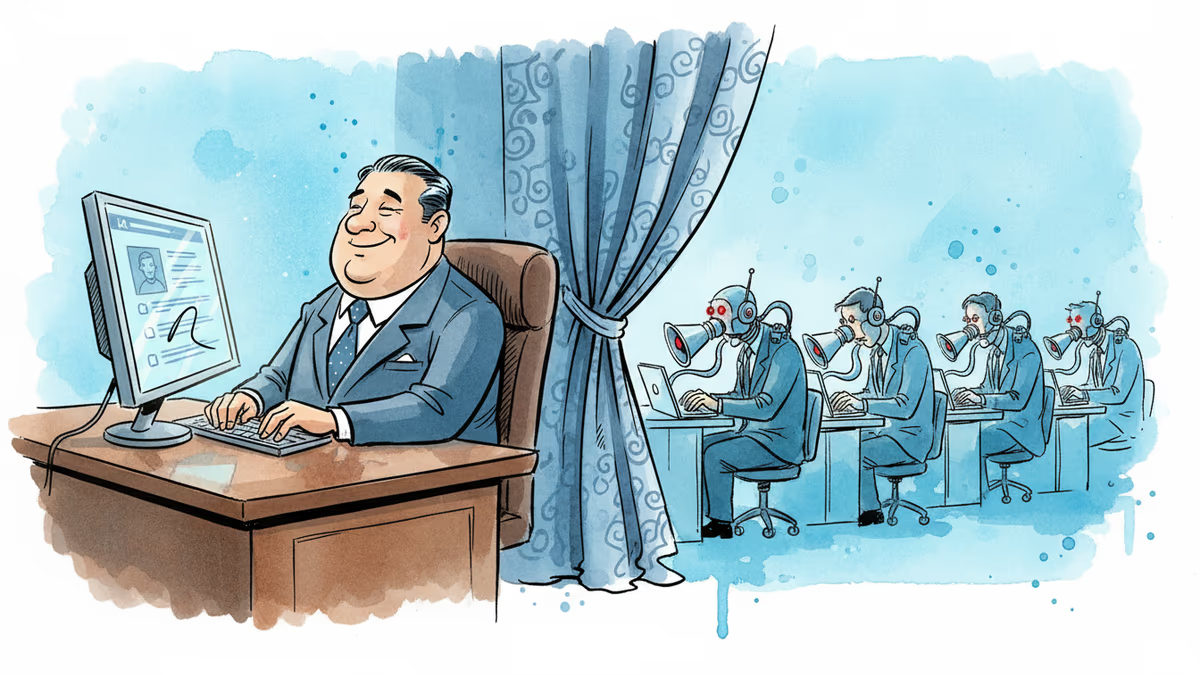
Filipino virtual assistants using AI to ghost-manage LinkedIn profiles for executives is now a structured industry. 30 comments a day, fake engagement rings, and a platform struggling to tell real from fabricated.
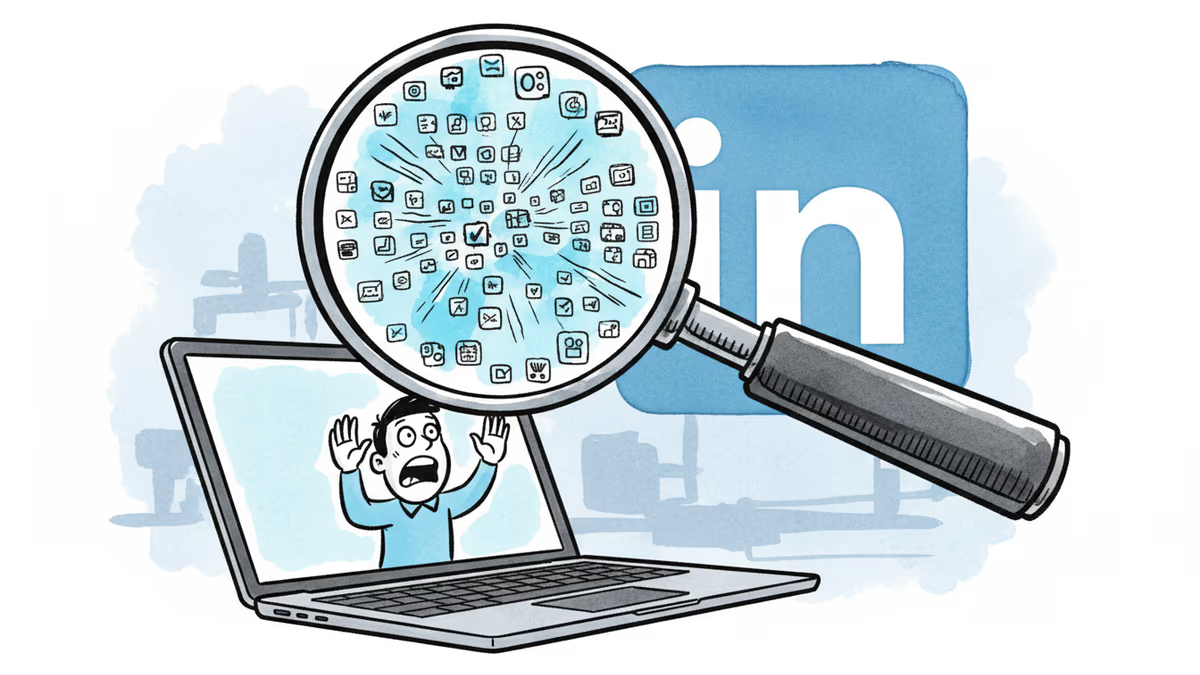
Two class action lawsuits allege LinkedIn secretly scanned users' browsers to identify installed extensions. Here's what happened, who's behind it, and why it matters.
LinkedIn partners with AI platforms to automatically verify skills based on usage patterns. Could this change how we prove professional competence?
Greg Brockman's massive donation to Trump's super PAC signals a dramatic shift in Silicon Valley's political alignment as AI regulations loom large.
Filipino virtual assistants using AI to ghost-manage LinkedIn profiles for executives is now a structured industry. 30 comments a day, fake engagement rings, and a platform struggling to tell real from fabricated.
Two class action lawsuits allege LinkedIn secretly scanned users' browsers to identify installed extensions. Here's what happened, who's behind it, and why it matters.
LinkedIn partners with AI platforms to automatically verify skills based on usage patterns. Could this change how we prove professional competence?
Greg Brockman's massive donation to Trump's super PAC signals a dramatic shift in Silicon Valley's political alignment as AI regulations loom large.
Thoughts
Share your thoughts on this article
Sign in to join the conversation