
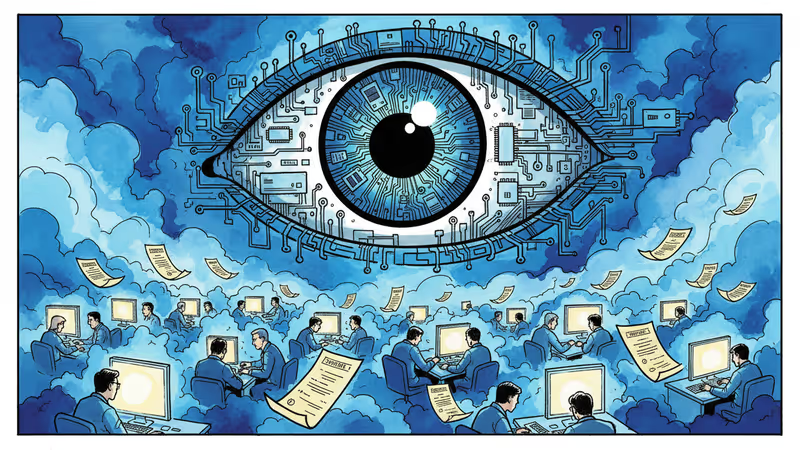
LinkedIn Will Now Certify Your AI Skills by Watching You Work
LinkedIn partners with AI platforms to automatically verify skills based on usage patterns. Could this change how we prove professional competence?
What if proving your professional skills was as simple as just doing your job? LinkedIn's new partnership announced Wednesday makes this a reality, allowing users to earn official AI skill certifications based purely on how they use popular AI tools.
The Algorithm Is Watching
LinkedIn has teamed up with Descript, Lovable, Replit, and Relay.app to launch an automated skill verification system. Here's how it works: as you edit videos in Descript or code in Replit, AI algorithms analyze your usage patterns, evaluate your output quality, and assess your tool proficiency in real-time.
The Microsoft-owned platform hasn't revealed exact qualification criteria, but the concept is straightforward. Instead of taking a test or completing a course, your actual work becomes the assessment. The AI watches how efficiently you navigate features, how creative your solutions are, and how polished your final products look.
LinkedIn plans to expand the program with partners including Gamma, GitHub, and Zapier in coming months, while inviting other companies to join the verified skills initiative.
The Job Market's New Reality
This move reflects a dramatic shift in hiring demands. According to learning platform eDX, job postings requiring AI skills doubled over the past 12 months. Indeed's Hiring Lab found that 4.2% of U.S. job postings mentioned AI-related keywords by the end of 2025—up from virtually zero just years ago.

What's particularly striking is how this trend extends beyond traditional tech roles. Banking, marketing, and other sectors are increasingly seeking AI-literate professionals, suggesting we're witnessing a fundamental change in workplace expectations.
"Jobs require fluency in the technology your employer depends on and AI proficiency," said Hari Srinivasan, VP of Product at LinkedIn. "The ability to use these tools to deliver today is now the most in-demand skill."
Trust vs. Privacy in Professional Validation
The system raises intriguing questions about professional credibility in the digital age. LinkedIn emphasizes that "trust matters more than ever," noting that over 100 million professionals have already verified their identity on the platform. Adding skill verification could provide another layer of authenticity in an era of resume inflation and credential mills.
But there's a flip side. Real-time monitoring of work patterns essentially means constant surveillance of professional activities. How comfortable are we with AI systems judging our competence based on digital behavior? And what happens when the algorithm's definition of "proficient" doesn't align with human judgment?
The approach also favors those who can afford premium AI tools and have the time to master them. Could this create new forms of professional inequality, where access to cutting-edge platforms determines career opportunities?
The Broader Implications
This development signals a shift from credential-based hiring to performance-based validation. Traditional degrees and certifications might matter less than demonstrable tool fluency. For job seekers, this could level the playing field—or create new barriers depending on their access to these platforms.
For employers, automatically verified skills could streamline hiring decisions. But it also raises questions about what we're actually measuring. Is proficiency with Replit the same as coding ability? Does skill with Descript translate to broader video production expertise?
Authors
Related Articles
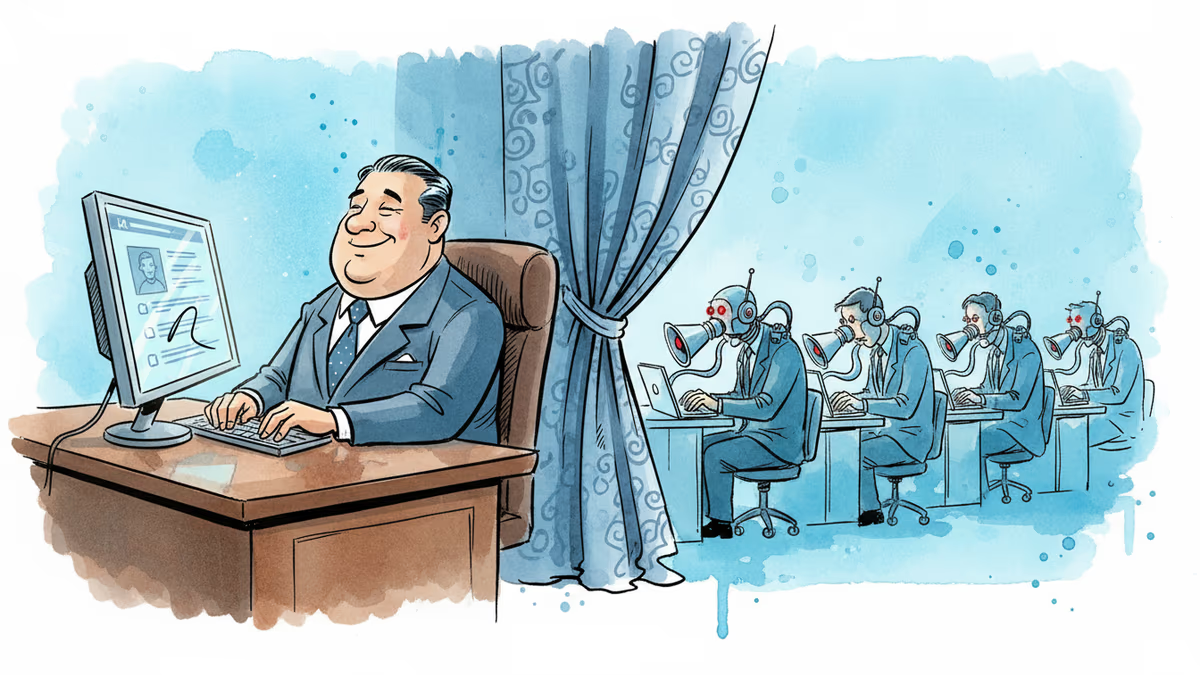
Filipino virtual assistants using AI to ghost-manage LinkedIn profiles for executives is now a structured industry. 30 comments a day, fake engagement rings, and a platform struggling to tell real from fabricated.
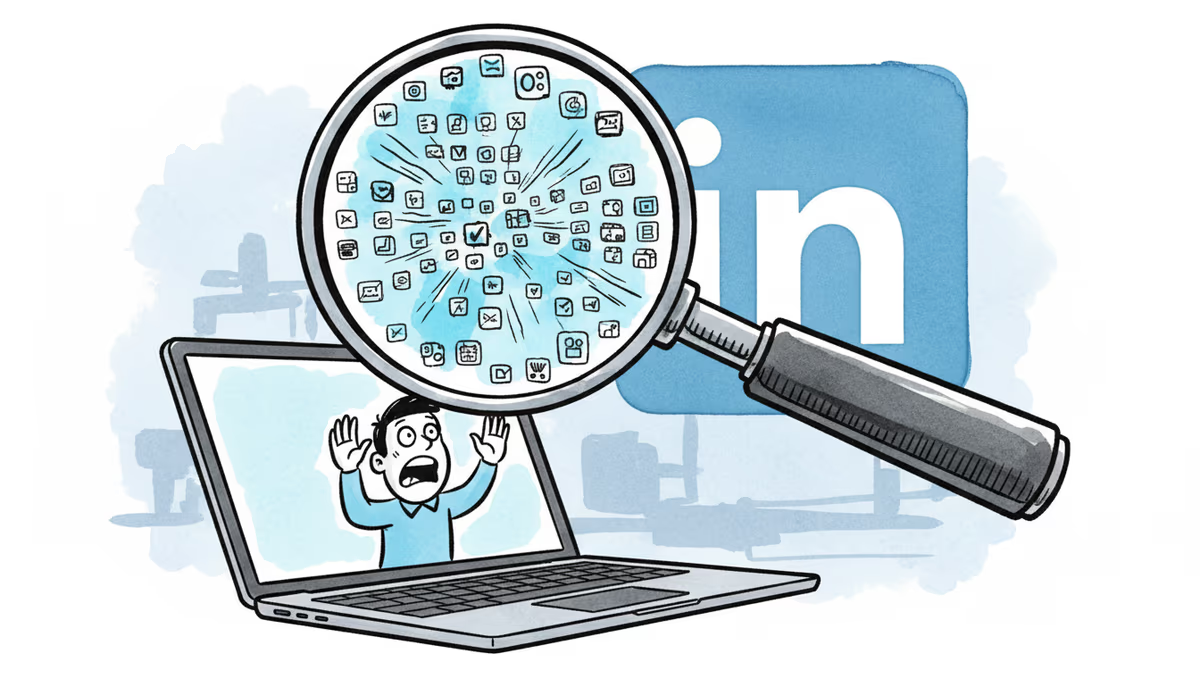
Two class action lawsuits allege LinkedIn secretly scanned users' browsers to identify installed extensions. Here's what happened, who's behind it, and why it matters.

Explore the DHS ICE List doxing controversy where 4,500 employee profiles were compiled from public data. Is it a security breach or public info?

Reid Hoffman discusses his 2025 book Superagency, the future of AI in 2026, and his outspoken criticism of the Trump administration. Learn why he believes tech neutrality is dead.
Filipino virtual assistants using AI to ghost-manage LinkedIn profiles for executives is now a structured industry. 30 comments a day, fake engagement rings, and a platform struggling to tell real from fabricated.
Two class action lawsuits allege LinkedIn secretly scanned users' browsers to identify installed extensions. Here's what happened, who's behind it, and why it matters.
Explore the DHS ICE List doxing controversy where 4,500 employee profiles were compiled from public data. Is it a security breach or public info?
Reid Hoffman discusses his 2025 book Superagency, the future of AI in 2026, and his outspoken criticism of the Trump administration. Learn why he believes tech neutrality is dead.
Thoughts
Share your thoughts on this article
Sign in to join the conversation