
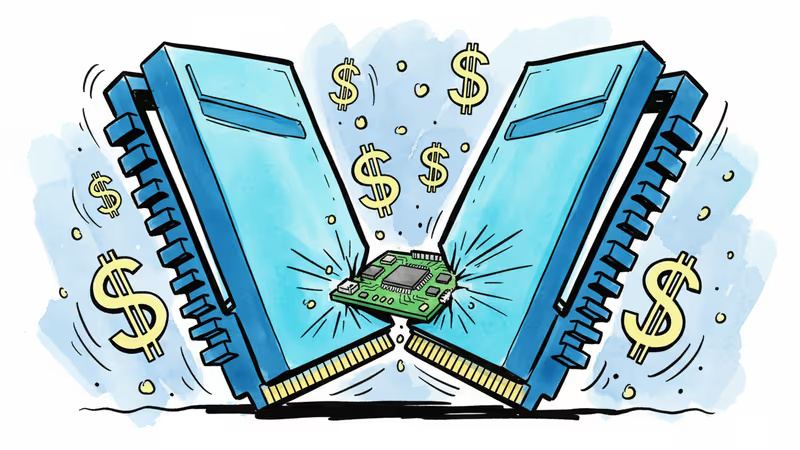
Raspberry Pi Raises Prices Again as Memory Costs Double
Raspberry Pi announces another price increase just two months after the last one, citing doubled memory component costs affecting all 2GB+ models.
Two months. That's how long Raspberry Pi managed to keep prices stable after their last increase. Today, CEO Eben Upton announced another round of price hikes, explaining that "the cost of some parts has more than doubled over the last quarter."
The latest increases affect all Raspberry Pi 4 and 5 models, plus Compute Module 4 and 5 products with 2GB or more of memory. This comes on the heels of December's price bumps that ranged from $5 to $25 depending on RAM capacity, with the 16GB Compute Module 5 jumping by $20.
The Memory Squeeze
This isn't just about general inflation hitting the tech world. The real culprit is the memory semiconductor supply chain, particularly for mobile-grade LPDDR memory that powers these tiny computers. When component costs double in a single quarter, even the most efficient manufacturers have little choice but to pass costs along.
Interestingly, devices using older LPDDR2 memory that the company stockpiled remain unaffected. It's a stark reminder that in today's volatile semiconductor market, inventory strategy can make or break pricing stability.
Education Takes the Hit
Raspberry Pi's original mission was democratizing computing education. Schools worldwide have built entire curricula around these affordable boards, and coding bootcamps rely on them for hands-on learning. Price increases directly threaten this accessibility.

For educators already stretching tight budgets, every dollar matters. A classroom set of 30 Raspberry Pis that might have cost $1,200 last year could now run $1,500 or more. That difference often determines whether a program happens at all.
Small Players, Big Pressures
The situation exposes how vulnerable smaller hardware companies are to supply chain volatility. While giants like Samsung or Apple can negotiate long-term contracts and absorb temporary cost spikes, companies like Raspberry Pi face the market's full force.
This dynamic is reshaping the entire single-board computer ecosystem. Competitors are watching closely—some may follow suit with their own increases, while others might see an opportunity to undercut with alternative solutions.
The Hobbyist Dilemma
Beyond education, Raspberry Pi's price increases hit the maker community hard. Weekend tinkerers, prototype developers, and small-scale entrepreneurs often operate on shoestring budgets. When your go-to development board costs 50% more than last year, project economics change dramatically.
Some users are already exploring alternatives like Arduino-based solutions or Chinese competitors. The question is whether Raspberry Pi's ecosystem advantages—software support, community, documentation—justify the premium.
Authors
Related Articles

Five stories from late September, traced to where the paper trail stops: Korea's export record, Nvidia's Hugging Face 8-K, a US-China AI channel, the UN on AI, and rising births.
The US government invested $2 billion in quantum computing startups, but Congress says the money was never authorized for that purpose. The fate of IBM-backed Anderon hangs in the balance.
Beijing added an Nvidia gaming chip to its customs ban list the same week Jensen Huang visited China with Trump. Here's what it means for the chip war—and who actually wins.
TSMC has signed a 30-year power purchase agreement for 100% of output from Taiwan's Hai Long offshore wind project. The 1GW deal reveals how chipmakers are quietly becoming energy companies.
Five stories from late September, traced to where the paper trail stops: Korea's export record, Nvidia's Hugging Face 8-K, a US-China AI channel, the UN on AI, and rising births.
The US government invested $2 billion in quantum computing startups, but Congress says the money was never authorized for that purpose. The fate of IBM-backed Anderon hangs in the balance.
Beijing added an Nvidia gaming chip to its customs ban list the same week Jensen Huang visited China with Trump. Here's what it means for the chip war—and who actually wins.
TSMC has signed a 30-year power purchase agreement for 100% of output from Taiwan's Hai Long offshore wind project. The 1GW deal reveals how chipmakers are quietly becoming energy companies.
Thoughts
Share your thoughts on this article
Sign in to join the conversation