
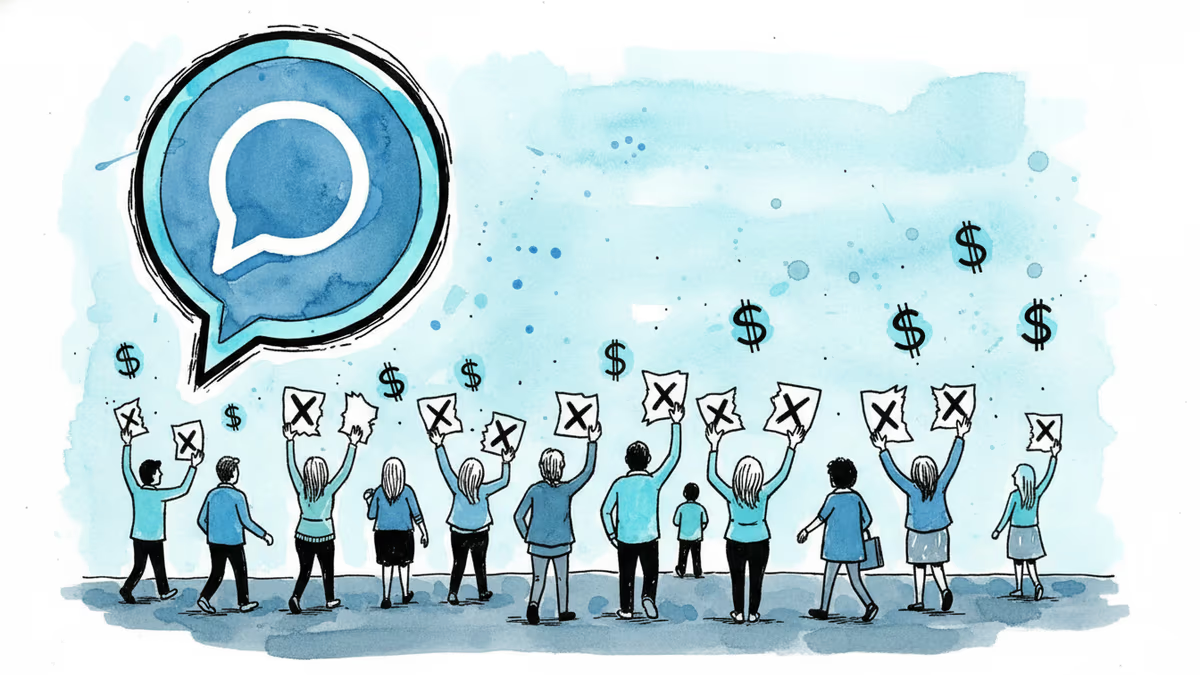
The Great ChatGPT Exodus: When AI Users Vote With Their Wallets
QuitGPT campaign sparks mass subscription cancellations as users protest OpenAI's political ties and performance issues. A new form of tech activism emerges.
$25 Million to Trump's PAC Was the Final Straw
Alfred Stephen, a freelance software developer in Singapore, thought he was making a smart investment last September. The $20-per-month ChatGPT Plus subscription would speed up his coding work. Instead, he found himself frustrated with the chatbot's abilities and its "gushing, meandering replies." Then he discovered something that changed everything: a Reddit post about QuitGPT.
The campaign revealed that OpenAI president Greg Brockman had donated $12.5 million (along with his wife's matching contribution) to Trump's super PAC MAGA Inc. It also highlighted that ICE uses a ChatGPT-4-powered résumé screening tool. For Stephen, already exploring alternatives, this was decisive. "That's really the straw that broke the camel's back," he says.
When he canceled, OpenAI's exit survey asked what could have kept him subscribed. His response: "Don't support the fascist regime."
When Performance Meets Politics
QuitGPT represents the latest wave in a growing movement of subscription cancellations. Reddit has been flooded with quit stories in recent weeks. Users cite frustration with GPT-5.2's performance, mock the chatbot's sycophantic responses with memes, and even plan a sardonic "Mass Cancellation Party" in San Francisco.
With ChatGPT boasting nearly 900 million weekly active users as of December 2025, the boycott's scale remains unclear. But QuitGPT is gaining traction. A recent Instagram post garnered 36 million views and 1.3 million likes. Campaign organizers report 17,000+ sign-ups on their website.
"There are lots of examples of failed campaigns like this, but we have seen a lot of effectiveness," says Dana Fisher, a sociologist at American University. The key is reaching critical mass where "enough people actually use their money to express their political opinions."

The Anti-Trump Tech Coalition
Dozens of left-leaning activists across the US—ranging from pro-democracy organizers to climate activists and "cyber libertarians"—came together in late January to launch QuitGPT. They were inspired by NYU marketing professor Scott Galloway's viral video arguing that the best way to stop ICE was through ChatGPT subscription cancellations.
The strategy? Create enough financial pressure on OpenAI to ripple through the stock market and potentially influence Trump's policies. "We make a big enough stink for OpenAI that all of the companies in the whole AI industry have to think about whether they're going to get away enabling Trump and ICE and authoritarianism," says an anonymous organizer.
Simon Rosenblum-Larson, a labor organizer from Madison, Wisconsin, joined after hearing about the campaign through activist Signal chats. "The goal here is to pull away the support pillars of the Trump administration. They're reliant on many of these tech billionaires for support and for resources."
Corporate Executives Feel the Heat
The consumer pressure coincides with internal employee activism. Tech workers are urging their employers to use political influence against ICE, cancel agency contracts, and speak out against its actions.
Some CEOs are responding. OpenAI's Sam Altman told employees in an internal Slack message that ICE is "going too far." Apple's Tim Cook called for "deescalation" in an internal memo. These statements mark a departure from the courtship dinners and donations that characterized Big Tech's approach to Trump since his inauguration.
The Broader AI Anxiety
While sparked by immigration enforcement, this movement taps into deeper AI anxieties. "It's a really strange set of coalitions built around the AI movement," says Rosenblum-Larson, citing concerns about data center energy costs, deepfake porn, teen mental health, job displacement, and content quality degradation.
George Washington University's David Karpf sees this as the beginning of a larger shift: "Those are the right conditions for a movement to spring up. In the longer arc, we are going to see users respond and react to Big Tech, deciding that they're not okay with this."
Authors
Related Articles
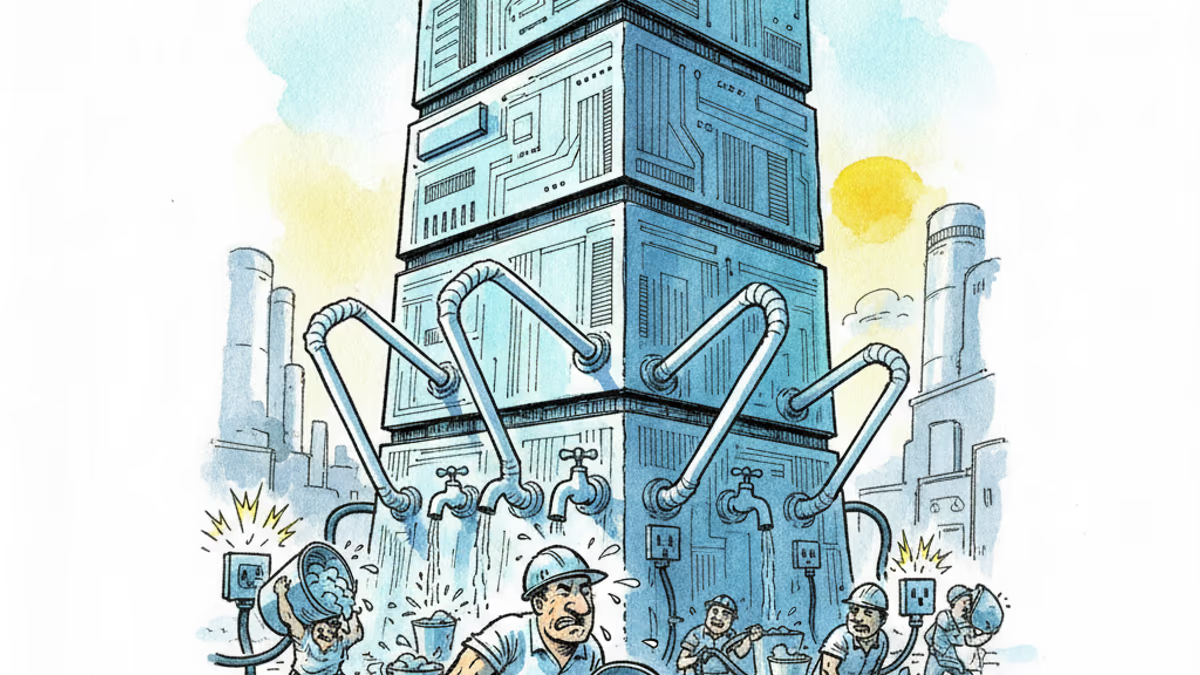
Samsung and SK unveiled a chip and AI investment package worth thousands of trillions of won on June 29. The headline number swings wildly by outlet, but the real contest isn't capital — it's water and power.
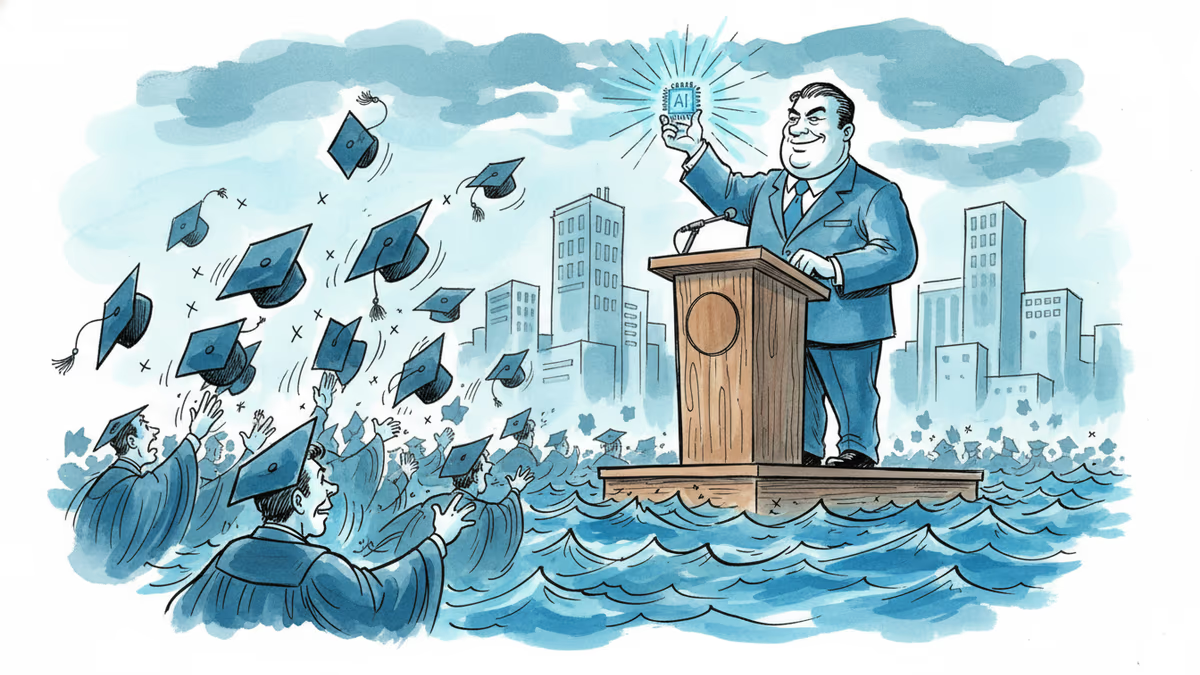
Viral videos show 2026 graduates jeering executives who praise AI at commencement ceremonies. It's not just rudeness — it's a signal about who pays for technological optimism.
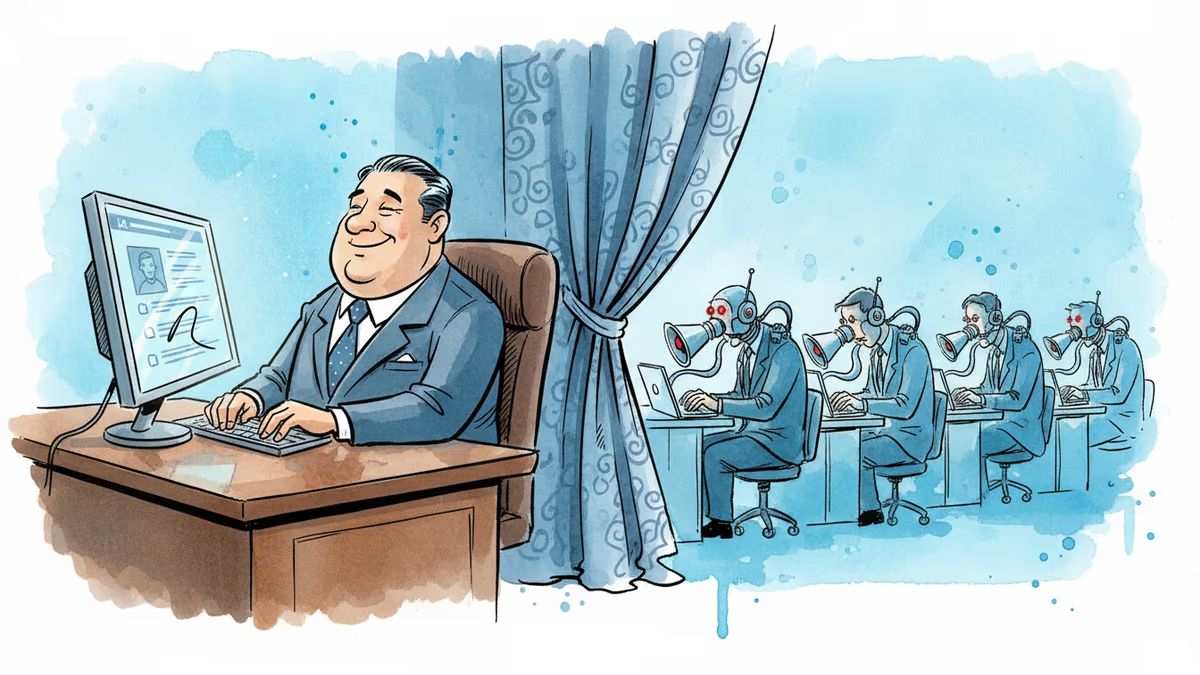
Filipino virtual assistants using AI to ghost-manage LinkedIn profiles for executives is now a structured industry. 30 comments a day, fake engagement rings, and a platform struggling to tell real from fabricated.
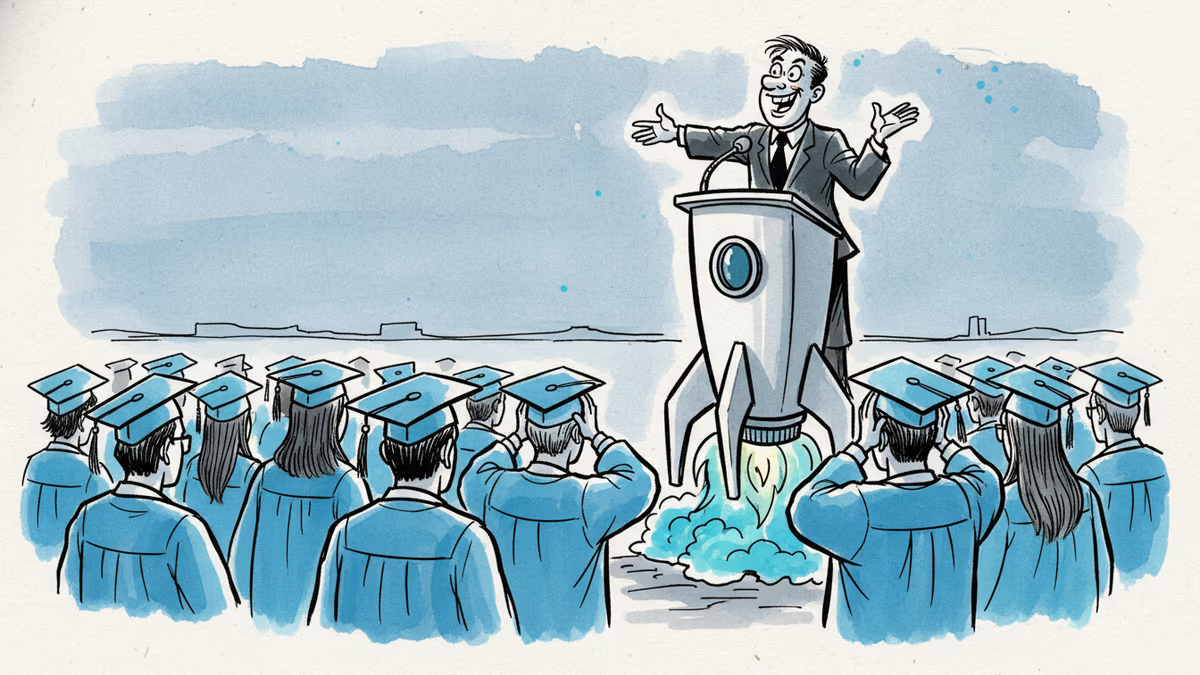
Two commencement speakers learned the hard way that AI enthusiasm doesn't land well with today's graduates. The backlash reveals a widening gap between tech optimism and Gen Z's economic reality.
Samsung and SK unveiled a chip and AI investment package worth thousands of trillions of won on June 29. The headline number swings wildly by outlet, but the real contest isn't capital — it's water and power.
Viral videos show 2026 graduates jeering executives who praise AI at commencement ceremonies. It's not just rudeness — it's a signal about who pays for technological optimism.
Filipino virtual assistants using AI to ghost-manage LinkedIn profiles for executives is now a structured industry. 30 comments a day, fake engagement rings, and a platform struggling to tell real from fabricated.
Two commencement speakers learned the hard way that AI enthusiasm doesn't land well with today's graduates. The backlash reveals a widening gap between tech optimism and Gen Z's economic reality.
Thoughts
Share your thoughts on this article
Sign in to join the conversation