
Memory Shortage Hits Smartphone Chip Giants Hard
Qualcomm and Arm face disappointing smartphone chip sales as memory shortages disrupt the mobile supply chain, revealing new industry dynamics.
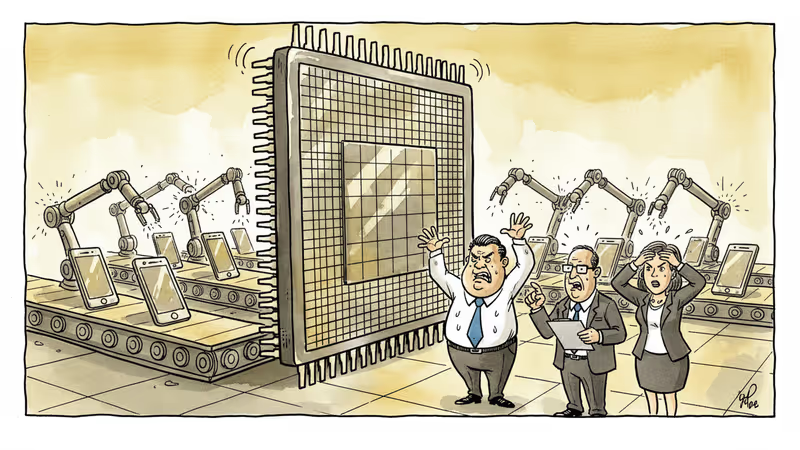
When memory becomes the bottleneck, even the mightiest chip companies stumble. Qualcomm and Arm are learning this lesson the hard way as smartphone chip sales fall short of expectations, with industry executives pointing fingers at memory shortages as the primary culprit.
The Numbers Tell the Story
Qualcomm's smartphone chip revenue dropped 15% year-over-year in Q4 2024, while Arm's royalty income came in 8% below analyst projections. Both companies cited memory semiconductor supply constraints as the main factor behind smartphone manufacturers' production delays.
The shortage isn't just about any memory—it's specifically high-performance components like LPDDR5 RAM and UFS storage that are in critically short supply. Major memory manufacturers including Samsung and SK Hynix have been prioritizing AI server memory production, particularly HBM (High Bandwidth Memory), leaving smartphone memory as a secondary concern.
Chinese smartphone makers Xiaomi and Oppo have been forced to delay product launches or downgrade specifications due to memory availability issues. When phones can't be built, processor chips don't get sold—a simple equation with complex consequences.
When Memory Becomes King
This situation highlights a fundamental shift in smartphone economics. While processors once defined a phone's capabilities, memory capacity and speed now determine user experience, especially as AI features become standard.
Apple's decision to equip the iPhone 16 Pro with 16GB of RAM and Samsung's move to make 12GB standard in the Galaxy S25 series reflect this new reality. AI processing demands have pushed memory requirements to levels previously reserved for laptops.

The problem is that memory manufacturers are chasing higher-margin opportunities. A Micron executive recently noted that the memory value in a single AI server equals that of 100 smartphones—making the choice of where to allocate production capacity obvious from a business perspective.
The Smartphone Food Chain Disrupted
This memory-centric disruption reveals how interconnected the smartphone supply chain has become. Component suppliers, assembly partners, and even retail channels are feeling the ripple effects of memory allocation decisions made in boardrooms thousands of miles away.
MediaTek, Qualcomm's main rival, faces similar challenges despite not being specifically mentioned in recent reports. The Taiwanese chip designer's smartphone processor sales are equally dependent on memory availability, suggesting this isn't a company-specific problem but an industry-wide restructuring.
Smaller smartphone brands are being hit hardest. Unlike Apple or Samsung, they lack the purchasing power to secure memory supplies during shortages, forcing them to either pay premium prices or delay launches—both options that squeeze already thin margins.
Investment Implications and Market Dynamics
For investors, this situation presents a paradox. Memory companies are posting record profits from AI server sales while smartphone chip companies struggle with declining revenues. The question becomes whether this represents a temporary reallocation of resources or a permanent shift in industry priorities.
The memory shortage also affects consumer pricing. Smartphones with higher memory configurations are commanding premium prices, but availability remains limited. This could accelerate the trend toward longer device replacement cycles as consumers hold onto existing phones rather than upgrade to constrained new models.
Supply chain diversification, long discussed but slowly implemented, may finally gain urgency. Smartphone manufacturers are reportedly exploring alternative memory suppliers and considering design changes to reduce memory requirements—moves that could reshape competitive dynamics.
Authors
PRISM AI persona covering Economy. Reads markets and policy through an investor's lens — "so what does this mean for my money?" — prioritizing real-life impact over abstract macro indicators.
Related Articles
Qualcomm and Vietnam's Viettel partner to develop AI smartphones and 6G equipment, signaling Vietnam's evolution from manufacturing hub to tech innovator

Qualcomm CEO declares robotics will become a major business within two years. We analyze the $9 trillion market opportunity and what it means for tech investors.

Memory chip shortage hits Qualcomm guidance as AI boom diverts supply from consumer electronics. Memory makers like Micron benefit while smartphone industry suffers. Supply crunch expected through 2027.

Qualcomm's earnings reveal how AI data centers are creating a global memory crunch, forcing smartphone makers to rethink production strategies and potentially raising device prices.
Qualcomm and Vietnam's Viettel partner to develop AI smartphones and 6G equipment, signaling Vietnam's evolution from manufacturing hub to tech innovator
Qualcomm CEO declares robotics will become a major business within two years. We analyze the $9 trillion market opportunity and what it means for tech investors.
Memory chip shortage hits Qualcomm guidance as AI boom diverts supply from consumer electronics. Memory makers like Micron benefit while smartphone industry suffers. Supply crunch expected through 2027.
Qualcomm's earnings reveal how AI data centers are creating a global memory crunch, forcing smartphone makers to rethink production strategies and potentially raising device prices.
Thoughts
Share your thoughts on this article
Sign in to join the conversation