

When 3D Printers Become Weapons Against Federal Power
Across America, makers are 3D-printing thousands of whistles to monitor ICE activity. How hackerspaces became focal points of resistance against immigration crackdowns.
A Plastic Whistle vs. The Federal Government
Across America, thousands of whistles are pouring out of 3D printers. They're not toys—they're tools of resistance against Trump's immigration crackdown. But why would a simple piece of plastic threaten federal agents?
Since federal agents shot and killed Renee Good and Alex Pretti in Minneapolis last month, Operation Metro Surge has upended life across Minnesota. Now citizens are building their own surveillance and warning systems to track ICE movements. At the center of it all: hackerspaces.
From Hobby Shops to Resistance Hubs
Hackerspaces—community workshops packed with 3D printers, laser engravers, and power tools—have transformed overnight. What used to be weekend hobby centers are now manufacturing resistance equipment 24/7.
"There is a constant level of inherent stress and anxiety," says B, a Midwest maker who requested anonymity out of fear of federal retribution. "There's like a base level of concern that will not go away for the foreseeable future."
The output goes far beyond whistles. Makers are cranking out 3D-printed tourniquets, bodycam mounts for ICE watchers, and handheld eye washers to counter pepper spray and tear gas. Each item represents something federal agents can't control: distributed manufacturing.
The Internet-Free Communication Revolution
Perhaps more threatening to authorities is Meshtastic—a network of low-power mesh routers that enables text messaging without internet or cell towers. Users place routers on trees and rooftops, creating expansive off-grid communication networks.
Woody Poulard, a Meshtastic advocate at NYC Resistor hackerspace, has worked with ICE watch volunteers to establish broader mesh networks across New York. In January, he ran workshops teaching people to build router nodes into their phone cases for instant connectivity anywhere.

"If there's a natural disaster, it's good for that too," Poulard explains. "But it's perfect for the situation that we're in right now, where you have people you might not want to join a conversation."
'Weaponized Cuteness' as Strategy
In Portland—a city currently suing ICE over tear gas use—artist Claire Danielle Cassidy takes a different approach. She builds solar-panel power banks for charging devices at demonstrations and advocates for "weaponized cuteness."
Wearing her own laser-cut "FUCK ICE" earrings (files available for download), Cassidy argues that "girly culture is going to save us, like it always does." Her pop-up camp "There U Glow" teaches LED light modification as an entry point to technical tinkering.
"If you learn about how to set up an LED coat, you actually know 75-ish percent of how to set up an off-grid solar array," she explains. The strategy? Make resistance accessible through joy rather than fear.
When Makers Meet the Moment
These spaces serve multiple functions beyond manufacturing. They host community readiness meetings, run "fix-it clinics" for protest-damaged tech, and repair doors broken during federal raids. The practicality is striking.
"Resistance is actually pretty practical," notes one anonymous maker. "Anybody can 3D-print a whistle. Anybody can fix a door or laser-cut stencils."
But this isn't just about tools—it's about infrastructure. Federal agencies excel at centralalized control, but struggle against distributed networks of makers who can rapidly prototype, manufacture, and deploy solutions.
The Broader Implications
What we're witnessing extends beyond immigration enforcement. It's a preview of how communities might resist authoritarian overreach using accessible technology. The same 3D printer that makes whistles today could manufacture medical devices during a healthcare crisis or communication equipment during internet shutdowns.
Yet questions remain about sustainability and scale. Can scattered hackerspaces really challenge federal power? Or do they provide merely the illusion of resistance while authorities develop countermeasures?
Authors
Related Articles
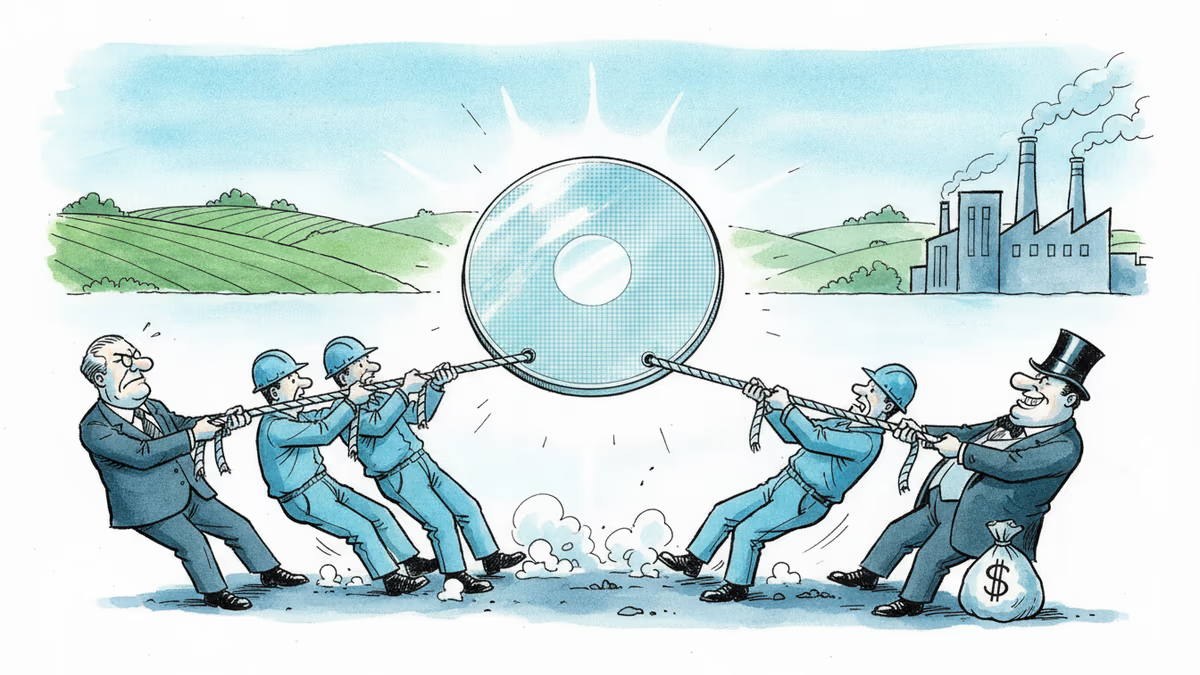
Samsung Electronics' union branch revealed that 84% of survey respondents oppose the government's roughly $290 billion (₩400 trillion) semiconductor megaproject in Gwangju. Government, management, the union and shareholders are all reading the same national project in sharply different ways.
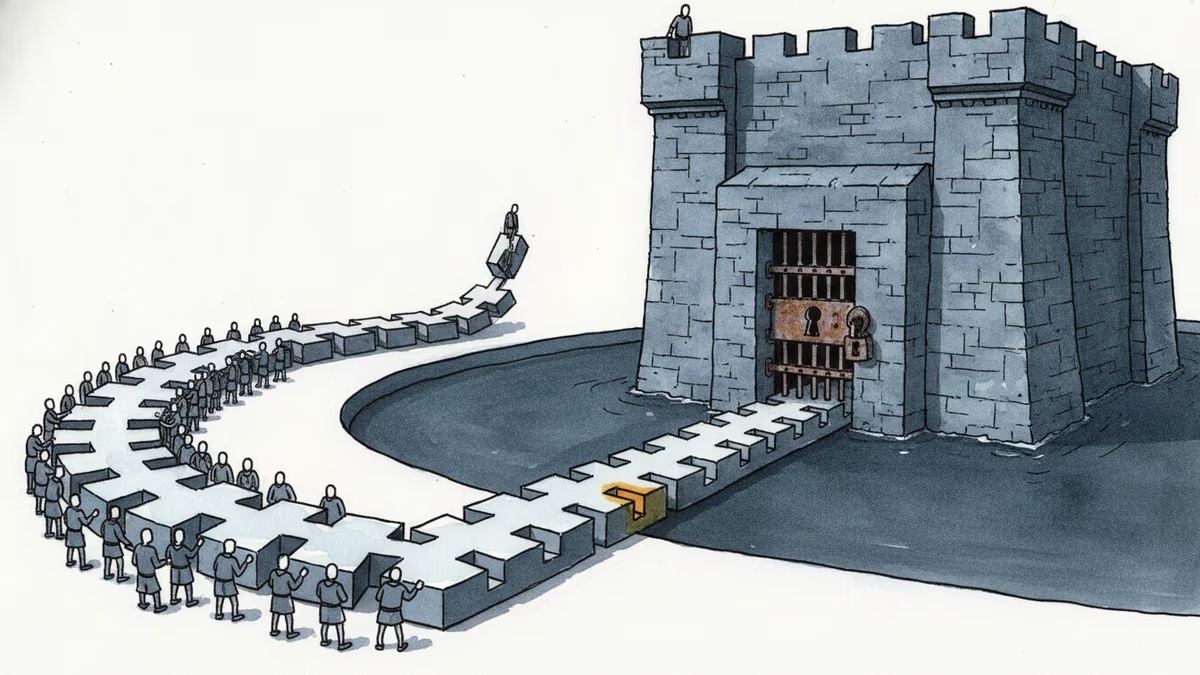
Nvidia shipped roughly a billion RISC-V cores in 2024, then announced it would run CUDA on the open standard. We break down how royalty-free instruction sets and open software stacks are trying to route around CUDA's lock-in. Part 2 of the Semiconductor Sovereignty series.
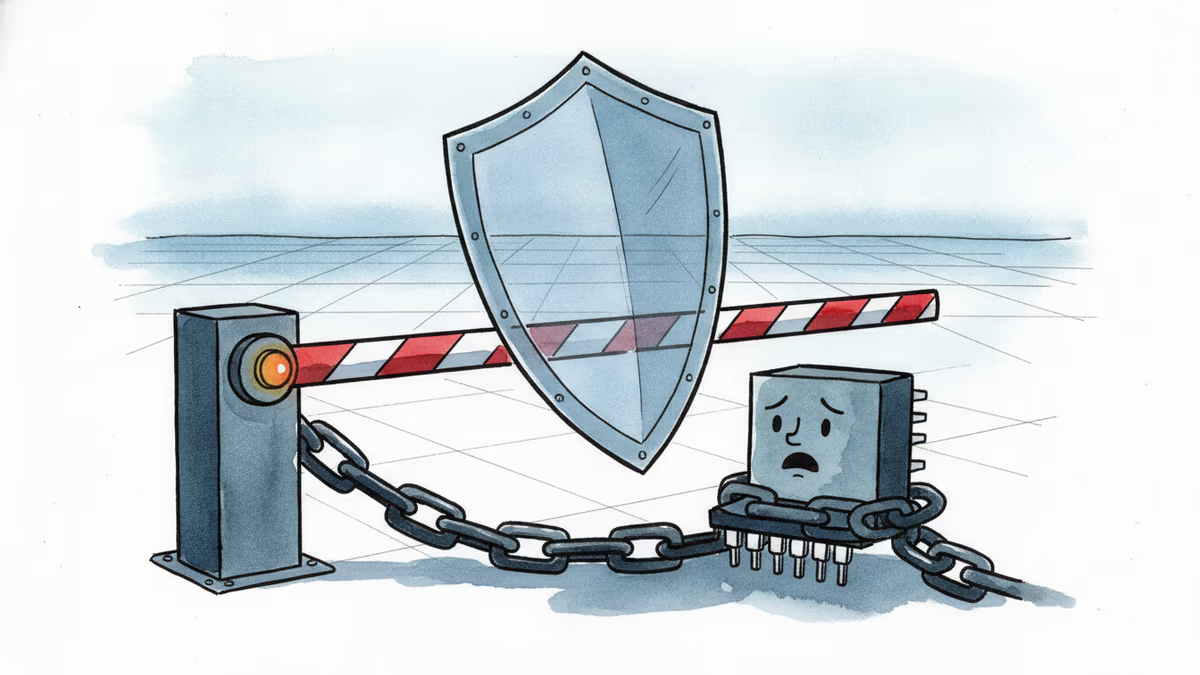
US AI-chip export controls split into three layers in the first half of 2026 — January easing, a May crackdown on circumvention, and a pending bill. Nvidia erased China from its guidance and still posted a record $81.6 billion quarter. A look at the export policy that both shields and cages it.
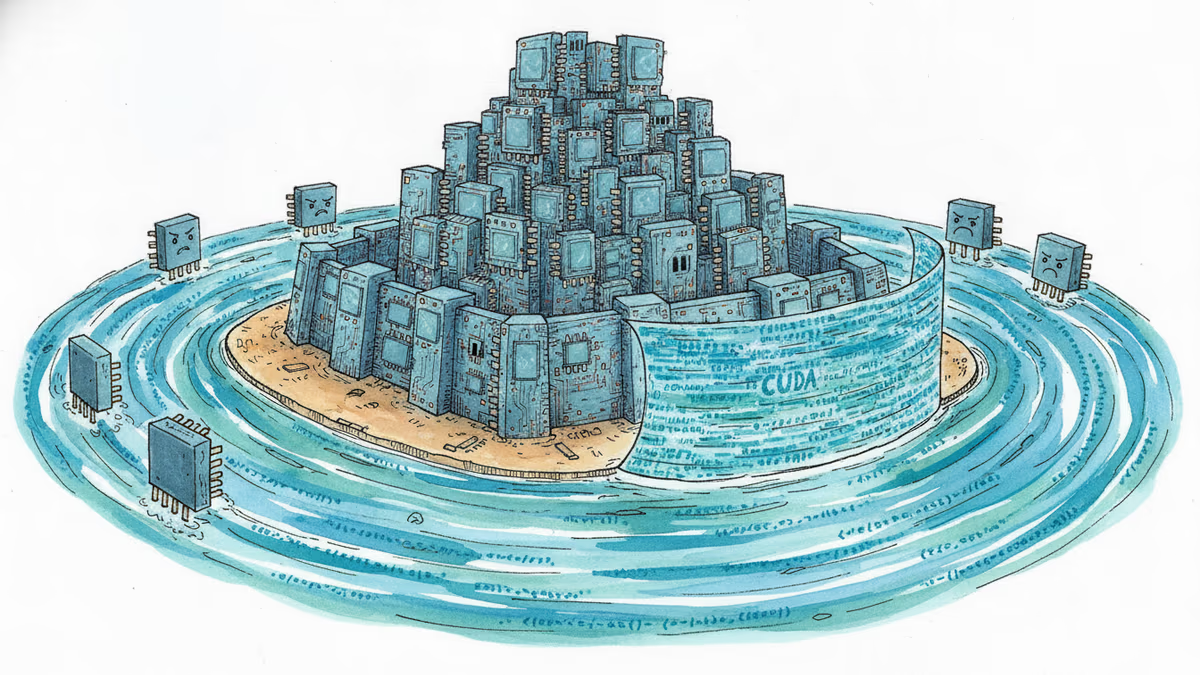
AMD's MI325X matches or beats Nvidia on memory and bandwidth — yet Nvidia's 86-92% share holds. The real moat is CUDA, 20 years in the making. Part 1 of 4.
Samsung Electronics' union branch revealed that 84% of survey respondents oppose the government's roughly $290 billion (₩400 trillion) semiconductor megaproject in Gwangju. Government, management, the union and shareholders are all reading the same national project in sharply different ways.
Nvidia shipped roughly a billion RISC-V cores in 2024, then announced it would run CUDA on the open standard. We break down how royalty-free instruction sets and open software stacks are trying to route around CUDA's lock-in. Part 2 of the Semiconductor Sovereignty series.
US AI-chip export controls split into three layers in the first half of 2026 — January easing, a May crackdown on circumvention, and a pending bill. Nvidia erased China from its guidance and still posted a record $81.6 billion quarter. A look at the export policy that both shields and cages it.
AMD's MI325X matches or beats Nvidia on memory and bandwidth — yet Nvidia's 86-92% share holds. The real moat is CUDA, 20 years in the making. Part 1 of 4.
Thoughts
Share your thoughts on this article
Sign in to join the conversation