
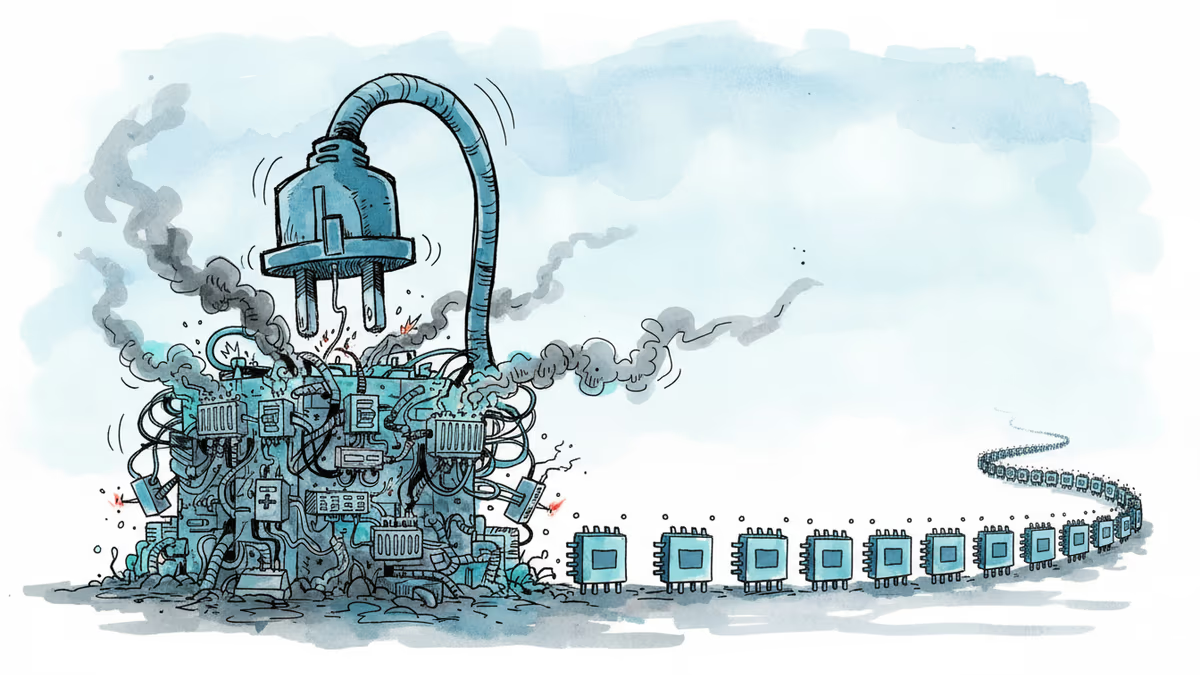
When Power, Not Processing, Becomes AI's Bottleneck
As data center energy demand threatens to triple by 2035, Indian startup C2i raises $15M with a bold claim to cut power losses by 10% through integrated grid-to-GPU solutions
175% surge in data center power demand by 2030—that's Goldman Sachs' projection, equivalent to adding another top-10 power-consuming country to the global grid. But here's the kicker: much of that energy never reaches the AI chips that need it.
Instead, 15-20% simply vanishes during the thousands of voltage conversion steps required to transform high-voltage grid power into something GPUs can actually use. It's a $50 billion problem hiding in plain sight.
The $15M Bet on 'Grid-to-GPU' Integration
C2i Semiconductors, a two-year-old Indian startup founded by former Texas Instruments power executives, thinks it has cracked this puzzle. The company just raised $15 million in Series A funding led by Peak XV Partners, betting on a radically different approach: treating power delivery as a single, integrated system rather than a chain of separate components.
"What used to be 400 volts has already moved to 800 volts, and will likely go higher," explains CTO Preetam Tadeparthy. The higher the voltage, the more critical efficiency becomes—and the bigger the opportunity for companies that get it right.
C2i's pitch is compelling: save 100 kilowatts for every megawatt consumed through their plug-and-play "grid-to-GPU" platform. That's not just about electricity bills—it cascades into cooling costs, GPU utilization rates, and overall data center economics.
The Validation Timeline: Six Months to Truth
For Peak XV Partners managing director Rajan Anandan, the math is straightforward. After the upfront capital investment in servers and facilities, energy becomes the dominant ongoing expense. "If you can reduce energy costs by 10 to 30%, you're talking about tens of billions of dollars," he told TechCrunch.
But claims are one thing; silicon is another. C2i expects its first two chip designs back from fabrication between April and June. Then comes the real test: validation with data center operators and hyperscalers who've already asked to review the data.

"We'll know in the next six months," Anandan said, pointing to this upcoming silicon validation as the moment when the thesis gets tested against reality.
India's 'Semiconductor Moment'
The investment also reflects something bigger: India's semiconductor design ecosystem coming of age. Anandan frames it in historical terms: "The way you should look at semiconductors in India is, this is like 2008 e-commerce. It's just getting started."
The fundamentals are aligning. India houses a growing share of global chip designers, while government-backed design-linked incentives have lowered tape-out costs and risks. For the first time, Indian startups can realistically build globally competitive semiconductor products rather than just serving as captive design centers.
C2i has assembled 65 engineers in Bengaluru and is setting up customer-facing operations in the U.S. and Taiwan as it prepares for early deployments.
David vs. Goliath in Power Delivery
Yet power delivery remains one of the most entrenched parts of the data center stack. Large incumbents with deep balance sheets and years-long qualification cycles have dominated for decades. While most newer companies focus on improving individual components, C2i is attempting something far more capital-intensive: redesigning the entire power chain simultaneously.
It's a high-risk, high-reward approach that few startups attempt—and one that can take years to prove in production environments.
The Broader Stakes
The timing couldn't be more critical. BloombergNEF projects data center electricity consumption will nearly triple by 2035. Meanwhile, AI workloads are pushing voltage requirements higher, making efficiency gains increasingly valuable.
For investors, the question isn't whether power efficiency matters—it's whether a startup can successfully challenge entrenched players in a conservative industry where failure means potential outages for mission-critical infrastructure.
Authors
Related Articles
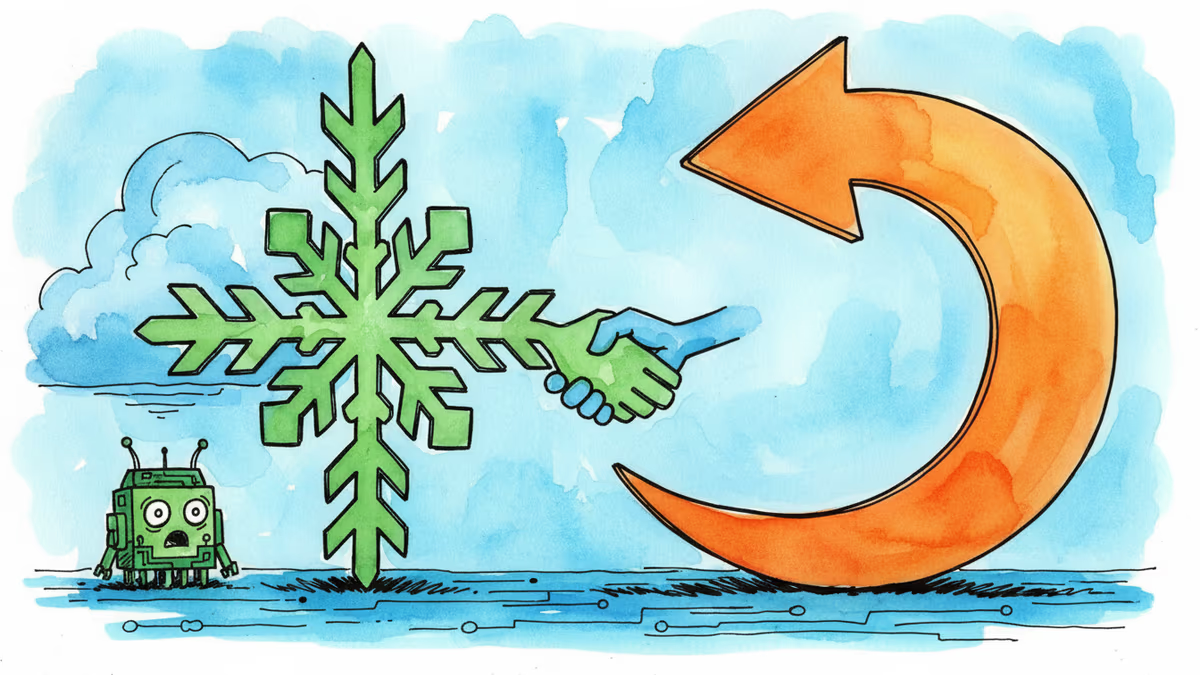
Snowflake's new $6 billion AWS contract is about more than cloud spending. It signals a shift in AI infrastructure—away from Nvidia GPUs and toward cheaper, homegrown chips for the agent era.
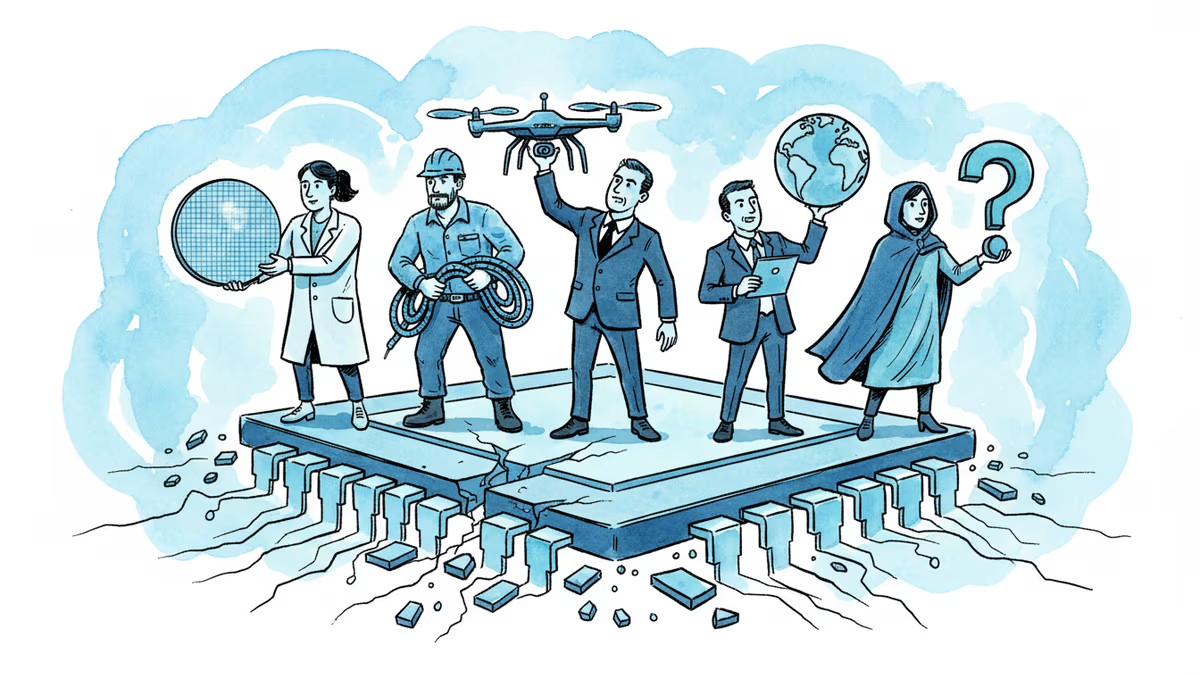
At Milken 2026, five AI insiders—from the CEO of ASML to a quantum physicist challenging LLMs—laid out the physical, energy, and geopolitical limits the AI boom is running into.
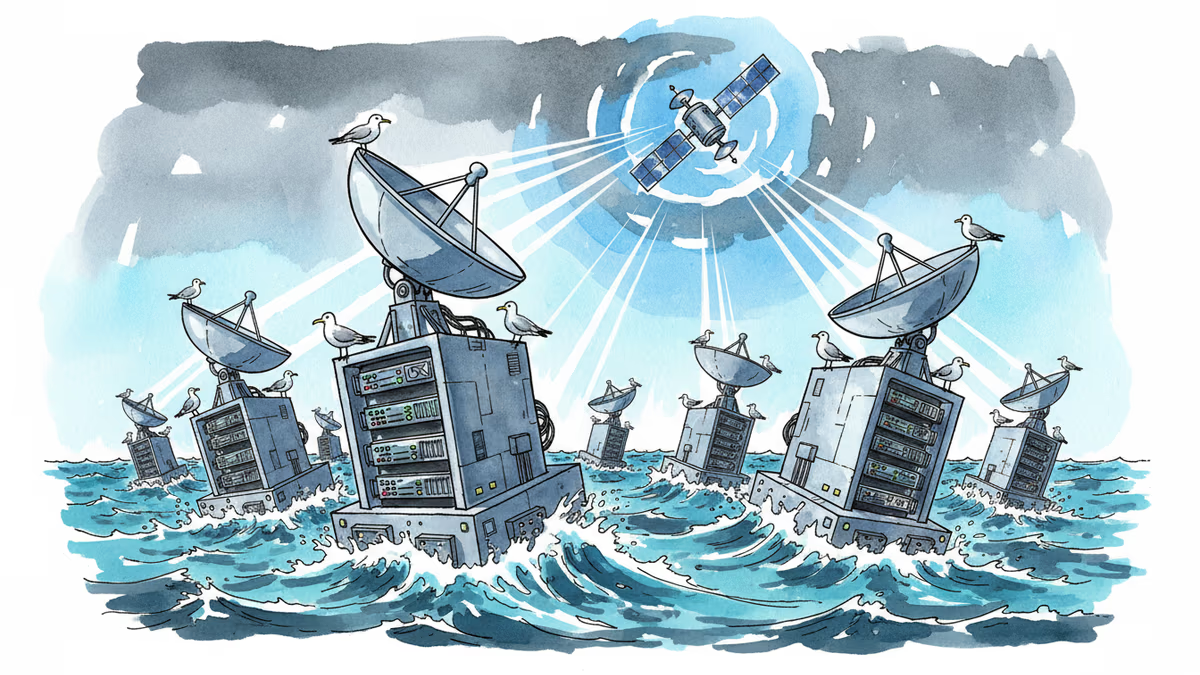
Palantir co-founder Peter Thiel and other Silicon Valley investors have poured $140 million into Panthalassa, a startup building wave-powered floating AI data centers in the open ocean. Here's what that actually means.
40,000 Samsung union workers rallied at its Pyeongtaek chip plant, threatening an 18-day strike over wages. With AI-driven RAM shortages already lifting consumer prices, the timing couldn't be worse.
Snowflake's new $6 billion AWS contract is about more than cloud spending. It signals a shift in AI infrastructure—away from Nvidia GPUs and toward cheaper, homegrown chips for the agent era.
At Milken 2026, five AI insiders—from the CEO of ASML to a quantum physicist challenging LLMs—laid out the physical, energy, and geopolitical limits the AI boom is running into.
Palantir co-founder Peter Thiel and other Silicon Valley investors have poured $140 million into Panthalassa, a startup building wave-powered floating AI data centers in the open ocean. Here's what that actually means.
40,000 Samsung union workers rallied at its Pyeongtaek chip plant, threatening an 18-day strike over wages. With AI-driven RAM shortages already lifting consumer prices, the timing couldn't be worse.
Thoughts
Share your thoughts on this article
Sign in to join the conversation