

Poland's Power Grid Attack: Russia Targeted Trust, Not Just Electricity
Russian hackers targeted Poland's electrical grid with wiper malware. The failed attack reveals a new front in digital warfare where civilian infrastructure becomes the battlefield.
When you flip a light switch, do you ever think a hacker could turn it off?
That scenario nearly became reality in Poland last month. Security firm ESET revealed Friday that Russian state-backed hackers from the Sandworm group launched a wiper malware attack against Poland's electrical grid in late December. While the attack failed, its intent was crystal clear: disrupt communications between renewable energy installations and power distribution operators to cut electricity delivery.
The Invisible War's New Battleground
Wiper malware isn't your typical hacking tool. It permanently erases code and data stored on servers, aiming to destroy operations entirely—like a digital scorched-earth campaign.
Sandworm, believed to operate under Russia's military intelligence agency GRU, has a notorious track record. They're the prime suspects behind Ukraine's power grid attacks in 2015 and 2016. ESET researchers identified the same tactics, techniques, and procedures in the Poland attack, making attribution highly likely.
The specific reasons for the attack's failure remain classified, but Poland's significant cybersecurity investments since the 2022 Ukraine invasion likely played a crucial role in thwarting the assault.
Beyond Blackouts: Weaponizing Uncertainty

What if this attack had succeeded? The consequences would've extended far beyond temporary darkness.
Modern electrical grids power everything from hospitals and financial systems to communications networks and transportation. Even hours of outage can cost billions in economic damage and create immeasurable social chaos.
But the deeper weapon is psychological warfare. When citizens lose confidence that basic services will function, trust in institutions erodes. This social fracturing might be Russia's real objective—proving that nowhere is truly safe from digital disruption.
The strategy isn't unique to Eastern Europe. Critical infrastructure attacks have targeted everyone from Colonial Pipeline in the US to energy facilities across Europe, demonstrating how civilian systems have become legitimate military targets in this new era of conflict.
Digital Cold War Rules
This incident marks an evolution in international cyber warfare. Previous attacks primarily targeted military installations or government agencies. Now, hackers directly threaten ordinary citizens' daily lives.
Attacking NATO member Poland carries particular significance. It demonstrates how adversaries can cripple alliance infrastructure without traditional military invasion. This raises profound questions about collective defense in cyberspace: Does a devastating cyberattack trigger NATO's Article 5 mutual defense clause?
The European Union has already responded with the 2022 Cyber Solidarity Act, establishing information sharing and joint response mechanisms among member states. However, whether defensive measures can keep pace with evolving attack capabilities remains uncertain.
The challenge extends beyond technical solutions. Critical infrastructure operators must balance connectivity benefits with security risks. Every smart grid upgrade, IoT sensor, and cloud migration creates new attack vectors while improving efficiency and sustainability.
Authors
Related Articles
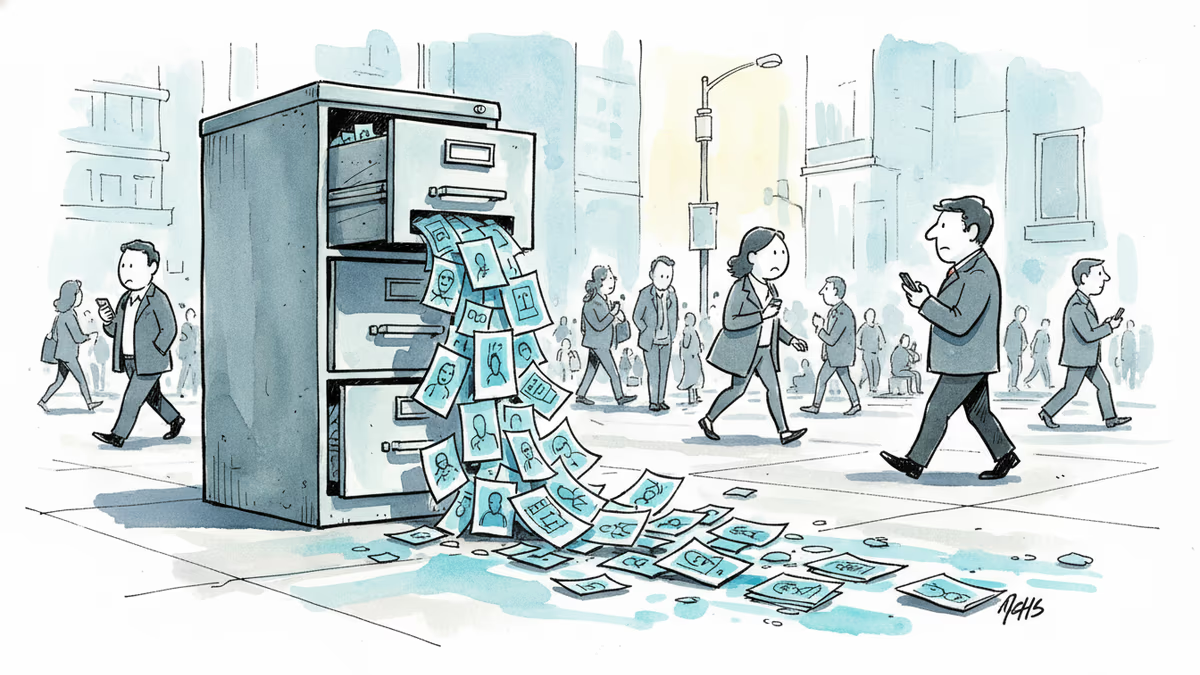
UK Visa Portal, a private immigration service mistaken for an official government site, has been exposing passport scans and selfies of over 100,000 applicants. The breach remains unpatched.
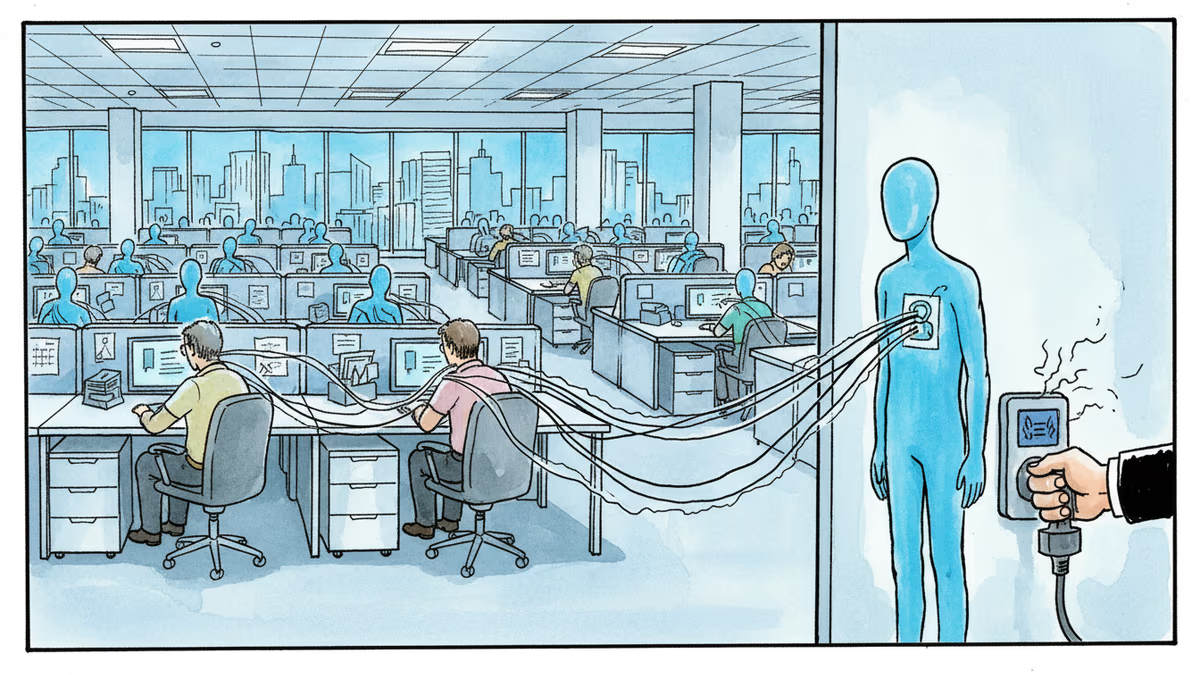
Okta CEO Todd McKinnon on why AI agents need identity management, the SaaSpocalypse threat, and why the kill switch might be the most important button in enterprise tech.
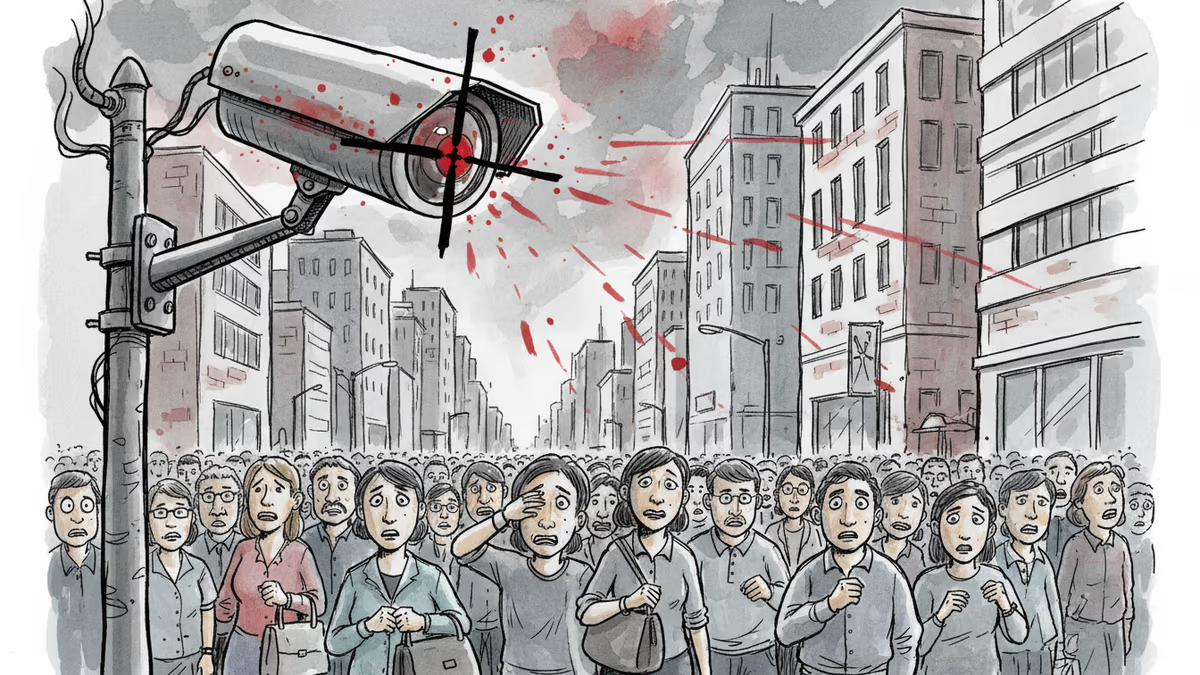
Iran and Israel are hacking civilian security cameras for military reconnaissance. How consumer surveillance devices became weapons of war.
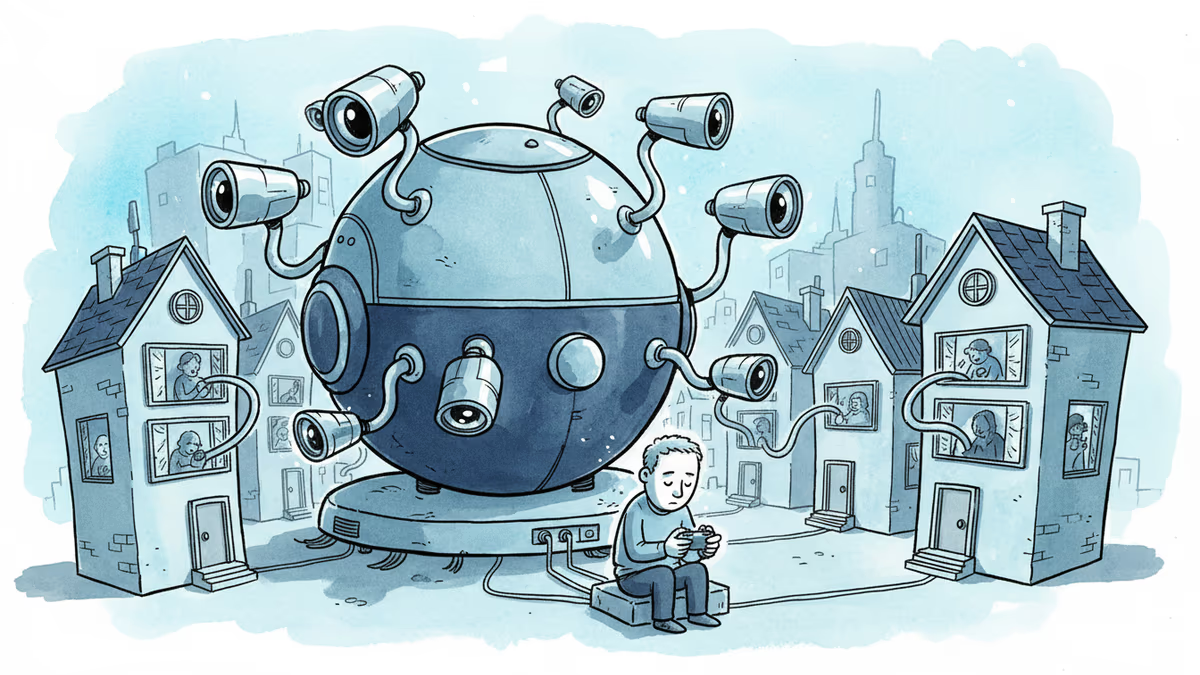
A security researcher discovered he could access 7,000 DJI robot vacuums and peek into strangers' homes. This Valentine's Day revelation exposes the hidden privacy risks of our smart home obsession.
UK Visa Portal, a private immigration service mistaken for an official government site, has been exposing passport scans and selfies of over 100,000 applicants. The breach remains unpatched.
Okta CEO Todd McKinnon on why AI agents need identity management, the SaaSpocalypse threat, and why the kill switch might be the most important button in enterprise tech.
Iran and Israel are hacking civilian security cameras for military reconnaissance. How consumer surveillance devices became weapons of war.
A security researcher discovered he could access 7,000 DJI robot vacuums and peek into strangers' homes. This Valentine's Day revelation exposes the hidden privacy risks of our smart home obsession.
Thoughts
Share your thoughts on this article
Sign in to join the conversation