
TikTok's Parent Company Enters VR Race Two Years Too Late
ByteDance's Pico unveils OS 6 and Project Swan to challenge Apple Vision Pro, but analysts question the timing in an increasingly crowded XR market.
$3,499 Later, ByteDance Finally Shows Up
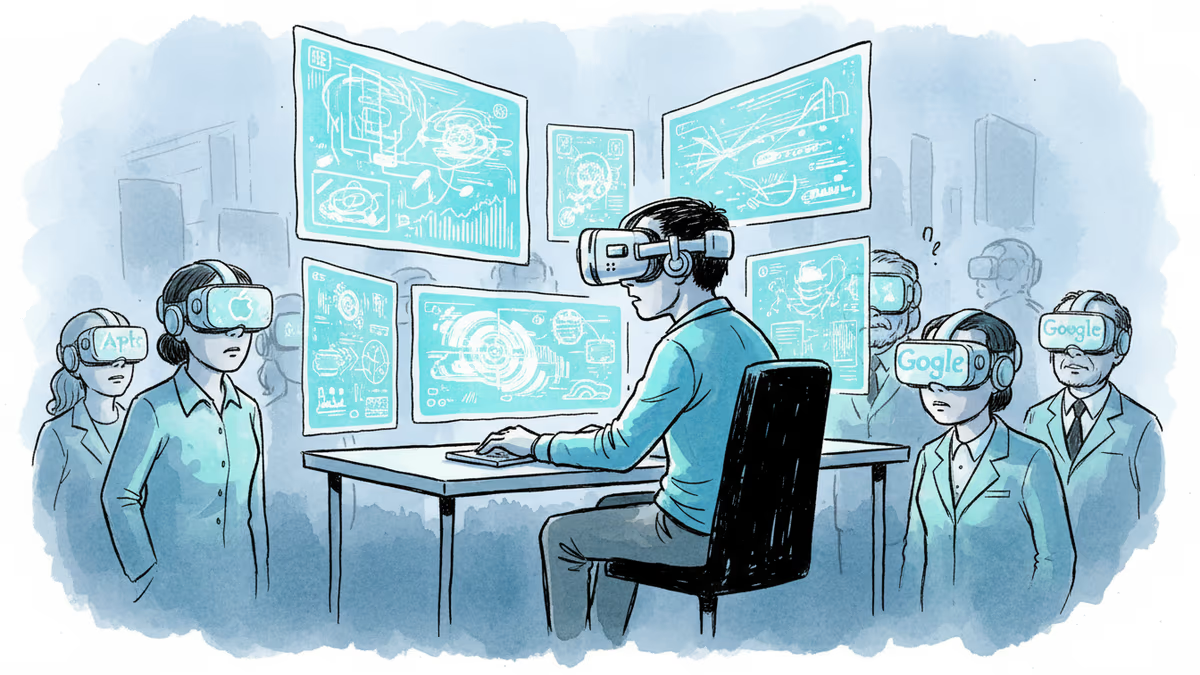
When ByteDance bought VR startup Pico in 2021, it felt like TikTok was making its inevitable move into virtual reality. Five years later, Pico's answer is a workplace-focused XR headset that sounds remarkably similar to what Apple launched with the Vision Pro two years ago.
At Mobile World Congress 2026 in Barcelona, Pico OS 6 promises multi-app workspaces with 360-degree real-world awareness. Users can collaborate through 3D avatars while spinning between spreadsheets and browser tabs—a demo that Apple perfected in 2024.
The Awkward Timing Problem
"It's a little odd, their timing," says Jitesh Ubrani, research manager at IDC. Apple has already established the premium XR workspace category. Google's Android XR launched in late 2025, pulling major developers into its ecosystem. Samsung's preparing its Galaxy XR headset. The party started without Pico.
Project Swan boasts micro-OLED displays with 4,000 pixels per inch and 40-45 pixels per degree resolution. Impressive specs—that match the Apple Vision Pro from two years ago. To compete, Pico needs to be lighter, cheaper, and have developers actually building for its platform.
TikTok: Superpower or Mismatch?

Pico's biggest asset is TikTok's massive marketing engine. But as Ubrani points out, "if this is a productivity-oriented device, that may not be the right place to market it." Imagine promoting enterprise software through dance videos.
The company's taking an open approach—supporting Unity, Unreal Engine, WebXR, and even WebSpatial for HTML/CSS-based XR apps. That's more flexible than Apple's walled garden, but openness doesn't guarantee adoption.
The Enterprise Reality Check
While tech companies chase the "spatial computing" dream, most businesses still prefer Zoom calls to VR meetings. The Apple Vision Pro, despite its technical prowess, hasn't transformed how we work. Early adopters bought them, used them briefly, then returned to their laptops.
Pico's betting that $3,499 was too expensive and that a more affordable option will crack the market. But price wasn't the only barrier—comfort, battery life, and the fundamental question of whether we actually want to work in VR remain unsolved.
Late to a Crowded Party
The XR landscape has shifted dramatically since Pico started this project. Meta dominates social VR and gaming. Apple owns the premium tier. Google's Android XR is attracting enterprise developers. Where does that leave a TikTok-backed challenger?
Pico will share more details about Project Swan at the Game Developers Conference on March 12. But the bigger question isn't about specs or features—it's whether there's still room for another player in a market that's already divided up its territories.
Authors
Related Articles
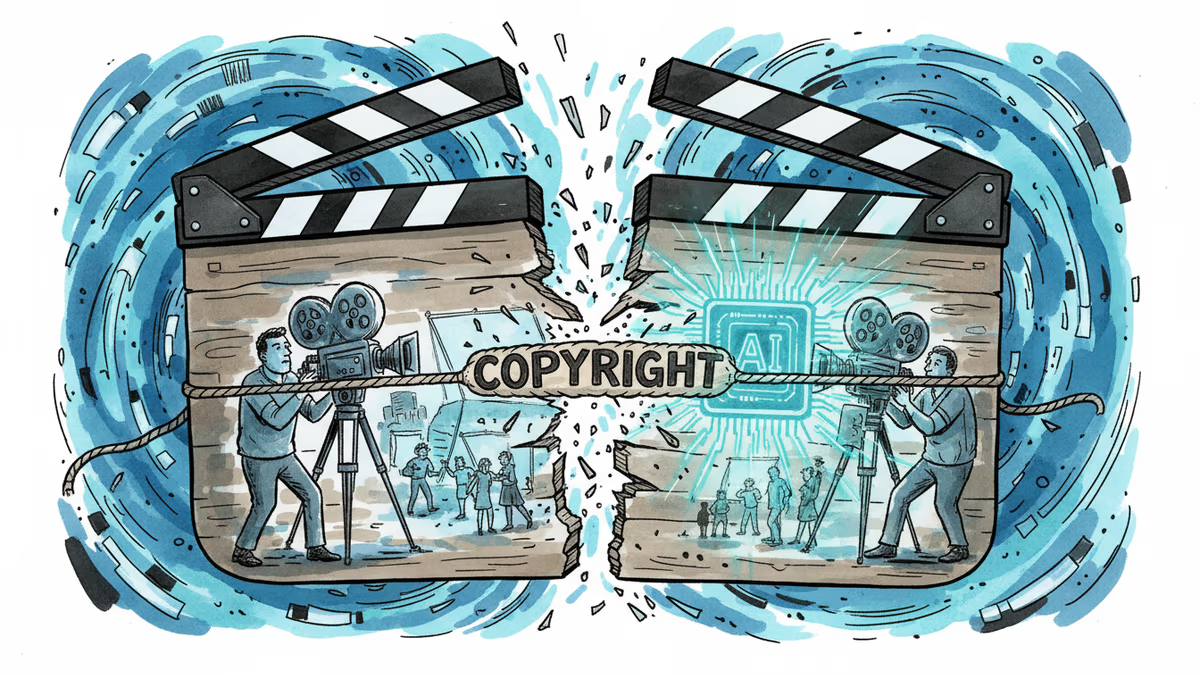
ByteDance's Dreamina Seedance 2.0 is now live in CapCut for seven markets. The US is missing. Here's what that tells us about AI video's biggest unsolved problem — and what it means for creators.
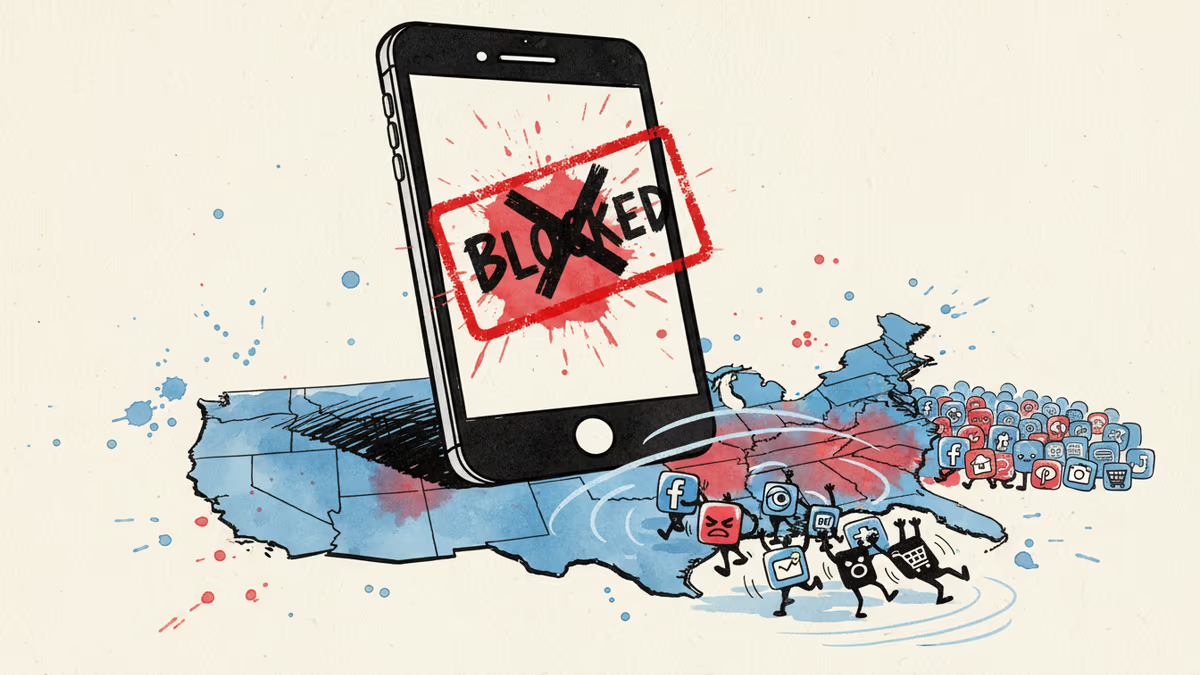
Apple quietly blocks all ByteDance apps for US-based iPhones, even with Chinese App Store accounts. This goes beyond TikTok—it's about platform power in geopolitical conflicts.

ByteDance's Seedance 2.0 is shocking China's creative industry, but Hollywood studios are fighting back with cease-and-desist letters. What's driving this cultural divide?
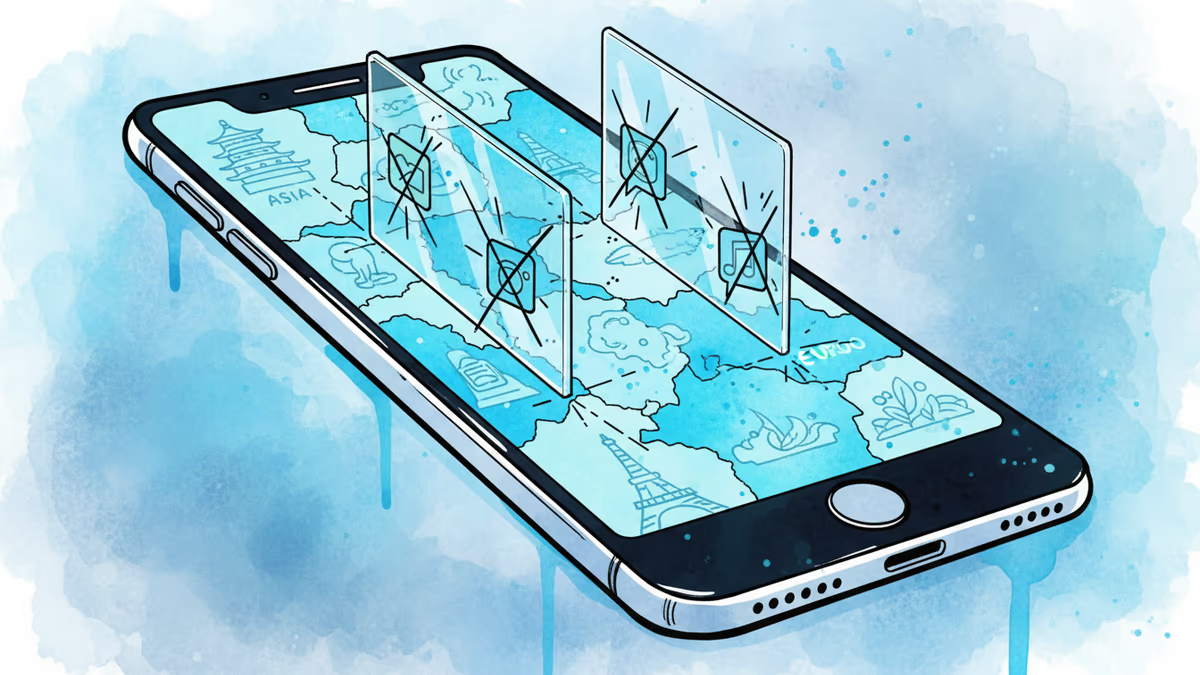
Apple deploys sophisticated location tracking to block ByteDance apps in the US, marking a shift toward geographically fragmented app ecosystems.
ByteDance's Dreamina Seedance 2.0 is now live in CapCut for seven markets. The US is missing. Here's what that tells us about AI video's biggest unsolved problem — and what it means for creators.
Apple quietly blocks all ByteDance apps for US-based iPhones, even with Chinese App Store accounts. This goes beyond TikTok—it's about platform power in geopolitical conflicts.
ByteDance's Seedance 2.0 is shocking China's creative industry, but Hollywood studios are fighting back with cease-and-desist letters. What's driving this cultural divide?
Apple deploys sophisticated location tracking to block ByteDance apps in the US, marking a shift toward geographically fragmented app ecosystems.
Thoughts
Share your thoughts on this article
Sign in to join the conversation