
Ghost Particles Are Sabotaging Superconductors
Scientists prove virtual photons—particles that don't exist—can degrade superconductor performance, confirming quantum field theory's strangest predictions.
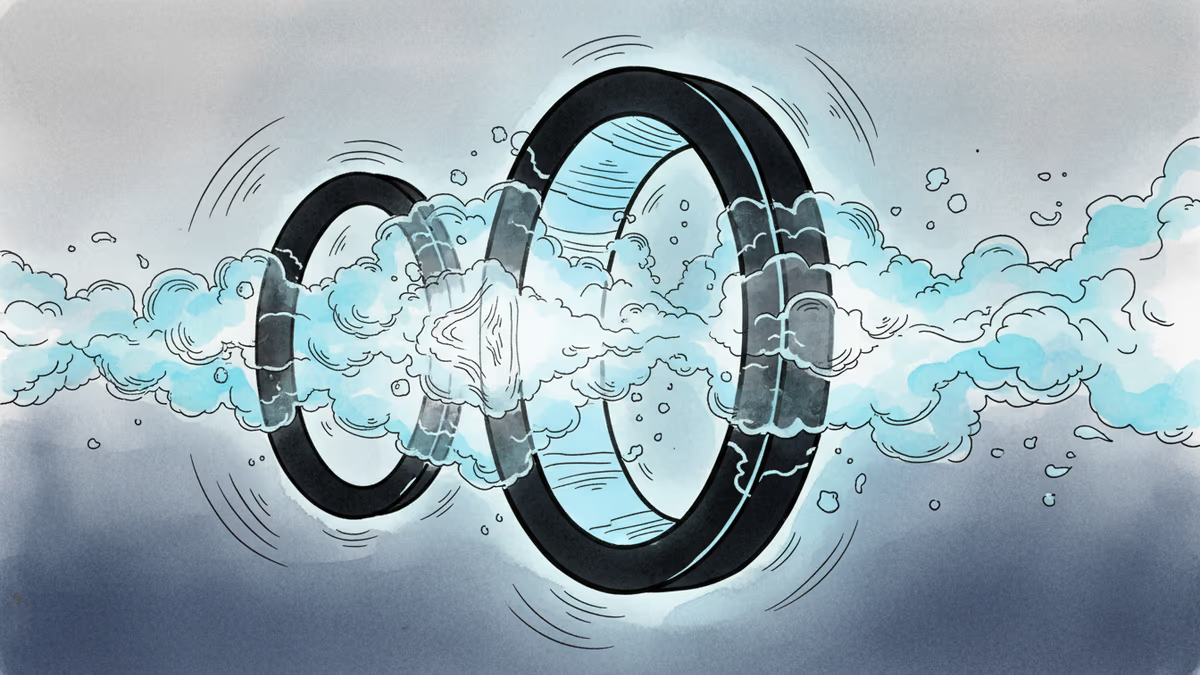
Particles that don't exist just broke something very real. Physicists have proven that virtual photons—theoretical constructs from quantum field theory—can actually degrade the performance of superconductors.
In quantum field theory, even empty space brims with fields that could govern interactions of quantum objects. Think of particles as energetic excitations of these fields. A photon is simply an energetic state of the quantum field. But virtual photons are different—they don't actually exist, yet they interact with other particles as if they do.
When Theory Meets Reality
Researchers exposed superconductors to conditions where virtual photons could influence their behavior. The result was measurable degradation—these non-existent particles increased electrical resistance, making the superconductor worse at its job.
This isn't just academic curiosity. Superconductors power MRI machines, enable quantum computers, and could revolutionize power transmission. If we can control virtual photon interactions, we might be able to deliberately tune superconductor performance.
The Invisible Hand of Quantum Mechanics

This research confirms one of quantum mechanics' strangest predictions through direct measurement. While theorists have long known virtual particles should influence real materials, actually detecting this influence represents a breakthrough.
For companies like IBM, Google, and Microsoft racing to build practical quantum computers, understanding these subtle quantum effects becomes crucial. The better we grasp quantum phenomena, the faster we can develop quantum technologies that work reliably.
Room-Temperature Dreams Still Distant
Don't expect this discovery to unlock room-temperature superconductors anytime soon. The experiments still required exotic refrigeration, and virtual photons made the superconductors worse, not better.
Yet scientists are intrigued. Understanding how virtual photons degrade performance might help us learn to block or harness these effects, potentially leading to superior superconductors.
The Measurement Problem
This research also highlights a fundamental challenge in quantum physics: how do you measure something that doesn't exist? The team's experimental design offers a template for probing other virtual particle effects, potentially opening new avenues for quantum research.
Authors
Related Articles

A Chinese research team from Hainan University has proposed a new quantum theory to explain the 'arrow of time.' Their study suggests time's forward motion emerges naturally from quantum interconnections, not external factors.

Samsung Electronics' union branch revealed that 84% of survey respondents oppose the government's roughly $290 billion (₩400 trillion) semiconductor megaproject in Gwangju. Government, management, the union and shareholders are all reading the same national project in sharply different ways.
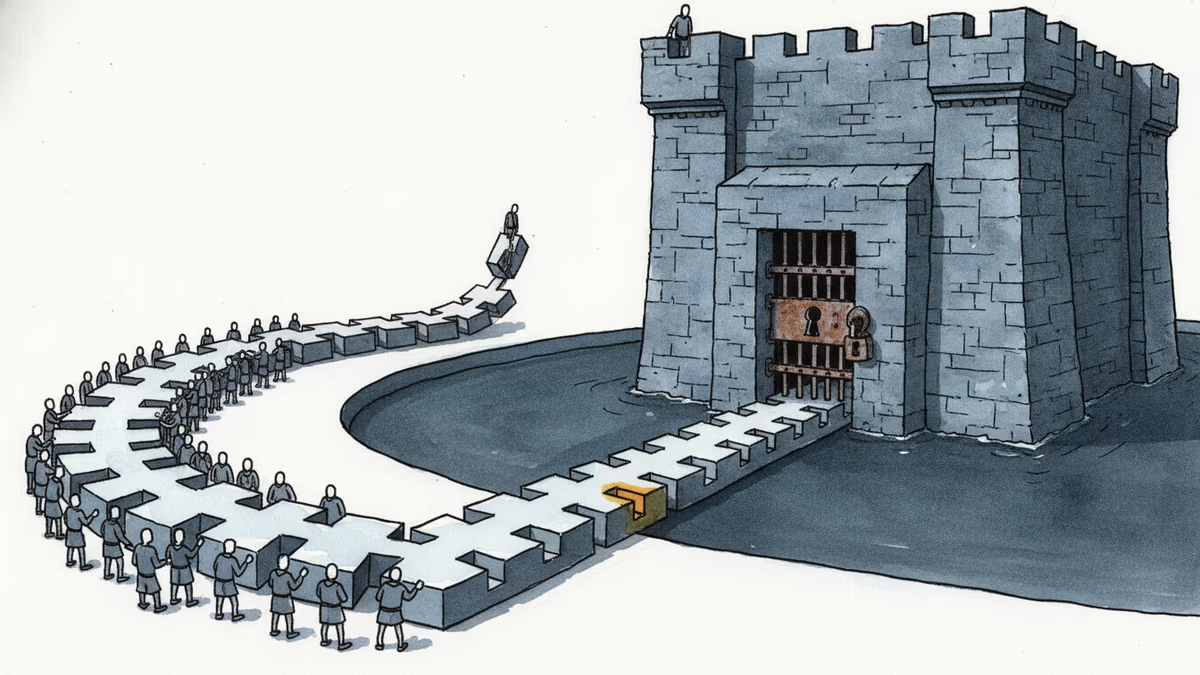
Nvidia shipped roughly a billion RISC-V cores in 2024, then announced it would run CUDA on the open standard. We break down how royalty-free instruction sets and open software stacks are trying to route around CUDA's lock-in. Part 2 of the Semiconductor Sovereignty series.
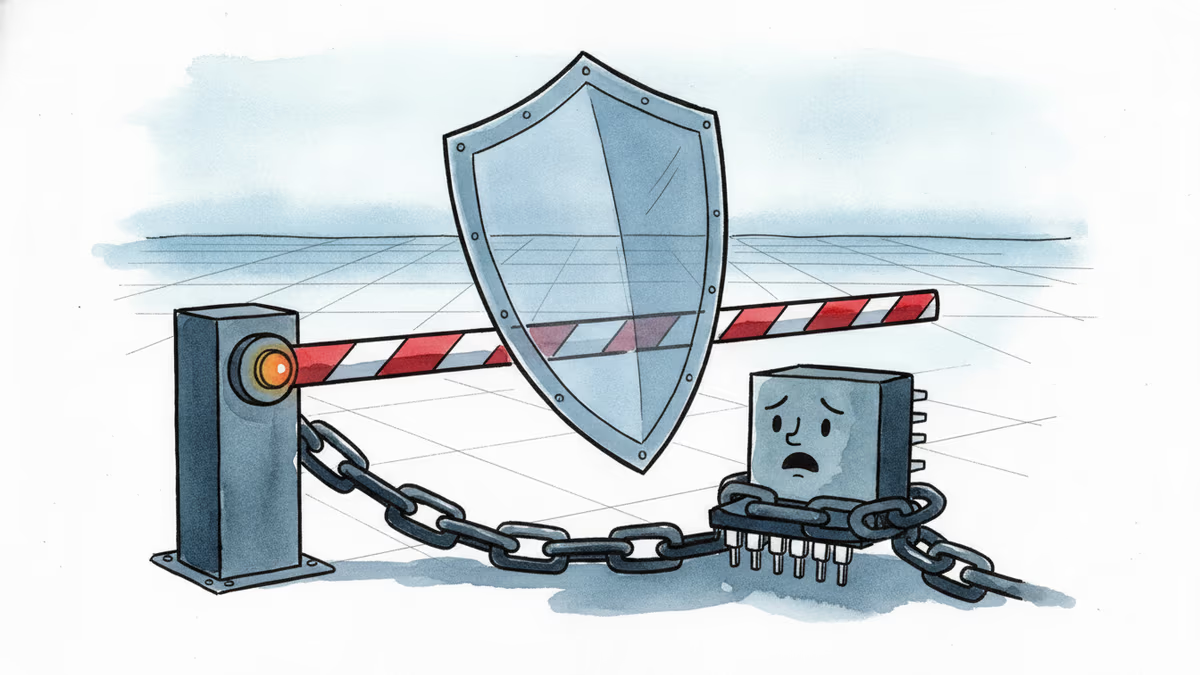
US AI-chip export controls split into three layers in the first half of 2026 — January easing, a May crackdown on circumvention, and a pending bill. Nvidia erased China from its guidance and still posted a record $81.6 billion quarter. A look at the export policy that both shields and cages it.
A Chinese research team from Hainan University has proposed a new quantum theory to explain the 'arrow of time.' Their study suggests time's forward motion emerges naturally from quantum interconnections, not external factors.
Samsung Electronics' union branch revealed that 84% of survey respondents oppose the government's roughly $290 billion (₩400 trillion) semiconductor megaproject in Gwangju. Government, management, the union and shareholders are all reading the same national project in sharply different ways.
Nvidia shipped roughly a billion RISC-V cores in 2024, then announced it would run CUDA on the open standard. We break down how royalty-free instruction sets and open software stacks are trying to route around CUDA's lock-in. Part 2 of the Semiconductor Sovereignty series.
US AI-chip export controls split into three layers in the first half of 2026 — January easing, a May crackdown on circumvention, and a pending bill. Nvidia erased China from its guidance and still posted a record $81.6 billion quarter. A look at the export policy that both shields and cages it.
Thoughts
Share your thoughts on this article
Sign in to join the conversation