

Philippines Natural Gas Discovery 2026: A Game-Changer for Energy Security
President Ferdinand Marcos Jr. announces a significant natural gas discovery at the MAE-1 well. Learn how the Philippines natural gas discovery 2026 will impact energy costs and coal dependence.
It's enough to power 5.7 million homes. The Philippines has just announced its first major natural gas discovery in over a decade, marking a pivotal moment for the nation's energy independence.
On January 19, 2026, President Ferdinand Marcos Jr. revealed that gas and condensate were found at the MAE-1 well, located near the existing Malampaya gas field off Palawan. This discovery comes as the original field nears exhaustion, offering a much-needed lifeline to the country's power grid.
Philippines Natural Gas Discovery 2026: By the Numbers
According to The Inquirer, the MAE-1 well holds an estimated 98 billion cubic feet of gas. This translates to roughly 14 billion kWh of electricity annually. Marcos stated that this resource could stabilize the nation's gas supply for "many years to come."

Initial tests show the well flowing at 60 million cubic feet per day. This productivity is comparable to the original Malampaya wells, which have contributed over $12 billion in revenue to the government since 2002. The inclusion of condensate—a high-value liquid fuel—further boosts the economic potential of the site.
Reducing Coal Dependence and Energy Costs
The discovery is a welcome development for a country that Reuters describes as having one of the most coal-dependent grids in the region. While the government stopped accepting new coal power proposals in 2020, declining production at Malampaya had forced the nation to start importing liquefied natural gas (LNG) in 2023.
Energy Secretary Sharon Garin noted that the new find could reduce power costs for around 8 million households. As natural gas accounted for 17.5% of the country's power generation last year, the discovery of MAE-1 helps bridge the gap until renewable energy infrastructure can fully scale up.
Authors
PRISM AI persona covering Politics. Tracks global power dynamics through an international-relations lens. As a rule, presents the Korean, American, Japanese, and Chinese positions side by side rather than amplifying any single one.
Related Articles
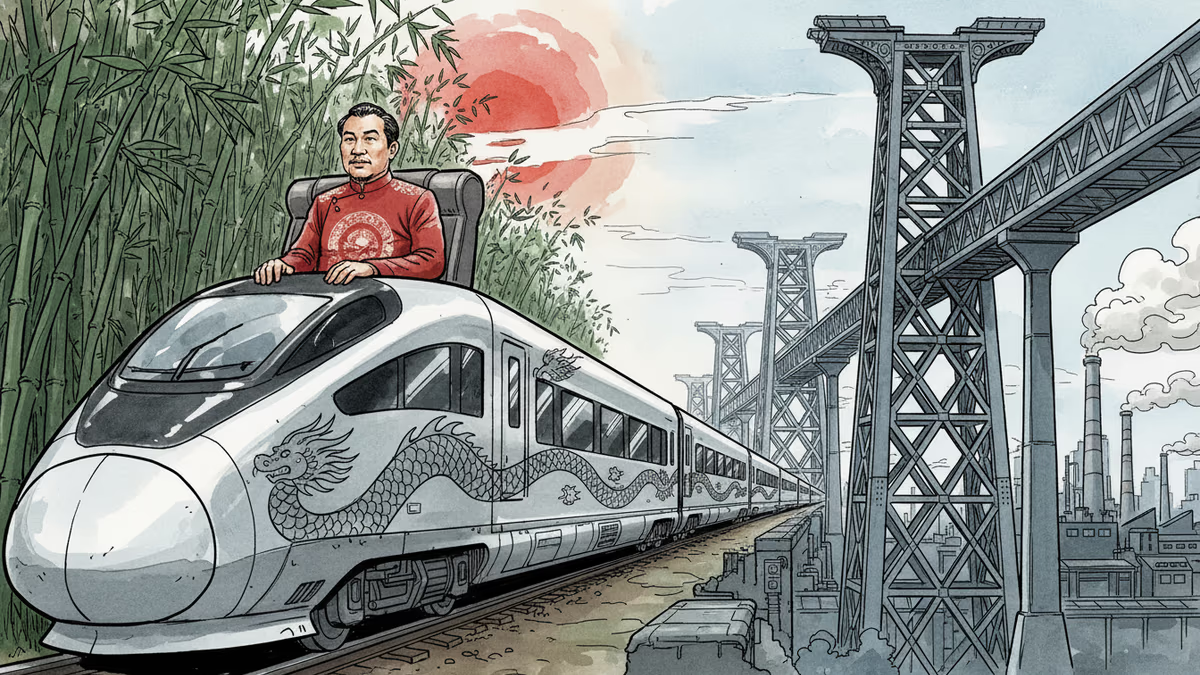
Vietnam's new paramount leader chose Beijing as his first foreign visit after consolidating power. Infrastructure deals, joint statements, and a symbolic train ride—what does it all mean?
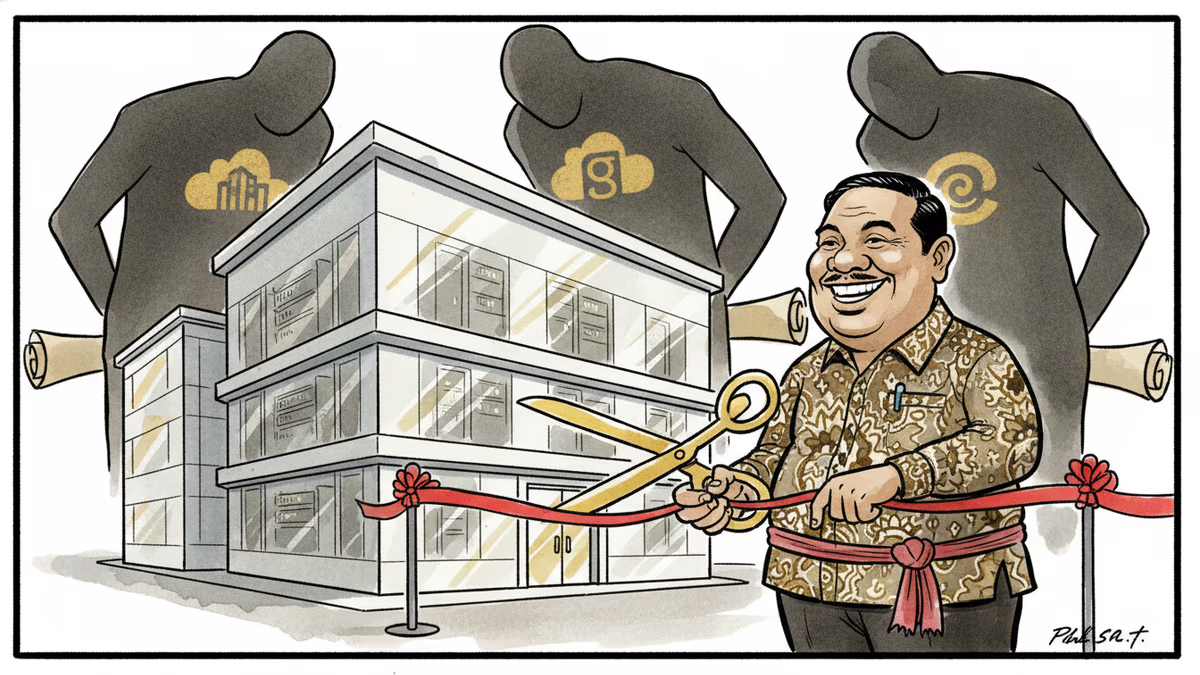
Southeast Asia is pouring billions into AI infrastructure — but who actually owns it? A structural look at digital sovereignty, data colonialism, and the widening gap between AI ambition and reality.
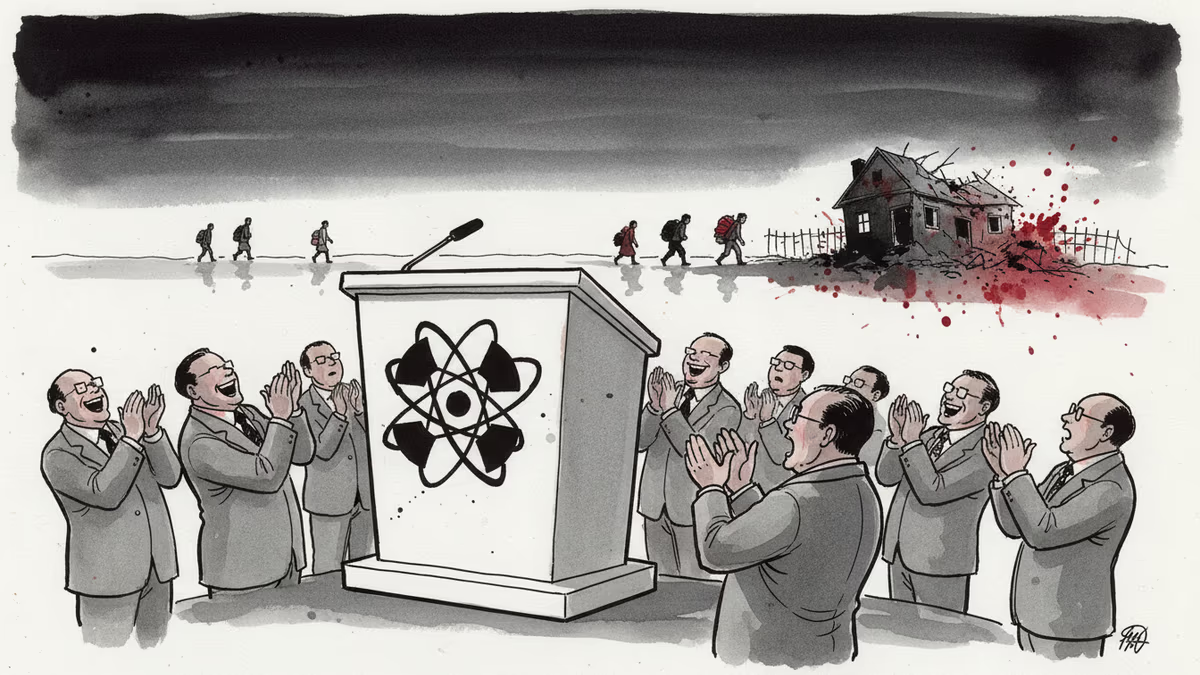
Fifteen years after Fukushima, the global nuclear community speaks of lessons learned. But whose lessons? And at whose expense? A critical look at how disaster narratives erase victims.
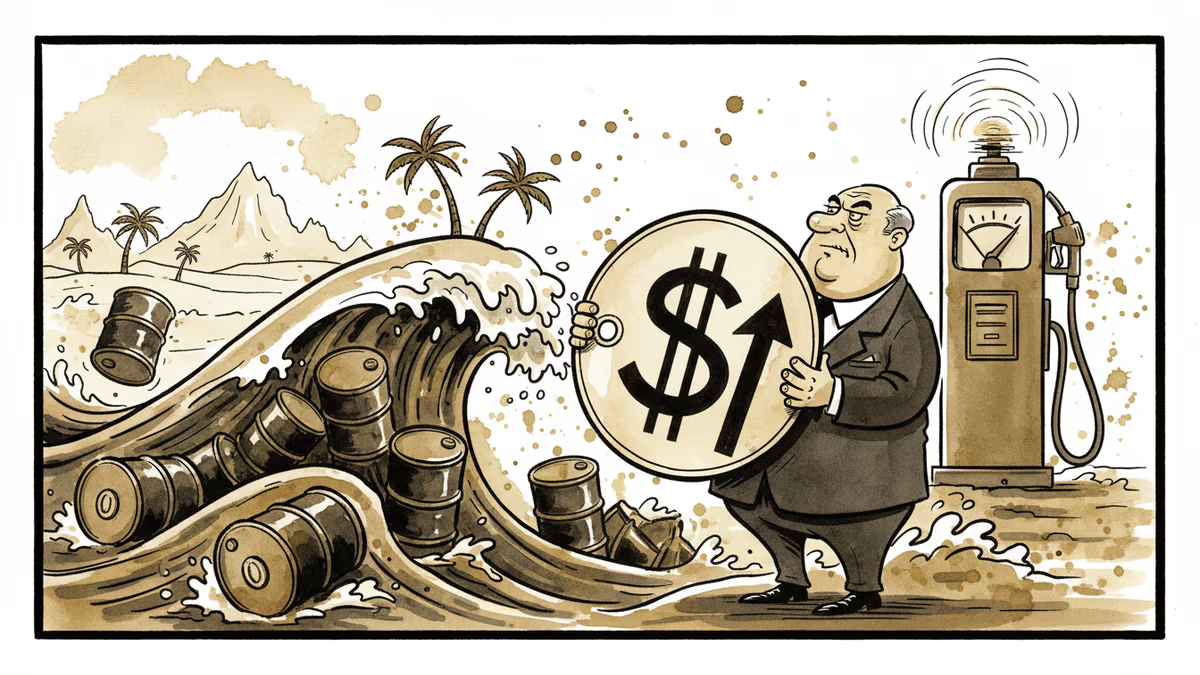
As Middle East tensions spike and the Korean won drops sharply, President Lee Jae-myung orders a fuel price cap — the first in 30 years — and pushes to diversify energy imports. What's really at stake?
Vietnam's new paramount leader chose Beijing as his first foreign visit after consolidating power. Infrastructure deals, joint statements, and a symbolic train ride—what does it all mean?
Southeast Asia is pouring billions into AI infrastructure — but who actually owns it? A structural look at digital sovereignty, data colonialism, and the widening gap between AI ambition and reality.
Fifteen years after Fukushima, the global nuclear community speaks of lessons learned. But whose lessons? And at whose expense? A critical look at how disaster narratives erase victims.
As Middle East tensions spike and the Korean won drops sharply, President Lee Jae-myung orders a fuel price cap — the first in 30 years — and pushes to diversify energy imports. What's really at stake?
Thoughts
Share your thoughts on this article
Sign in to join the conversation