
Peace Corps or Sales Corps? America's Volunteer Agency Goes Silicon Valley
The Peace Corps launches 'Tech Corps' to promote AI companies with Trump ties, transforming from community service to corporate marketing. What does this mean for international development?
When 60 Years of Service Meets Silicon Valley Ambition
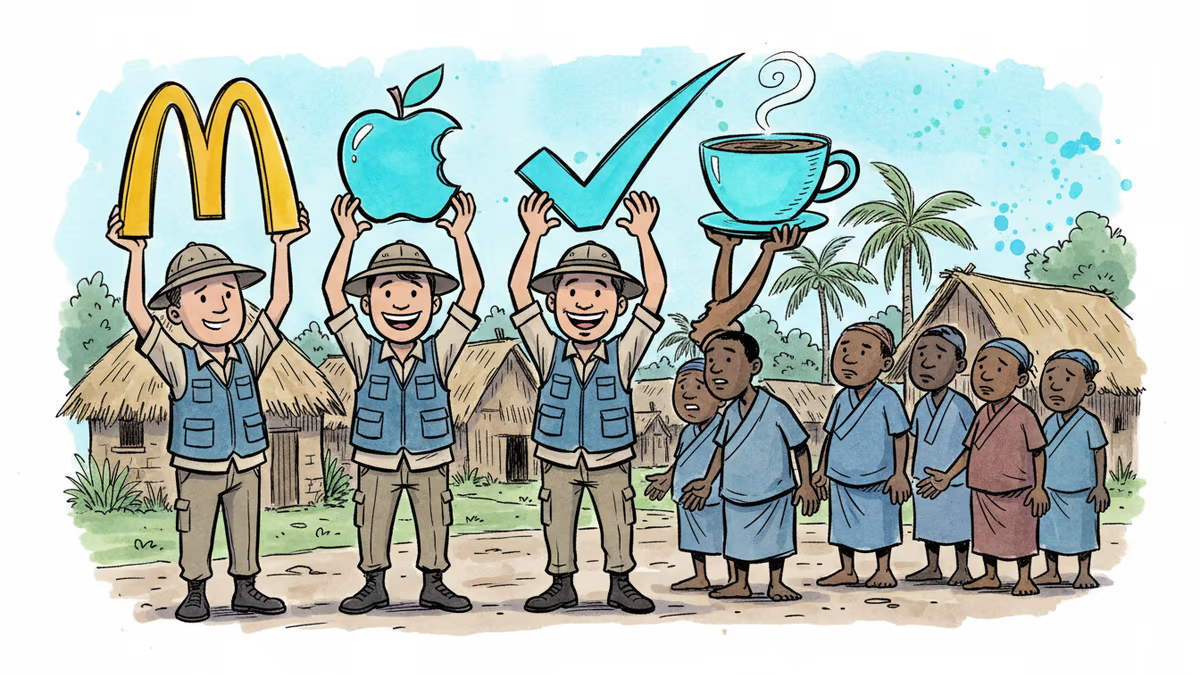
Picture this: A Peace Corps volunteer arrives in a remote village in Ghana. Instead of teaching English or building wells, they're demonstrating ChatGPT and promoting Meta's latest AI tools. This isn't science fiction—it's the new "Tech Corps" initiative that's quietly reshaping America's most idealistic government program.
For over six decades, the Peace Corps embodied Kennedy's vision of Americans serving humanity's greatest needs. Now, it's becoming a recruitment ground for what critics call "Silicon Valley salespeople" promoting AI companies—many with direct ties to President Trump.
The Great Mission Drift
The numbers tell the story of transformation. Since 1961, 240,000 volunteers have served in 140 countries, focusing on education, healthcare, and agriculture. The Brookings Institution notes the agency was created to "promote world peace and friendship" through genuine cultural exchange.
Tech Corps flips this model. Volunteers now promote specific AI platforms from OpenAI, Meta, and Google under the banner of "digital development." The companies benefiting? Many have publicly aligned with Trump's administration, from Elon Musk's xAI to various AI startups courting federal contracts.
This shift raises uncomfortable questions about corporate capture of public service. When volunteers become de facto marketing representatives, what happens to the Peace Corps' credibility in host communities?
The Data Colonialism Question
Proponents frame Tech Corps as bridging the "digital divide." They argue rural communities in Africa and Southeast Asia need AI literacy to compete globally. The rhetoric sounds noble: empowerment through technology.

But development experts see a different picture. "Communities struggling with basic infrastructure don't need AI chatbots—they need clean water and schools," argues Sarah Johnson, an international development specialist. "This feels like solutions looking for problems."
The deeper concern is data sovereignty. When Peace Corps volunteers introduce villagers to American AI platforms, whose data gets collected? Whose algorithms get trained? Critics warn this could create a new form of digital colonialism, where developing nations become data farms for Silicon Valley giants.
Three Stakeholder Perspectives
Tech Companies: This is a win-win. They gain market access to untapped regions while building goodwill through the Peace Corps brand. It's corporate social responsibility meets business development.
Host Communities: The reception is mixed. Urban educated populations welcome AI training, but rural communities often lack the infrastructure to meaningfully benefit. The mismatch between needs and offerings creates frustration.
Traditional Development Workers: They're alarmed. Decades of relationship-building and trust could be undermined if communities view Peace Corps volunteers as corporate representatives rather than genuine partners.
The Regulatory Reckoning Ahead
This transformation comes as global regulators scrutinize Big Tech's expansion into developing markets. The EU's AI Act and similar legislation worldwide aim to prevent exactly this kind of unchecked influence expansion.
Congress may need to intervene. The Peace Corps operates under specific legislative mandates that emphasize mutual benefit and cultural exchange. Using volunteers for corporate promotion could violate these principles, triggering oversight hearings.
Investors should also pay attention. If Tech Corps faces regulatory backlash, the AI companies involved could see reputational damage and restricted market access—exactly the opposite of their intended outcome.
Authors
Related Articles

Samsung and SK unveiled a chip and AI investment package worth thousands of trillions of won on June 29. The headline number swings wildly by outlet, but the real contest isn't capital — it's water and power.
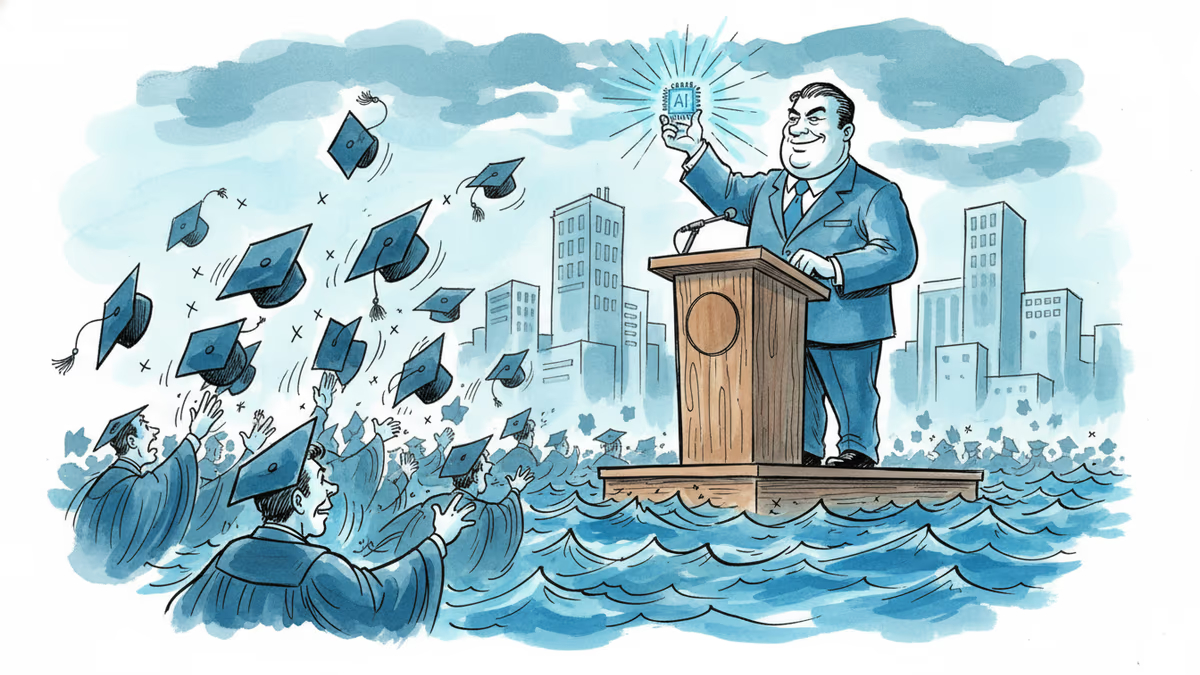
Viral videos show 2026 graduates jeering executives who praise AI at commencement ceremonies. It's not just rudeness — it's a signal about who pays for technological optimism.

Filipino virtual assistants using AI to ghost-manage LinkedIn profiles for executives is now a structured industry. 30 comments a day, fake engagement rings, and a platform struggling to tell real from fabricated.
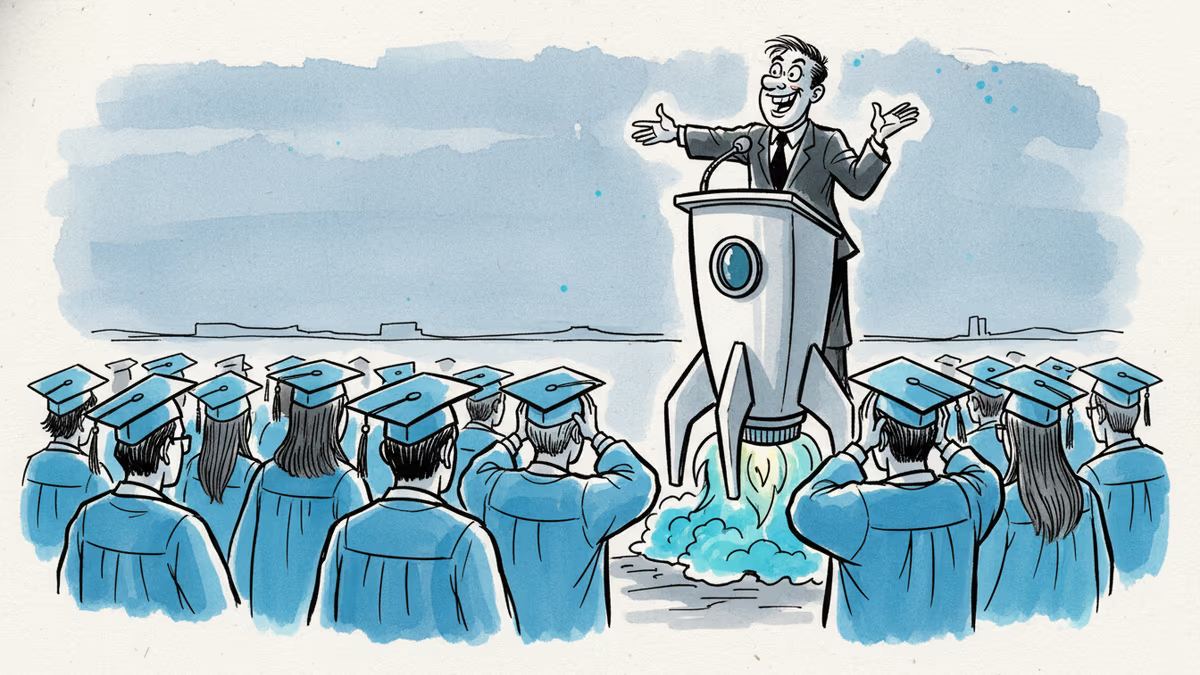
Two commencement speakers learned the hard way that AI enthusiasm doesn't land well with today's graduates. The backlash reveals a widening gap between tech optimism and Gen Z's economic reality.
Samsung and SK unveiled a chip and AI investment package worth thousands of trillions of won on June 29. The headline number swings wildly by outlet, but the real contest isn't capital — it's water and power.
Viral videos show 2026 graduates jeering executives who praise AI at commencement ceremonies. It's not just rudeness — it's a signal about who pays for technological optimism.
Filipino virtual assistants using AI to ghost-manage LinkedIn profiles for executives is now a structured industry. 30 comments a day, fake engagement rings, and a platform struggling to tell real from fabricated.
Two commencement speakers learned the hard way that AI enthusiasm doesn't land well with today's graduates. The backlash reveals a widening gap between tech optimism and Gen Z's economic reality.
Thoughts
Share your thoughts on this article
Sign in to join the conversation