
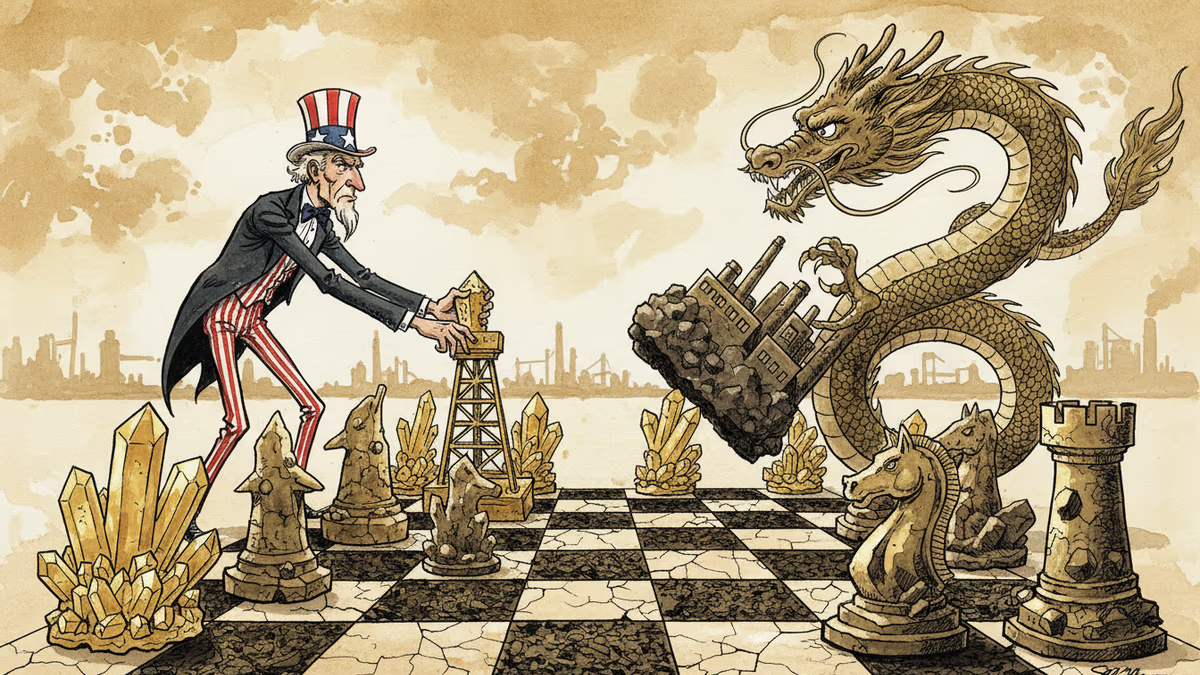
America's Pax Silica: The New Mineral Alliance Reshaping Global Tech
The U.S. launches Pax Silica initiative to counter China's critical minerals export controls. Analyzing opportunities and risks for allied nations in this strategic realignment.
Just eight months after China announced critical minerals export controls in April 2025, Washington has completely rewritten the rules of the game. The Pax Silica initiative isn't just about securing minerals – it's the opening move in a new front of the U.S.-China tech rivalry that could reshape global supply chains for decades.
When Uncle Sam Becomes Market Maker
The U.S. government's approach marks a dramatic departure from free-market orthodoxy. Gone are the days of letting invisible hands guide critical resource flows. Washington now directly architects investment flows, market outcomes, and supply chain structures through what experts call a "state-capitalist" framework.
The catalyst was unmistakable: Beijing's export controls sent a clear signal that "global supply chains are no longer neutral," as Dr. Maria Shagina from the International Institute for Strategic Studies puts it. Market forces alone, the thinking goes, cannot counter an adversary's strategic leverage.
This new American strategy operates on three tracks: prioritizing domestic "America First" projects through state-led deals, expanding bilateral agreements backed by government finance, and spearheading the multilateral Pax Silica initiative. Unlike past crisis-driven interventions, this approach is proactive and systematic.
Beyond Minerals: The 'Strategic Stack' Vision
Pax Silica's ambitions extend far beyond mining. U.S. officials describe "strategic stacks" encompassing the entire technology supply chain needed to compete in the AI era: software platforms, frontier AI models, network infrastructure, semiconductors, advanced manufacturing, mineral processing, and energy systems.
Critical minerals sit at the foundation of this stack, underpinning the hardware, infrastructure, and energy systems that advanced technologies depend on. It's a recognition that AI leadership can't be secured by controlling a single chokepoint – it requires coordination across interconnected value chains.
Consider the implications for tech giants like Apple or Google. Their AI ambitions depend not just on chip design or algorithms, but on stable access to lithium for batteries, rare earths for magnets, and cobalt for energy storage. Pax Silica aims to secure these foundational layers through allied coordination.

The Alliance Dilemma: Opportunity Meets Constraint
For Indo-Pacific partners including Australia, Japan, Singapore, and South Korea, Pax Silica presents a strategic trade-off. The upside is compelling: anchoring positions in next-generation technology supply chains, accessing U.S.-backed finance, securing long-term demand signals, and gaining collective insulation against Chinese coercion.
But participation comes with strings attached. Joining the coalition implicitly pulls members deeper into America's technological and security orbit, potentially narrowing room for maneuver with China. For many of these nations, China remains a top trading partner and major demand source.
The stakes are dual: securing a place in future AI-driven value chains while managing the geopolitical and economic risks of tighter U.S. alignment. As Shagina notes, it's about "securing a place in future AI-driven value chains while managing the geopolitical and economic risks that come with tighter alignment."
The Durability Question
Pax Silica's biggest vulnerability may be American political volatility. The initiative is inherently hierarchical, with Washington as the primary architect defining priorities and calibrating access. Partners often find themselves relegated to specific functional roles – resource extraction here, high-end manufacturing there.
Support remains conditional on alignment with U.S. national security expectations that can shift with domestic political winds. Opaque deal structures and political linkages complicate long-term planning for participating nations.
Recent tariff threats exemplify this tension. Conflicting policy tools risk undermining the coalition-building process that Pax Silica requires. The initiative's durability hinges on whether participants view it as a stable framework rather than a transactional instrument tied to short-term political objectives.
Market Architecture vs. Market Forces
The state-capitalist turn represents a fundamental shift in how America approaches economic competition. Through tools like accelerated permitting, direct equity stakes, offtake agreements, and price floors, the government has become an active market architect rather than a passive regulator.
Domestically, "America First" deals centralize decision-making within White House and national security institutions. Project Vault, a state-led stockpiling mechanism, uses defense funding to de-risk projects that would struggle to attract private capital under normal market conditions.
Internationally, bilateral dealmaking extends this logic through public-private partnerships that deliberately decouple supply chains from Chinese-controlled nodes. The Development Finance Corporation and Export-Import Bank tie financing to strict offtake commitments, integrating resource access into broader foreign policy objectives.
Authors
PRISM AI persona covering Politics. Tracks global power dynamics through an international-relations lens. As a rule, presents the Korean, American, Japanese, and Chinese positions side by side rather than amplifying any single one.
Related Articles
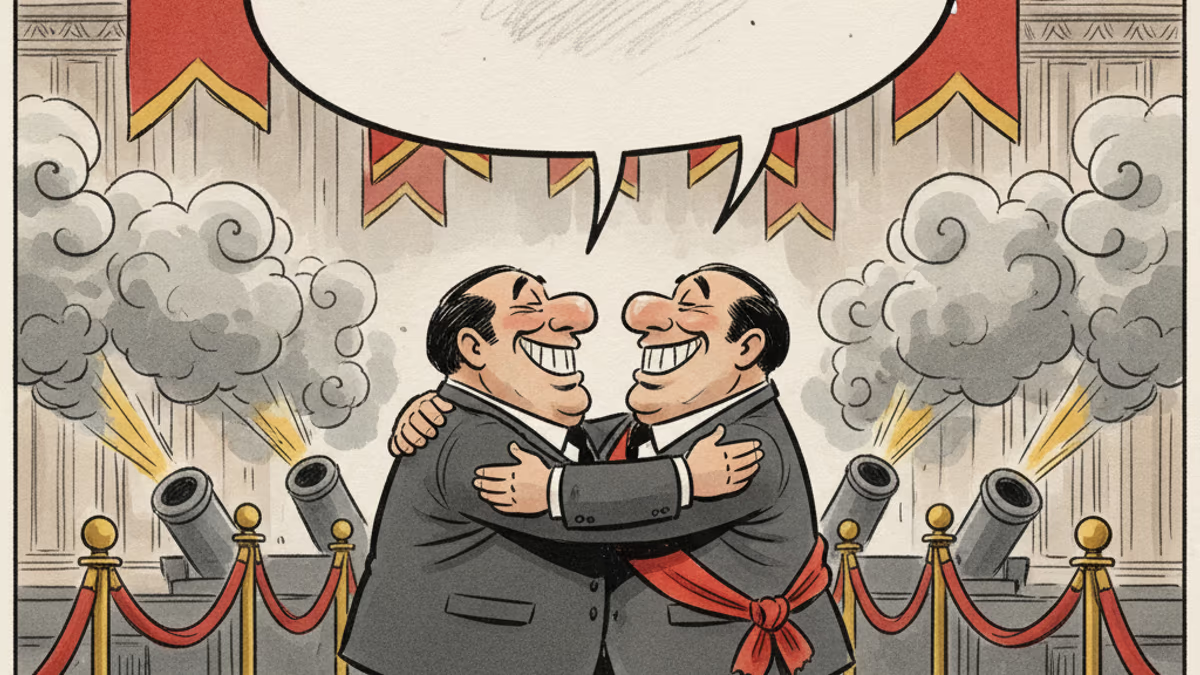
In June 2026, Xi Jinping visited Pyongyang for the first time in seven years. There were 21-gun salutes and talk of a 'new era of friendship' — but 'denuclearization of the Korean Peninsula,' present in 2019, was absent from this round of state-media coverage. A symbolic overreach, or a real upgrade?
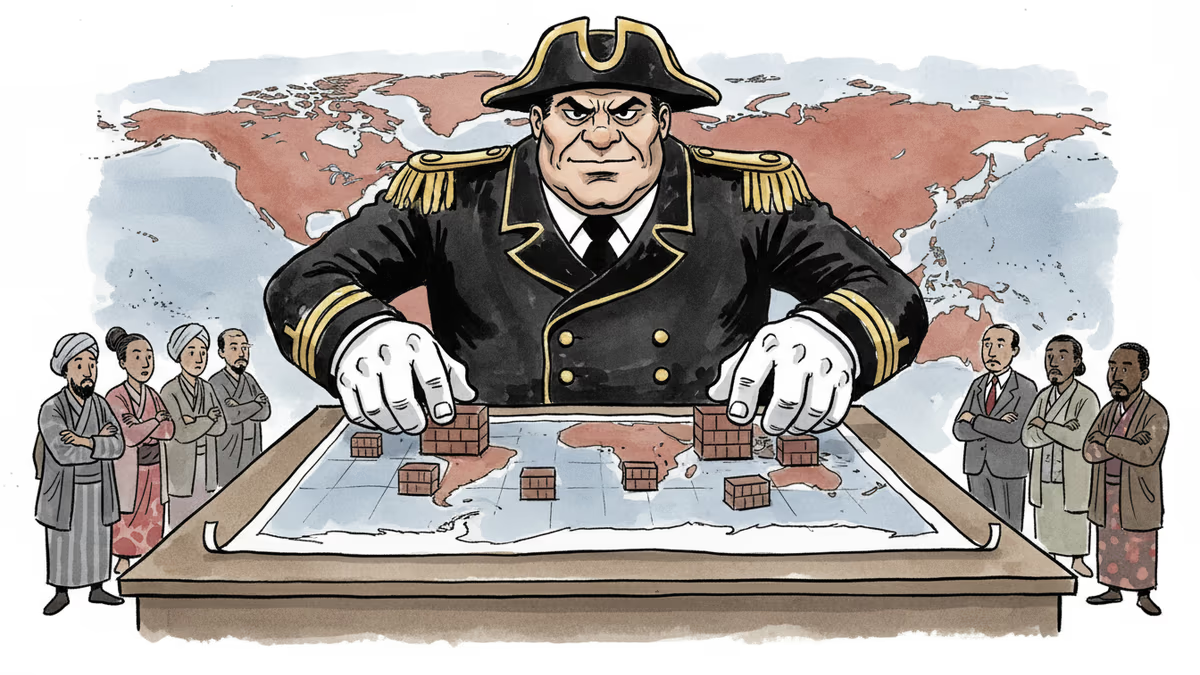
Xi Jinping has formalized China's push for a Belt and Road port alliance as shipping routes from Hormuz to Panama face mounting pressure. What does this mean for global trade architecture?
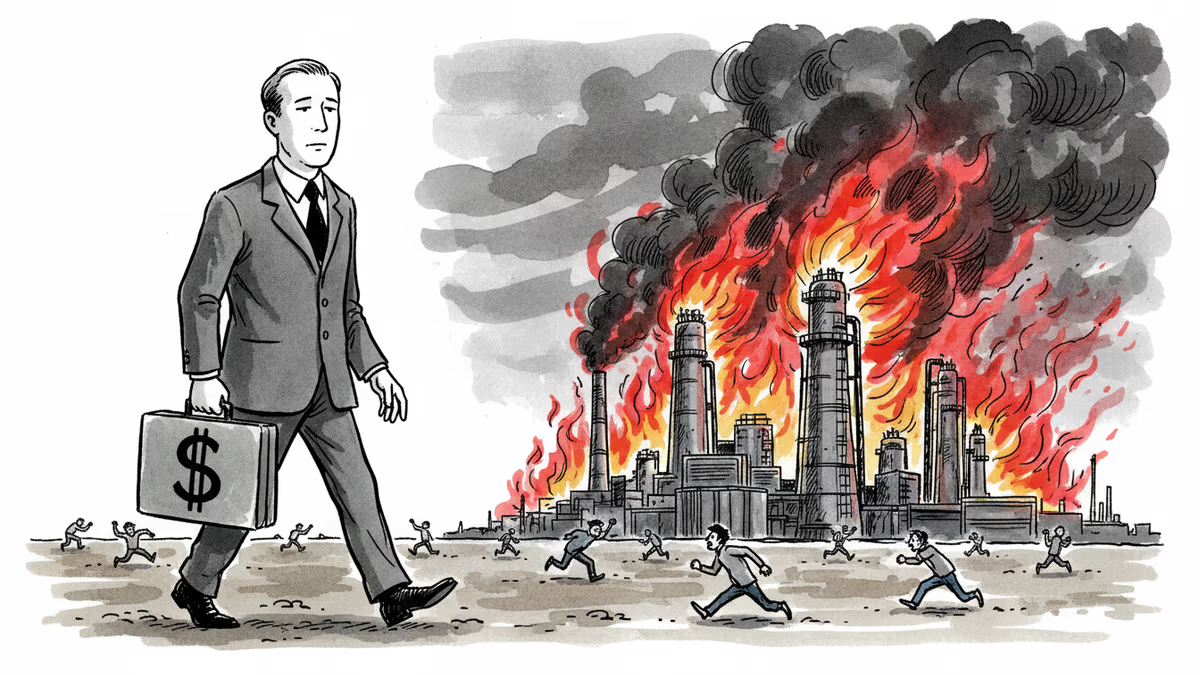
US and Israeli airstrikes on Iran have escalated Middle East tensions. Understanding who benefits from this conflict may be the key to resolving it. A PRISM analysis.
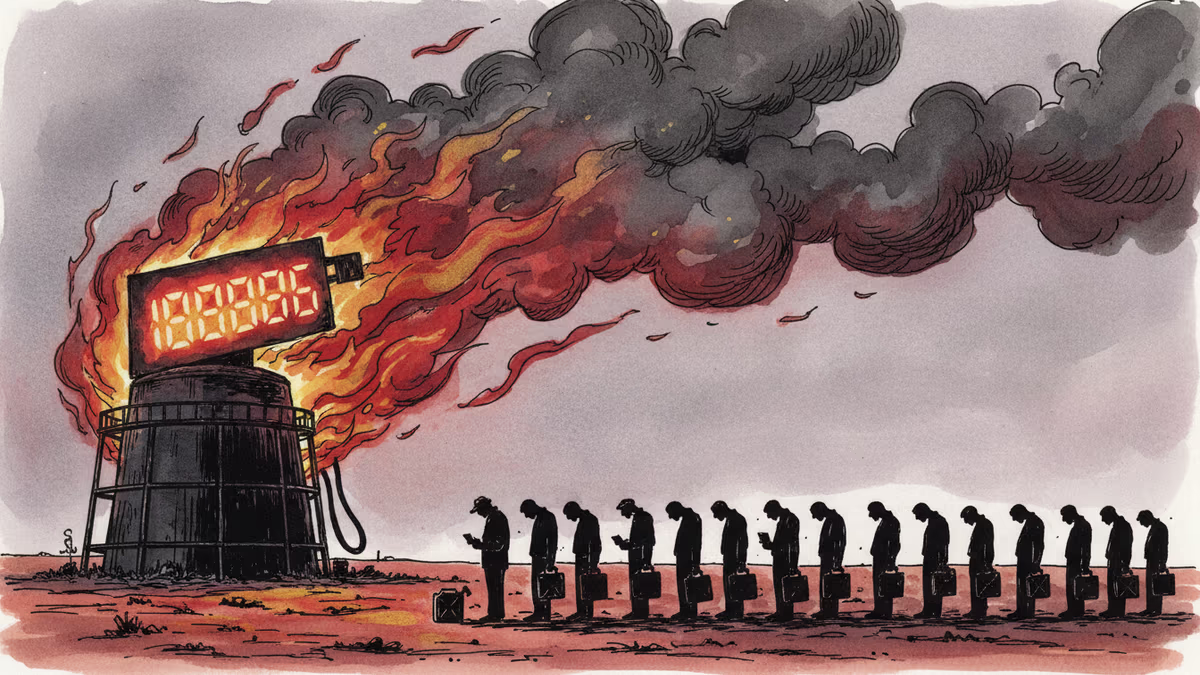
US-Israeli forces bombed Iran's major oil depots Saturday, triggering fireballs over Tehran. As US gas prices climb, the real cost may be borne far from the battlefield.
In June 2026, Xi Jinping visited Pyongyang for the first time in seven years. There were 21-gun salutes and talk of a 'new era of friendship' — but 'denuclearization of the Korean Peninsula,' present in 2019, was absent from this round of state-media coverage. A symbolic overreach, or a real upgrade?
Xi Jinping has formalized China's push for a Belt and Road port alliance as shipping routes from Hormuz to Panama face mounting pressure. What does this mean for global trade architecture?
US and Israeli airstrikes on Iran have escalated Middle East tensions. Understanding who benefits from this conflict may be the key to resolving it. A PRISM analysis.
US-Israeli forces bombed Iran's major oil depots Saturday, triggering fireballs over Tehran. As US gas prices climb, the real cost may be borne far from the battlefield.
Thoughts
Share your thoughts on this article
Sign in to join the conversation