

The $300 Billion 4Patriots Disaster Preparedness Market: Prepping Goes Mainstream
Explore the surging 4Patriots disaster preparedness market, projected to hit $300 billion by 2030, and the technical controversies surrounding survival gear.
Is your family ready for the grid to go down? A $300 billion industry says you aren't—but they're more than happy to sell you the solution. Disaster prepping, once a niche hobby for survivalists, has entered the corporate mainstream. According to FEMA data from 2023, 51% of Americans are now 'prepared for a disaster' in some capacity, fueled by a perfect storm of climate chaos and political instability.
The 4Patriots Disaster Preparedness Market Explosion
As reported by WIRED, the industry is currently a battlefield between two major players: 4Patriots and My Patriot Supply. These firms aren't just selling 1,800-watt solar generators and dehydrated food; they're selling 'energy independence.' 4Patriots official stated they shipped over 5 million products in the past 3 years. However, this rapid growth comes with scrutiny. Consumer Reports recently gave their signature solar generator a score of 46 out of 100, raising questions about whether these tools can actually perform when the world ends.

Reliability vs. Marketing in Survival Tech
The tech behind these products draws inspiration from the battery advancements of companies like Tesla. Yet, practical tests often tell a different story. In one demonstration, the 'AlphaCase' generator failed to power a standard refrigerator, triggering an 'overload' message. This gap between marketing promises and technical reality is a major point of contention, especially since 4Patriots previously had to recall several thousand units in 2016 due to fire hazards. For a customer base prioritizing reliability, these defects are more than just a nuisance—they're a critical failure of the brand's core promise.
Authors
Related Articles
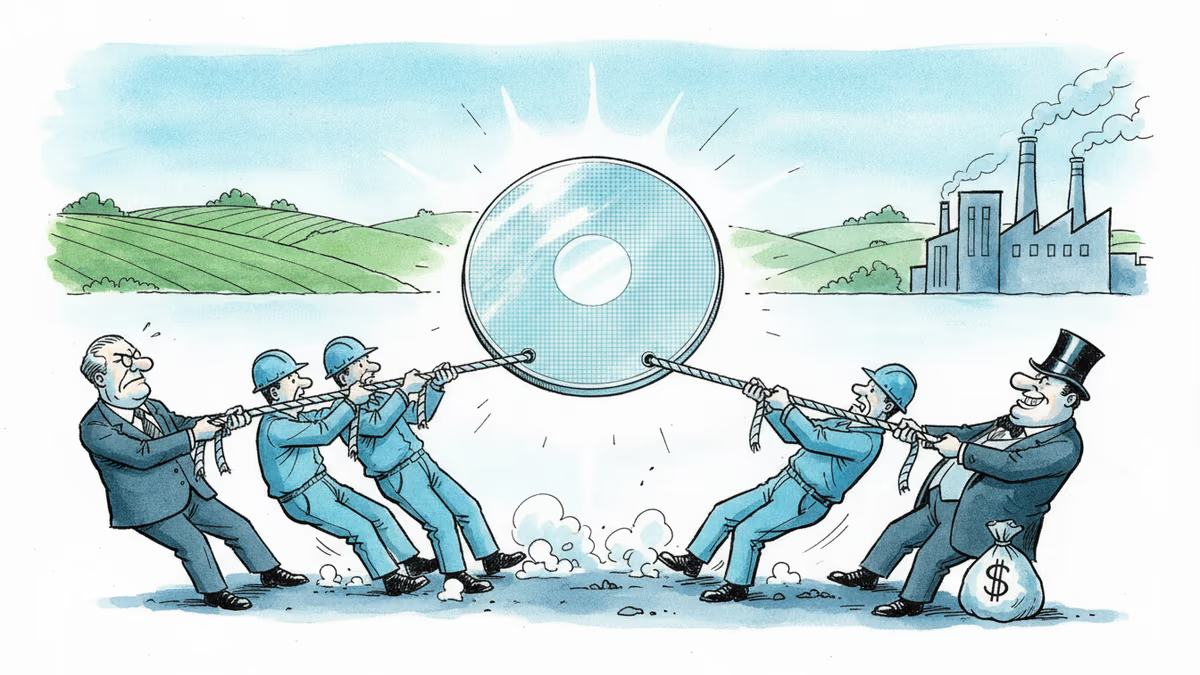
Samsung Electronics' union branch revealed that 84% of survey respondents oppose the government's roughly $290 billion (₩400 trillion) semiconductor megaproject in Gwangju. Government, management, the union and shareholders are all reading the same national project in sharply different ways.
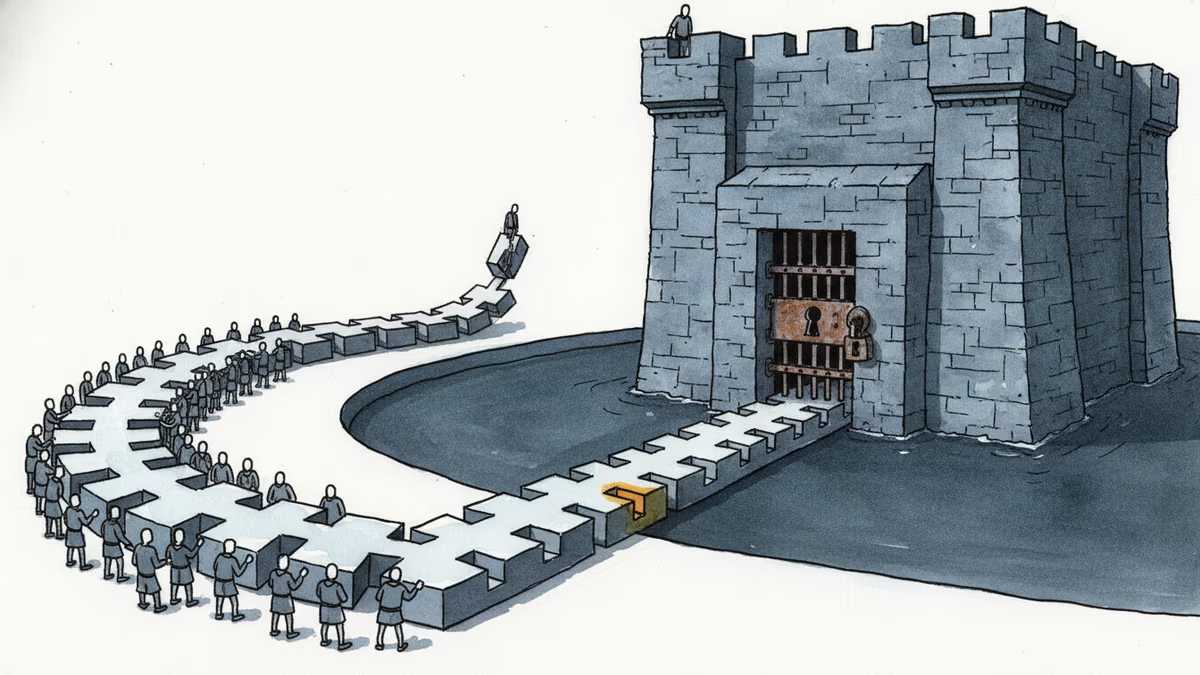
Nvidia shipped roughly a billion RISC-V cores in 2024, then announced it would run CUDA on the open standard. We break down how royalty-free instruction sets and open software stacks are trying to route around CUDA's lock-in. Part 2 of the Semiconductor Sovereignty series.
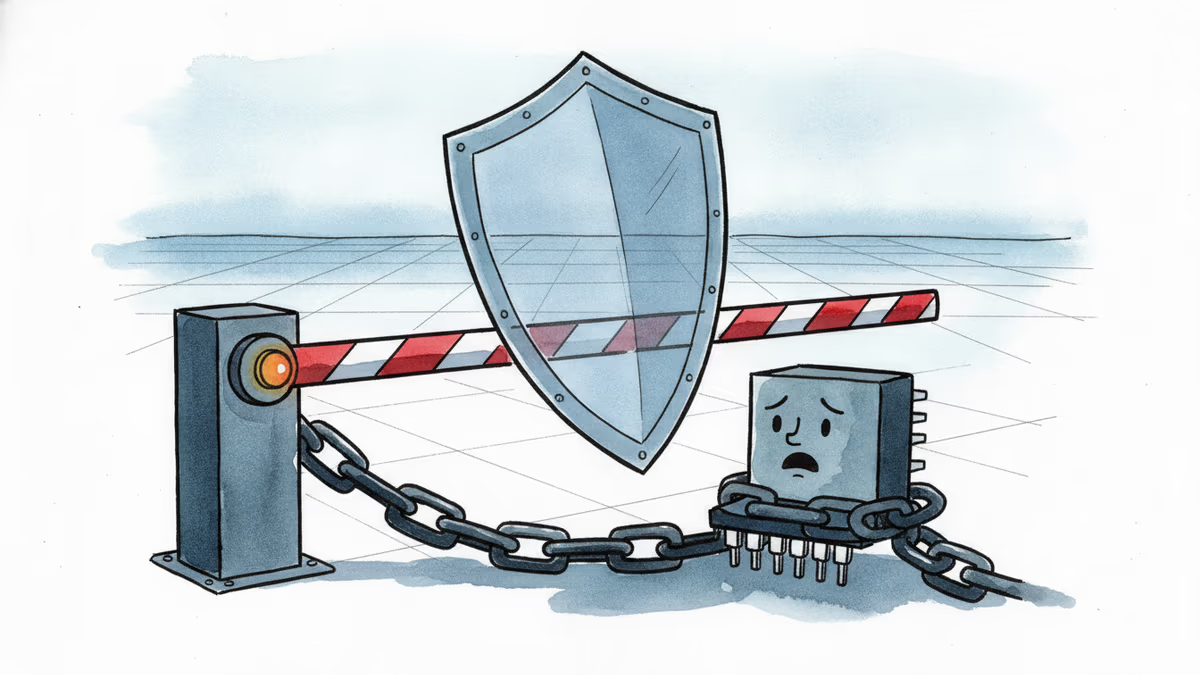
US AI-chip export controls split into three layers in the first half of 2026 — January easing, a May crackdown on circumvention, and a pending bill. Nvidia erased China from its guidance and still posted a record $81.6 billion quarter. A look at the export policy that both shields and cages it.
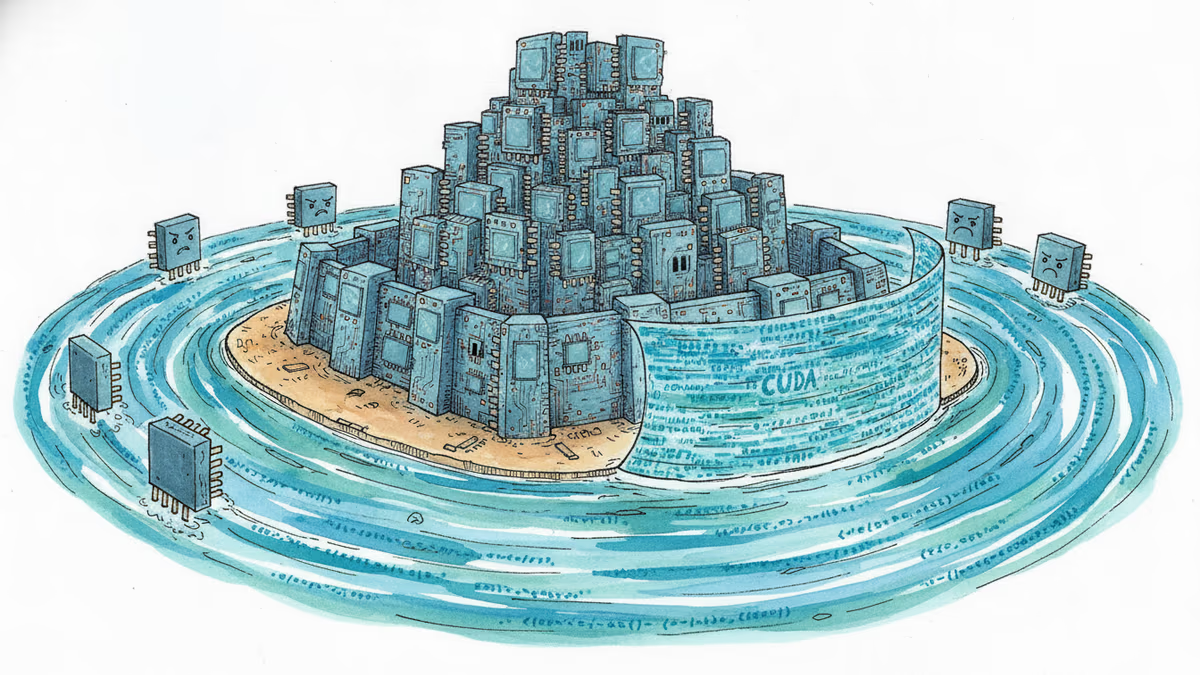
AMD's MI325X matches or beats Nvidia on memory and bandwidth — yet Nvidia's 86-92% share holds. The real moat is CUDA, 20 years in the making. Part 1 of 4.
Samsung Electronics' union branch revealed that 84% of survey respondents oppose the government's roughly $290 billion (₩400 trillion) semiconductor megaproject in Gwangju. Government, management, the union and shareholders are all reading the same national project in sharply different ways.
Nvidia shipped roughly a billion RISC-V cores in 2024, then announced it would run CUDA on the open standard. We break down how royalty-free instruction sets and open software stacks are trying to route around CUDA's lock-in. Part 2 of the Semiconductor Sovereignty series.
US AI-chip export controls split into three layers in the first half of 2026 — January easing, a May crackdown on circumvention, and a pending bill. Nvidia erased China from its guidance and still posted a record $81.6 billion quarter. A look at the export policy that both shields and cages it.
AMD's MI325X matches or beats Nvidia on memory and bandwidth — yet Nvidia's 86-92% share holds. The real moat is CUDA, 20 years in the making. Part 1 of 4.
Thoughts
Share your thoughts on this article
Sign in to join the conversation