

Qatar's $230M Bet on Nvidia's Next Challenger
Positron's massive Series B funding signals a new front in the AI chip wars, with Qatar's sovereign wealth fund backing alternatives to Nvidia's dominance in the booming inference market.
Positron, a three-year-old semiconductor startup based in Reno, just secured $230 million in Series B funding—and the lead investor tells a bigger story than the dollars alone. Qatar Investment Authority, the country's sovereign wealth fund, is betting big on breaking Nvidia's stranglehold on AI computing, part of a broader Middle Eastern strategy to become an AI infrastructure powerhouse.
The timing isn't coincidental. As hyperscalers and AI companies grow increasingly uncomfortable with their dependence on a single chip supplier, alternatives like Positron are finding eager backers. Even OpenAI, despite being one of Nvidia's largest customers, has reportedly been shopping for alternatives since last year, unsatisfied with some of the company's latest offerings.
The Inference Gold Rush
Positron's focus isn't on training massive language models—that's yesterday's battle. Instead, the company is targeting inference, the computing power needed to actually run AI applications in the real world. As businesses shift from building large models to deploying them at scale, inference hardware demand is exploding.
The company claims its first-generation Atlas chip, manufactured in Arizona, matches Nvidia'sH100 GPU performance while consuming less than a third of the power. Beyond memory capabilities, sources tell TechCrunch that Positron's chips excel in high-frequency and video-processing workloads—exactly the kind of versatility that could appeal to customers looking to diversify their chip suppliers.
With this latest round, Positron has raised just over $300 million total, following a $75 million Series A from investors including Valor Equity Partners and DFJ Growth. The rapid scaling reflects both the urgency of the AI infrastructure buildout and the premium investors are willing to pay for Nvidia alternatives.

Qatar's Sovereign AI Strategy
Qatar's involvement through QIA represents more than just venture capital—it's part of a calculated geopolitical strategy. The country views compute capacity as critical to economic competitiveness and is positioning itself as the Middle East's leading AI services hub. This week's Web Summit Qatar in Doha repeatedly emphasized "sovereign" AI infrastructure as a national priority.
The strategy is already materializing through major commitments, including a $20 billion AI infrastructure joint venture with Brookfield Asset Management announced in September. For Qatar, investing in companies like Positron isn't just about financial returns—it's about securing access to critical AI infrastructure that won't be subject to geopolitical tensions or supply chain disruptions.
This sovereign approach to AI infrastructure is becoming increasingly common as nations recognize that AI capabilities are becoming as strategically important as traditional defense assets. Qatar's early moves in this space could pay dividends as other countries scramble to reduce their dependence on concentrated chip suppliers.
The Nvidia Dependency Problem
The broader context here is an industry-wide recognition that Nvidia's dominance creates risks. When one company controls such a large share of AI computing infrastructure, customers face pricing power, supply constraints, and limited innovation paths. Positron's fundraising success reflects investors' belief that this concentration is unsustainable.
Yet challenging Nvidia isn't just about building better chips—it's about building entire ecosystems. Nvidia's advantage isn't just hardware; it's the software stack, developer tools, and network effects that make their platform sticky. New entrants like Positron will need to prove they can match not just performance metrics, but the entire development experience that has made Nvidia the default choice.
Authors
Related Articles
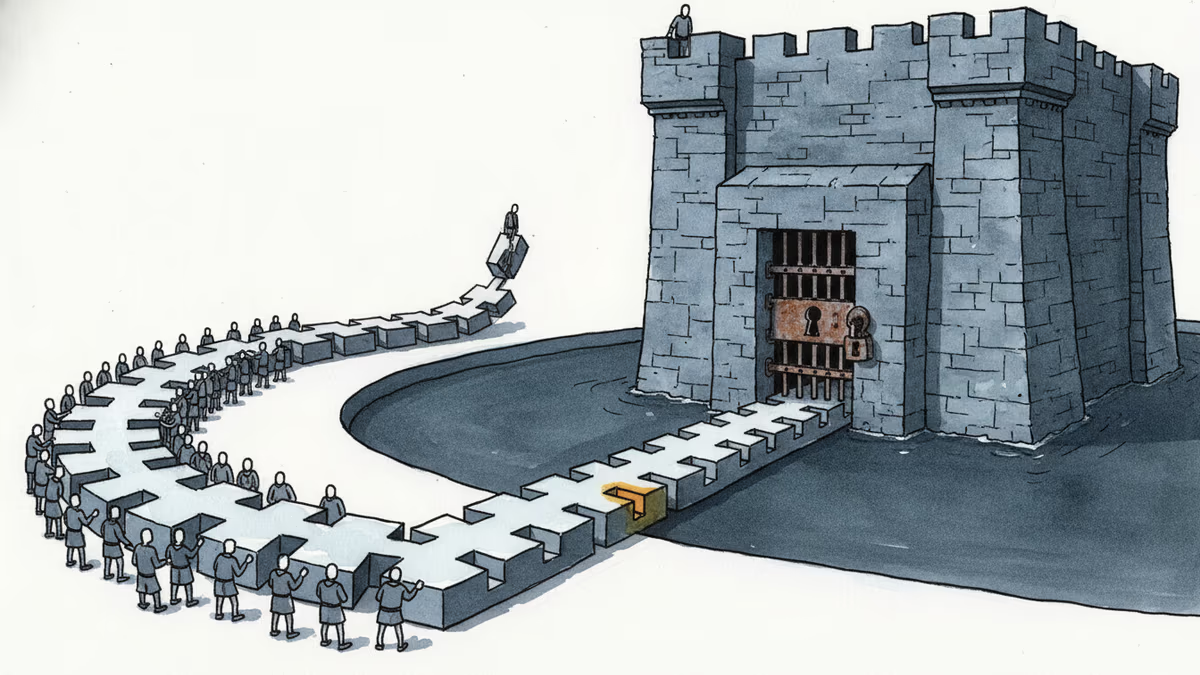
Nvidia shipped roughly a billion RISC-V cores in 2024, then announced it would run CUDA on the open standard. We break down how royalty-free instruction sets and open software stacks are trying to route around CUDA's lock-in. Part 2 of the Semiconductor Sovereignty series.
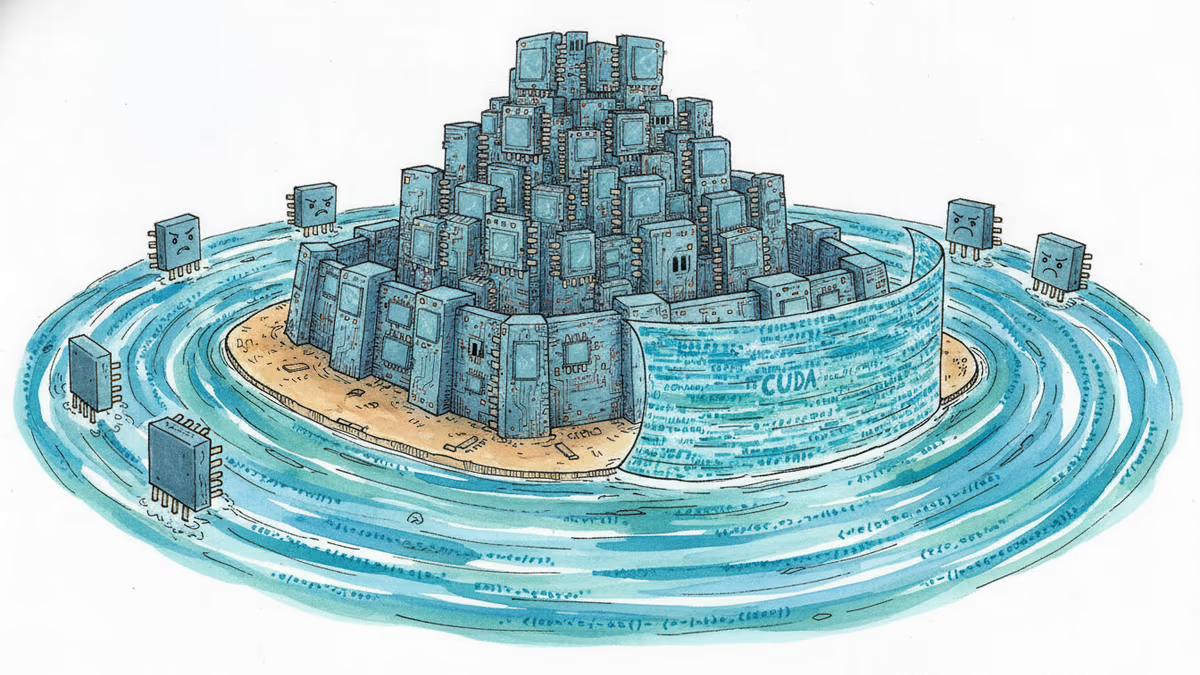
AMD's MI325X matches or beats Nvidia on memory and bandwidth — yet Nvidia's 86-92% share holds. The real moat is CUDA, 20 years in the making. Part 1 of 4.

SpaceX plans to invest at least $55 billion in a Texas AI chip factory called Terafab, with total costs potentially reaching $119 billion. We break down what's real, what's at stake, and who wins or loses.

Cerebras Systems is targeting a $26.6B valuation in what could be 2026's largest tech IPO. But the real story is how deeply OpenAI is embedded in its capital structure—as customer, lender, and potential shareholder.
Nvidia shipped roughly a billion RISC-V cores in 2024, then announced it would run CUDA on the open standard. We break down how royalty-free instruction sets and open software stacks are trying to route around CUDA's lock-in. Part 2 of the Semiconductor Sovereignty series.
AMD's MI325X matches or beats Nvidia on memory and bandwidth — yet Nvidia's 86-92% share holds. The real moat is CUDA, 20 years in the making. Part 1 of 4.
SpaceX plans to invest at least $55 billion in a Texas AI chip factory called Terafab, with total costs potentially reaching $119 billion. We break down what's real, what's at stake, and who wins or loses.
Cerebras Systems is targeting a $26.6B valuation in what could be 2026's largest tech IPO. But the real story is how deeply OpenAI is embedded in its capital structure—as customer, lender, and potential shareholder.
Thoughts
Share your thoughts on this article
Sign in to join the conversation