
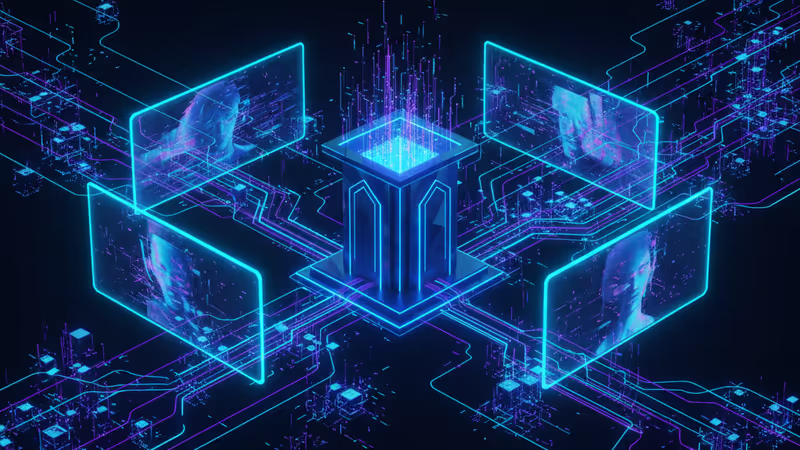
The Rise of AI Pastor Deepfake Scams: Weaponizing Digital Faith
Religious leaders like Father Mike Schmitz are warning against AI pastor deepfake scams. Discover how scammers are using voice cloning and deepfakes to exploit faith and influence.
Your pastor's voice is calling, but it's not the pastor. Father Mike Schmitz, a Catholic priest with over 1.2 million YouTube subscribers, recently issued a stark warning to his congregation: 'Don't trust the words coming out of my mouth.' Schmitz has become the latest high-profile target of AI-generated impersonation scams that weaponize religious trust for financial gain.
AI Pastor Deepfake Scams: Exploiting the Pulpit
According to WIRED, these scams use sophisticated deepfakes to urge followers to click malicious links for 'blessings' or donate to fraudulent causes. Rachel Tobac, CEO of SocialProof Security, notes that pastors are ideal targets because they possess a level of authority that differs from typical influencers. When a religious figure espouses a belief or makes a request, followers often ascribe deep spiritual meaning and power to it, making them less likely to question its authenticity.

The Blurred Line Between Tech and Spirit
The problem isn't limited to external scammers. Some religious institutions are leaning into the tech themselves. A church in Dallas recently showcased AI-generated videos of deceased activists, while a 2025 report revealed that a majority of pastors now use ChatGPT to assist in sermon preparation. However, OpenAI has expressed concern, reporting that hundreds of thousands of users may be experiencing religious delusions or psychosis through chatbot interactions every week.
Authors
Related Articles
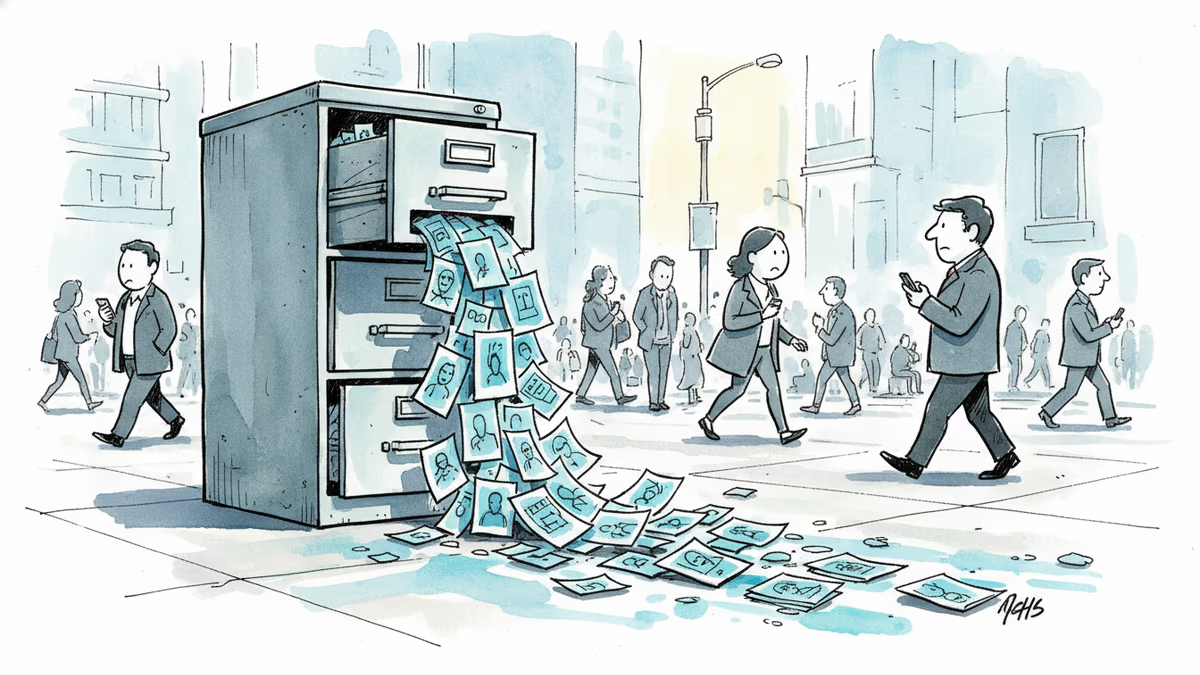
UK Visa Portal, a private immigration service mistaken for an official government site, has been exposing passport scans and selfies of over 100,000 applicants. The breach remains unpatched.
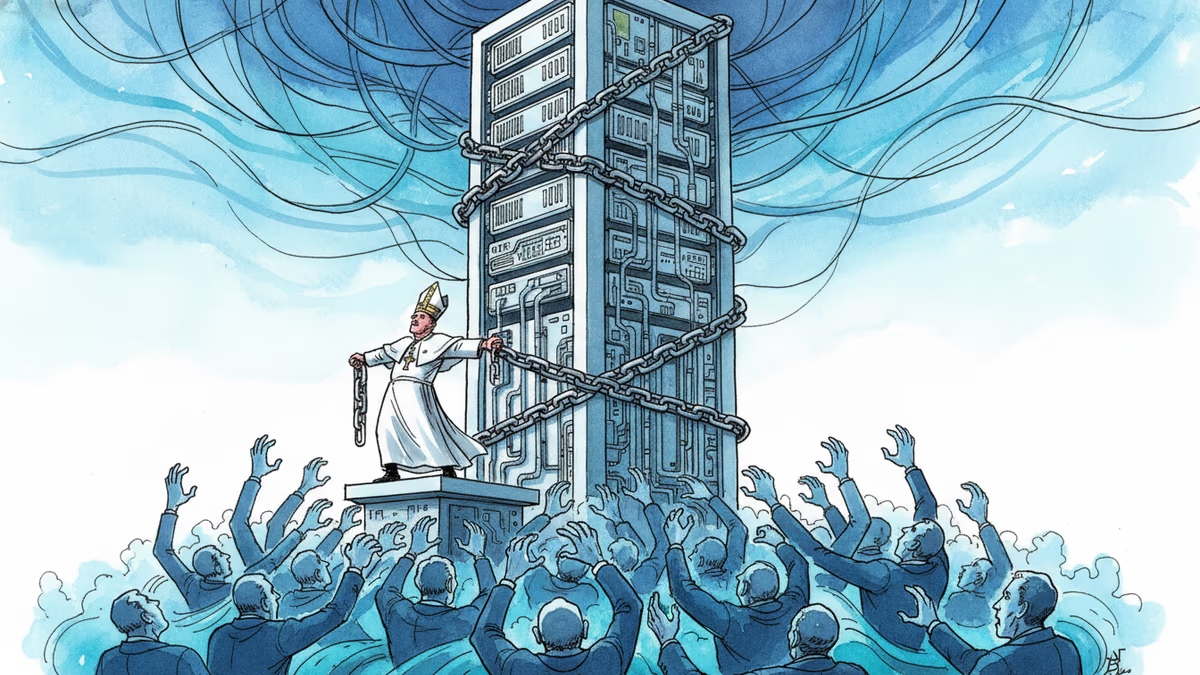
Pope Leo XIV's first encyclical frames AI not as a technology problem but a power problem. Who controls the algorithm controls reality—and that's a political question, not a spiritual one.
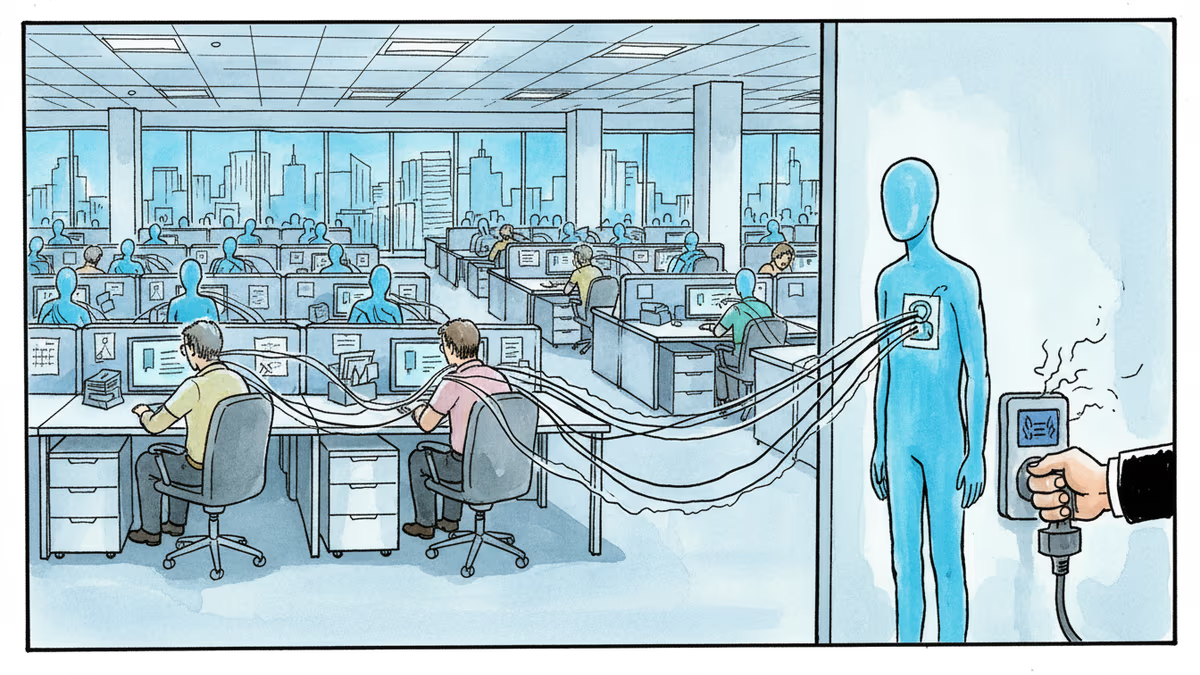
Okta CEO Todd McKinnon on why AI agents need identity management, the SaaSpocalypse threat, and why the kill switch might be the most important button in enterprise tech.
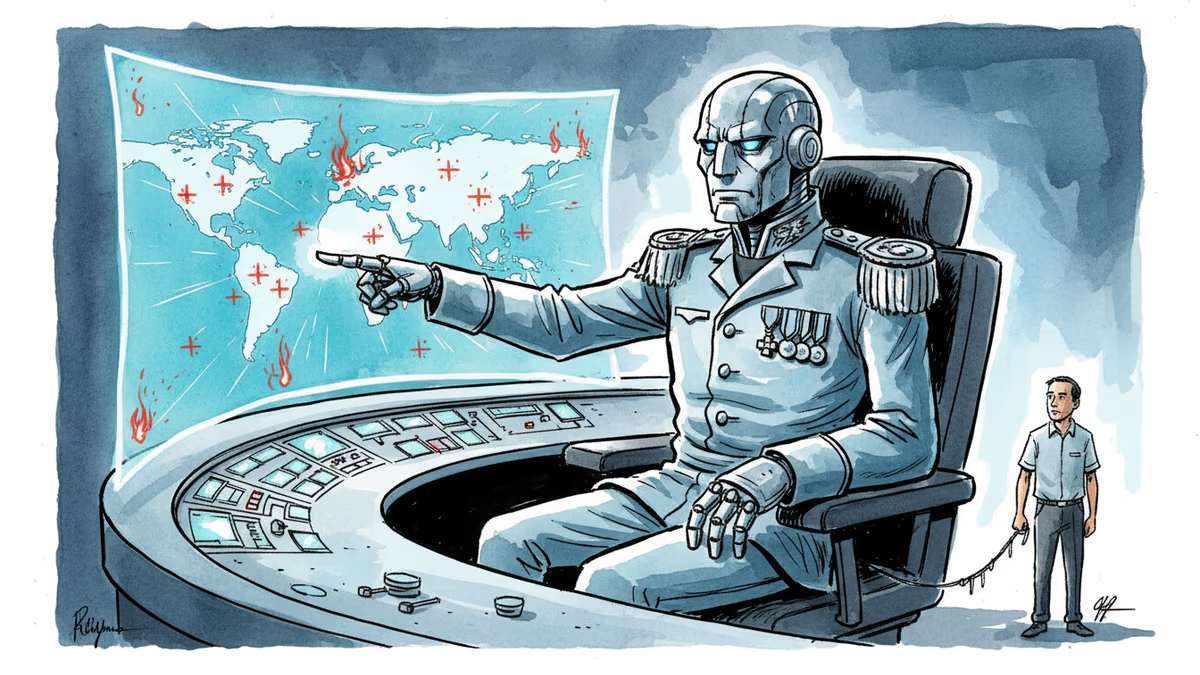
Anthropic's Claude AI is embedded in US military operations—from the capture of Maduro to the Iran war. A Pentagon dispute is exposing what "responsible AI" actually means in wartime.
UK Visa Portal, a private immigration service mistaken for an official government site, has been exposing passport scans and selfies of over 100,000 applicants. The breach remains unpatched.
Pope Leo XIV's first encyclical frames AI not as a technology problem but a power problem. Who controls the algorithm controls reality—and that's a political question, not a spiritual one.
Okta CEO Todd McKinnon on why AI agents need identity management, the SaaSpocalypse threat, and why the kill switch might be the most important button in enterprise tech.
Anthropic's Claude AI is embedded in US military operations—from the capture of Maduro to the Iran war. A Pentagon dispute is exposing what "responsible AI" actually means in wartime.
Thoughts
Share your thoughts on this article
Sign in to join the conversation