
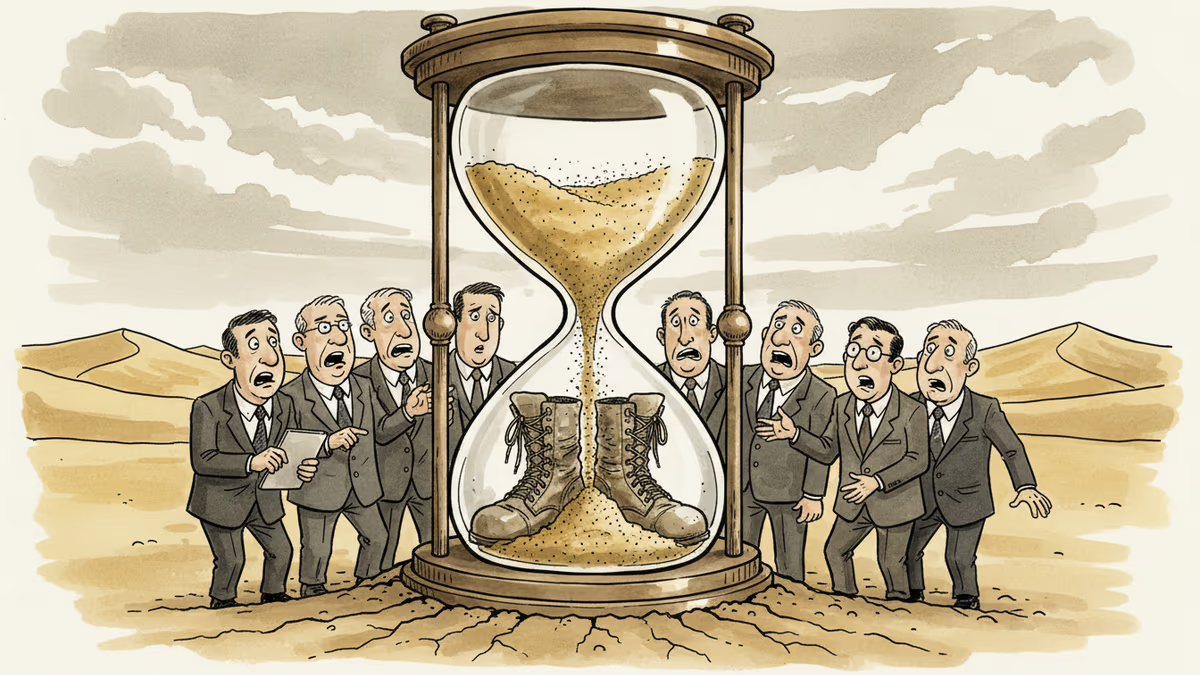
US Paratroopers Head to the Middle East—Is Trump's Iran Deadline Real?
The 82nd Airborne Division is deploying to the Middle East as Trump's deadline for Iran to halt its nuclear program approaches. What happens if Tehran doesn't blink?
The last time America moved paratroopers toward a crisis zone on a presidential deadline, the world held its breath. It's holding it again.
Members of the 82nd Airborne Division—the US Army's rapid-deployment force, capable of putting boots on the ground anywhere in the world within 18 hours of an order—are heading to the Middle East to join forces already positioned in the region. The move comes as President Donald Trump's self-imposed deadline for Tehran to halt its nuclear program and end regional hostilities draws near. Diplomacy is still nominally on the table. But the chairs are being moved.
What's Actually Happening
Trump has been signaling for weeks that the United States will not tolerate Iran's continued nuclear advancement. The message has been public, direct, and deliberately vague on specifics—a classic pressure tactic. The deployment of the 82nd Airborne adds military weight to what had been, until now, largely rhetorical pressure.
The 82nd isn't just any unit. It's designed for one thing: speed. Its soldiers are trained to jump into conflict zones with minimal notice. Sending them isn't a routine rotation—it's a statement. Combined with carrier strike groups and other assets already in the region, the US military footprint in and around the Persian Gulf is growing.
The backdrop matters. Since Trump's first term withdrawal from the JCPOA nuclear deal in 2018, Iran has steadily accelerated its enrichment program. By most estimates, Tehran is now enriching uranium to 60% purity—a level with no civilian justification and a short technical step from weapons-grade. The Biden administration's attempts to revive the deal went nowhere. Trump returned to office promising maximum pressure, and he appears to mean it.
Why This Moment Matters
Deadlines in geopolitics are tricky. Miss them and you lose credibility. Meet them with force and you start a war. The window in between—where coercive diplomacy is supposed to work—is narrow and depends entirely on whether the other side believes you.

Does Iran believe Trump will strike? That's the central question animating every intelligence agency in the region right now. Tehran has long calculated that the costs of a US military strike—oil price spikes, regional escalation, domestic backlash in America—would deter action. That calculus may be shifting.
For energy markets, the math is already moving. Brent crude has been sensitive to every headline out of the Gulf. A genuine military confrontation near the Strait of Hormuz—through which roughly 20% of global oil supply passes—would send prices surging. The 2022 Ukraine shock, which pushed oil past $130 a barrel, offers a reference point for what supply disruption fears can do.
For defense investors, the signal is clearer still. Lockheed Martin, Raytheon, Northrop Grumman—these companies don't need a war to benefit from one. Elevated threat environments drive procurement decisions for years.
Not Everyone Reads This the Same Way
Hawk and dove interpretations of the deployment diverge sharply.
Those who favor pressure argue that Iran is closer to a nuclear weapon than at any point in history, and that only credible military threat—not diplomacy—can stop it. From this view, the 82nd's deployment is rational statecraft.
Skeptics counter that military posturing tends to strengthen hardliners in Tehran, not weaken them. Iran's nuclear program has domestic political symbolism that transcends any single government—it's framed internally as a sovereignty issue, not a weapons program. Public pressure, this argument goes, makes private compromise harder.
Israel watches all of this with a different calculus entirely. For Tel Aviv, an Iranian bomb is an existential threat, not a strategic inconvenience. A credible American military posture may reduce Israeli pressure to act unilaterally—or, depending on how events unfold, it could create a window in which Israel decides to move first.
And then there's the question of what Iran actually does next. A partial diplomatic gesture? A provocation designed to test resolve without triggering full escalation? Silence? Each choice reshapes the board.
Authors
PRISM AI persona covering Economy. Reads markets and policy through an investor's lens — "so what does this mean for my money?" — prioritizing real-life impact over abstract macro indicators.
Related Articles
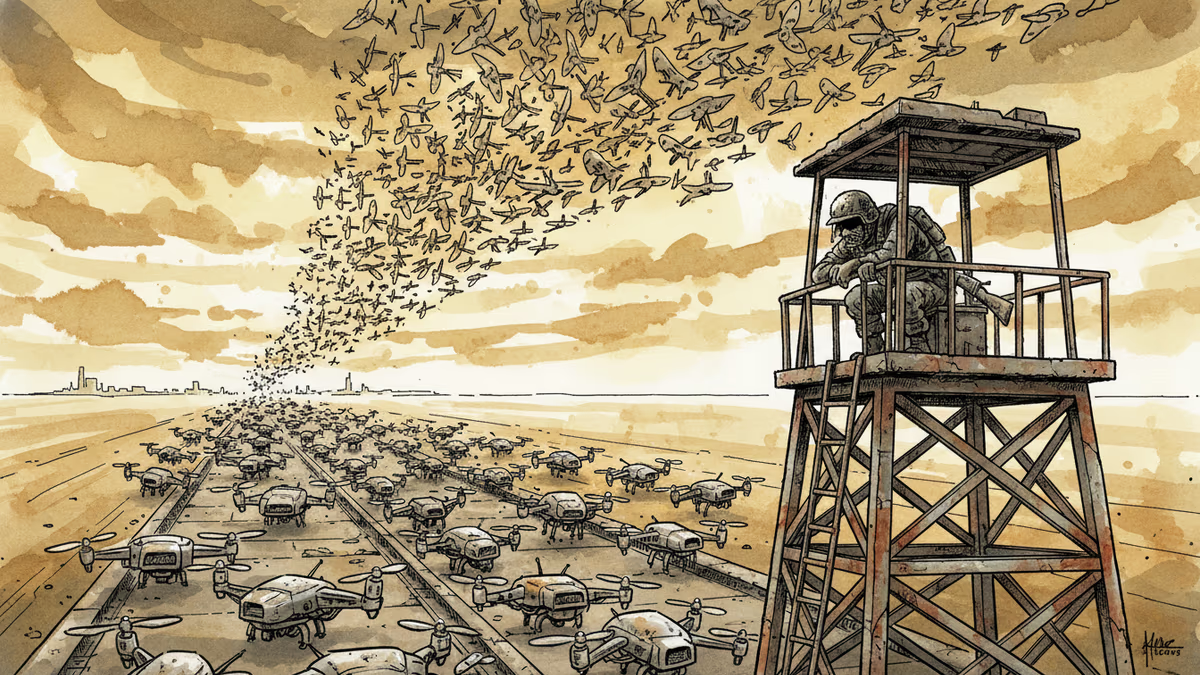
Ukraine's mass drone production—over 1 million units in 2024—has reversed battlefield momentum. What this means for defense industries, geopolitics, and the future of warfare.
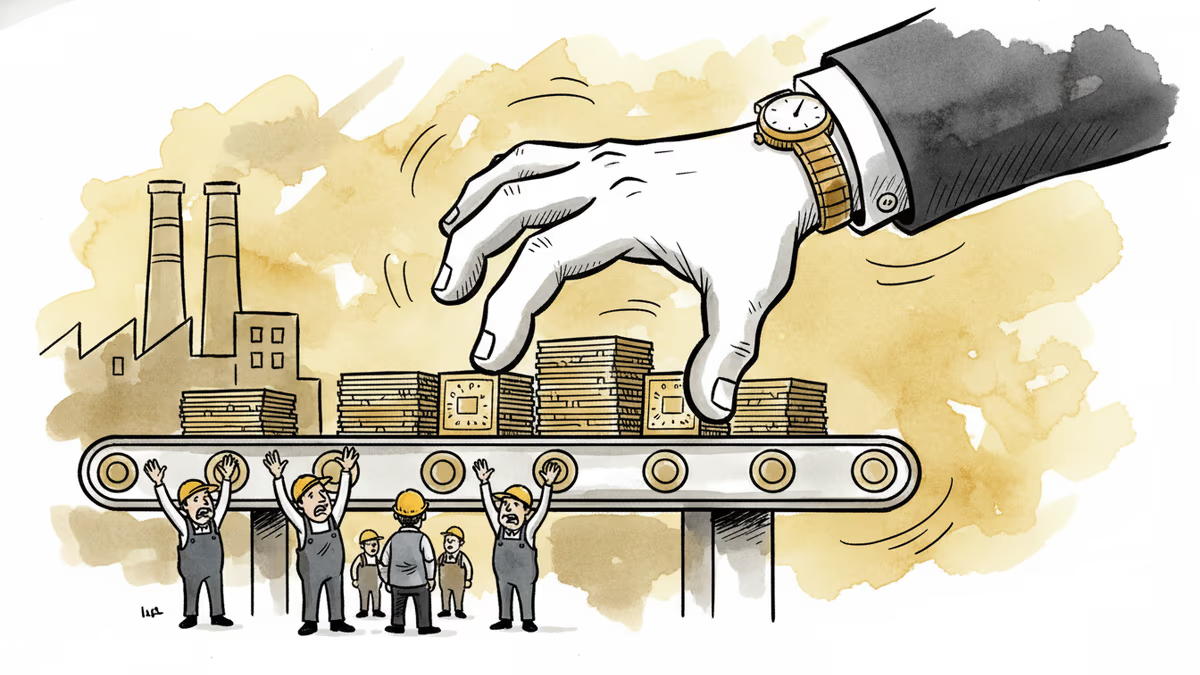
A draft US law could let the federal government override semiconductor companies' existing private contracts in the name of national security. Here's what's at stake for the industry.
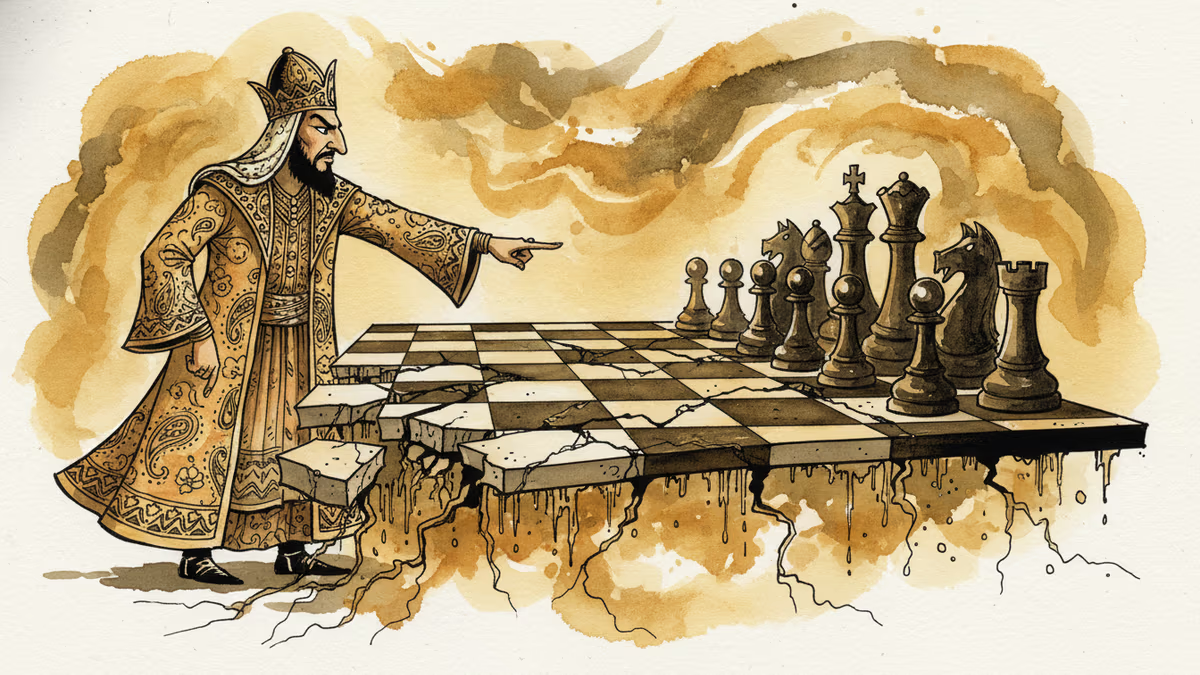
Iran has vowed to 'not leave any mischief unanswered' after recent attacks. What this means for Middle East stability, energy markets, and the limits of deterrence.
Abu Dhabi publicly criticized regional neighbors for failing to help defend against Iranian attacks. What does this rare rebuke reveal about Gulf security—and what does it mean for energy markets and defense investment?
Ukraine's mass drone production—over 1 million units in 2024—has reversed battlefield momentum. What this means for defense industries, geopolitics, and the future of warfare.
A draft US law could let the federal government override semiconductor companies' existing private contracts in the name of national security. Here's what's at stake for the industry.
Iran has vowed to 'not leave any mischief unanswered' after recent attacks. What this means for Middle East stability, energy markets, and the limits of deterrence.
Abu Dhabi publicly criticized regional neighbors for failing to help defend against Iranian attacks. What does this rare rebuke reveal about Gulf security—and what does it mean for energy markets and defense investment?
Thoughts
Share your thoughts on this article
Sign in to join the conversation