
When Border Agents Become Urban Warriors: Two Dead in Immigration Raids
Trump's immigration enforcement deploys military-style tactical units in US cities, resulting in two civilian deaths. An analysis of the militarization of domestic law enforcement.
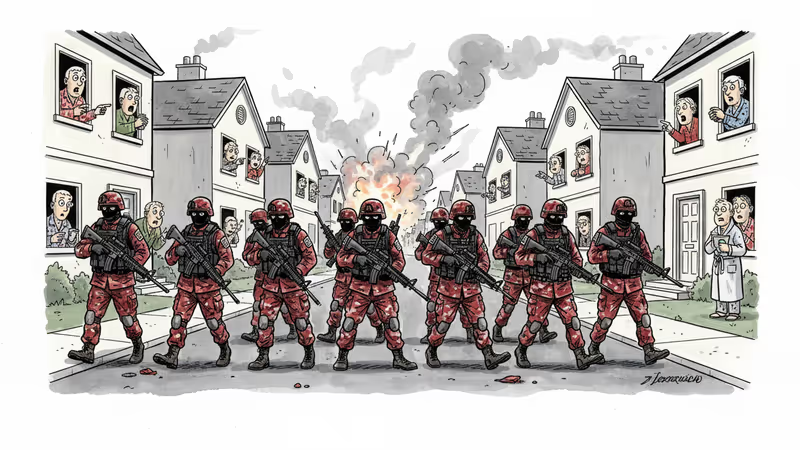
Ten days after 37-year-old intensive care nurse Alex Pretti was shot dead by federal agents in Minneapolis, a troubling picture emerges of how America conducts immigration enforcement in 2026. The masked, heavily armed operatives sweeping through Democratic cities aren't operating like police—they're behaving like special forces in Iraq or Afghanistan.
Two civilians are now dead, and the tactical units responsible seem to answer to no one.
The Wrong Tool for the Job
Immigration and Customs Enforcement's Special Response Teams, Customs and Border Protection's tactical units, and the Border Patrol Tactical Unit (BORTAC) form the backbone of Operation Metro Surge. These aren't your typical law enforcement officers. They're 554 ICE agents and 259 BORTAC operatives drawn heavily from US Special Operations Command, equipped with explosives, assault rifles, and flash-bang grenades.
Gil Kerlikowske, CBP commissioner under Obama, puts it bluntly: "It's like using a chain saw to mow your lawn." BORTAC agents are trained for desert operations, not urban policing. Yet here they are, charging into crowds without dispersal orders and breaking down doors in residential neighborhoods.
The agents who killed Renee Good on January 7th and Alex Pretti on January 24th exemplify this mismatch. Jonathan Ross, who shot Good, joined Border Patrol in 2007 and worked the El Paso sector until 2015. Raymundo Gutierrez, identified by ProPublica as one of Pretti's shooters, has worked for CBP since 2014. Both are desert warfare specialists now patrolling American suburbs.
Wartime Rules on Main Street
Perhaps most alarming is how these units operate. According to leaked ICE memos and Justice Department guidance, agents no longer need judicial warrants before breaking into private homes or making arrests. This represents a fundamental shift from civilian law enforcement to military-style operations.
The psychological warfare extends to disturbing details. The Colorado Sun reported ICE agents leaving ace of spades playing cards in detained immigrants' vehicles—the same calling card American soldiers used in Vietnam and Iraq. It's a small but ominous sign of how these agents view their mission: not as law enforcement, but as warfare.

Carmina Guerrero's2009 civil lawsuit illustrates the "night raid" mentality. Dozens of BORTAC, ICE, and DEA agents burst into her Arizona home at 5 AM without a warrant. Six children were present, along with her 60-year-old mother, who was allegedly thrown to the ground at gunpoint and verbally abused. When Guerrero asked to put on clothes, agents reportedly called her a "fucking whore" who didn't "deserve any respect."
Zero Accountability
The most troubling aspect isn't the tactics themselves—it's the complete absence of consequences. The Washington Post reports that in 16 shootings involving Department of Homeland Security personnel since July, not one agent has faced state or federal charges.
This impunity isn't accidental. The agents wear masks, their faces are blurred in official photos, and they operate under a veil of operational security that makes identification nearly impossible. When protesters sued BORTAC agents for 2020 abductions in Portland, the agents remained unnamed in court documents.
The message is clear: these operatives can act with virtual impunity, knowing that accountability mechanisms designed for civilian law enforcement don't apply to them.
A Dangerous Precedent
What makes this moment particularly significant isn't just the immediate human cost—it's the normalization of military tactics in civilian law enforcement. BORTAC was formed in 1984 to suppress prison riots, not patrol American neighborhoods. Yet here we are, watching desert warfare specialists conduct operations in Minneapolis, Chicago, and Los Angeles.
Tom Homan, Trump's "border czar," frames this as simple cooperation: "I'm asking them to be cops working with cops." But the units he's deploying aren't cops—they're paramilitary operatives with a fundamentally different training, mindset, and mission.
The targeting of Democratic-controlled cities isn't coincidental. This represents a deliberate escalation in how federal power confronts local resistance, with tactics that would have been unthinkable in civilian law enforcement just a decade ago.
Beyond Immigration
The implications extend far beyond immigration policy. Once these tactics prove "effective" in one domain, they tend to migrate to others. BORTAC's involvement in the 2022 Uvalde school shooting response—where they performed no better than local police—suggests these units aren't the surgical instruments they're portrayed as.
The 683 BORTAC deployments between 2015 and 2019 were mostly border operations. Now they're patrolling American cities, treating citizens like enemy combatants. This shift represents a qualitative change in how America polices itself.
Authors
Related Articles
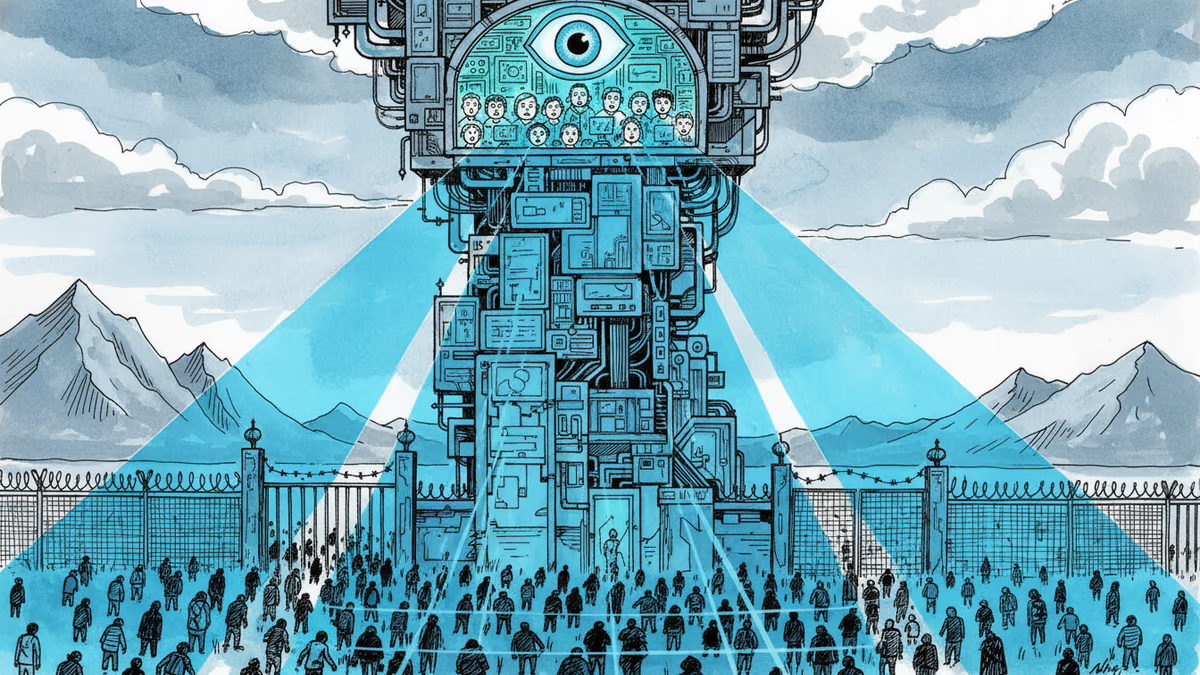
Palantir has become the tech backbone of Trump's immigration enforcement. Former employees are calling it a 'descent into fascism.' What happens when the people who build surveillance tools start asking uncomfortable questions?
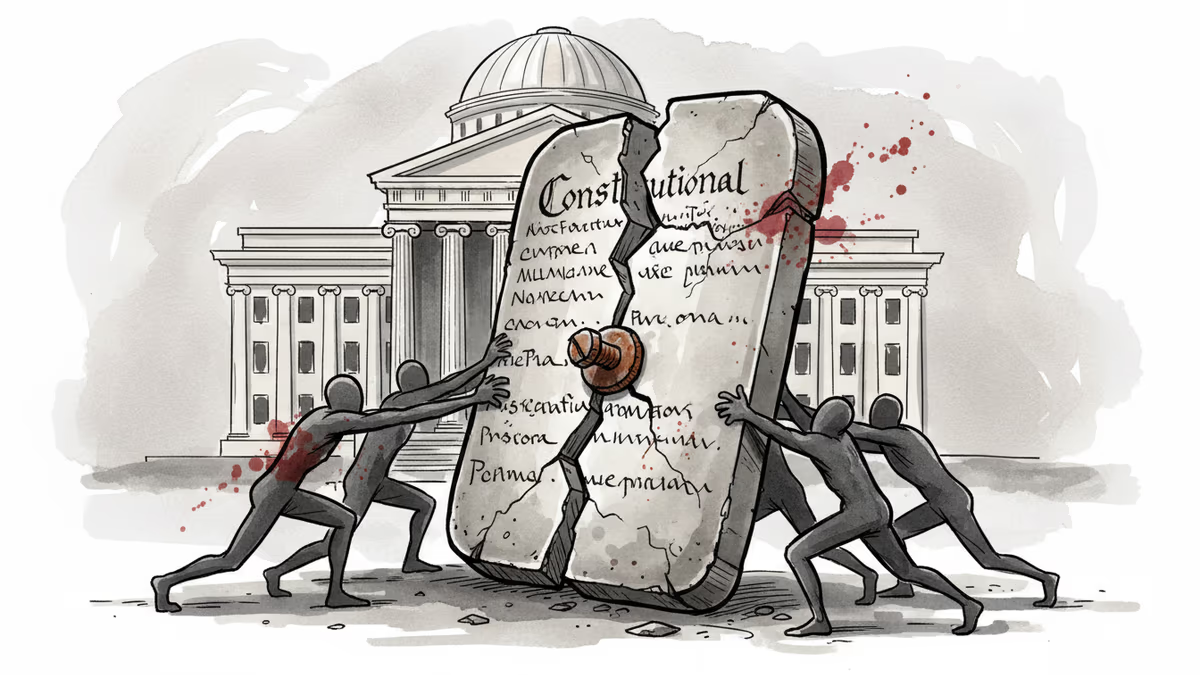
The Supreme Court heard arguments over Trump's birthright citizenship order. The justices seemed skeptical—but the fact that this case made it to the highest court signals something bigger.
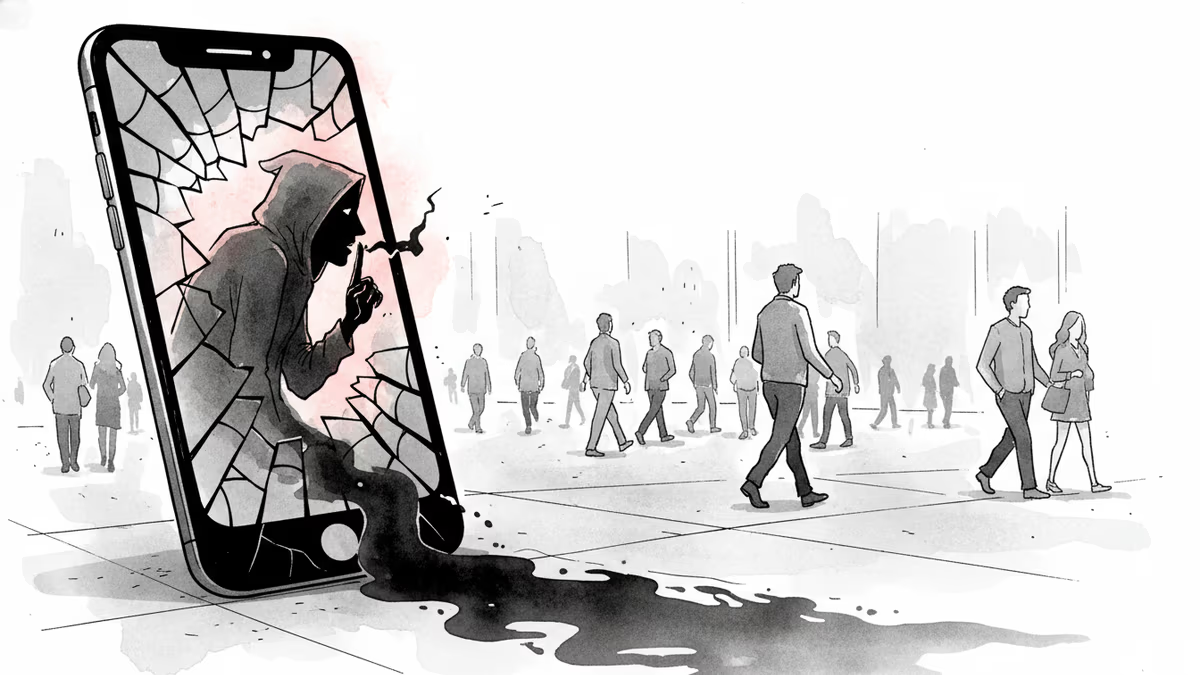
P3 Global Intel, which powers anonymous crime tip systems for law enforcement worldwide, suffered a major breach. The implications go far beyond a typical data leak.
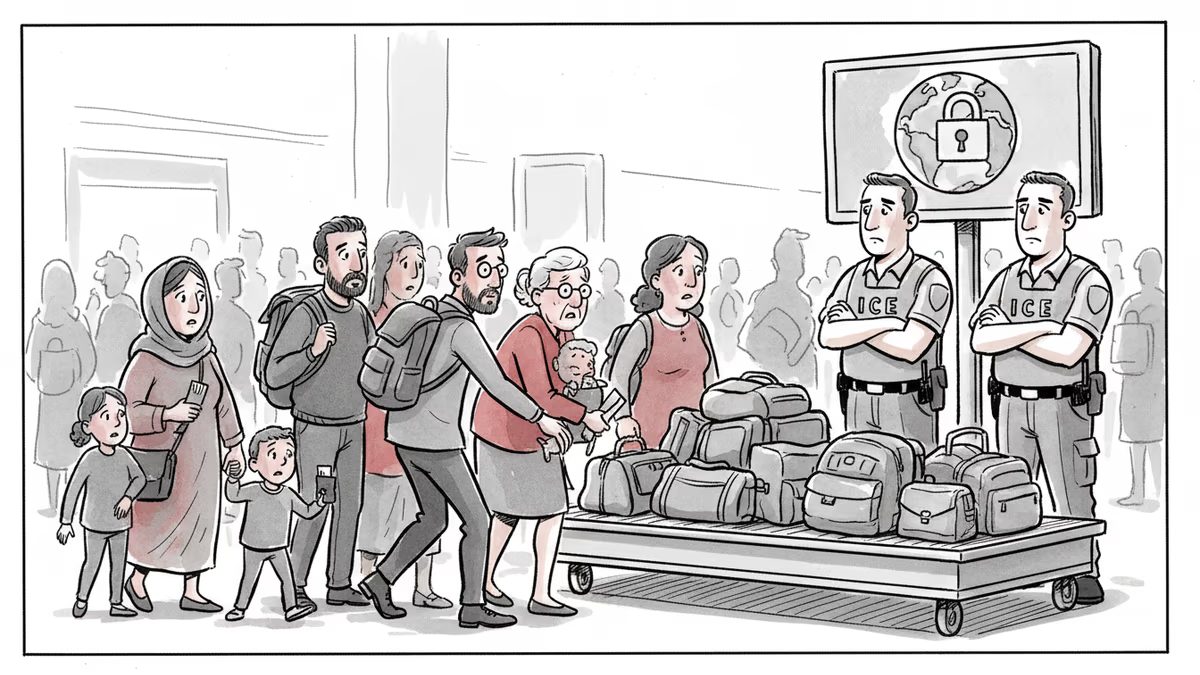
ICE agents have been deployed to 14 US airports, officially to fill TSA staffing gaps during the government shutdown. But the line between security assistance and immigration enforcement is blurring fast.
Palantir has become the tech backbone of Trump's immigration enforcement. Former employees are calling it a 'descent into fascism.' What happens when the people who build surveillance tools start asking uncomfortable questions?
The Supreme Court heard arguments over Trump's birthright citizenship order. The justices seemed skeptical—but the fact that this case made it to the highest court signals something bigger.
P3 Global Intel, which powers anonymous crime tip systems for law enforcement worldwide, suffered a major breach. The implications go far beyond a typical data leak.
ICE agents have been deployed to 14 US airports, officially to fill TSA staffing gaps during the government shutdown. But the line between security assistance and immigration enforcement is blurring fast.
Thoughts
Share your thoughts on this article
Sign in to join the conversation