
The 4mm Paradox: Why Thinner Foldables Are Getting Thicker Where It Matters
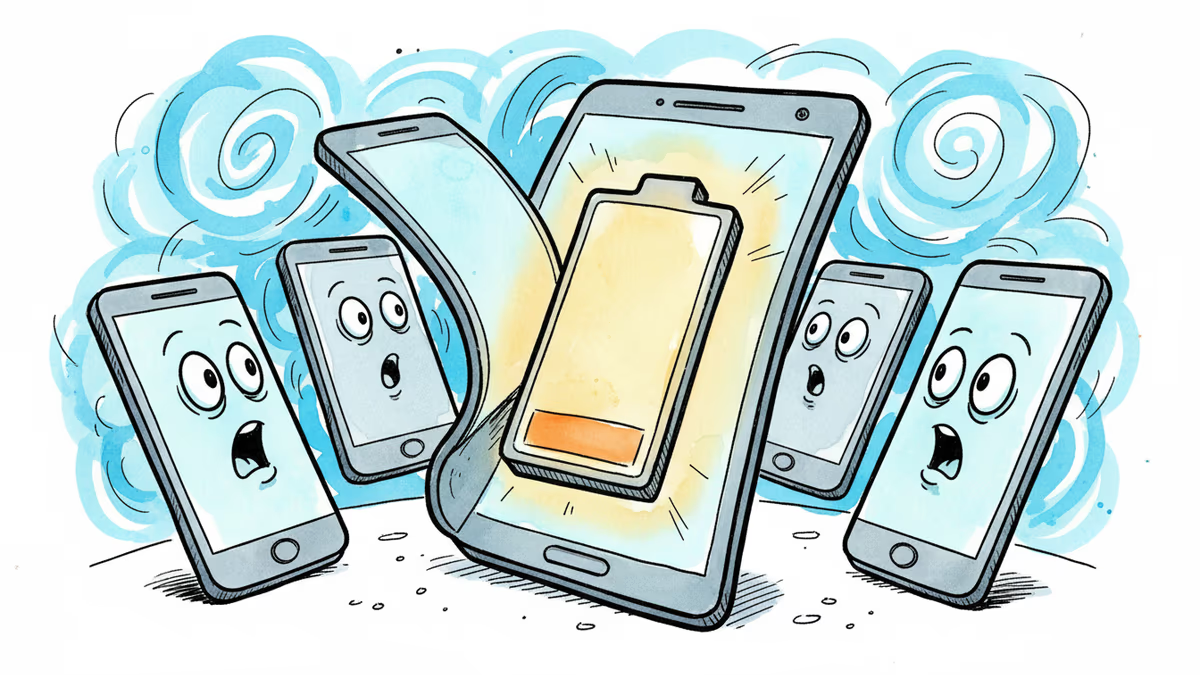
Honor's Magic V6 claims the thinnest foldable crown at 4mm, but the real innovation lies in its 6,600mAh battery. A new battleground emerges in the foldable wars.
4mm Meets 6,600mAh: The Engineering Impossibility Made Real
A sheet of paper measures 0.1mm thick. Honor's Magic V6, when unfolded, measures 4mm—the thickness of 40 sheets. That's just 0.1mm thinner than last year's model. Yet somehow, they crammed in 780mAh more battery capacity. Thinner device, longer battery life? This contradictory achievement poses a fundamental question to the foldable industry.
"Is thinness really the future of foldables?"
The Chinese Thickness Obsession That Changed the Game
Over three years, Honor has slashed foldable thickness from 12mm to 4mm—a two-thirds reduction. But this numbers game reveals an interesting paradox. Samsung's Galaxy Z Fold6 remains "thick" at 12.1mm (when folded), yet still dominates market share globally.
Honor's strategy differs. Use thinness for headlines, but place the real bet on battery technology. The 6,600mAh capacity exceeds most regular smartphones. Given that foldables run dual displays—inherently power-hungry—this capacity provides genuine all-day usage without compromise.
More intriguing is their roadmap tease: silicon-carbon battery technology targeting 7,000mAh+ capacity. With 32% silicon density, they're pushing energy efficiency to new limits.
The Apple Integration Gamble: Coexistence Over Competition
Perhaps the boldest move isn't hardware—it's software strategy. Magic V6 offers two-way notification sync with iPhones. Notifications appear on your Apple Watch. One-tap file sharing with Macs. Even extended display functionality.

This represents a strategic shift for Android manufacturers. Instead of building walled gardens to compete with Apple's ecosystem, Honor chooses infiltration through integration. But this approach carries risks. One iOS update could disable these features entirely, leaving Honor users stranded.
The question becomes: Is Apple comfortable with this level of Android integration, or will they view it as ecosystem contamination?
What This Means for Established Players
For Samsung, Honor's approach presents a dilemma. Samsung's foldable strategy has prioritized durability and ecosystem integration over raw specifications. Their 25W charging speeds pale against Honor's 80W wired and 66W wireless capabilities—a 3x difference.
Yet Samsung retains advantages Honor can't easily replicate: brand trust, global service networks, and deep carrier relationships. Honor's "select international markets in H2 2026" suggests they're still testing waters rather than launching full-scale assaults.
Apple, meanwhile, faces an interesting decision. Their rumored foldable iPhone timeline keeps shifting, partly due to technical challenges Honor seems to have solved. Do they accelerate development, or let Android manufacturers fight among themselves first?
The Real Competition Isn't Thickness
The foldable market's maturation reveals a shift in consumer priorities. Early adopters tolerated thick devices and short battery life for novelty. Mainstream consumers demand practical daily drivers.
Honor's 44% crease reduction and 2,800 MPa hinge strength address real usability concerns. The 1.5% reflectivity anti-glare coating tackles outdoor visibility—a common foldable weakness.
These improvements matter more than millimeter differences. Yet the industry remains fixated on thinness metrics that consumers rarely notice in real-world usage.
Authors
Related Articles
Donut Lab claims breakthrough solid-state battery tech with 5-minute charging and 400Wh/kg density. Experts are skeptical. Could this unknown startup really leapfrog industry giants?

Donut Lab's solid-state battery passed independent testing, but the real question isn't about performance—it's about production scale and industry disruption.

Analyzing how foldable phones with large screens and mobile computing power are challenging the traditional laptop market, from Samsung Galaxy Fold to future mobile workstations.

Google's Pixel 10 Pro Fold achieves IP68 rating, solving foldables' biggest weakness. How this milestone changes the game for Samsung, Motorola, and the entire foldable market
Donut Lab claims breakthrough solid-state battery tech with 5-minute charging and 400Wh/kg density. Experts are skeptical. Could this unknown startup really leapfrog industry giants?
Donut Lab's solid-state battery passed independent testing, but the real question isn't about performance—it's about production scale and industry disruption.
Analyzing how foldable phones with large screens and mobile computing power are challenging the traditional laptop market, from Samsung Galaxy Fold to future mobile workstations.
Google's Pixel 10 Pro Fold achieves IP68 rating, solving foldables' biggest weakness. How this milestone changes the game for Samsung, Motorola, and the entire foldable market
Thoughts
Share your thoughts on this article
Sign in to join the conversation