
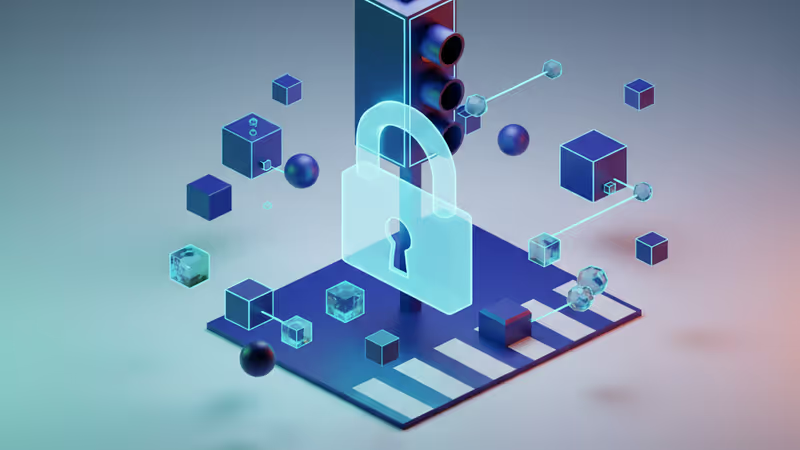
Simple Mistakes, Big Echoes: The Palo Alto Crosswalk Hack Truth
The Palo Alto crosswalk hack was revealed to be a simple case of unchanged default passwords. Discover how Elon Musk and Mark Zuckerberg's fake voices took over.
It wasn't a sophisticated cyberattack from a nation-state, nor a genius-level exploit. Last year, the heart of Silicon Valley faced a bizarre security breach when a dozen voice-enabled crosswalks in Palo Alto began broadcasting deepfake versions of Elon Musk and Mark Zuckerberg. While many initially suspected a high-tech Bluetooth vulnerability, the reality behind the hack turned out to be far more mundane—and embarrassing.
Palo Alto Crosswalk Hack Caused by Default Passwords
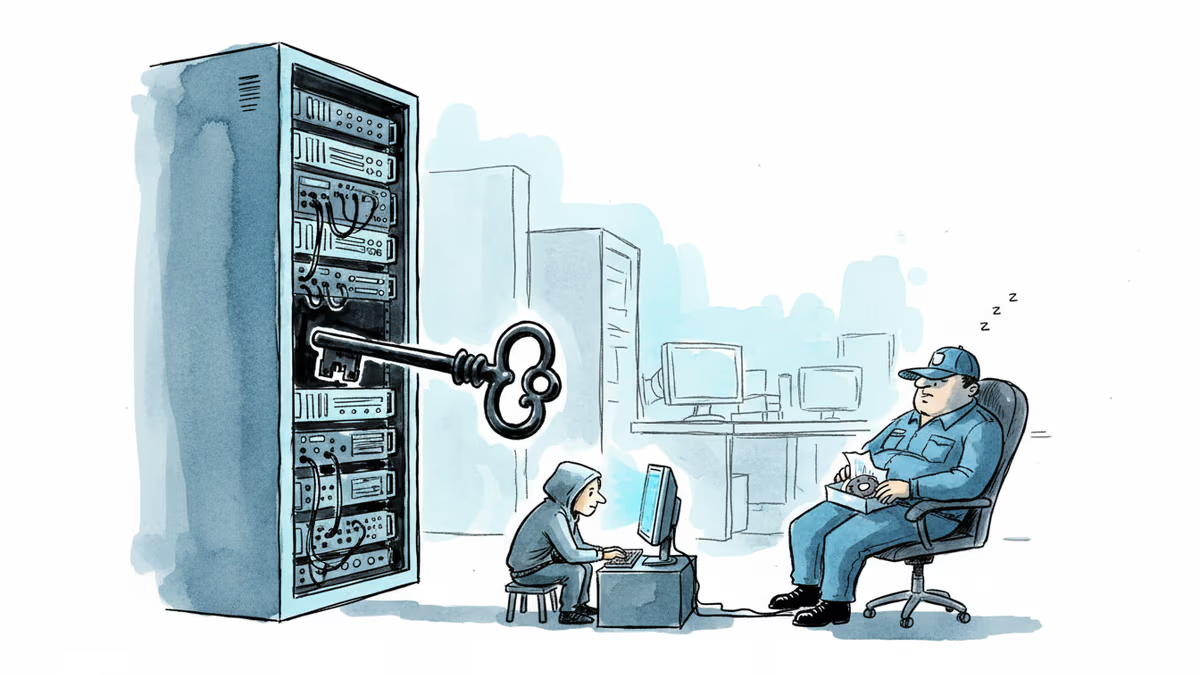
According to reports from Boing Boing, the crosswalks were compromised simply because the default passwords had never been changed. The hackers didn't need to write complex code; they merely used factory-set credentials that are often available in public manuals online. This allowed them to bypass local security and replace standard crossing instructions with mocking audio clips of tech billionaires.

The Growing Risks of IoT Negligence
The city has since updated the passwords and secured the hardware, but the incident highlights a massive blind spot in smart city infrastructure. As cities rush to implement IoT devices for efficiency, basic security hygiene often takes a backseat. Cybersecurity enthusiasts point out that thousands of similar devices likely remain active across the country with their original factory settings intact.
Authors
Related Articles
A critical vulnerability in Starlette—downloaded 325 million times per week—puts millions of AI agent servers at risk, exposing stored credentials for email, databases, and third-party services.
GitHub confirmed hackers stole data from 3,800 internal repositories via a poisoned VS Code extension. Here's why developer tools are now the most dangerous attack surface in tech.
A Utah woman was sentenced to life in prison partly because of her Google searches and deleted texts. The Kouri Richins case reveals how digital footprints have become the courtroom's most reliable witness.
Dirty Frag gives low-privilege users root access on virtually every Linux distro. The exploit code leaked three days ago. Microsoft says attackers are already experimenting with it.
A critical vulnerability in Starlette—downloaded 325 million times per week—puts millions of AI agent servers at risk, exposing stored credentials for email, databases, and third-party services.
GitHub confirmed hackers stole data from 3,800 internal repositories via a poisoned VS Code extension. Here's why developer tools are now the most dangerous attack surface in tech.
A Utah woman was sentenced to life in prison partly because of her Google searches and deleted texts. The Kouri Richins case reveals how digital footprints have become the courtroom's most reliable witness.
Dirty Frag gives low-privilege users root access on virtually every Linux distro. The exploit code leaked three days ago. Microsoft says attackers are already experimenting with it.
Thoughts
Share your thoughts on this article
Sign in to join the conversation