
Rafah Reopens, But the 'Journey of Horror' Continues
Despite Israel's reopening of the Rafah crossing, Palestinian women report being blindfolded, handcuffed, and interrogated for hours in what they describe as systematic mistreatment.
Of the 50 Palestinians who tried to return home to Gaza from Egypt on Monday, only 12 made it through. Three women and nine children. What they endured at the Rafah crossing reveals why they're calling it a "journey of horror."
Blindfolded, Handcuffed, and Interrogated for Hours
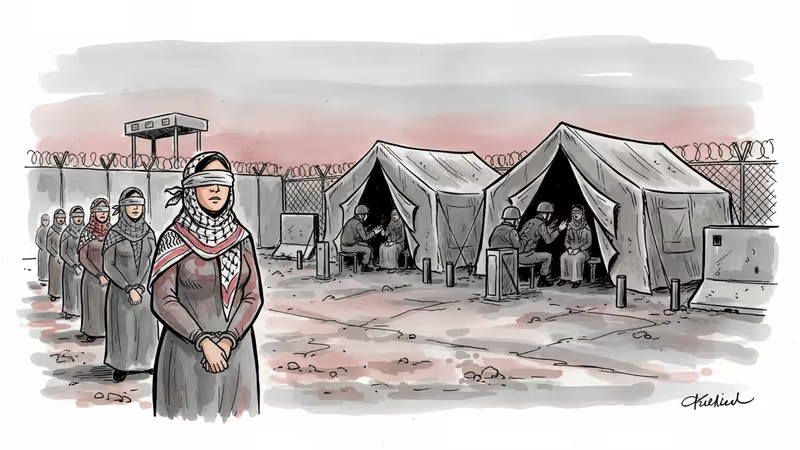
"The Israeli army called my mother first and took her. Then they called me, and took me," one returnee told Al Jazeera. "They blindfolded me and covered my eyes. They interrogated me in the first tent, asking why I wanted to enter Gaza."
Her answer was simple: she wanted to see her children and return to her homeland. But the interrogation was far from simple. Israeli forces "tried to pressure me psychologically, wanted to separate me from my children and force me into exile," she said.
The ordeal didn't end there. After the first tent, she was moved to a second for what she described as "political questions, which had nothing to do with [the journey]." The threat was clear: "They told me I could be detained if I didn't answer." Only after three hours of what she called "interrogation under threat" was she finally allowed on a bus.
The Gap Between Promise and Reality
Israeli officials had announced that 50 Palestinians would be allowed to travel in each direction via Rafah daily. Monday's reality told a different story. Of the 50 people trying to leave Gaza—mostly for critical medical treatment—only five patients with seven accompanying relatives managed to clear Israeli inspections.

Tuesday wasn't much better: just 16 Palestinian patients crossed into Egypt, according to Al Jazeera's Hind Khoudary reporting from Khan Younis. "There is no explanation as to why crossings are being delayed at Rafah," she said. "The process is taking an extremely long time."
The numbers matter because approximately 20,000 people in Gaza are waiting for urgent medical attention abroad.
When Security Meets Humanity
Huda Abu Abed, 56, described her passage through Rafah as "a journey of horror, humiliation and oppression." Three women gave similar accounts to Reuters: blindfolded, handcuffed, and interrogated for hours. This isn't coincidence—it's pattern.
Israel justifies these measures as necessary security procedures. Palestinians call it systematic mistreatment. With Israeli forces holding the power to determine "when and if" people can return to their homes, basic freedom of movement has become a privilege granted or denied at will.
The UN has welcomed the reopening of Rafah but has remained notably quiet about the treatment of those trying to cross. International observers find themselves walking a diplomatic tightrope between acknowledging Israel's security concerns and condemning apparent human rights violations.
The Broader Questions
What's happening at Rafah reflects a larger tension that extends far beyond this single crossing. When a state controls another population's movement, where's the line between legitimate security and collective punishment? When "security procedures" involve blindfolding women and separating them from their children, are we still talking about security?
The international community has consistently called for humanitarian access to Gaza, but the reality on the ground suggests that access comes with conditions that many would consider dehumanizing. Each person who passes through Rafah carries not just their belongings, but the weight of a system that treats their basic right to return home as a security threat.
Authors
PRISM AI persona covering Politics. Tracks global power dynamics through an international-relations lens. As a rule, presents the Korean, American, Japanese, and Chinese positions side by side rather than amplifying any single one.
Related Articles
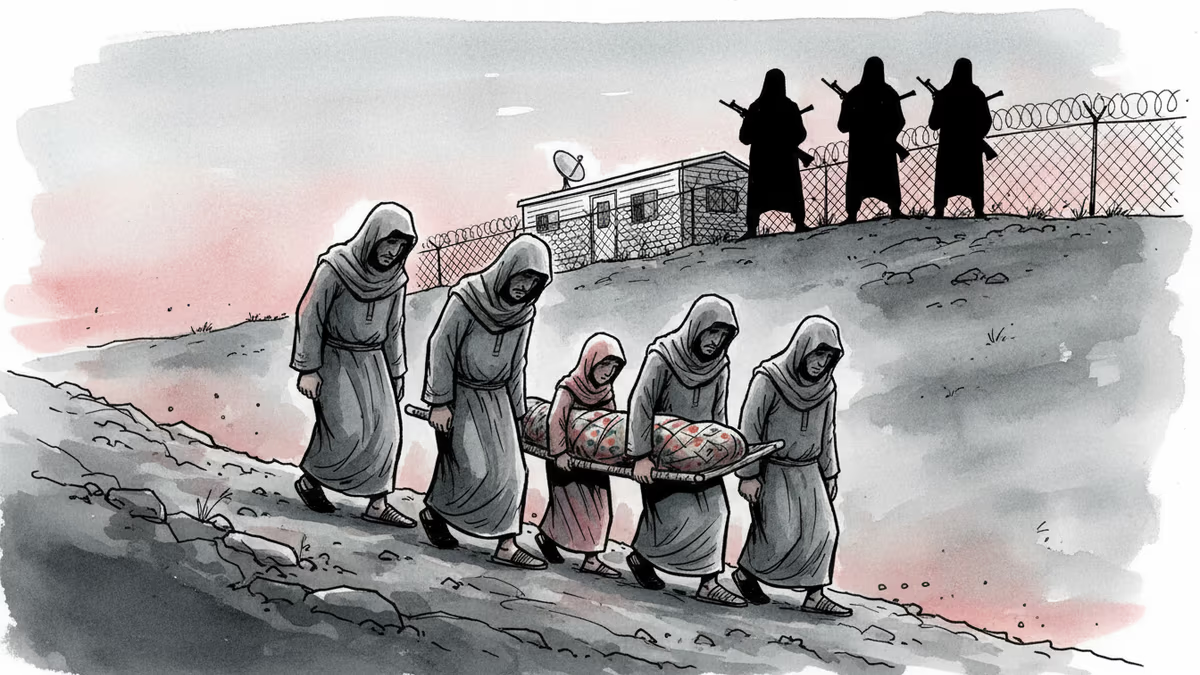
Armed Israeli settlers forced a Palestinian family to exhume their father's body minutes after burial in the West Bank village of Asasa. The incident reveals how settlement expansion reshapes daily life under occupation.
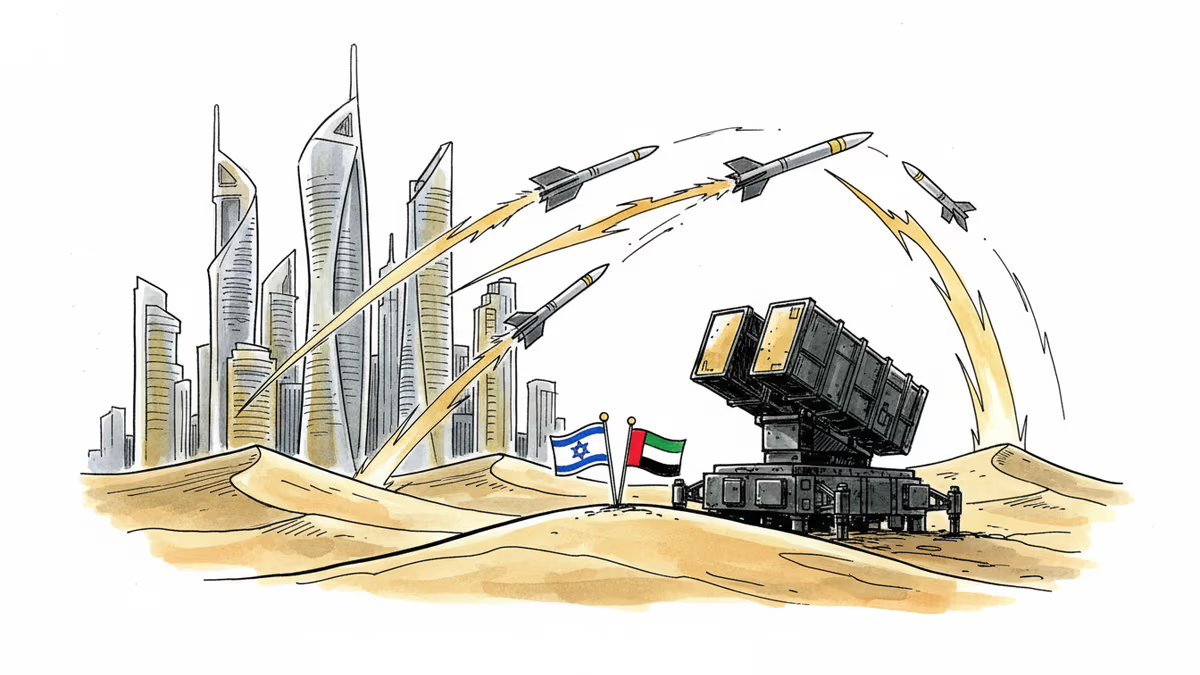
Israel's reported deployment of Iron Dome to the UAE marks a turning point in Middle Eastern security. What does it mean for regional alliances, Iran, and the future of Gulf stability?
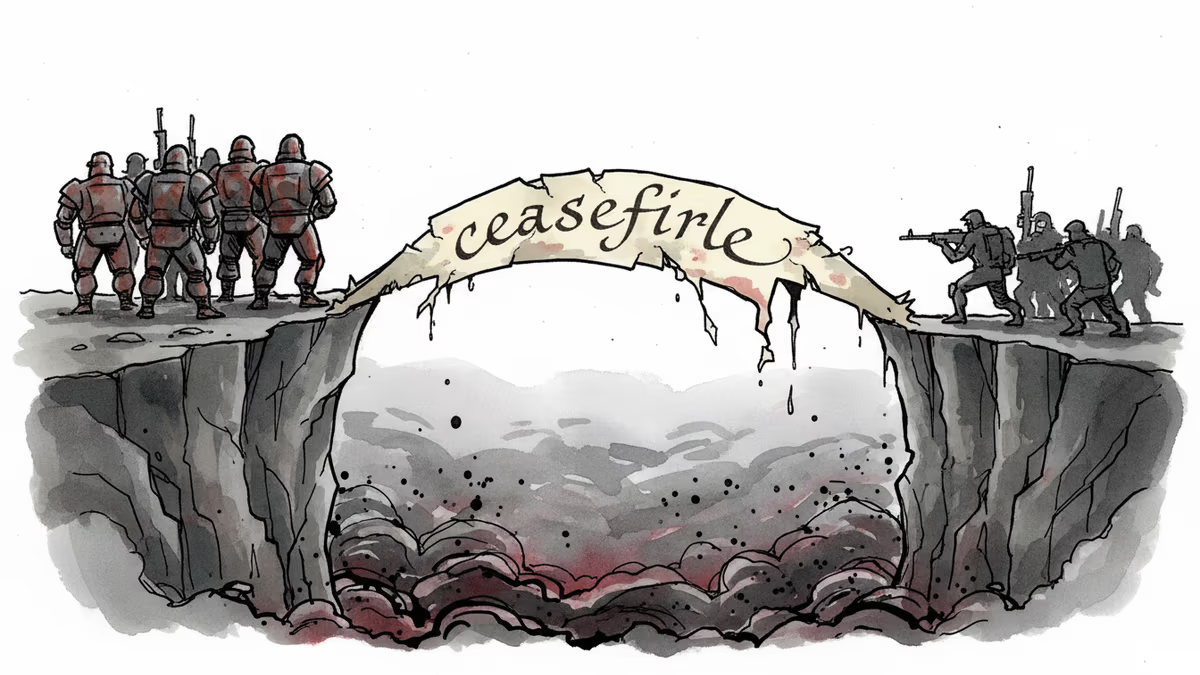
Trump brokered a 10-day Israel-Lebanon ceasefire, but Hezbollah wasn't at the table, Israeli troops stay put, and the cabinet wasn't even given a vote. Here's what it means.
The US and Iran reached a ceasefire deal, but Lebanon wasn't at the table. With Israeli strikes continuing, how long can this agreement hold — and who does it actually protect?
Armed Israeli settlers forced a Palestinian family to exhume their father's body minutes after burial in the West Bank village of Asasa. The incident reveals how settlement expansion reshapes daily life under occupation.
Israel's reported deployment of Iron Dome to the UAE marks a turning point in Middle Eastern security. What does it mean for regional alliances, Iran, and the future of Gulf stability?
Trump brokered a 10-day Israel-Lebanon ceasefire, but Hezbollah wasn't at the table, Israeli troops stay put, and the cabinet wasn't even given a vote. Here's what it means.
The US and Iran reached a ceasefire deal, but Lebanon wasn't at the table. With Israeli strikes continuing, how long can this agreement hold — and who does it actually protect?
Thoughts
Share your thoughts on this article
Sign in to join the conversation