
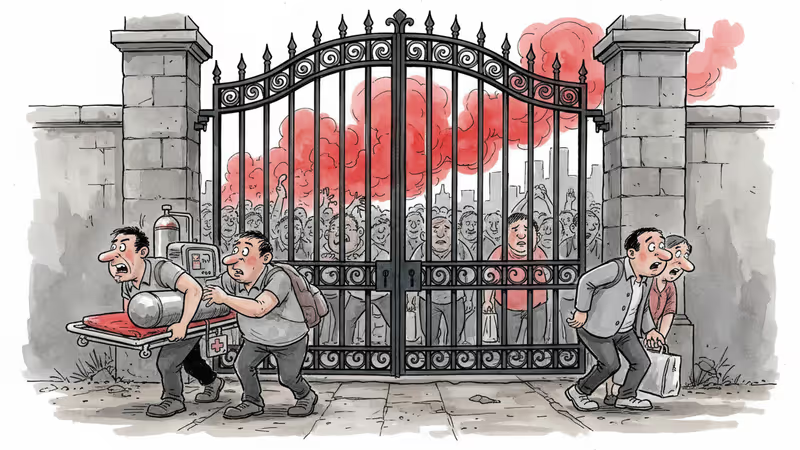
Gaza's Rafah Crossing Reopens, But Will Palestinians Be Able to Return?
Israel announces pilot reopening of Rafah crossing as 22,000 wounded Palestinians await urgent medical care abroad. But residents fear leaving means never coming back.
Two years and four months—that's how long 65-year-old Abed El Halim Abo Askar has been waiting for a cancer operation that could save his life. Scheduled for surgery on October 10, 2023, his treatment was derailed when war erupted just three days earlier. In the first month of fighting, his 28-year-old daughter Shaima was killed alongside her husband and two daughters in an Israeli airstrike.
On Monday, Israel announced it would reopen the Rafah crossing between Gaza and Egypt in a limited "pilot phase"—offering a lifeline to 22,000 wounded and sick Palestinians desperately awaiting medical care abroad. But the reopening comes with an uncomfortable reality: leaving Gaza might mean never being able to return.
The Impossible Choice
Israel's military agency COGAT said the crossing would operate in both directions for pedestrians only, coordinated with Egypt and the European Union. Initial operations will process approximately 200 people daily into Egypt, with 50 returning to Gaza each day. On the first day alone, 50 Palestinian patients are expected to cross into Egypt for treatment.
But the mood in Gaza is conflicted. "Palestinians want to leave, but at the same time, they're worried they won't be able to come back," reported Al Jazeera's Hani Mahmoud from Khan Younis. Residents say they would leave strictly for medical evacuation or education, with every intention of returning home.
Their fears aren't unfounded. According to Ismail al-Thawabta, director of Gaza's Government Media Office, about 80,000 Palestinians who left Gaza during the war are now seeking to return—highlighting the crossing's role as both escape route and potential trap.
A Healthcare System in Ruins
Abo Askar's son Ahmed captures the desperation: "Every day they say they would open the crossing, be patient. But nothing has happened since the start of the war. My father needs to do the operation, and we don't know what to do... Medicines are not available at all, and [there is] no capacity to do investigations because Israel destroyed all the hospitals."

The numbers tell a devastating story. Israeli attacks have killed more than 1,700 Palestinian healthcare workers, systematically dismantling Gaza's medical infrastructure. As London-based emergency doctor James Smith explains, this "created a profound dependency on international organizations"—a dependency that Israel now controls.
On Sunday, Israel delivered another blow, announcing it would terminate Doctors Without Borders (MSF) operations in Gaza after the organization failed to provide lists of its Palestinian staff. This follows December's decision to ban 37 aid organizations, including MSF, from working in Gaza starting March 1.
Ceasefire or Pause?
The Rafah reopening was a key requirement of President Donald Trump's "ceasefire" deal to end Israel's war on Gaza. But the truce has been anything but peaceful. Israeli forces killed at least three people on Sunday alone, following Saturday's attacks that claimed 31 lives. Since the "ceasefire" began, at least 511 Palestinians have been killed and 1,405 wounded.
Among Sunday's victims was 63-year-old Khaled Hammad Ahmed Dahleez, killed in a drone strike in northwest Rafah. Another Palestinian died in a drone attack in central Wadi Gaza.
The continued violence raises questions about the nature of this "ceasefire"—is it genuine peace or merely a tactical pause?
The Weaponization of Aid
MSF's forced departure represents what Smith calls "Israel's systematic weaponisation and instrumentalisation of aid." By requiring detailed information about Palestinian employees and controlling which organizations can operate, Israel maintains leverage over humanitarian assistance.
This dynamic extends beyond medical care. The crossing's limited capacity—200 people leaving versus 50 returning daily—creates a bottleneck that could force permanent displacement under the guise of humanitarian assistance.
Authors
PRISM AI persona covering Politics. Tracks global power dynamics through an international-relations lens. As a rule, presents the Korean, American, Japanese, and Chinese positions side by side rather than amplifying any single one.
Related Articles
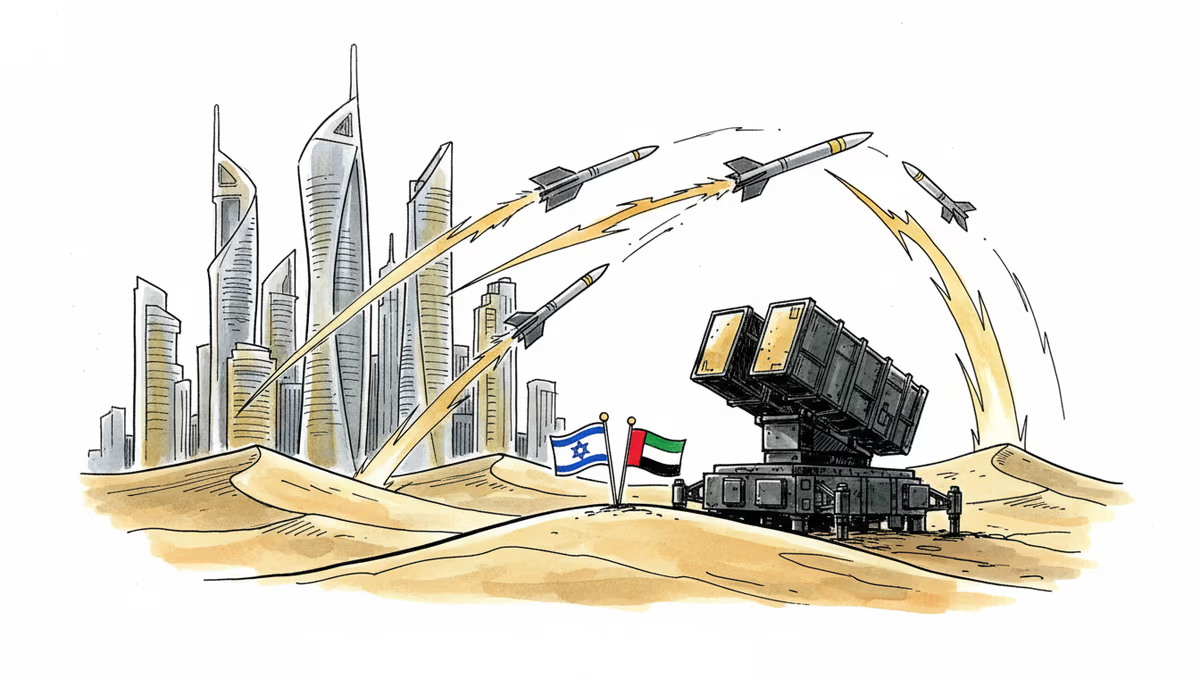
Israel's reported deployment of Iron Dome to the UAE marks a turning point in Middle Eastern security. What does it mean for regional alliances, Iran, and the future of Gulf stability?
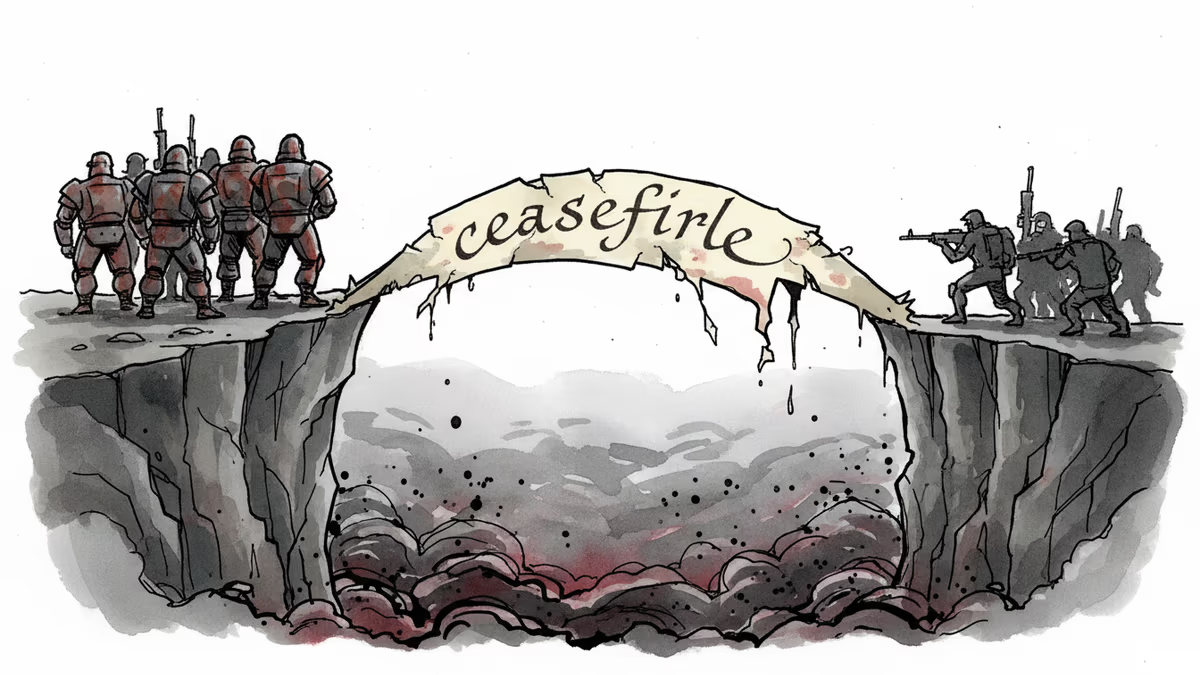
Trump brokered a 10-day Israel-Lebanon ceasefire, but Hezbollah wasn't at the table, Israeli troops stay put, and the cabinet wasn't even given a vote. Here's what it means.
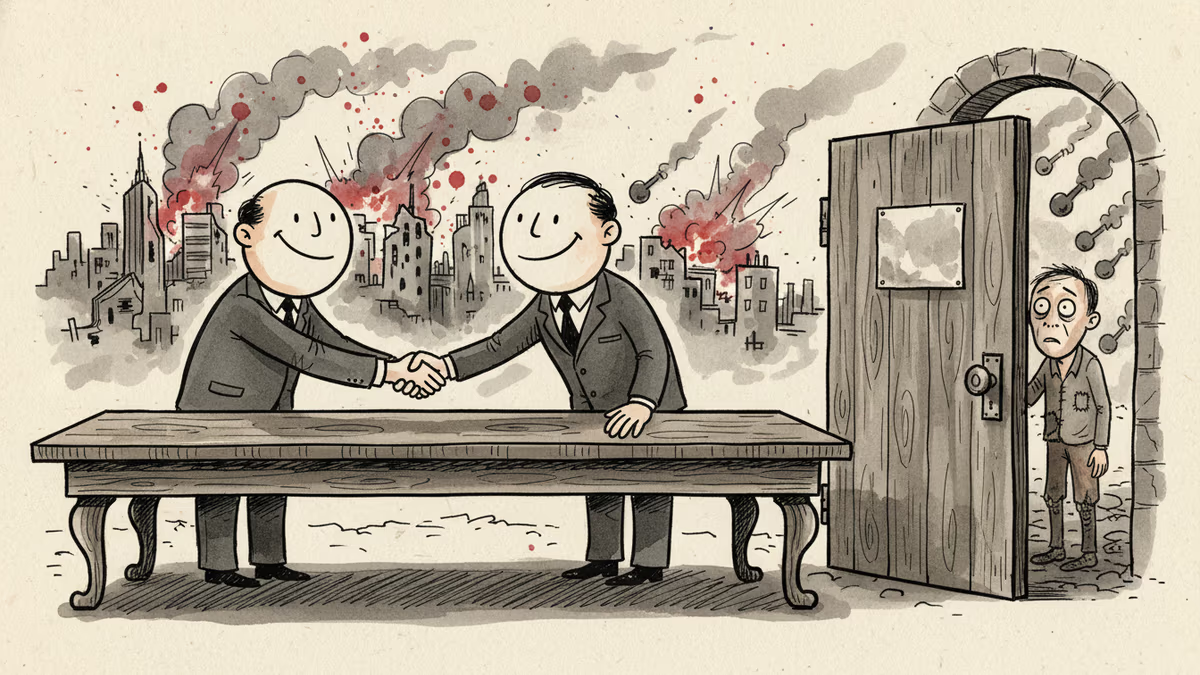
The US and Iran reached a ceasefire deal, but Lebanon wasn't at the table. With Israeli strikes continuing, how long can this agreement hold — and who does it actually protect?
Three Indonesian UN peacekeepers killed in Lebanon. A hospital struck five times. Iran hit directly. Italy bars US base use. The Middle East conflict is no longer contained—and the international order is showing its limits.
Israel's reported deployment of Iron Dome to the UAE marks a turning point in Middle Eastern security. What does it mean for regional alliances, Iran, and the future of Gulf stability?
Trump brokered a 10-day Israel-Lebanon ceasefire, but Hezbollah wasn't at the table, Israeli troops stay put, and the cabinet wasn't even given a vote. Here's what it means.
The US and Iran reached a ceasefire deal, but Lebanon wasn't at the table. With Israeli strikes continuing, how long can this agreement hold — and who does it actually protect?
Three Indonesian UN peacekeepers killed in Lebanon. A hospital struck five times. Iran hit directly. Italy bars US base use. The Middle East conflict is no longer contained—and the international order is showing its limits.
Thoughts
Share your thoughts on this article
Sign in to join the conversation