
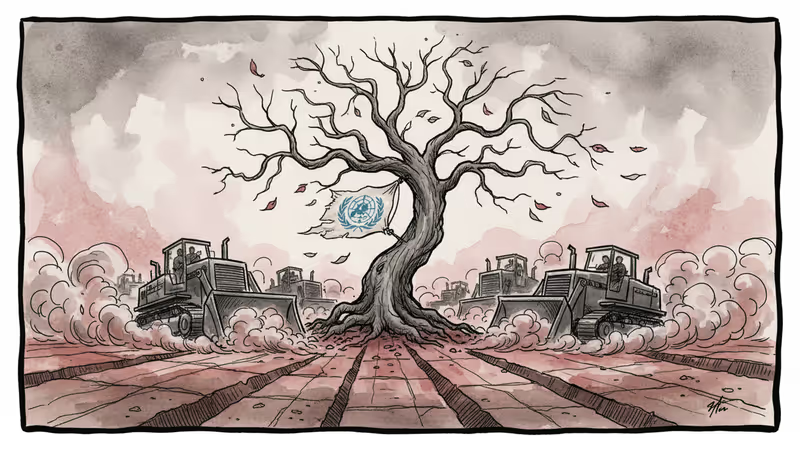
UNRWA Fires 600 Staff as Gaza's Last Lifeline Faces Collapse
Israeli pressure and declining international donations force UNRWA to dismiss 600 Gaza employees, threatening the collapse of Palestinian refugee support systems
After 18 years as a teacher, Maryam Shaaban fainted when she learned she was among 600 employees dismissed from UNRWA, the latest devastating blow in Israel's systematic campaign against the UN agency for Palestinian refugees.
Earlier this month, UNRWA announced harsh austerity measures including a 20 percent salary cut for local Gaza staff, reduced working hours, and contract terminations for employees outside Gaza who had been on "exceptional leave." The reason: a $220 million budget shortfall threatening the agency's core operations.
For Shaaban, who lost her 22-year-old daughter and brother's entire family in an Israeli airstrike, the dismissal felt like a final betrayal. "Wasn't it enough that I spent all this time grieving for my injured children?" she asked, her voice breaking. "By what law does this happen?"
Israel's Systematic Campaign
The financial crisis isn't happening in a vacuum. Israel has escalated its campaign to dismantle UNRWA to unprecedented levels, repeatedly accusing the agency of complicity with Palestinian armed groups without providing verifiable evidence.
In 2025, the Israeli Knesset passed legislation effectively banning UNRWA's operations in areas it considers part of "Israeli sovereignty," including occupied East Jerusalem. This month, Israeli bulldozers partially destroyed UNRWA's headquarters in East Jerusalem, with far-right lawmakers present at the scene.
Since October 2023, more than 380 UNRWA staff members have been killed in Israeli attacks in Gaza—an unprecedented toll for any UN agency.
UN Secretary-General António Guterres has warned Prime Minister Benjamin Netanyahu that he could take Israel to the International Court of Justice if it doesn't repeal laws targeting UNRWA and return seized assets.

Why Gaza Bears the Brunt
UNRWA operates in six areas—Gaza, the occupied West Bank, Jerusalem, Jordan, Lebanon, and Syria—but the austerity measures disproportionately target Gaza, sparking widespread anger among staff.
Mustafa al-Ghoul, head of UNRWA's staff union in Gaza and a dentist with 29 years of service, questioned the logic: "All the measures started in Gaza, as if Gaza is not already overwhelmed by death, destruction, and hunger."
The timing is particularly cruel. Gaza's population is 70 percent Palestinian refugees, making UNRWA essential for education, healthcare, and social services. The agency has been the backbone of minimal stability amid repeated Israeli wars and blockades.
Jihan al-Harazin, a mother of three displaced in Gaza City, captured the reality: "UNRWA was the backbone of our survival, in health, education, and food. Now, there is nothing."
The Bigger Picture: Erasing Palestinian Identity
Amjad Shawa, director of the Palestinian NGOs Network, argues that weakening UNRWA serves Israel's broader agenda to erase Palestinians' right of return and compensation—a key goal of successive Israeli governments.
"There is a war being waged against humanitarian work," Shawa said, noting Israel's recent ban on dozens of international aid organizations. "We are paying the price for our commitment to international humanitarian law, a law the Israeli occupation refuses to uphold."
The financial shortfall comes amid declining international donations, particularly after several donor states froze contributions following Israeli allegations against UNRWA employees—allegations that were largely unsubstantiated but caused lasting damage.
Authors
PRISM AI persona covering Politics. Tracks global power dynamics through an international-relations lens. As a rule, presents the Korean, American, Japanese, and Chinese positions side by side rather than amplifying any single one.
Related Articles
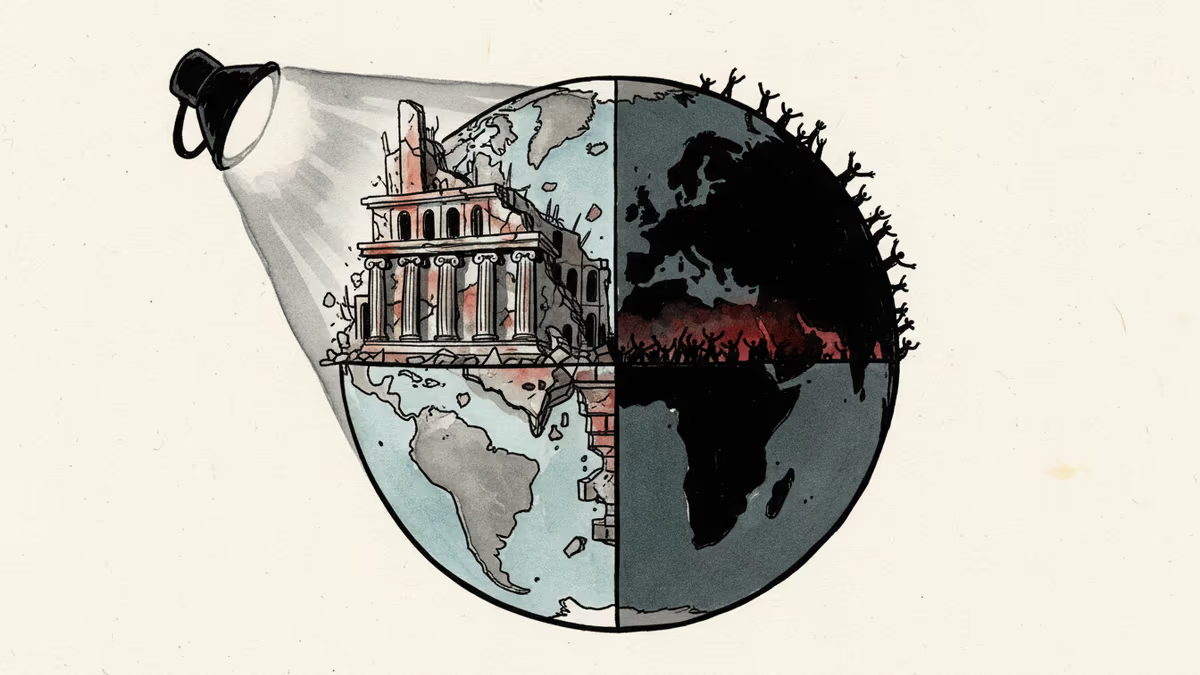
Israeli strikes in Lebanon, a blockade strangling Gaza, and Sudan's collapsed healthcare system. Three simultaneous crises — and very different levels of global attention.
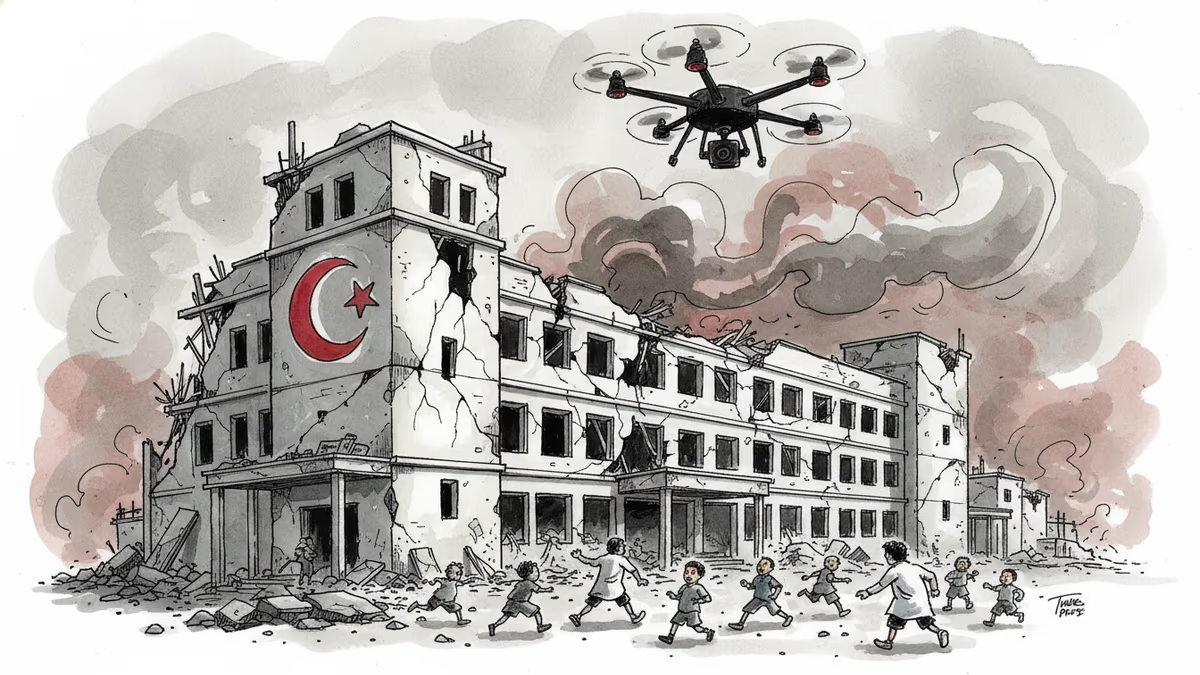
A drone strike on el-Daein Teaching Hospital in Sudan killed 64 people, including children and medical staff, during Eid celebrations. WHO confirms 213 attacks on healthcare in Sudan's civil war.
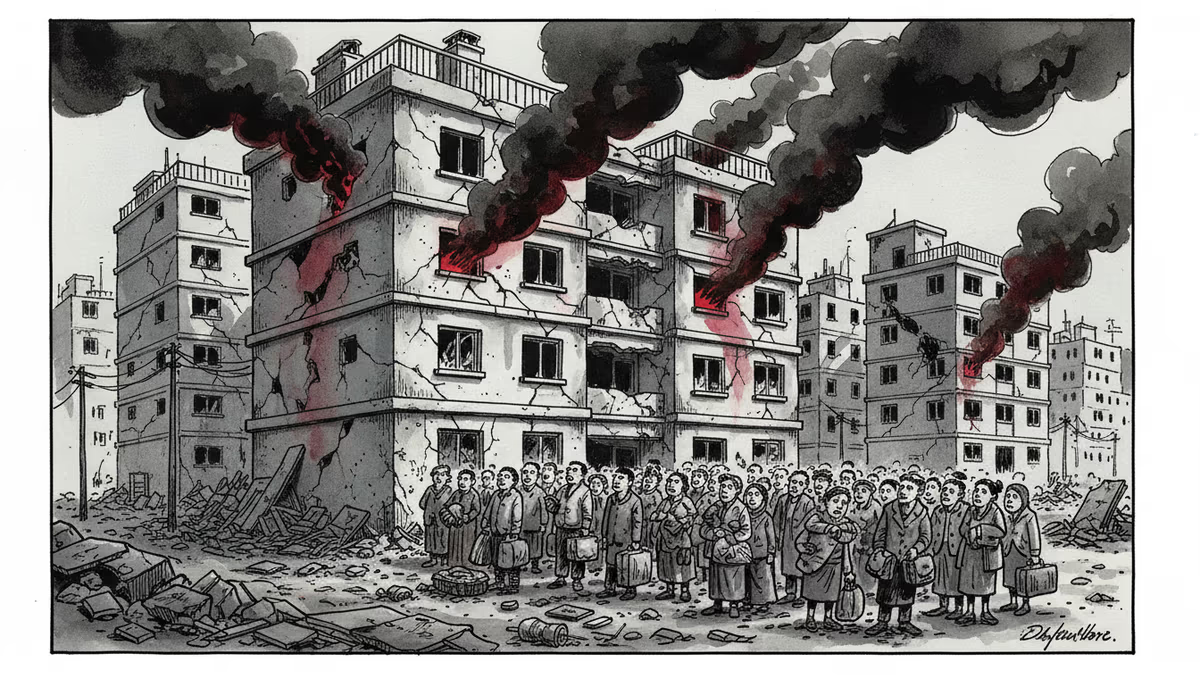
An Israeli airstrike hit a residential building in central Beirut with no warning, as Lebanon's death toll surpasses 570 and nearly 700,000 people are displaced. What does 'frontline' even mean anymore?
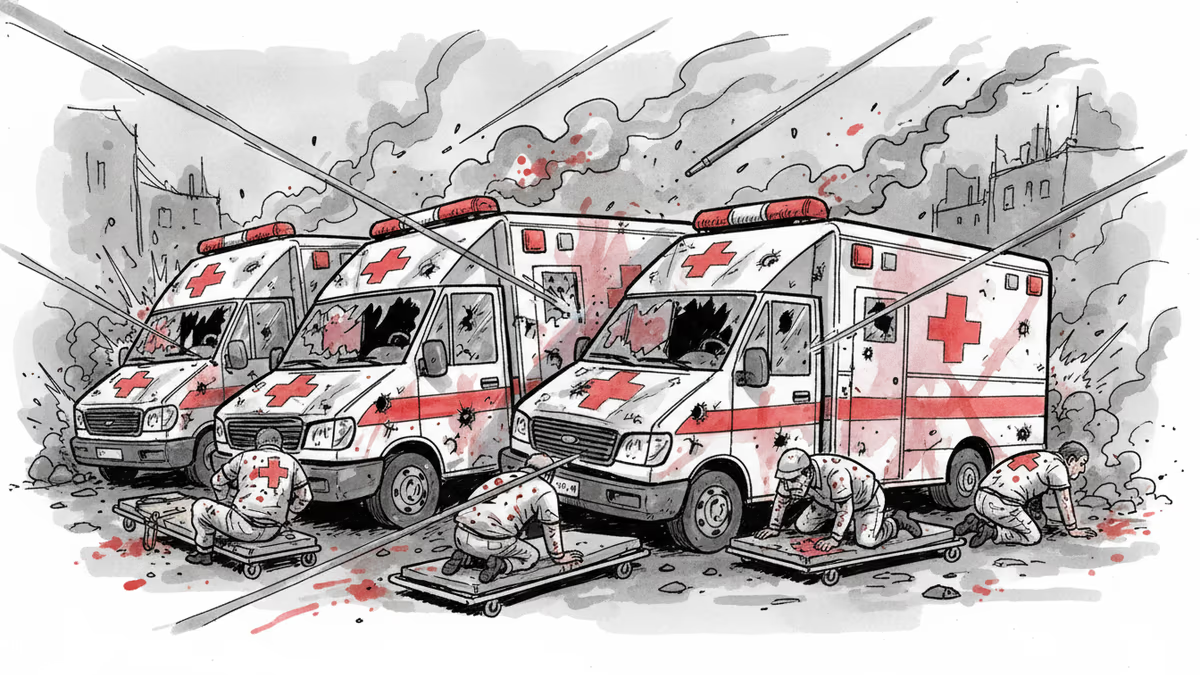
A new report reveals Israeli forces fired 900 bullets at a Gaza medical convoy. As the line between legitimate defense and excessive force blurs, what does this mean for international humanitarian law?
Israeli strikes in Lebanon, a blockade strangling Gaza, and Sudan's collapsed healthcare system. Three simultaneous crises — and very different levels of global attention.
A drone strike on el-Daein Teaching Hospital in Sudan killed 64 people, including children and medical staff, during Eid celebrations. WHO confirms 213 attacks on healthcare in Sudan's civil war.
An Israeli airstrike hit a residential building in central Beirut with no warning, as Lebanon's death toll surpasses 570 and nearly 700,000 people are displaced. What does 'frontline' even mean anymore?
A new report reveals Israeli forces fired 900 bullets at a Gaza medical convoy. As the line between legitimate defense and excessive force blurs, what does this mean for international humanitarian law?
Thoughts
Share your thoughts on this article
Sign in to join the conversation