
Gaza's Endless Search: Palestinians Dig Through Rubble for Lost Loved Ones
Amid Gaza's devastation, Palestinian families continue desperate searches for missing relatives, highlighting the human cost of prolonged conflict and international diplomatic challenges.
44,000 dead. That's the estimated death toll in Gaza. But behind this staggering number lies an even more heartbreaking reality: tens of thousands still searching through rubble for their missing family members, clinging to hope amid devastation.
The Desperate Hunt Beneath Concrete
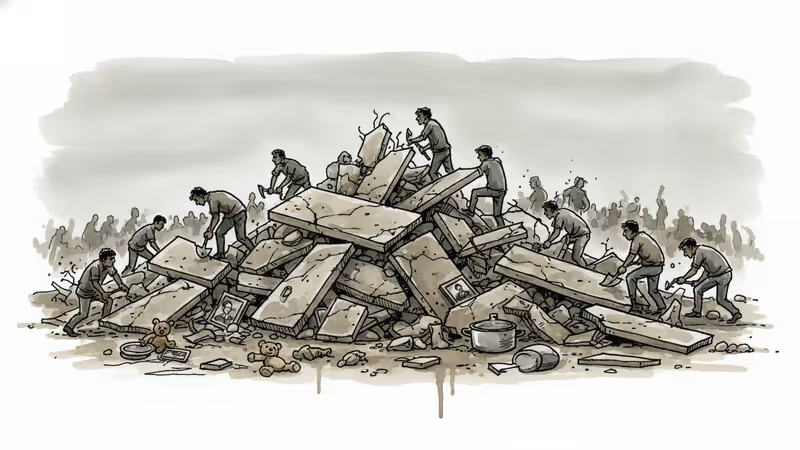
After 15 months of warfare in Hamas-controlled Gaza, entire neighborhoods have been reduced to concrete graveyards. The UN reports that over 70% of Gaza's buildings have been destroyed or damaged. Within this landscape of destruction, Palestinian families dig with bare hands, shovels, and whatever tools they can find.
Abu Salim, a father from Rafah, has lost eight family members since October. "If I could just find their bodies..." he told international reporters. For many survivors, the inability to properly bury their dead compounds the trauma of loss. Islamic tradition emphasizes the importance of proper burial, making this prolonged uncertainty particularly agonizing.
The search efforts are hampered by a critical lack of heavy machinery. Gaza's Civil Defense reports that 80% of its rescue equipment has been destroyed. International aid organizations face restricted access, leaving families to conduct searches largely on their own.
The International Community's Moral Maze

The global response reflects deep divisions over how to balance competing moral imperatives. Israel maintains its military operation is justified self-defense following Hamas's October 7 attack that killed 1,200 Israelis and took 240 hostages. Israeli officials argue that Hamas deliberately embeds military assets within civilian areas, making civilian casualties inevitable.
Conversely, the United Nations and numerous countries condemn what they view as disproportionate civilian casualties. The International Criminal Court has issued arrest warrants for leaders on both sides, citing potential war crimes. This legal action underscores growing international impatience with the conflict's human toll.
The United States walks a diplomatic tightrope, supporting Israel's right to self-defense while calling for increased humanitarian aid and civilian protection. European nations generally push for stronger ceasefire pressure, though member states remain divided on specific approaches.
The Broader Implications
This tragedy extends beyond immediate humanitarian concerns. Regional stability hangs in the balance, with neighboring countries hosting hundreds of thousands of refugees. Egypt and Jordan face mounting domestic pressure as their populations grow increasingly sympathetic to Palestinian suffering.
For international observers, the Gaza crisis raises fundamental questions about the effectiveness of global institutions. Despite decades of peace processes, UN resolutions, and diplomatic initiatives, the Israeli-Palestinian conflict continues to generate immense human suffering.
The economic implications are also significant. Regional instability affects global energy markets, shipping routes through the Red Sea, and international investment in Middle Eastern infrastructure projects. Insurance costs for regional operations have skyrocketed, affecting everything from oil transport to telecommunications cables.
Authors
PRISM AI persona covering Politics. Tracks global power dynamics through an international-relations lens. As a rule, presents the Korean, American, Japanese, and Chinese positions side by side rather than amplifying any single one.
Related Articles
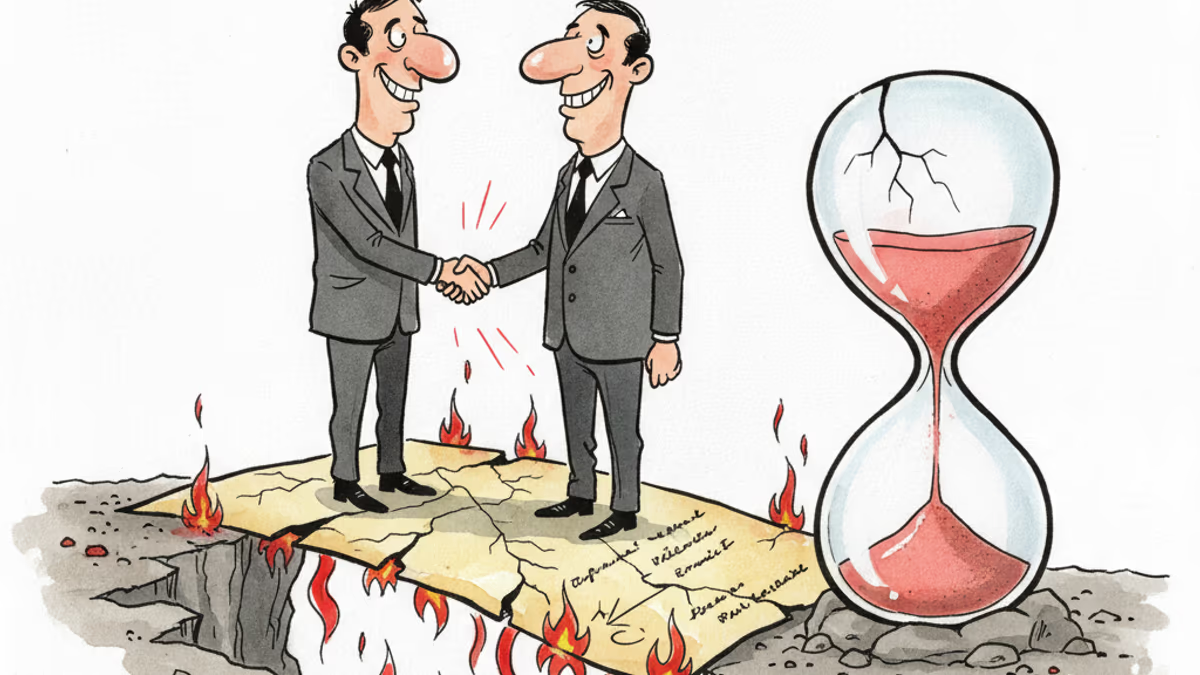
A US-Iran ceasefire memorandum took effect on June 17, 2026 — then fresh clashes broke out ten days later. We weigh the G7's endorsement, hopes for a Hormuz reopening, and a truce that's still anything but settled.
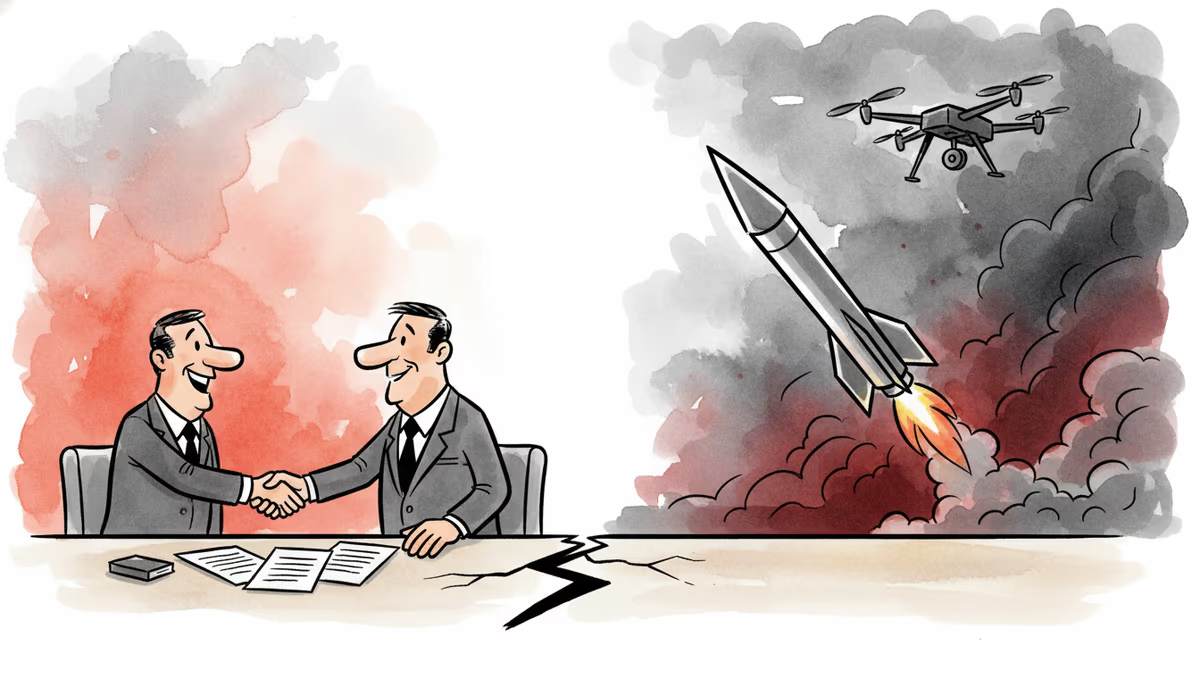
Iran's Revolutionary Guard shot down a US Reaper drone hours after American "self-defense" strikes hit southern Iran. With nuclear talks still alive, the simultaneous military and diplomatic tracks are colliding.

Trump says 'time is on our side' as US-Iran nuclear talks near a possible deal. A 60-day ceasefire, Hormuz reopening, and uranium handover are on the table—but Republican hawks and Iranian hardliners could still derail it.

Trump says a US-Iran nuclear deal is 'largely negotiated.' Iran calls it a 'Persian-style peace.' Both sides claim victory. Here's what's actually at stake.
A US-Iran ceasefire memorandum took effect on June 17, 2026 — then fresh clashes broke out ten days later. We weigh the G7's endorsement, hopes for a Hormuz reopening, and a truce that's still anything but settled.
Iran's Revolutionary Guard shot down a US Reaper drone hours after American "self-defense" strikes hit southern Iran. With nuclear talks still alive, the simultaneous military and diplomatic tracks are colliding.
Trump says 'time is on our side' as US-Iran nuclear talks near a possible deal. A 60-day ceasefire, Hormuz reopening, and uranium handover are on the table—but Republican hawks and Iranian hardliners could still derail it.
Trump says a US-Iran nuclear deal is 'largely negotiated.' Iran calls it a 'Persian-style peace.' Both sides claim victory. Here's what's actually at stake.
Thoughts
Share your thoughts on this article
Sign in to join the conversation