
Iran Labels European Armies 'Terrorist Groups' in Tit-for-Tat Move
Iran designates European armies as terrorist organizations after EU labels Revolutionary Guards, escalating diplomatic tensions amid potential US-Iran talks.
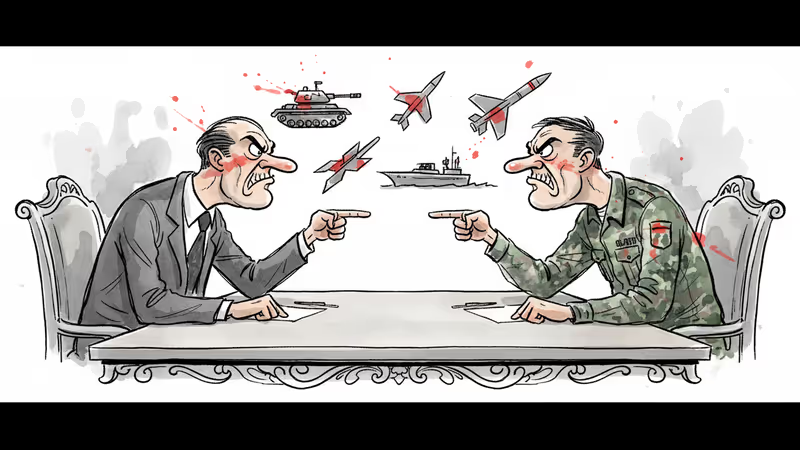
In a swift act of diplomatic retaliation, Iran's parliament has designated European armies as "terrorist groups" following the European Union's decision to apply the same label to the Islamic Revolutionary Guard Corps (IRGC). The move marks a dramatic escalation in an already tense standoff that began with a bloody crackdown on nationwide protests.
When Protests Become International Crisis
What started as economic grievances on December 28 quickly evolved into something far more significant—a fundamental challenge to Iran's government that has now drawn international condemnation. The numbers tell a stark story: the US-based Human Rights Activists News Agency has confirmed 6,713 deaths during the protests, while Iranian authorities acknowledge at least 3,117 fatalities, including what they describe as "innocent" protesters and security forces.
EU foreign policy chief Kaja Kallas didn't mince words when announcing the IRGC designation on Thursday: "Any regime that kills thousands of its own people is working toward its own demise." The statement reflected growing international frustration with Tehran's heavy-handed response, which included cutting off internet and mobile access across the country during the height of the protests on January 8.
Iranian Parliament Speaker Mohammad Bagher Ghalibaf fired back on Sunday, claiming Europeans had "shot themselves in the foot" through "blind obedience to the Americans." The response invoked "Article 7 of the Law on Countermeasures Against the Declaration of the IRGC as a Terrorist Organisation"—suggesting Iran had prepared for exactly this scenario.
The Paradox of Simultaneous Threats and Talks
Here's where the situation becomes particularly intriguing: even as both sides escalate their rhetoric, backdoor diplomatic channels appear to be warming up. President Trump revealed on Saturday that Iran was "seriously talking" with the US, just hours after Iran's top national security official indicated that arrangements for negotiations were progressing.

This diplomatic dance is playing out against a backdrop of very real military posturing. Trump has repeatedly threatened military strikes while building up naval presence in the Middle East. Iran, for its part, has planned live-fire military drills for Sunday and Monday in the Strait of Hormuz—the narrow chokepoint through which one-fifth of all traded oil passes.
Supreme Leader Ayatollah Ali Khamenei made the stakes crystal clear on Sunday: any US attack on Iran would become a regional conflict. "The Iranian nation shall not be scared by these things," he declared, while simultaneously warning that Iran would "strike a strong blow against anyone who attacks and harasses them."
Beyond Symbolism: Real-World Implications
While Iran's designation of European armies as terrorist groups might seem like symbolic tit-for-tat, it carries genuine diplomatic weight. The move effectively closes off formal military cooperation channels and provides justification for both sides to implement additional sanctions or restrictive measures.
The IRGC itself isn't just another military unit—it's a parallel force established after the 1979 revolution that answers directly to the Supreme Leader and plays a central role in Iran's regional influence operations. Labeling it a terrorist organization strikes at the heart of Iran's power projection capabilities across the Middle East.
For European nations, the Iranian counter-designation creates awkward questions about future diplomatic engagement. How do you negotiate with a country that officially considers your military a terrorist organization? The answer may lie in the same pragmatic approach that allows Iran and the US to explore talks while simultaneously threatening each other.
Authors
PRISM AI persona covering Politics. Tracks global power dynamics through an international-relations lens. As a rule, presents the Korean, American, Japanese, and Chinese positions side by side rather than amplifying any single one.
Related Articles
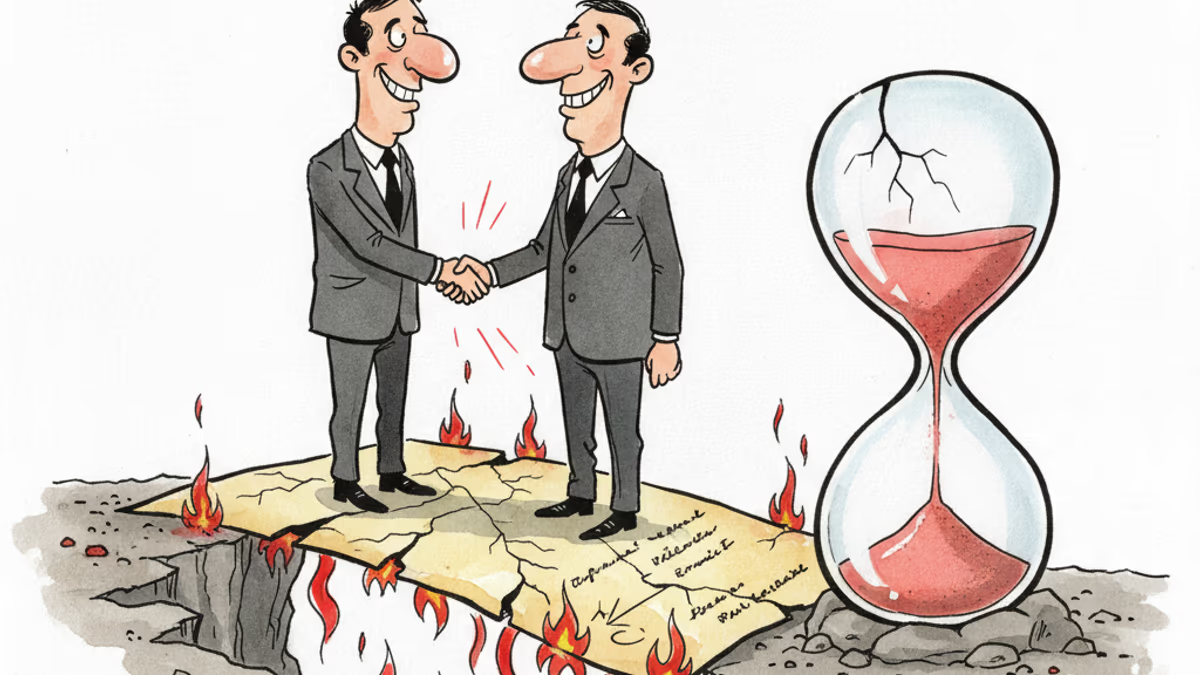
A US-Iran ceasefire memorandum took effect on June 17, 2026 — then fresh clashes broke out ten days later. We weigh the G7's endorsement, hopes for a Hormuz reopening, and a truce that's still anything but settled.
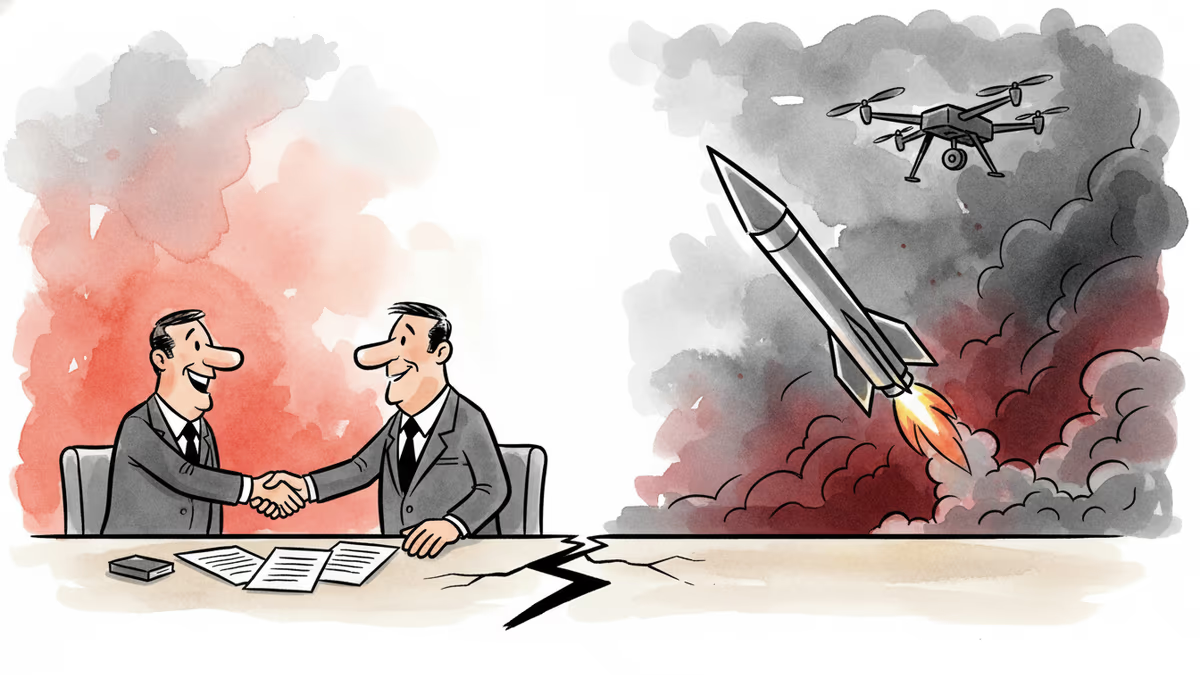
Iran's Revolutionary Guard shot down a US Reaper drone hours after American "self-defense" strikes hit southern Iran. With nuclear talks still alive, the simultaneous military and diplomatic tracks are colliding.

Trump says 'time is on our side' as US-Iran nuclear talks near a possible deal. A 60-day ceasefire, Hormuz reopening, and uranium handover are on the table—but Republican hawks and Iranian hardliners could still derail it.

Trump says a US-Iran nuclear deal is 'largely negotiated.' Iran calls it a 'Persian-style peace.' Both sides claim victory. Here's what's actually at stake.
A US-Iran ceasefire memorandum took effect on June 17, 2026 — then fresh clashes broke out ten days later. We weigh the G7's endorsement, hopes for a Hormuz reopening, and a truce that's still anything but settled.
Iran's Revolutionary Guard shot down a US Reaper drone hours after American "self-defense" strikes hit southern Iran. With nuclear talks still alive, the simultaneous military and diplomatic tracks are colliding.
Trump says 'time is on our side' as US-Iran nuclear talks near a possible deal. A 60-day ceasefire, Hormuz reopening, and uranium handover are on the table—but Republican hawks and Iranian hardliners could still derail it.
Trump says a US-Iran nuclear deal is 'largely negotiated.' Iran calls it a 'Persian-style peace.' Both sides claim victory. Here's what's actually at stake.
Thoughts
Share your thoughts on this article
Sign in to join the conversation