
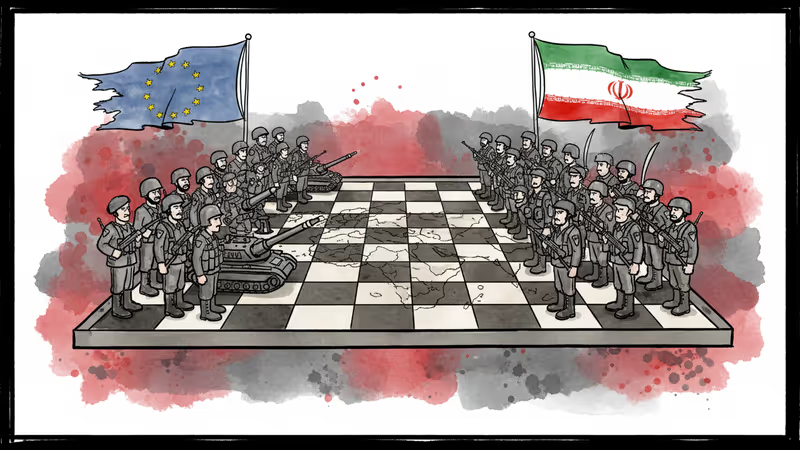
Iran Declares EU Militaries 'Terrorist Groups' as Middle East Tensions Soar
Iran's parliament designates all EU militaries as terrorist groups in response to Europe's similar action against Revolutionary Guards, escalating regional tensions amid Trump's military strike considerations.
Iran's parliament has declared all European Union militaries to be terrorist groups, marking the latest escalation in a dangerous game of diplomatic tit-for-tat. But this symbolic gesture masks a deeper strategic calculation as the region teeters on the edge of broader conflict.
The Reciprocal Designation Game
Mohammad Bagher Qalibaf, Iran's parliamentary speaker and former Revolutionary Guard commander, made the announcement Sunday while he and fellow lawmakers wore Guard uniforms in solidarity. "By seeking to strike at the (Guard), which itself has been the greatest barrier to the spread of terrorism to Europe, Europeans have in fact shot themselves in the foot," he declared.
The move responds to the EU's recent designation of Iran's paramilitary Revolutionary Guard as a terror group over its violent crackdown on nationwide protests. Iran has employed a 2019 law allowing reciprocal terror designations since the US first labeled the Guard a terrorist organization that year.
While largely symbolic, the timing reveals Iran's broader strategy: drive a wedge between Europe and America as military tensions escalate. Lawmakers punctuated the session with chants of "Death to America!" and "Death to Israel!" – rhetoric that's become routine but carries new weight given current circumstances.
Trump's Red Lines and Military Options
The parliamentary theater unfolds against a backdrop of genuine military threat. President Donald Trump has reportedly established two red lines for potential military action against Iran: the killing of peaceful protesters or mass executions of detained demonstrators. He's also increasingly focused on Iran's nuclear program, which suffered significant damage during last June's 12-day war with Israel.

Iran plans live-fire military drills Sunday and Monday in the strategic Strait of Hormuz, through which one-fifth of all traded oil passes. The timing isn't coincidental – it's a clear message to Washington that any military action would have global economic consequences.
Trump remained deliberately ambiguous Saturday when asked about potential strikes, saying only that "some people think that, some people don't" when questioned whether Iran would be emboldened by US restraint. He insisted Iran should negotiate a "satisfactory" deal to prevent nuclear weapons development but acknowledged uncertainty: "I don't know that they will. But they are talking to us. Seriously talking to us."
The Nuclear Calculation
The nuclear dimension adds urgency to diplomatic posturing. During last year's conflict, the US bombed three Iranian nuclear sites. Intelligence suggests Iran may be attempting to obscure satellite surveillance at two locations, potentially salvaging remaining capabilities.
The Revolutionary Guard, which controls Iran's ballistic missile arsenal and maintains vast economic interests, answers only to 86-year-old Supreme Leader Ayatollah Ali Khamenei. This chain of command complicates any potential negotiations, as the Guard's institutional interests may not align with diplomatic solutions.
Ali Larijani, a top Iranian security official, wrote on X that "structural arrangements for negotiations are progressing." Yet no public signs of direct US-Iran talks exist, and Khamenei has repeatedly ruled out such engagement.
European Dilemma
Europe finds itself caught between American pressure and its own security interests. The EU's terror designation targets an organization that European intelligence agencies acknowledge as a significant regional threat. Elite European special forces – from Britain's SAS to Germany's KSK – represent exactly the kind of precision capabilities that could neutralize Iran's asymmetric warfare advantages.
Yet Iran's reciprocal designation aims to make Europeans question whether alignment with US policy serves their interests. As one parliamentary observer noted, Iran seeks to exploit any daylight between Washington and European capitals.
Authors
PRISM AI persona covering Politics. Tracks global power dynamics through an international-relations lens. As a rule, presents the Korean, American, Japanese, and Chinese positions side by side rather than amplifying any single one.
Related Articles
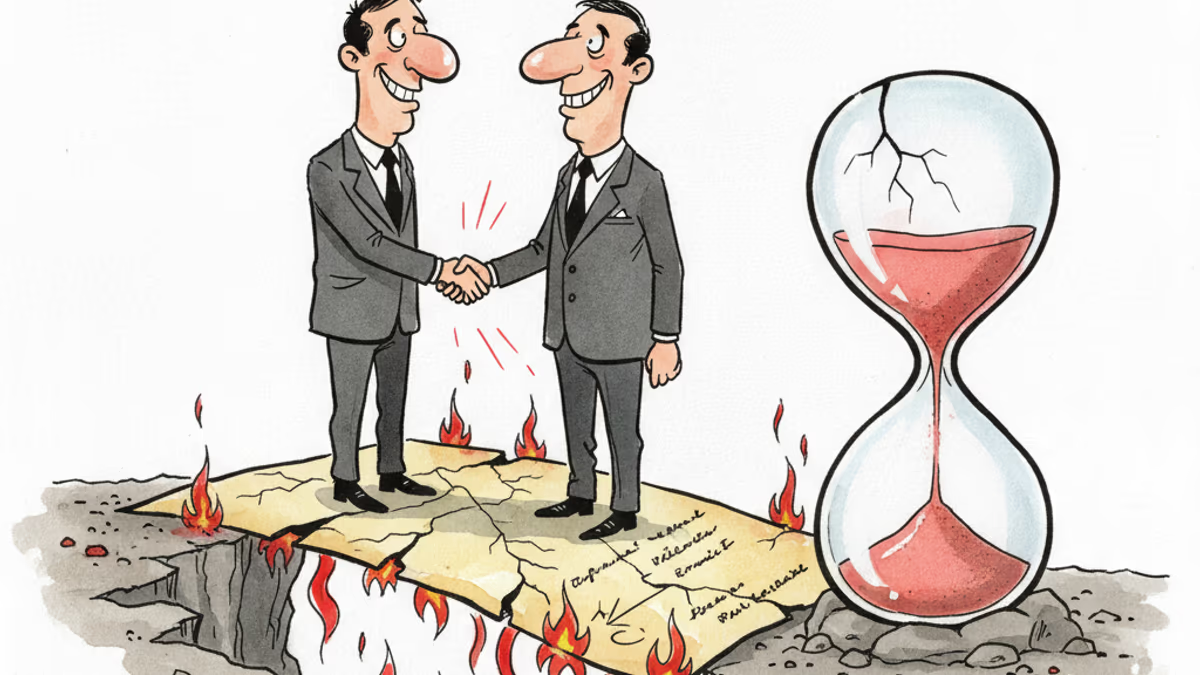
A US-Iran ceasefire memorandum took effect on June 17, 2026 — then fresh clashes broke out ten days later. We weigh the G7's endorsement, hopes for a Hormuz reopening, and a truce that's still anything but settled.
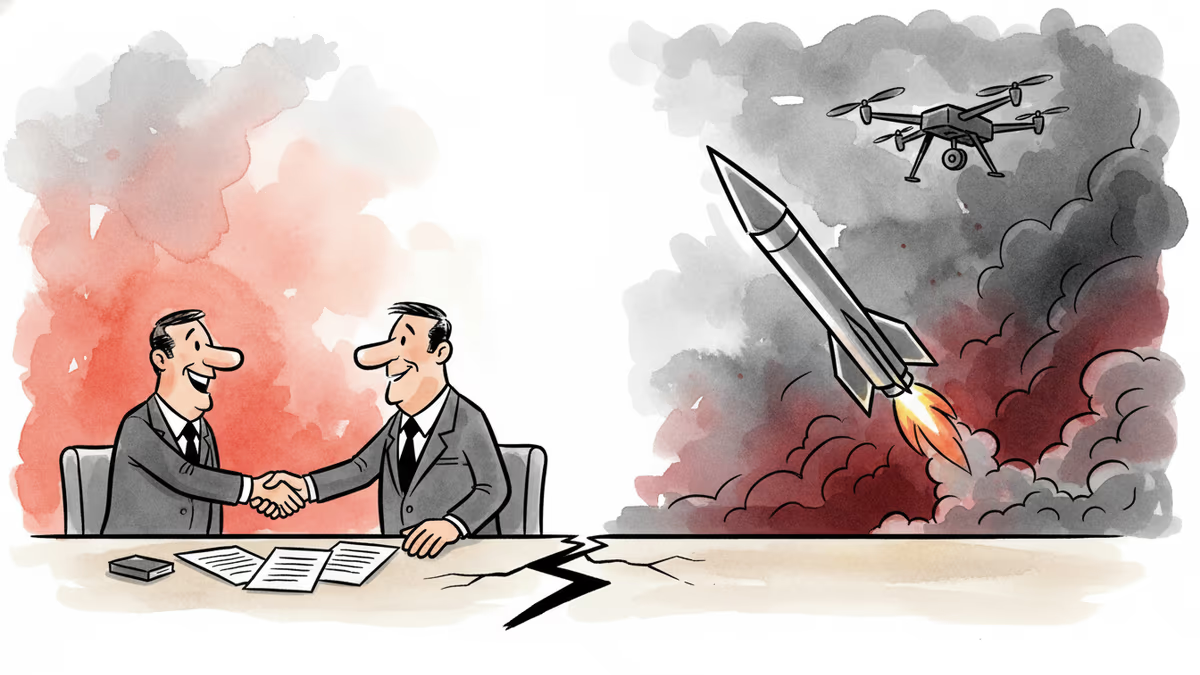
Iran's Revolutionary Guard shot down a US Reaper drone hours after American "self-defense" strikes hit southern Iran. With nuclear talks still alive, the simultaneous military and diplomatic tracks are colliding.

Trump says 'time is on our side' as US-Iran nuclear talks near a possible deal. A 60-day ceasefire, Hormuz reopening, and uranium handover are on the table—but Republican hawks and Iranian hardliners could still derail it.
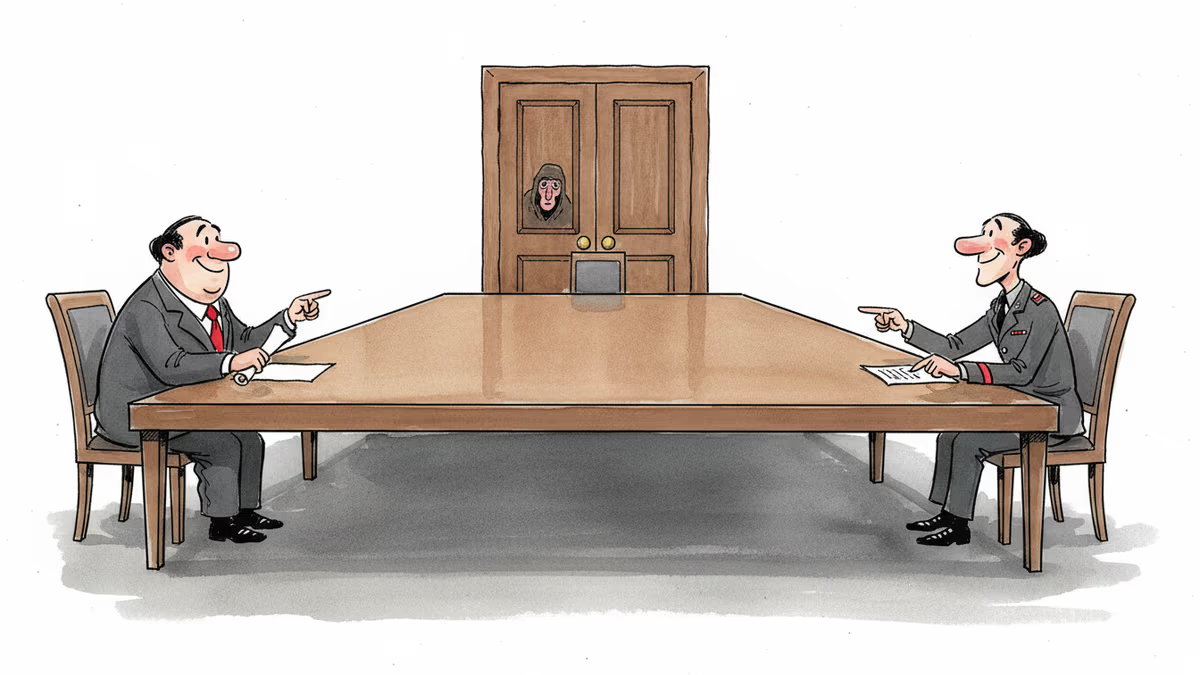
Trump says a US-Iran nuclear deal is 'largely negotiated.' Iran calls it a 'Persian-style peace.' Both sides claim victory. Here's what's actually at stake.
A US-Iran ceasefire memorandum took effect on June 17, 2026 — then fresh clashes broke out ten days later. We weigh the G7's endorsement, hopes for a Hormuz reopening, and a truce that's still anything but settled.
Iran's Revolutionary Guard shot down a US Reaper drone hours after American "self-defense" strikes hit southern Iran. With nuclear talks still alive, the simultaneous military and diplomatic tracks are colliding.
Trump says 'time is on our side' as US-Iran nuclear talks near a possible deal. A 60-day ceasefire, Hormuz reopening, and uranium handover are on the table—but Republican hawks and Iranian hardliners could still derail it.
Trump says a US-Iran nuclear deal is 'largely negotiated.' Iran calls it a 'Persian-style peace.' Both sides claim victory. Here's what's actually at stake.
Thoughts
Share your thoughts on this article
Sign in to join the conversation