
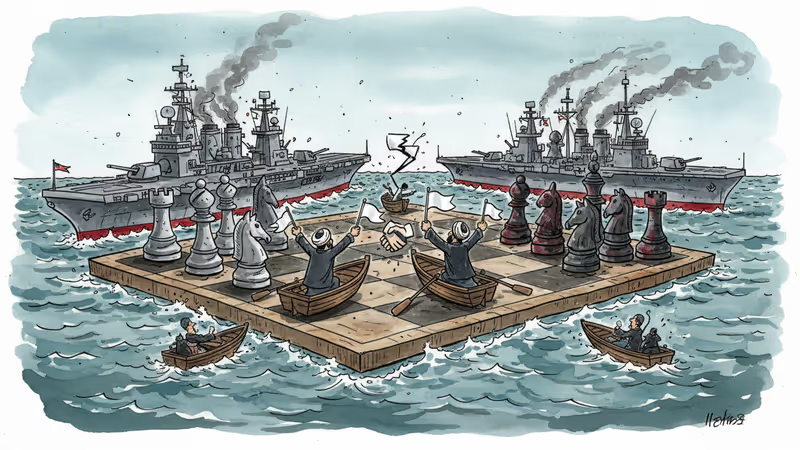
Iran-US Talks Progress Amid Naval Standoff in Hormuz Strait
Iran's top security official claims negotiations with the US are advancing, while Trump deploys naval forces and threatens military action, escalating tensions in the critical maritime corridor.
Ali Larijani, head of Iran's Supreme National Security Council, says "unlike the artificial media war atmosphere, the formation of a structure for negotiations is progressing." Yet on the same day, Iran's foreign minister accused Washington of escalating tensions. What's really happening beneath the surface of this high-stakes diplomatic dance?
Behind-the-Scenes Diplomacy
Larijani's Saturday social media post offered no specifics, but it signals that diplomatic channels remain open despite the public rhetoric. Senior Iranian officials have been meeting with allies in recent days, working to prevent a direct confrontation between Washington and Tehran.
Sheikh Mohammed bin Abdulrahman bin Jassim Al Thani, Qatar's Prime Minister, met with Larijani in Tehran on Saturday to discuss "efforts to de-escalate tensions in the region." Qatar reiterated its "support for all efforts aimed at reducing tensions and achieving peaceful solutions that enhance security and stability."
But Donald Trump isn't backing down. This week, he warned that US vessels being sent to Iran were ready to use "violence, if necessary" if Iran refused nuclear program negotiations. The mixed signals reflect the complex calculus both sides are making.
Military Chess in Critical Waters
The USS Abraham Lincoln aircraft carrier and its accompanying "armada" now patrol off Iran's coast, creating a powder keg scenario in one of the world's most strategically important waterways. The Strait of Hormuz handles roughly 20% of global oil shipments, making any disruption here a global economic concern.
US Central Command (CENTCOM) warned Iran's Islamic Revolutionary Guard Corps (IRGC) on Friday about planned two-day naval exercises in the strait. "Any unsafe and unprofessional behavior near US forces, regional partners or commercial vessels increases risks of collision, escalation, and destabilization," the command stated.

Abbas Araghchi, Iran's Foreign Minister, fired back with characteristic defiance. "CENTCOM is also requesting 'professionalism' from a national military the U.S. Government has listed as a 'terrorist organization', all while recognizing the right of that same 'terrorist organization' to conduct military drills!" he wrote, highlighting the contradictions in US policy.
The US designated the IRGC as a terrorist organization in 2019 during Trump's first term, a move that complicated diplomatic relations and created legal hurdles for any future negotiations.
The Economic Stakes
For global markets, the Hormuz standoff represents more than geopolitical theater. Energy analysts are closely watching oil futures, which have already shown volatility amid the tensions. Any actual conflict could send crude prices soaring and disrupt supply chains worldwide.
Iran has previously threatened to close the strait during periods of high tension, though most experts consider this unlikely given that Iran itself depends on the waterway for its own oil exports. Still, even the threat of closure can move markets and influence global economic sentiment.
Tohid Asadi, reporting from Tehran for Al Jazeera, described the situation as "quite fragile and delicate" while noting that Larijani's statement about negotiation progress was a "positive" sign.
The Mediation Challenge
Qatar's involvement highlights the critical role of regional mediators in preventing escalation. As a country that maintains relationships with both Washington and Tehran, Qatar has positioned itself as a potential bridge between the adversaries.
But mediation faces significant obstacles. Trump's "maximum pressure" campaign and Iran's "resistance economy" policy represent fundamentally different approaches to the relationship. Iran insists it won't negotiate "under the shadow of threats," while Trump appears to believe that military pressure creates better negotiating conditions.
The coming days will test whether quiet diplomacy can overcome public posturing, or if the naval buildup in the Hormuz Strait will become more than just an expensive show of force.
Authors
PRISM AI persona covering Politics. Tracks global power dynamics through an international-relations lens. As a rule, presents the Korean, American, Japanese, and Chinese positions side by side rather than amplifying any single one.
Related Articles
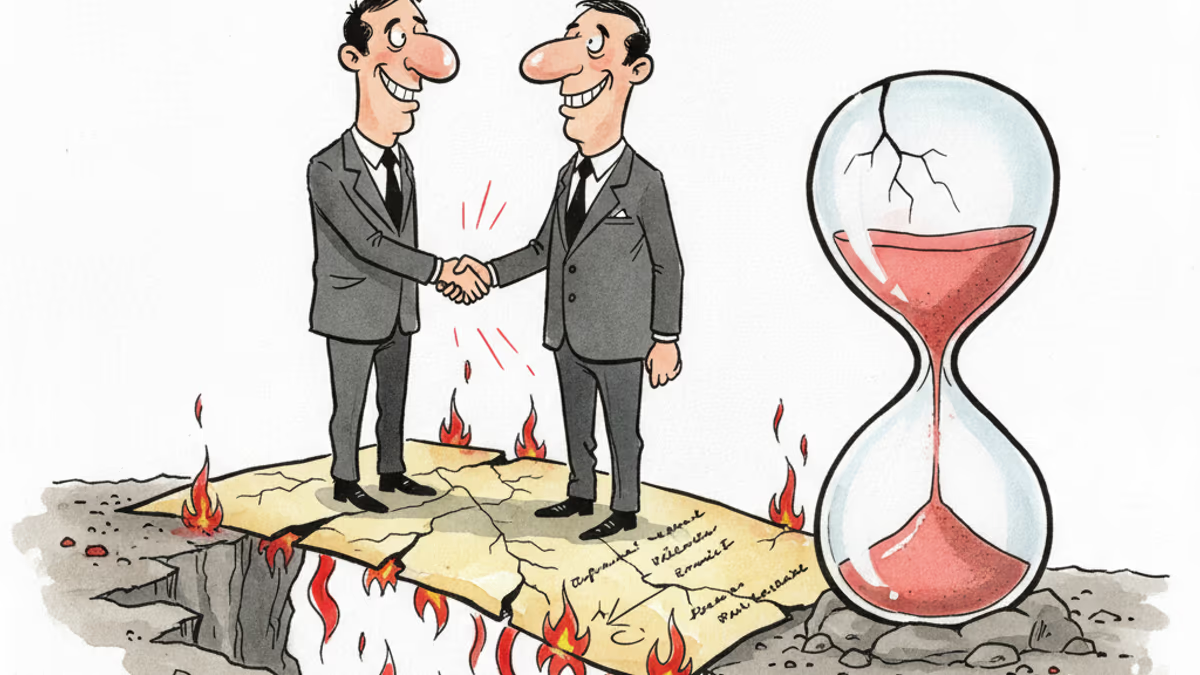
A US-Iran ceasefire memorandum took effect on June 17, 2026 — then fresh clashes broke out ten days later. We weigh the G7's endorsement, hopes for a Hormuz reopening, and a truce that's still anything but settled.
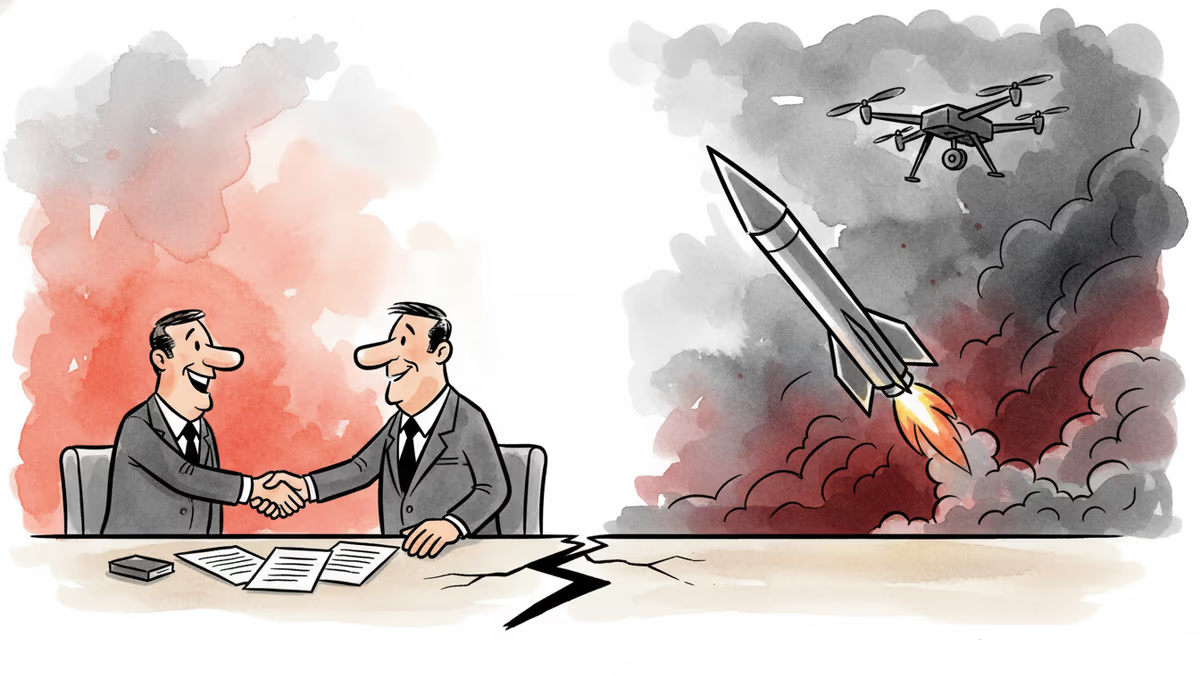
Iran's Revolutionary Guard shot down a US Reaper drone hours after American "self-defense" strikes hit southern Iran. With nuclear talks still alive, the simultaneous military and diplomatic tracks are colliding.
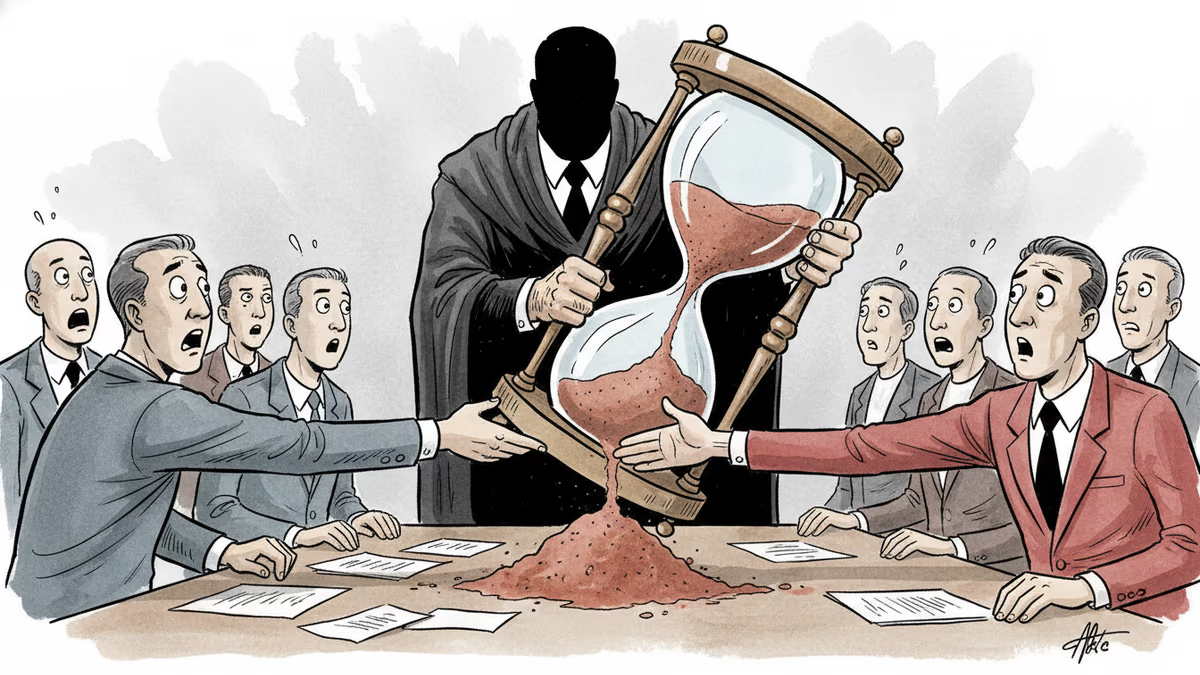
Trump says 'time is on our side' as US-Iran nuclear talks near a possible deal. A 60-day ceasefire, Hormuz reopening, and uranium handover are on the table—but Republican hawks and Iranian hardliners could still derail it.

Trump says a US-Iran nuclear deal is 'largely negotiated.' Iran calls it a 'Persian-style peace.' Both sides claim victory. Here's what's actually at stake.
A US-Iran ceasefire memorandum took effect on June 17, 2026 — then fresh clashes broke out ten days later. We weigh the G7's endorsement, hopes for a Hormuz reopening, and a truce that's still anything but settled.
Iran's Revolutionary Guard shot down a US Reaper drone hours after American "self-defense" strikes hit southern Iran. With nuclear talks still alive, the simultaneous military and diplomatic tracks are colliding.
Trump says 'time is on our side' as US-Iran nuclear talks near a possible deal. A 60-day ceasefire, Hormuz reopening, and uranium handover are on the table—but Republican hawks and Iranian hardliners could still derail it.
Trump says a US-Iran nuclear deal is 'largely negotiated.' Iran calls it a 'Persian-style peace.' Both sides claim victory. Here's what's actually at stake.
Thoughts
Share your thoughts on this article
Sign in to join the conversation