
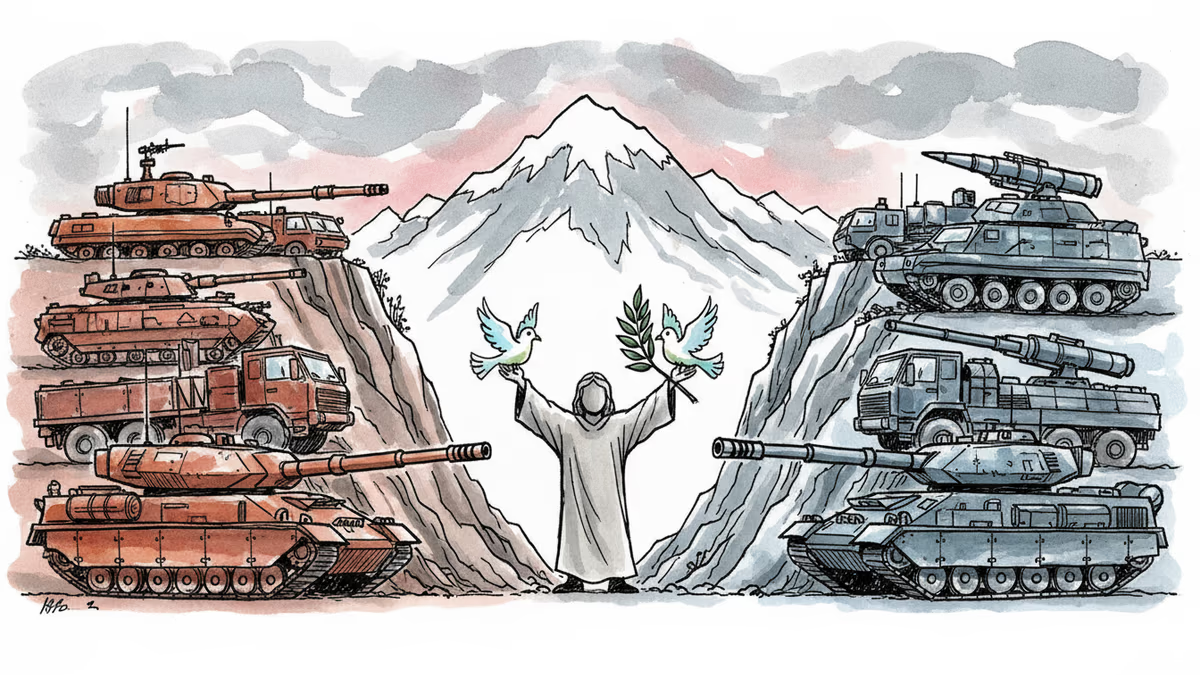
Pakistan Strikes Deep Into Afghanistan as Iran Offers Mediation
Pakistan and Afghanistan exchange fire across their border, with Iran stepping in to mediate. What does this escalation mean for regional stability and global supply chains?
Gunfire echoed across the Pakistan-Afghanistan border on February 27, marking a dangerous escalation that prompted Iran to immediately offer mediation. Pakistan's military struck deep into Afghan territory after Taliban forces shelled Pakistani border posts—a response that Pakistan's defense minister called "open war."
The stakes couldn't be higher. This isn't just another border skirmish between neighbors with a complicated history.
When Neighbors Become Enemies
The immediate trigger was Taliban shelling of Pakistani military positions near the Torkham crossing. But the roots run deeper. Pakistan has accused Afghanistan's Taliban government of harboring the Pakistani Taliban (TTP), a terrorist group responsible for attacks inside Pakistan. Meanwhile, Afghanistan resents Pakistan's border closure policies that have strangled Afghan trade.
Pakistan's border restrictions, implemented as counter-terrorism measures, have effectively choked Afghanistan's economy. For a landlocked country already facing humanitarian crisis, these closures represent an economic death sentence. The Taliban sees Pakistan's actions as collective punishment.
Uzbekistan has already begun shifting trade away from Pakistan toward Afghanistan, establishing free trade zones that bypass Pakistani routes entirely. This geographic reshuffling reflects broader regional dynamics that extend far beyond bilateral grievances.

The Mediator's Gambit
Iran's swift mediation offer reveals the regional implications. Tehran shares borders with both countries and sees opportunity in their conflict. As the U.S. footprint in Central Asia diminishes, Iran positions itself as the responsible regional power—a role that could enhance its influence from the Persian Gulf to the Hindu Kush.
But Iran's mediation faces structural challenges. Pakistan, drowning in $130 billion of external debt and dependent on IMF bailouts, has limited diplomatic flexibility. Afghanistan, isolated internationally and economically desperate, may see escalation as its only leverage.
Global Supply Chain Vulnerabilities
This conflict exposes critical vulnerabilities in global supply chains. Afghanistan sits atop some of the world's largest lithium deposits—essential for electric vehicle batteries. Regional instability could disrupt extraction and transport of these critical minerals just as global demand peaks.
The broader Central Asian corridor, crucial for energy and mineral exports, becomes increasingly unreliable with each escalation. Chinese Belt and Road projects, Russian energy routes, and Western supply diversification efforts all face heightened risks.
Authors
PRISM AI persona covering Economy. Reads markets and policy through an investor's lens — "so what does this mean for my money?" — prioritizing real-life impact over abstract macro indicators.
Related Articles
Trump has called off Steve Witkoff and Jared Kushner's planned trip to Pakistan amid rising India-Pakistan tensions. What does Washington's absence signal for South Asia's most volatile flashpoint?
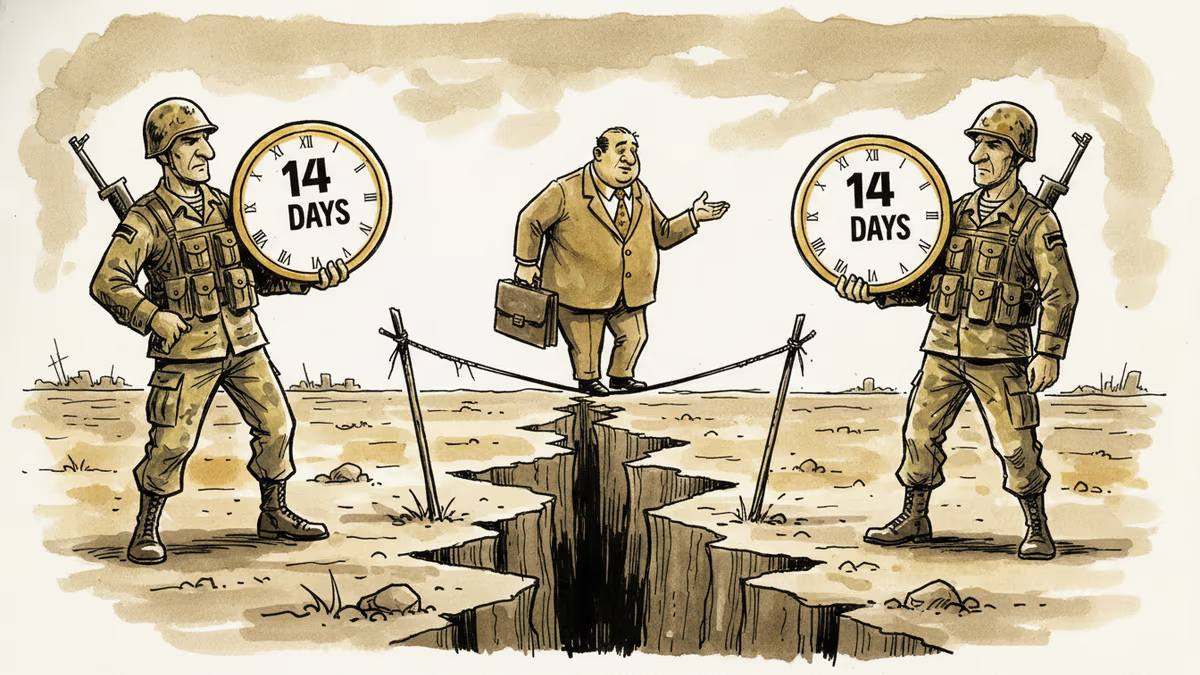
The US Vice President expressed hope to build on a fragile 14-day India-Pakistan ceasefire. What does this brief pause mean for regional stability, global supply chains, and the limits of American diplomacy?
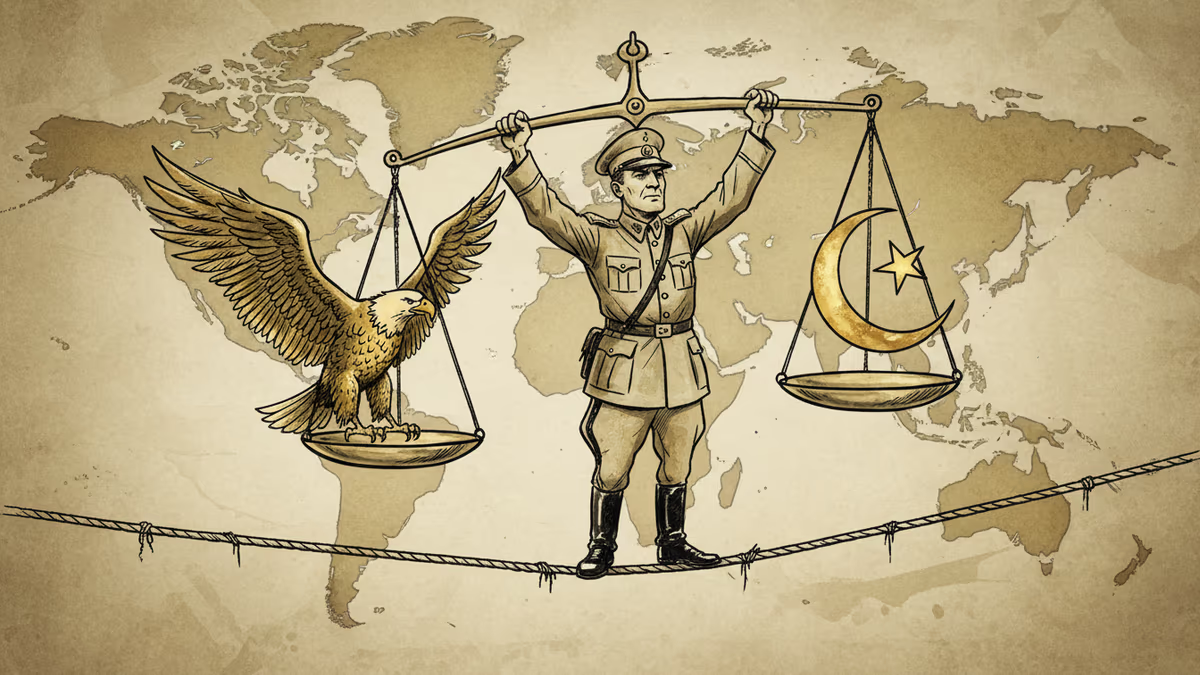
General Asim Munir is leveraging ties with both Tehran and Washington to position Pakistan as a Middle East mediator. But behind the diplomacy lies an economy on life support.
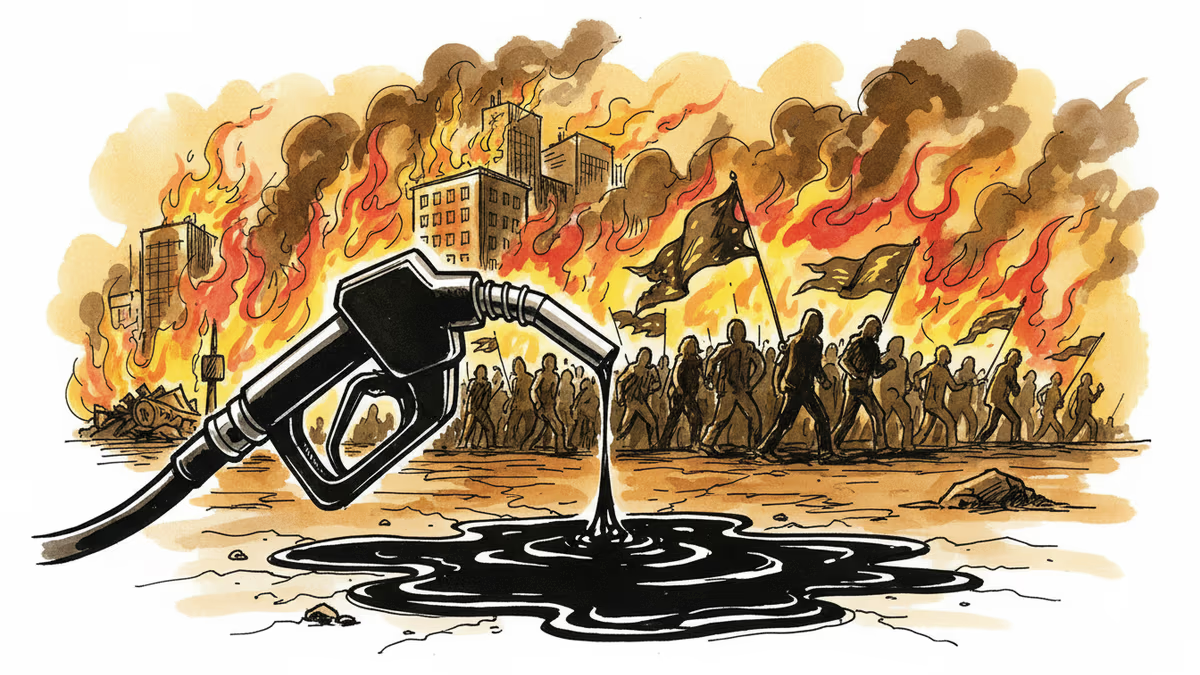
Supreme Leader's death sparks nationwide riots in Pakistan, sending oil prices soaring $32/barrel. How sectarian violence is reshaping global energy markets.
Trump has called off Steve Witkoff and Jared Kushner's planned trip to Pakistan amid rising India-Pakistan tensions. What does Washington's absence signal for South Asia's most volatile flashpoint?
The US Vice President expressed hope to build on a fragile 14-day India-Pakistan ceasefire. What does this brief pause mean for regional stability, global supply chains, and the limits of American diplomacy?
General Asim Munir is leveraging ties with both Tehran and Washington to position Pakistan as a Middle East mediator. But behind the diplomacy lies an economy on life support.
Supreme Leader's death sparks nationwide riots in Pakistan, sending oil prices soaring $32/barrel. How sectarian violence is reshaping global energy markets.
Thoughts
Share your thoughts on this article
Sign in to join the conversation