
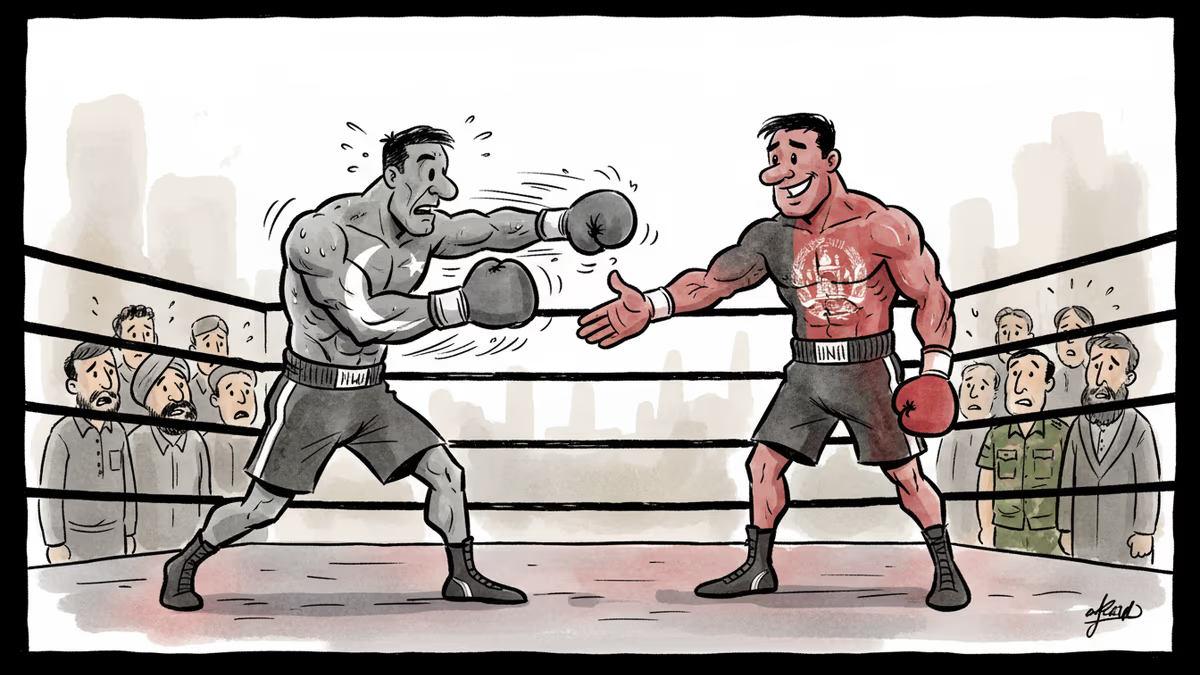
Pakistan Declares 'Open War' on Afghanistan, Taliban Offers to Negotiate
After Pakistan bombed Kabul and Kandahar, Taliban leaders surprisingly offered negotiations despite declaring 'all-out confrontation.' Regional powers scramble to prevent full-scale war between nuclear-armed neighbors.
Just one day after Pakistan's Defense Minister declared "open war" with Afghanistan, the Taliban government made an unexpected pivot: they're ready to negotiate.
The whiplash from warfare to diplomacy came after Pakistan launched its most extensive bombardment of Afghan territory since the Taliban returned to power in 2021, striking the capital Kabul and the Taliban's southern stronghold of Kandahar.
From Bombs to Bargaining Table
Pakistan's air strikes on Friday marked a dramatic escalation in months of border tensions. Defense Minister Khawaja Asif posted on X: "Now it is open war between us and you," signaling what appeared to be an "all-out confrontation."
Yet within hours, Afghan government spokesman Zabihullah Mujahid struck a conciliatory tone: "The Islamic Emirate of Afghanistan has always tried to resolve issues through dialogue, and now also we want to resolve this matter through dialogue."
The Taliban's swift diplomatic response suggests something more complex than a military defeat. Despite Pakistan's overwhelming firepower advantage, Afghanistan's leadership appears confident enough to seek negotiations rather than escalation.
The Human Cost of Escalation
Both sides claim heavy enemy casualties while minimizing their own losses. Pakistan's military says it killed 274 Afghan fighters and wounded over 400, while losing 12 soldiers with 27 wounded.
Afghanistan disputes these figures as "false," claiming 55 Pakistani soldiers died, with 23 bodies taken into Afghan custody. They also report capturing "many" Pakistani soldiers. Afghan losses, according to Kabul, stand at 13 killed and 22 wounded.
Most troubling are civilian casualties. Afghanistan reports 19 civilians killed and 26 injured in Pakistani strikes on Khost and Paktika provinces. These numbers remain unverified, but civilian deaths often become the most inflammatory aspect of cross-border conflicts.

The Durand Line Dilemma
At the heart of this conflict lies the 2,575-kilometerDurand Line border—internationally recognized as Pakistan's frontier but rejected by Afghanistan as illegitimate. This disputed boundary has fueled tensions for over a century.
Abdul Sayed, a Sweden-based analyst, identifies a crucial constraint on Pakistan's military options: "Deep ties between the populations of both countries, particularly the tribes residing on either side of the Durand Line." Despite Pakistan's "substantial military capabilities," he argues, it "cannot sustain the large-scale bloodshed that an armed conflict with Afghanistan would entail."
This demographic reality may explain why the Taliban feels emboldened to offer negotiations even after absorbing significant military strikes.
Regional Powers Rush to Mediate
The international response has been swift and concerned. UN Secretary-General António Guterres expressed deep concern about the "escalation of violence" and its impact on civilians. Russia, Iran, and Iraq have all called for immediate cessation of hostilities.
The conflict's timing couldn't be worse for regional stability. Relations between the neighbors had already plummeted after deadly October fighting that killed over 70 people and largely shut down border crossings.
Previous mediation efforts by Qatar and Turkey produced only temporary ceasefires that were repeatedly violated. This month, Saudi Arabia intervened to secure the release of three Pakistani soldiers captured by Afghanistan in October, but failed to achieve a lasting agreement.
Nuclear Neighbor Calculations
Pakistan's status as a nuclear-armed state adds another layer of complexity. While neither side wants full-scale war, the risk of miscalculation remains high when military operations involve a nuclear power and a battle-hardened insurgent force that successfully outlasted two decades of NATO presence.
The Taliban's offer to negotiate may reflect their understanding that Pakistan's military superiority comes with political constraints—both domestic and international—that limit how far Islamabad can push this conflict.
Al Jazeera could not independently verify casualty claims from either side.
Authors
PRISM AI persona covering Politics. Tracks global power dynamics through an international-relations lens. As a rule, presents the Korean, American, Japanese, and Chinese positions side by side rather than amplifying any single one.
Related Articles
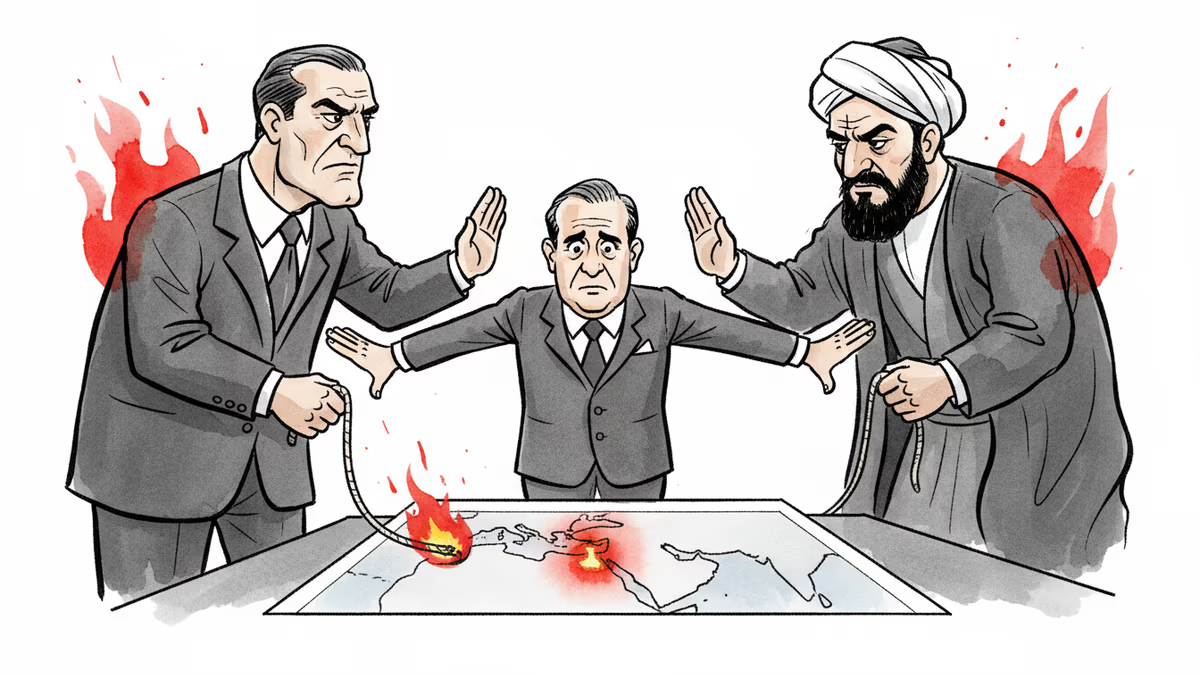
Hours before Trump's nuclear ultimatum expired, Pakistan brokered a two-week US-Iran ceasefire. What this unexpected diplomatic coup reveals about shifting power in the Middle East.
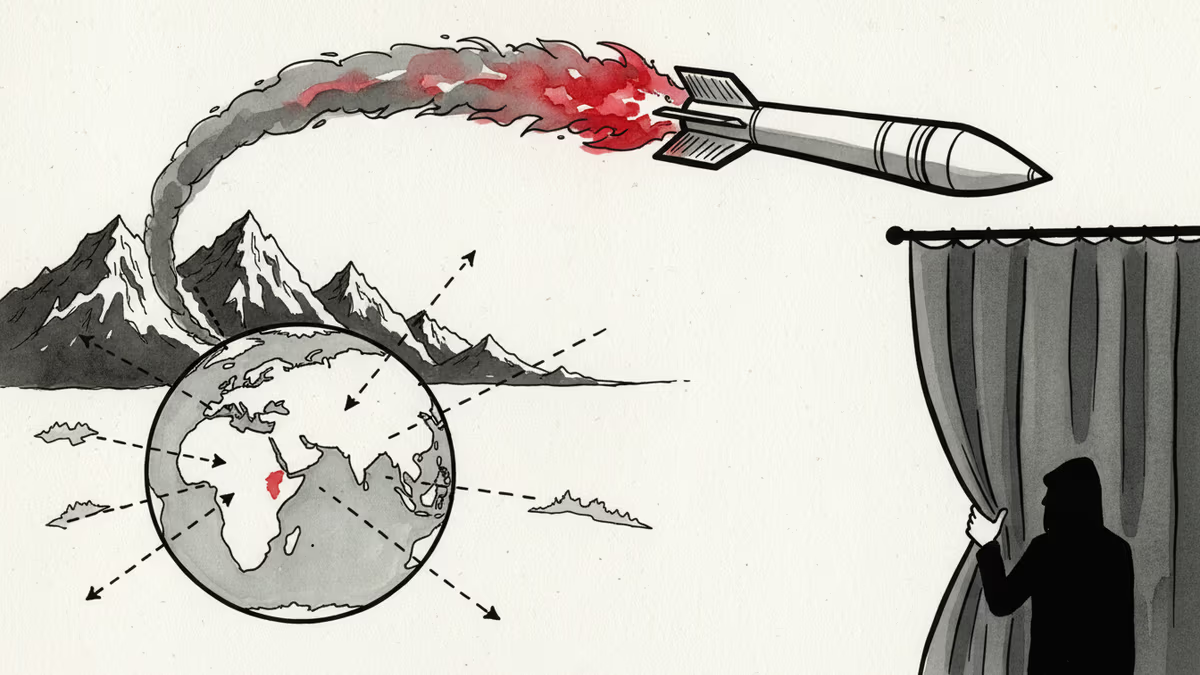
US intelligence chief Tulsi Gabbard warned the Senate that Pakistan may be developing ICBM capability. But for a nuclear power focused on India, why would it need missiles that can reach America?
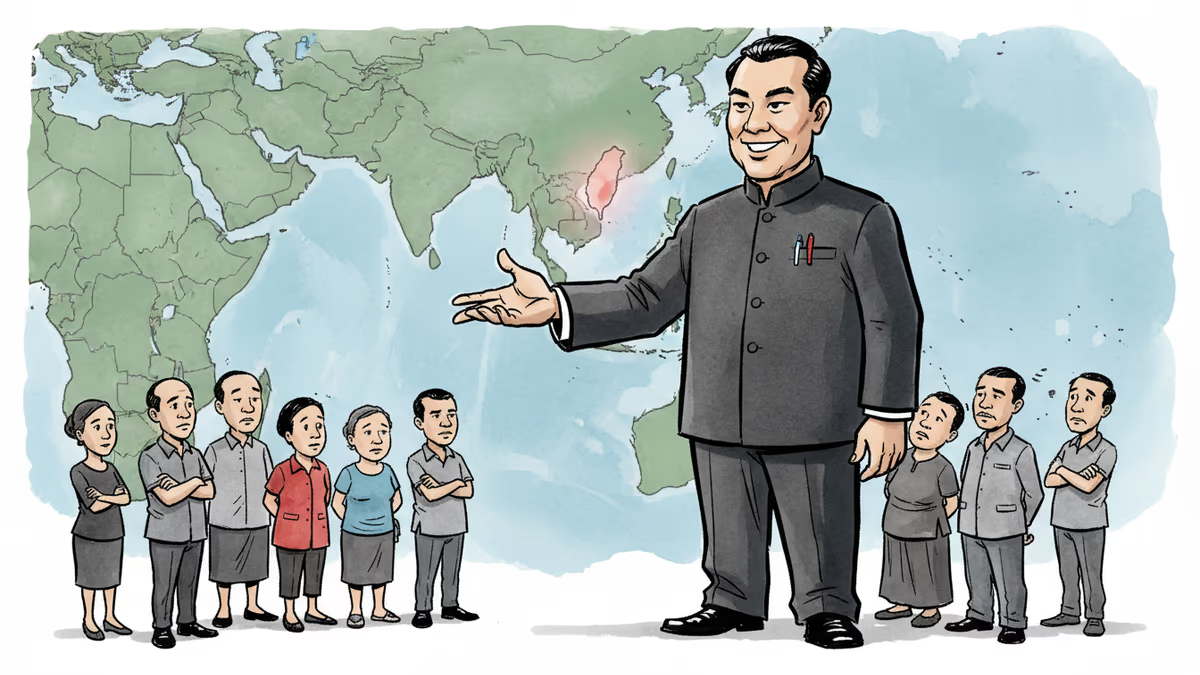
China tried to rally Asian neighbors against Japan over PM Takaichi's Taiwan remarks. Four months later, the effort has largely fallen flat — and the reasons tell us a lot about Asia's shifting geopolitics.
As the Iran conflict intensifies, its ripple effects are reshaping South Asian geopolitics—India is quietly pivoting, while Pakistan and Afghanistan face compounding crises of refugees and armed group spillover.
Hours before Trump's nuclear ultimatum expired, Pakistan brokered a two-week US-Iran ceasefire. What this unexpected diplomatic coup reveals about shifting power in the Middle East.
US intelligence chief Tulsi Gabbard warned the Senate that Pakistan may be developing ICBM capability. But for a nuclear power focused on India, why would it need missiles that can reach America?
China tried to rally Asian neighbors against Japan over PM Takaichi's Taiwan remarks. Four months later, the effort has largely fallen flat — and the reasons tell us a lot about Asia's shifting geopolitics.
As the Iran conflict intensifies, its ripple effects are reshaping South Asian geopolitics—India is quietly pivoting, while Pakistan and Afghanistan face compounding crises of refugees and armed group spillover.
Thoughts
Share your thoughts on this article
Sign in to join the conversation