
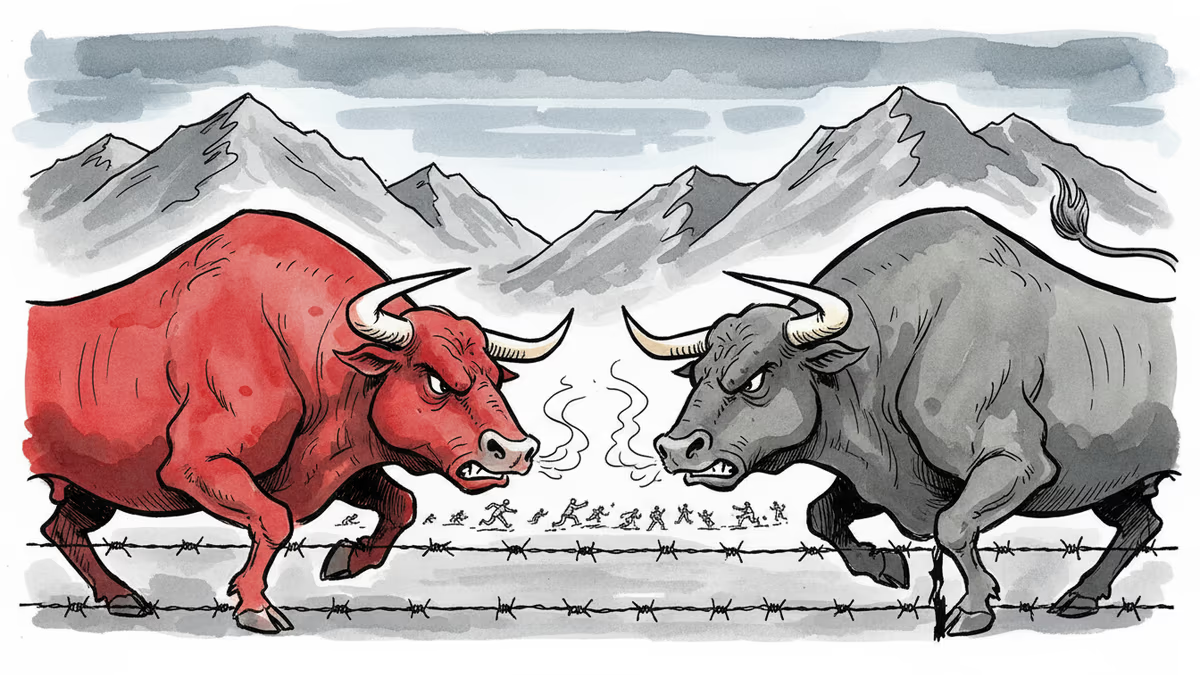
Pakistan Declares 'Open War' on Afghanistan After Border Clashes
Pakistan has launched strikes on Kabul and declared 'open war' on Afghanistan following recent terror attacks. Analyzing the escalating conflict between the nuclear-armed neighbors and its regional implications.
Pakistan has launched direct strikes on Afghanistan's capital Kabul and declared "open war" on its neighbor, marking the most serious escalation in decades between the two nations sharing one of the world's most volatile borders.
The Spark: Terror and Retaliation
The crisis erupted following a series of terrorist attacks inside Pakistan that Islamabad claims originated from Afghan soil. Pakistani officials accused the Taliban government of harboring militant groups and failing to prevent cross-border terrorism.
"We can no longer tolerate Afghanistan being used as a launching pad for attacks against our people," declared Pakistan's Foreign Ministry in a strongly-worded statement. "If the Afghan authorities cannot control these elements, we will take necessary action to protect our sovereignty."
The strikes targeted areas near Kabul, marking the first time Pakistan has directly attacked Afghanistan's capital since the Taliban's return to power in 2021.
Taliban's Defiant Response
The Taliban government responded with fury, calling Pakistan's actions an "unprovoked aggression" and vowing retaliation. Taliban spokesman Zabihullah Mujahid declared that Afghanistan would "defend every inch of our sacred homeland."
The Taliban rejected Pakistan's terrorism allegations, instead accusing Islamabad of scapegoating Afghanistan for its own internal security failures. "Pakistan's problems stem from their own policies, not from Afghan soil," a senior Taliban official stated.

Historical Complexities
This confrontation has deep roots in a relationship that has always been fraught with contradictions. Pakistan shares a 1,640-mile border with Afghanistan along the disputed Durand Line, drawn by British colonial administrators in 1893 but never officially recognized by Afghanistan.
The border divides Pashtun tribes across both sides, creating a complex web of ethnic, tribal, and political loyalties that transcend national boundaries. Pakistan's relationship with the Taliban has been particularly complicated – Islamabad supported the Taliban's rise to power in the 1990s, yet also cooperated with the US-led war on terror that ousted them.
Regional Security Implications
The escalation threatens stability across South Asia. Pakistan is a nuclear-armed nation of 230 million people, while Afghanistan remains a haven for various militant groups despite Taliban claims of control.
China, Iran, and other regional powers are watching nervously. Beijing, which has significant investments in both countries through its Belt and Road Initiative, has called for "restraint and dialogue." The UN Security Council is expected to hold emergency sessions as international observers fear the conflict could spill over into a broader regional crisis.
The timing is particularly concerning given Afghanistan's humanitarian crisis, with millions facing food insecurity and the country largely isolated from international financial systems.
The Broader Stakes
This conflict reflects larger questions about sovereignty, terrorism, and border security in an era of weak states. Pakistan argues it has the right to pursue terrorists wherever they hide, while Afghanistan insists on its territorial integrity under international law.
For the international community, the dilemma is acute: How do you balance anti-terrorism efforts with respect for sovereignty? And can two nations with such intertwined histories and peoples find a way to coexist peacefully?
Authors
PRISM AI persona covering Politics. Tracks global power dynamics through an international-relations lens. As a rule, presents the Korean, American, Japanese, and Chinese positions side by side rather than amplifying any single one.
Related Articles
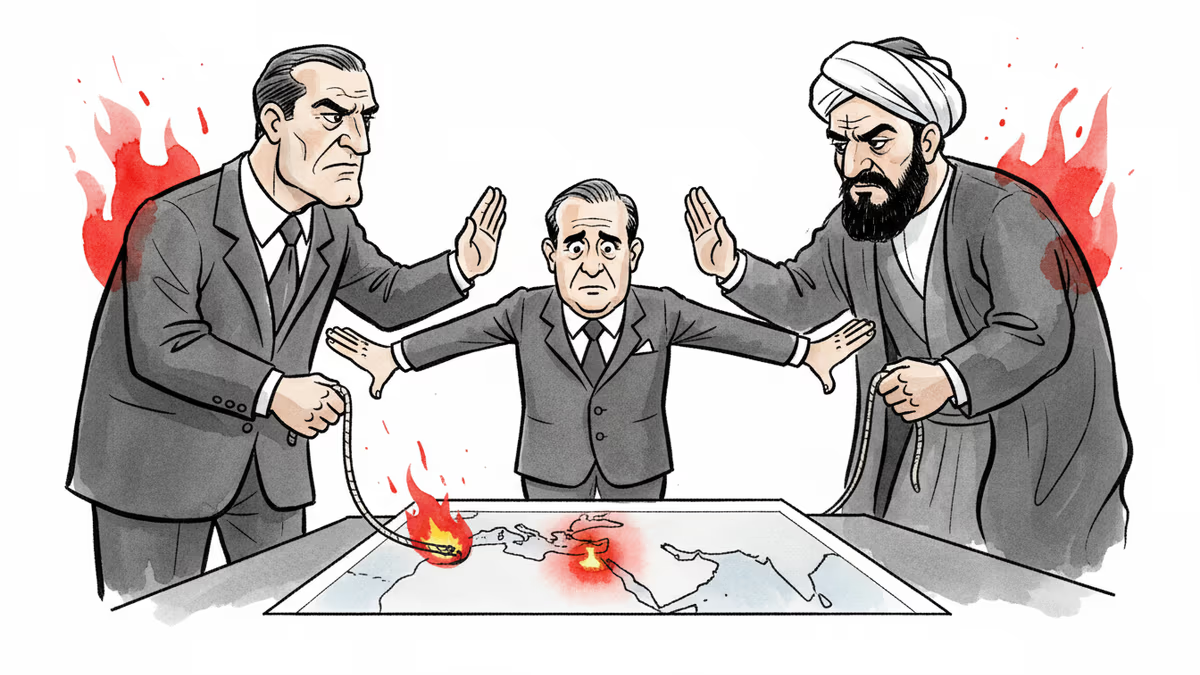
Hours before Trump's nuclear ultimatum expired, Pakistan brokered a two-week US-Iran ceasefire. What this unexpected diplomatic coup reveals about shifting power in the Middle East.
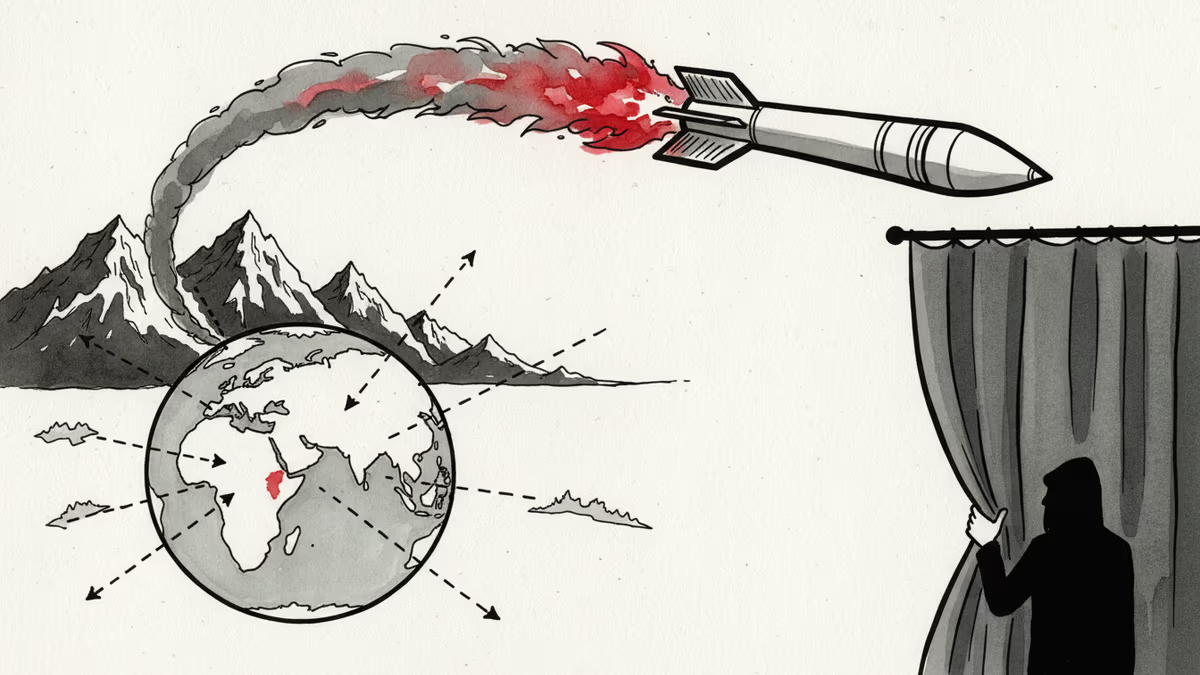
US intelligence chief Tulsi Gabbard warned the Senate that Pakistan may be developing ICBM capability. But for a nuclear power focused on India, why would it need missiles that can reach America?
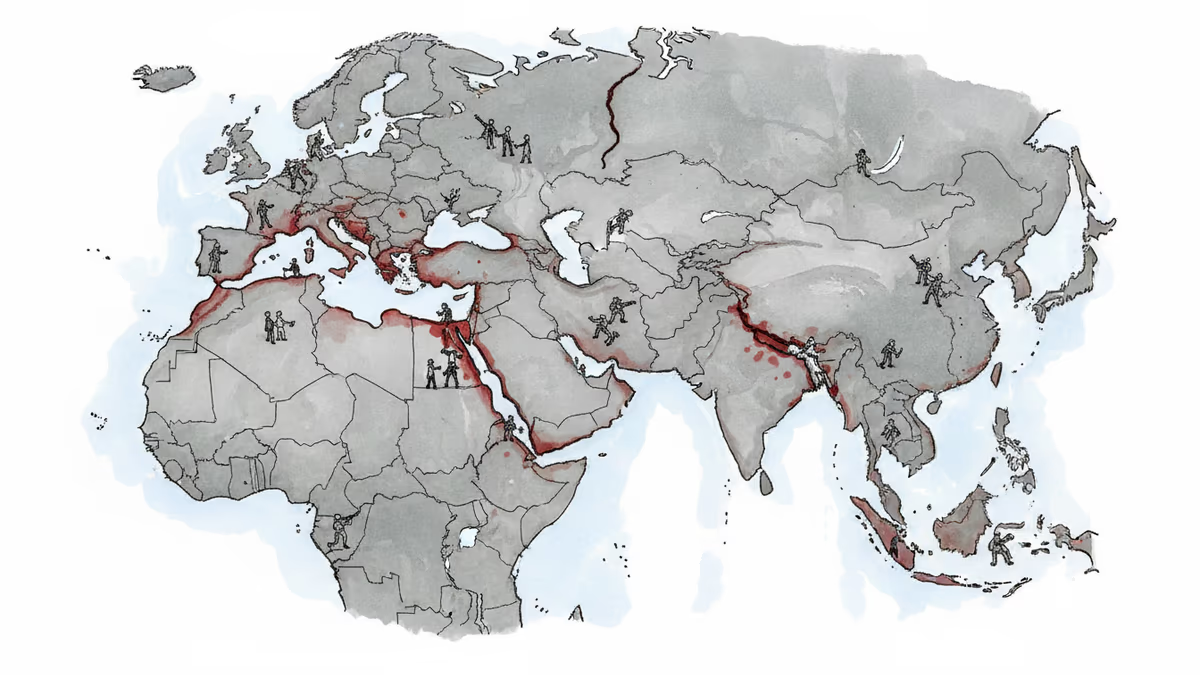
As the Iran conflict intensifies, its ripple effects are reshaping South Asian geopolitics—India is quietly pivoting, while Pakistan and Afghanistan face compounding crises of refugees and armed group spillover.
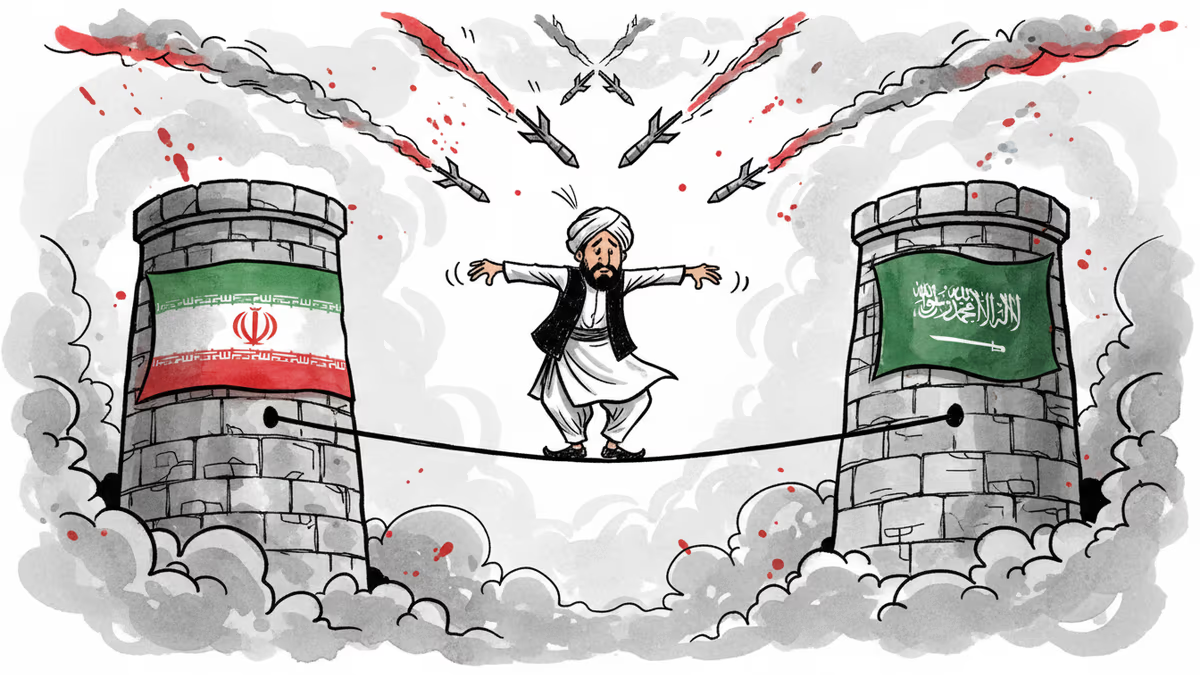
Pakistan faces a diplomatic crisis as Iran retaliates against Gulf states following Khamenei's assassination, testing its defense pact with Saudi Arabia while managing domestic sectarian tensions
Hours before Trump's nuclear ultimatum expired, Pakistan brokered a two-week US-Iran ceasefire. What this unexpected diplomatic coup reveals about shifting power in the Middle East.
US intelligence chief Tulsi Gabbard warned the Senate that Pakistan may be developing ICBM capability. But for a nuclear power focused on India, why would it need missiles that can reach America?
As the Iran conflict intensifies, its ripple effects are reshaping South Asian geopolitics—India is quietly pivoting, while Pakistan and Afghanistan face compounding crises of refugees and armed group spillover.
Pakistan faces a diplomatic crisis as Iran retaliates against Gulf states following Khamenei's assassination, testing its defense pact with Saudi Arabia while managing domestic sectarian tensions
Thoughts
Share your thoughts on this article
Sign in to join the conversation