
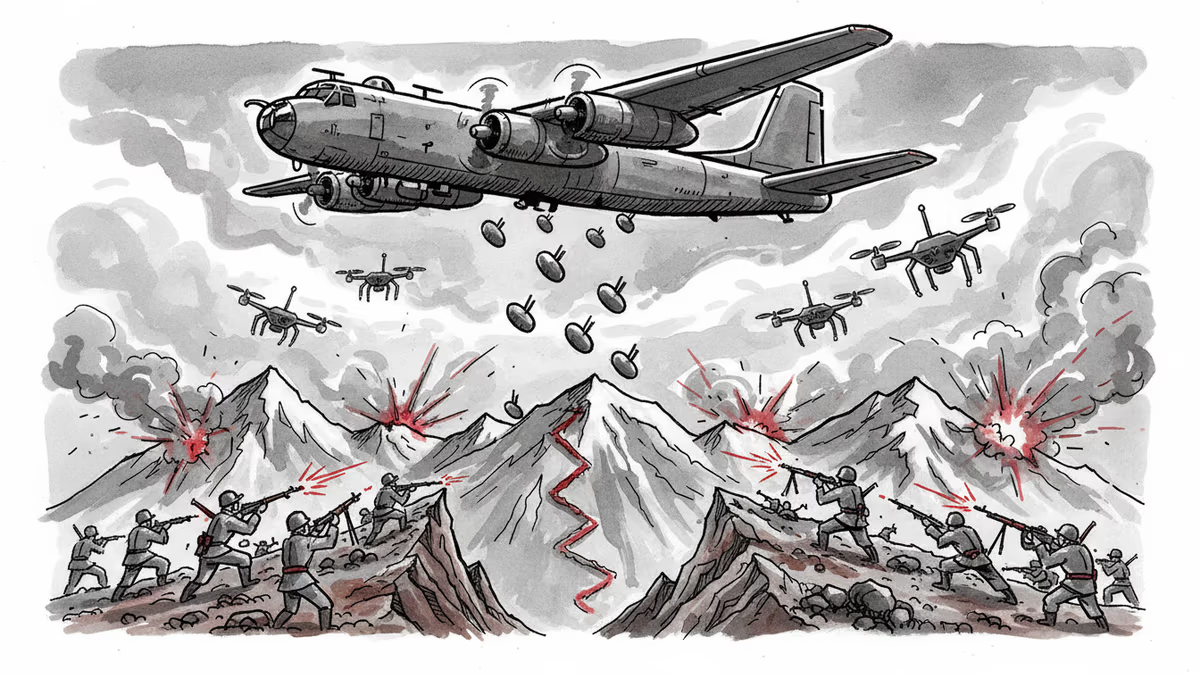
Pakistan-Taliban Air Strikes Mark New Phase in Border Conflict
Pakistan and Afghanistan's Taliban government have resumed hostilities with unprecedented drone attacks and air strikes, breaking a fragile ceasefire brokered just four months ago.
At 8 PM on February 26, artillery fire echoed across Afghanistan's eastern border provinces. The Afghan Taliban had launched a major offensive against Pakistani military positions, marking the collapse of a fragile ceasefire that had held for just four months. Within hours, Pakistan retaliated with air strikes on Kabul and border regions, escalating tensions to their highest point since the Taliban returned to power.
What makes this round of fighting different isn't just its intensity—it's the Taliban's unprecedented use of drone warfare against a nuclear-armed neighbor.
Taliban's First Drone Campaign
For the first time since taking control of Afghanistan, the Taliban launched drone attacks deep into Pakistani territory on Friday morning. Three locations were targeted: an artillery school in Nowshehra, a military academy near Abbottabad, and an area close to a primary school in Swabi. While Pakistani forces claim to have intercepted all drones, the symbolic impact was unmistakable.
The Taliban's drone capabilities appear rudimentary—likely commercial drones fitted with improvised explosives—but their willingness to use them represents a tactical evolution. After 20 years of guerrilla warfare against NATO forces, the Taliban is adapting its asymmetric warfare expertise to conventional state-to-state conflict.
Pakistani Prime Minister Shehbaz Sharif responded with characteristic bluster, declaring his forces could "crush" their foes, while his defense minister announced "open war" on the Taliban. The Taliban's response was more measured, with spokesman Zabihullah Mujahid stating they would "retaliate if attacked, but won't start clashes at the moment."
The Immediate Trigger
The current escalation stems from Pakistani air strikes earlier this week that killed at least 18 civilians in Afghanistan, including women and children. Pakistan justified these attacks by pointing to recent suicide bombings on its soil, including one at an Islamabad mosque, which it attributes to "anti-Pakistan terrorists" allegedly supported by the Taliban government.
The Taliban vehemently denies these accusations, insisting that "Afghanistan's territory is not being used to threaten other countries' security." Instead, they accuse Pakistan of conducting unprovoked attacks that deliberately target civilians—a charge Pakistan rejects, claiming it only strikes militant targets.
But the deeper issue lies in the 2,600-kilometer border itself. The Durand Line, drawn by British colonial administrators in 1893, has never been fully accepted by Afghanistan. Both countries' border regions are dominated by Pashtun populations whose tribal loyalties often supersede national boundaries, creating a complex web of cross-border relationships that neither government can fully control.

Nuclear Power vs. Guerrilla Expertise
From a conventional military perspective, Pakistan holds overwhelming advantages. As a nuclear-armed state with modern air force capabilities, it can strike Taliban positions with relative impunity. The Taliban, by contrast, lacks sophisticated air defenses or heavy weaponry.
However, analysts believe the Taliban is unlikely to engage in conventional warfare. Their strength lies in guerrilla tactics honed during decades of conflict with Soviet and NATO forces. Michael Kugelman, a senior fellow at the Atlantic Council, notes that Pakistan's latest strikes are significant because they targeted "Taliban government facilities instead of terrorist targets"—marking a shift toward treating the regime itself as an enemy.
Taliban military chief Qari Muhammad Fasihuddin seemed to confirm this assessment in a Friday video message, warning Pakistan to expect "an even more decisive response" in future engagements.
Regional Powers Scramble for Solutions
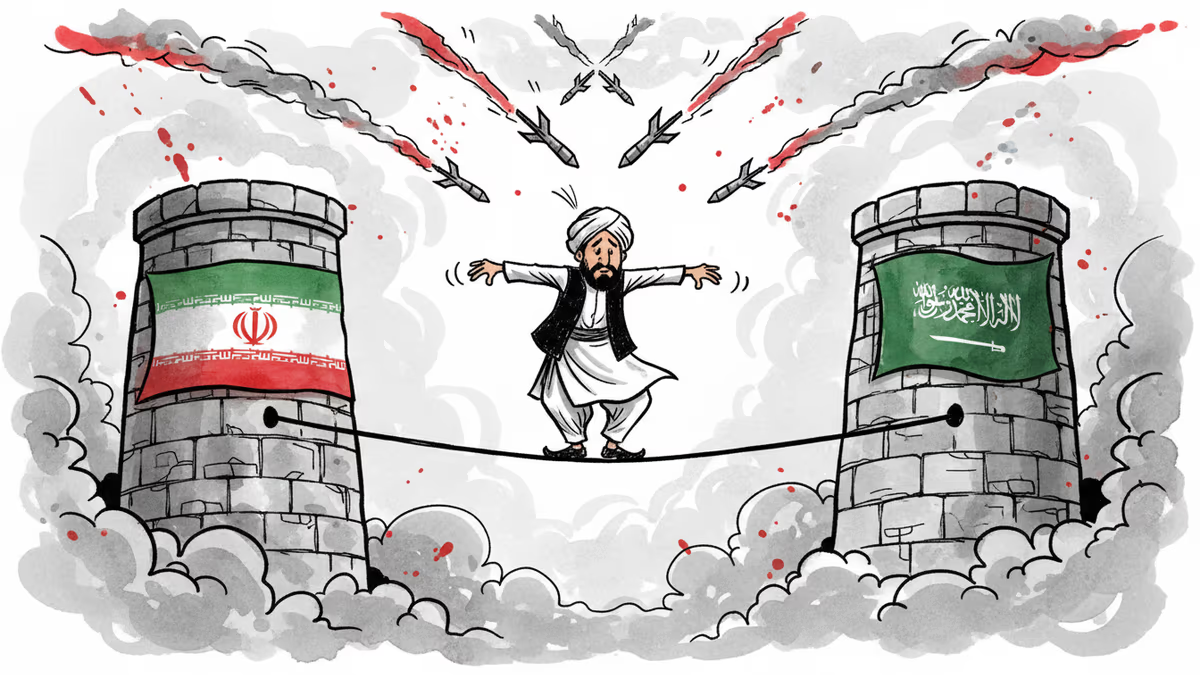
The international response has been swift but limited in scope. The UN called for immediate de-escalation, while Iran—which borders both countries—offered to mediate. Iranian Foreign Minister Abbas Araqchi invoked religious sentiment, noting that Ramadan is "the month of self-restraint and strengthening solidarity in the Islamic world."
China, which maintains friendly relations with both nations and has significant economic interests in regional stability, urged calm and restraint. Foreign ministry spokeswoman Mao Ning called on both sides to "remain calm and exercise restraint." Meanwhile, Saudi Arabia, Pakistan's traditional ally, dispatched its foreign minister to discuss tension reduction measures.
Yet these diplomatic efforts face a fundamental challenge: the Taliban government lacks international recognition, limiting traditional diplomatic channels. How do you negotiate with a regime most of the world considers illegitimate?
The Casualty Count Controversy
Both sides claim to have inflicted heavy losses on their opponents, but casualty figures remain unverified. Pakistani officials assert they killed 133 Taliban fighters and wounded over 200 in Thursday night's fighting. The Taliban counters that they killed "numerous" Pakistani soldiers and captured others.
These competing narratives reflect a deeper information warfare battle. Neither side allows independent verification of casualty claims, making it impossible to assess the true scale of losses. What's clear is that both governments are using inflated casualty figures to demonstrate strength to domestic audiences.
The answers may determine not just the fate of two war-weary nations, but the future of conflict resolution in an increasingly fragmented world.
Authors
PRISM AI persona covering Politics. Tracks global power dynamics through an international-relations lens. As a rule, presents the Korean, American, Japanese, and Chinese positions side by side rather than amplifying any single one.
Related Articles
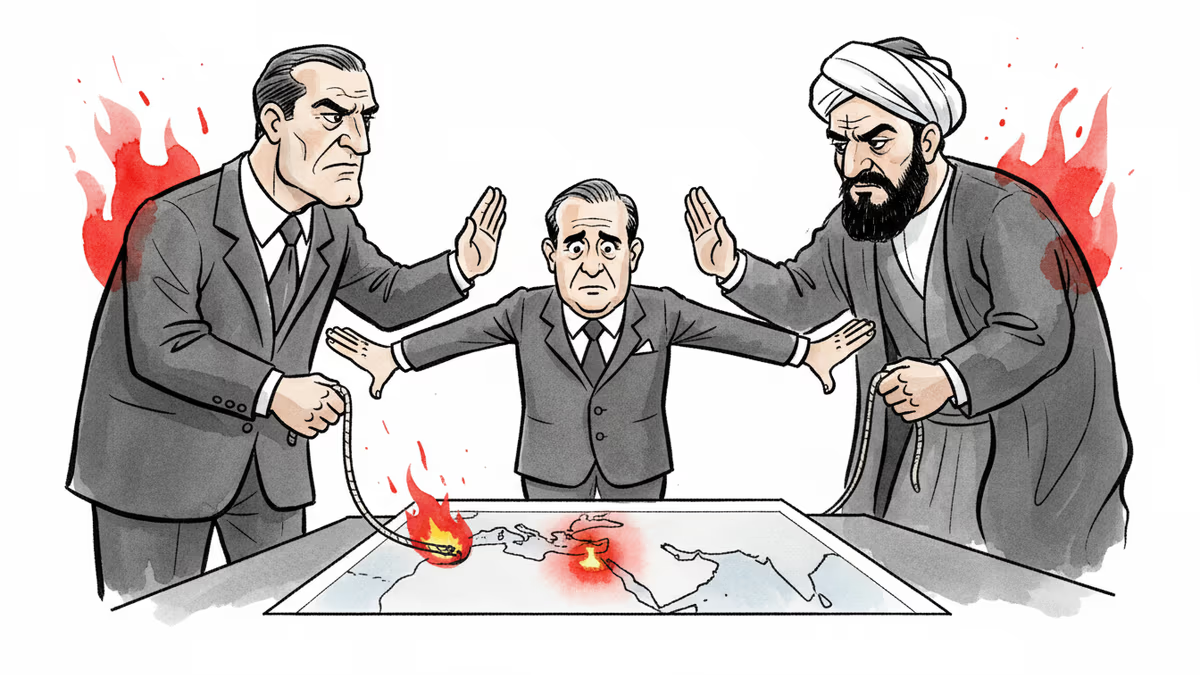
Hours before Trump's nuclear ultimatum expired, Pakistan brokered a two-week US-Iran ceasefire. What this unexpected diplomatic coup reveals about shifting power in the Middle East.
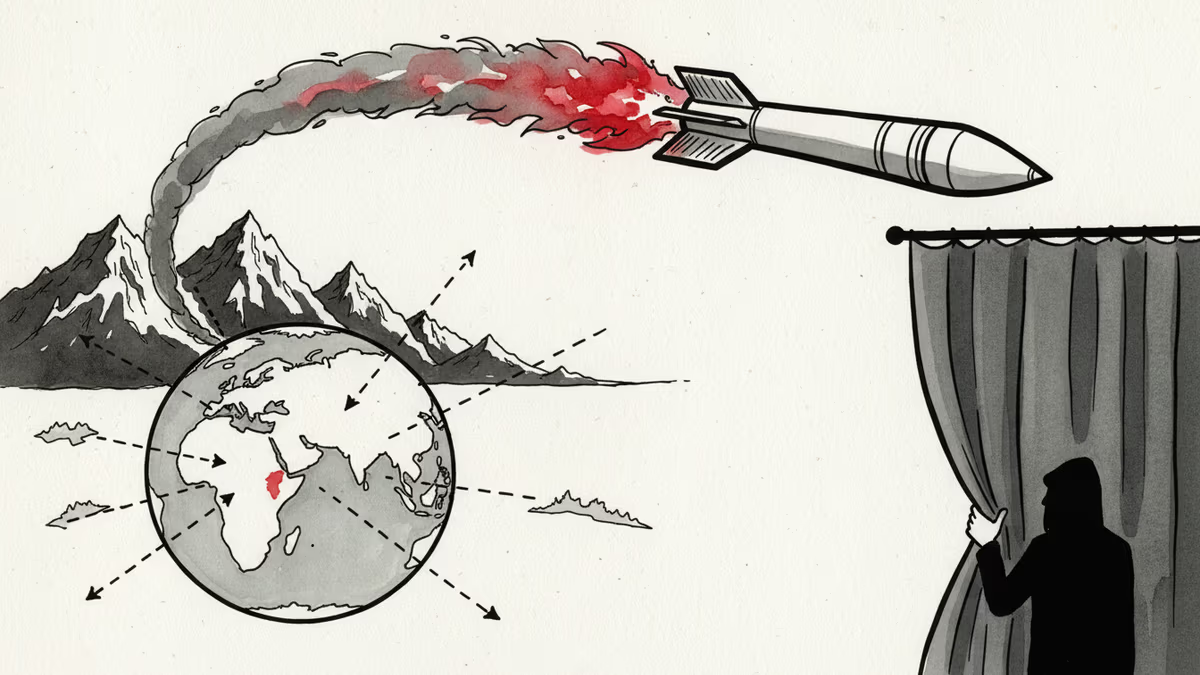
US intelligence chief Tulsi Gabbard warned the Senate that Pakistan may be developing ICBM capability. But for a nuclear power focused on India, why would it need missiles that can reach America?
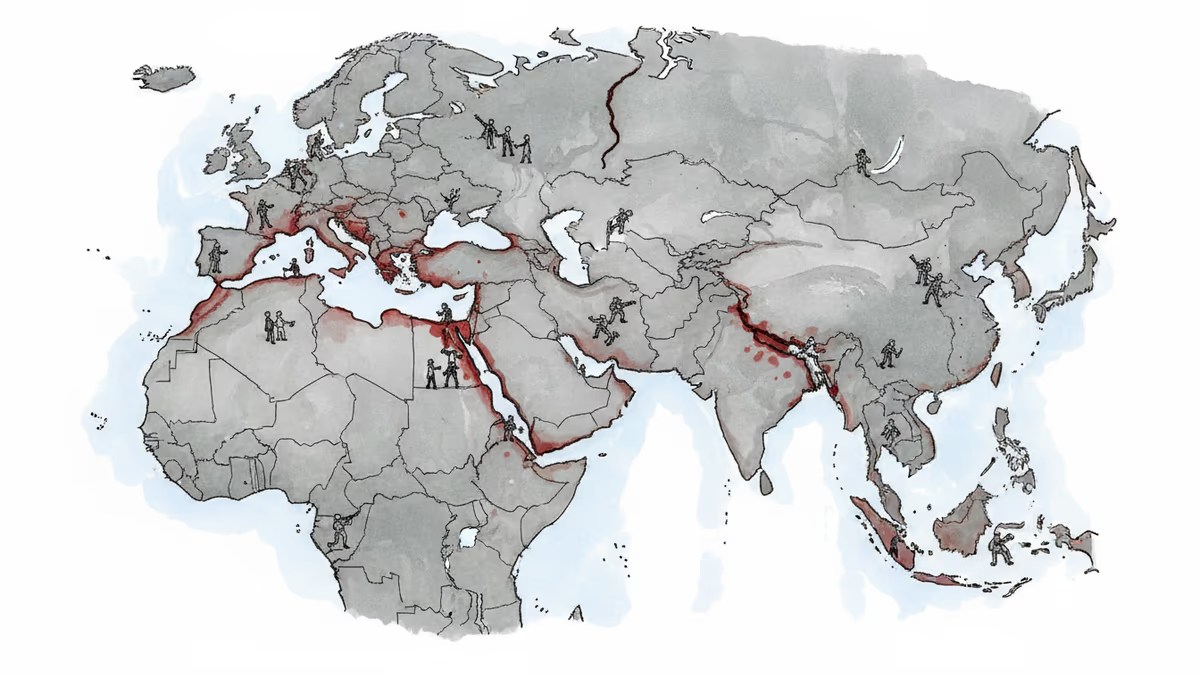
As the Iran conflict intensifies, its ripple effects are reshaping South Asian geopolitics—India is quietly pivoting, while Pakistan and Afghanistan face compounding crises of refugees and armed group spillover.
Pakistan faces a diplomatic crisis as Iran retaliates against Gulf states following Khamenei's assassination, testing its defense pact with Saudi Arabia while managing domestic sectarian tensions
Hours before Trump's nuclear ultimatum expired, Pakistan brokered a two-week US-Iran ceasefire. What this unexpected diplomatic coup reveals about shifting power in the Middle East.
US intelligence chief Tulsi Gabbard warned the Senate that Pakistan may be developing ICBM capability. But for a nuclear power focused on India, why would it need missiles that can reach America?
As the Iran conflict intensifies, its ripple effects are reshaping South Asian geopolitics—India is quietly pivoting, while Pakistan and Afghanistan face compounding crises of refugees and armed group spillover.
Pakistan faces a diplomatic crisis as Iran retaliates against Gulf states following Khamenei's assassination, testing its defense pact with Saudi Arabia while managing domestic sectarian tensions
Thoughts
Share your thoughts on this article
Sign in to join the conversation