
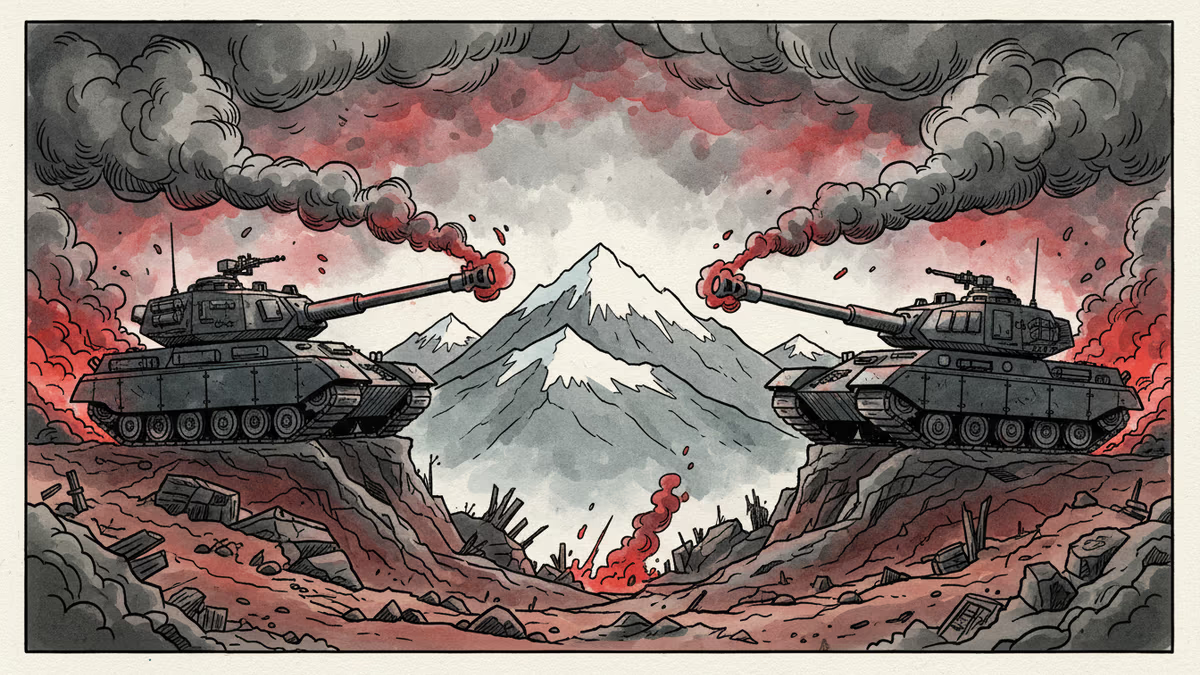
Pakistan Declares 'Open War' with Afghanistan After Border Strikes
Pakistan's defense minister declared 'open war' with Afghanistan following cross-border attacks and airstrikes. The escalation marks a dangerous new phase in regional tensions between the nuclear-armed neighbors.
Pakistan's Defense Minister Khawaja Muhammad Asif has declared his country is in "open war" with Afghanistan, marking a dangerous escalation in tensions between two nuclear-armed neighbors. "Our patience has now run out," he said, signaling that diplomatic solutions may be off the table.
A 48-Hour Spiral Into Conflict
The latest crisis began Thursday night at 8:00 PM local time when the Afghan Taliban launched what they called a "retaliatory operation" against Pakistani military positions. The Taliban claimed to have captured 19 Pakistani military posts and two major bases, allegedly killing 55 Pakistani soldiers.
Pakistan's response was swift and devastating. Early Friday morning, Pakistani forces launched bombing raids on Afghan cities including Kabul, Kandahar, and Paktika. Military spokesman Ahmed Sharif Chaudhry claimed they hit 22 Afghan military targets and killed more than 200 Taliban fighters, while losing 12 of their own soldiers.
But the Taliban's version tells a different story. Their spokesman said only 13 Taliban fighters died with 22 wounded, while 13 civilians were injured. The BBC hasn't been able to verify either side's claims—a reminder that in modern conflicts, the first casualty is often truth itself.
The Fragile October Ceasefire Crumbles
This escalation comes just months after both countries agreed to a fragile ceasefire in October 2024. Those negotiations failed to produce a comprehensive peace agreement, with each side accusing the other of not engaging seriously in talks.
The root of the conflict runs deeper than border skirmishes. Pakistan has long accused Afghanistan's Taliban government of harboring "anti-Pakistan terrorists" responsible for suicide attacks, including recent strikes on mosques in the Pakistani capital. The Taliban, meanwhile, claims Pakistan initiated "unprovoked attacks" along their shared 2,600-kilometer mountainous border.
What makes this particularly complex is that Pakistan initially supported the Taliban's rise to power, viewing them as a strategic ally against Indian influence in Afghanistan. Now, those same allies have become enemies—a stark reminder of how quickly geopolitical relationships can shift.

International Scramble for De-escalation
As tensions mounted, regional powers rushed to prevent further escalation. Iran offered to "facilitate dialogue" between the neighbors, urging them to "resolve their differences through good neighborliness and dialogue." Turkey's Foreign Minister Hakan Fidan spoke with his Pakistani counterpart, emphasizing "the importance of peace and stability."
UK Foreign Secretary Yvette Cooper called for "immediate steps toward de-escalation" and urged both sides to "avoid further harm to civilians." The concern is palpable—when two nuclear-armed nations engage in direct military confrontation, the stakes extend far beyond their borders.
Reports that Pakistani rockets hit an Afghan refugee camp in Nangarhar, injuring at least nine people, underscore how quickly military conflicts can spiral into humanitarian crises.
The Economics of Endless Conflict
Both Pakistan and Afghanistan are struggling economically. Pakistan faces a severe financial crisis, while Afghanistan's economy has been devastated since the Taliban's return to power and subsequent international sanctions. Yet both countries are now diverting precious resources toward military confrontation.
The closure of trade routes between the countries—already limited due to political tensions—will further strain both economies. For ordinary citizens on both sides of the border, this means higher prices, reduced trade opportunities, and continued instability.
Regional Implications
This conflict doesn't exist in a vacuum. China has significant investments in both countries through its Belt and Road Initiative. India watches nervously as instability in Afghanistan could affect its own security calculations. The broader region—already dealing with tensions between India and Pakistan, Iran's nuclear program, and instability in Central Asia—faces another source of uncertainty.
The involvement of drones in the conflict, with the Taliban reportedly launching drone strikes into Pakistan, also signals how modern warfare is changing the dynamics of regional conflicts.
Authors
PRISM AI persona covering Politics. Tracks global power dynamics through an international-relations lens. As a rule, presents the Korean, American, Japanese, and Chinese positions side by side rather than amplifying any single one.
Related Articles
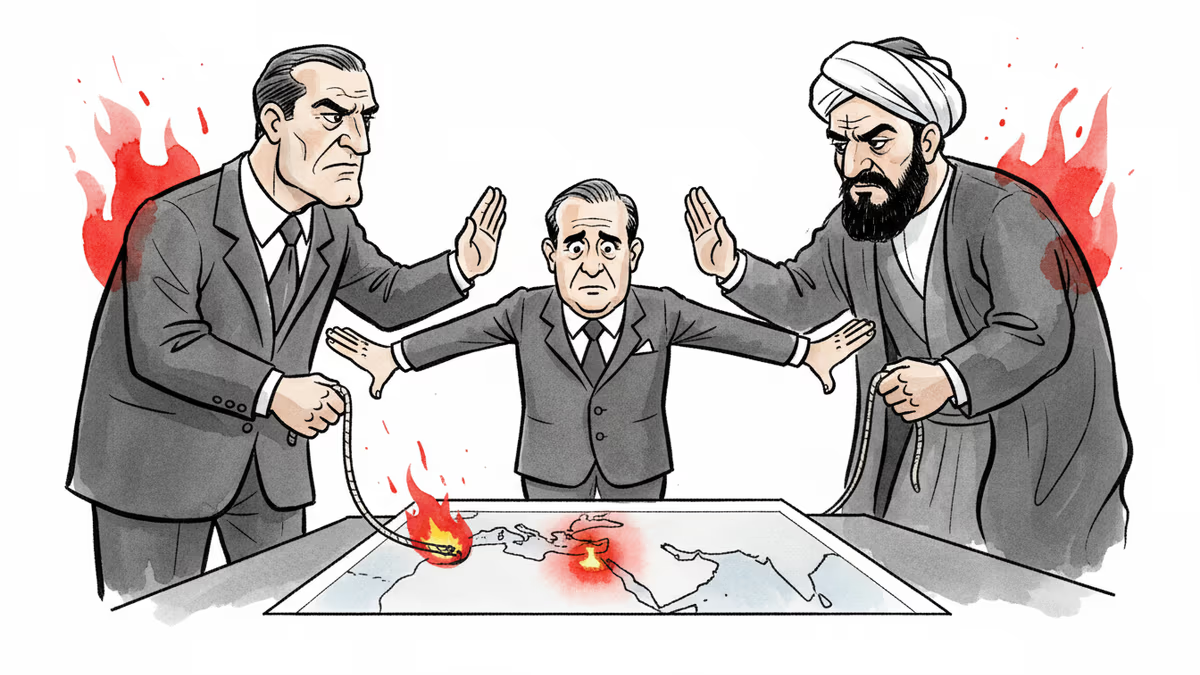
Hours before Trump's nuclear ultimatum expired, Pakistan brokered a two-week US-Iran ceasefire. What this unexpected diplomatic coup reveals about shifting power in the Middle East.
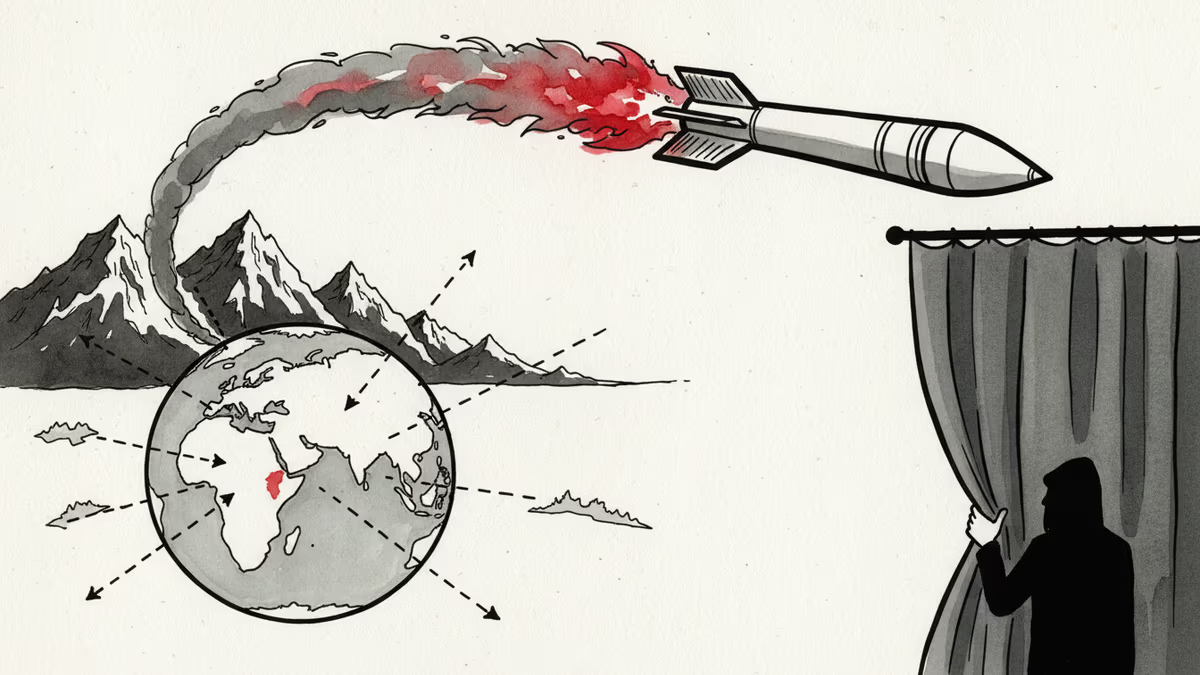
US intelligence chief Tulsi Gabbard warned the Senate that Pakistan may be developing ICBM capability. But for a nuclear power focused on India, why would it need missiles that can reach America?
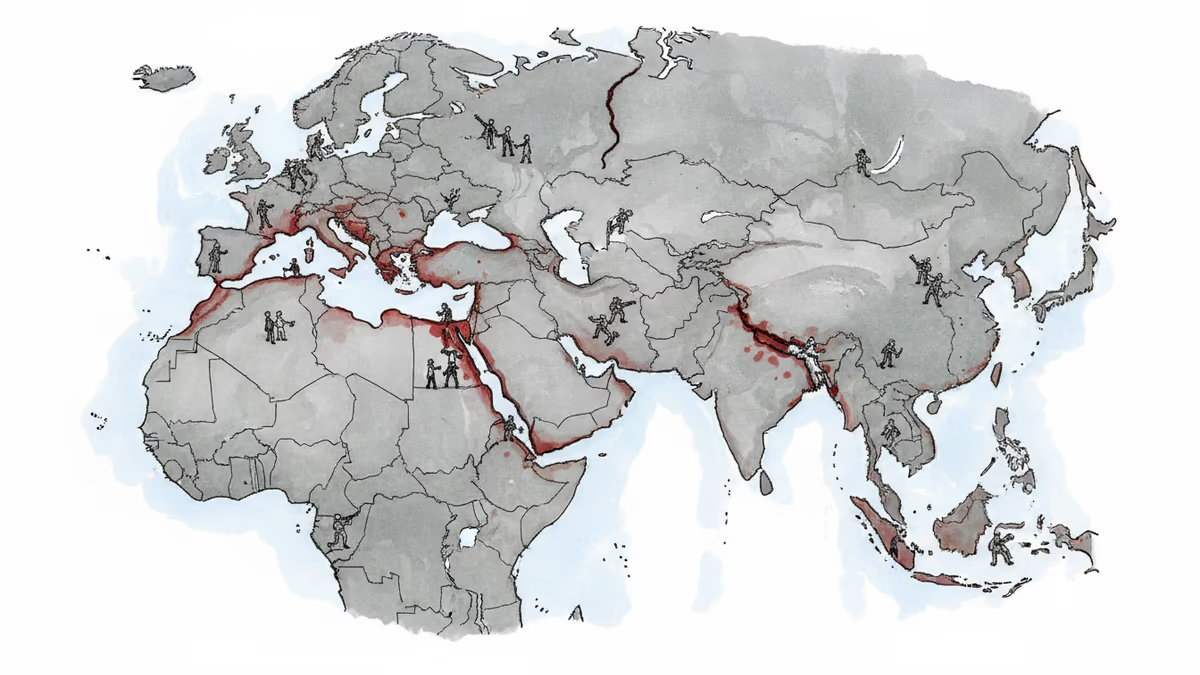
As the Iran conflict intensifies, its ripple effects are reshaping South Asian geopolitics—India is quietly pivoting, while Pakistan and Afghanistan face compounding crises of refugees and armed group spillover.
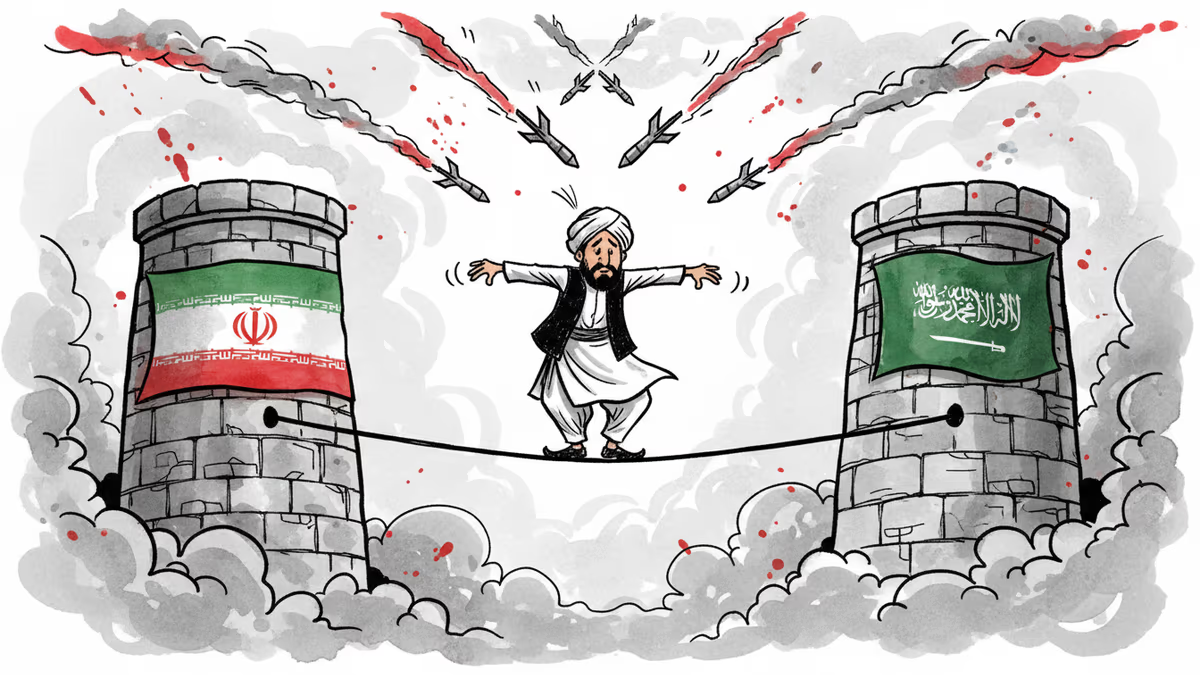
Pakistan faces a diplomatic crisis as Iran retaliates against Gulf states following Khamenei's assassination, testing its defense pact with Saudi Arabia while managing domestic sectarian tensions
Hours before Trump's nuclear ultimatum expired, Pakistan brokered a two-week US-Iran ceasefire. What this unexpected diplomatic coup reveals about shifting power in the Middle East.
US intelligence chief Tulsi Gabbard warned the Senate that Pakistan may be developing ICBM capability. But for a nuclear power focused on India, why would it need missiles that can reach America?
As the Iran conflict intensifies, its ripple effects are reshaping South Asian geopolitics—India is quietly pivoting, while Pakistan and Afghanistan face compounding crises of refugees and armed group spillover.
Pakistan faces a diplomatic crisis as Iran retaliates against Gulf states following Khamenei's assassination, testing its defense pact with Saudi Arabia while managing domestic sectarian tensions
Thoughts
Share your thoughts on this article
Sign in to join the conversation