
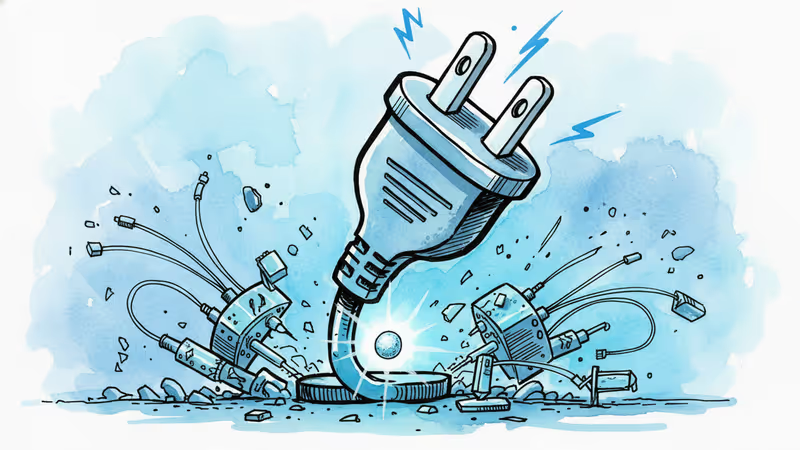
Fusion Power's Cost Problem May Have a $100M Solution
Pacific Fusion claims it can eliminate expensive lasers from fusion reactors through magnetic field manipulation. Could this breakthrough make fusion power commercially viable by the 2030s?
The math behind fusion power is brutally simple: if it costs more to start the fusion reaction than you can earn selling the electricity, the technology is dead on arrival. Most fusion startups are betting hundreds of millions on unproven approaches, hoping to crack this fundamental economic puzzle by the mid-2030s.
Pacific Fusion thinks it's found a shortcut that could save $100 million per reactor.
The Laser Problem That's Been Holding Fusion Back
Most fusion approaches face the same expensive reality. To create conditions hot enough for atoms to fuse, researchers typically need both powerful magnets and lasers to "preheat" the fuel before the main compression event. The lasers alone can cost over $100 million for a commercial-scale system.
Pacific Fusion uses a different approach called pulsed-driven inertial confinement fusion. Instead of lasers, massive electrical pulses create magnetic fields that compress fuel pellets—about the size of a pencil eraser—in less than 100 billionths of a second. "The faster you can implode it, the hotter it'll get," explains Keith LeChien, the company's co-founder and CTO.
But even this approach has needed that expensive laser "kickstart"—typically 5% to 10% of the total energy input. Until now.
A $0.22 Solution to a $100 Million Problem
In experiments at Sandia National Laboratory, Pacific Fusion discovered they could eliminate the laser preheating entirely through clever engineering. By adjusting the thickness of aluminum wrapping around their plastic fuel targets, they can control how much magnetic field "leaks" through to warm the fuel before compression.

The precision required? About the same as manufacturing a .22 caliber bullet casing—a process that's been "honed and perfected over 100 plus years," LeChien notes. The additional energy cost is "much less than 1%" of the system's total power requirements.
This isn't just about cost savings. Eliminating lasers also removes complex maintenance requirements and simplifies the entire system architecture. For a technology that needs to compete with natural gas and renewables on price, every dollar matters.
The Reality Check: Simulation vs. Real World
LeChien is refreshingly honest about the challenges ahead. "A lot of people have simulated things and said, 'Oh, this will work or that will work.' It's a very different game to simulate something, build it, test it, and have it work."
The experiments help validate computer models, but commercial fusion still faces enormous hurdles. The fuel pellets must be manufactured with extreme precision, the electrical systems must fire with perfect timing, and the entire process must be repeated thousands of times per day for decades.
Most fusion companies are targeting the early to mid-2030s for their first commercial plants. That timeline assumes everything goes perfectly—a big assumption in an industry where "five years away" has been the standard promise for over 50 years.
The Stakes: 24/7 Clean Power at Grid Scale
Unlike solar and wind, fusion promises consistent baseload power that grid operators understand. If successful, it could provide massive amounts of electricity around the clock without weather dependencies or storage requirements.
But the window for fusion may be narrowing. Battery costs continue plummeting, making renewable-plus-storage increasingly competitive. Geothermal is expanding beyond traditional hot spots. Even advanced nuclear fission is seeing renewed investment.
Pacific Fusion's approach could be the cost breakthrough fusion needs—or it could be another promising lab result that doesn't scale. The company's experiments represent progress, but the fusion industry has learned to be cautious about breakthrough claims.
Authors
Related Articles

Samsung Electronics' union branch revealed that 84% of survey respondents oppose the government's roughly $290 billion (₩400 trillion) semiconductor megaproject in Gwangju. Government, management, the union and shareholders are all reading the same national project in sharply different ways.
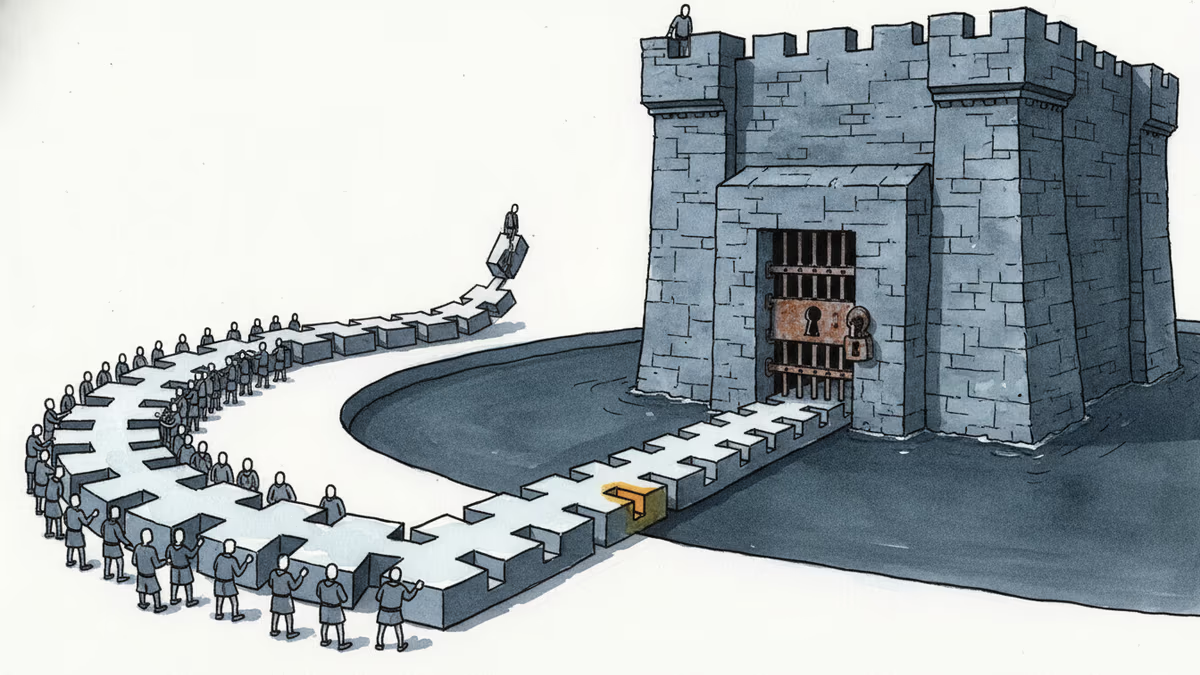
Nvidia shipped roughly a billion RISC-V cores in 2024, then announced it would run CUDA on the open standard. We break down how royalty-free instruction sets and open software stacks are trying to route around CUDA's lock-in. Part 2 of the Semiconductor Sovereignty series.
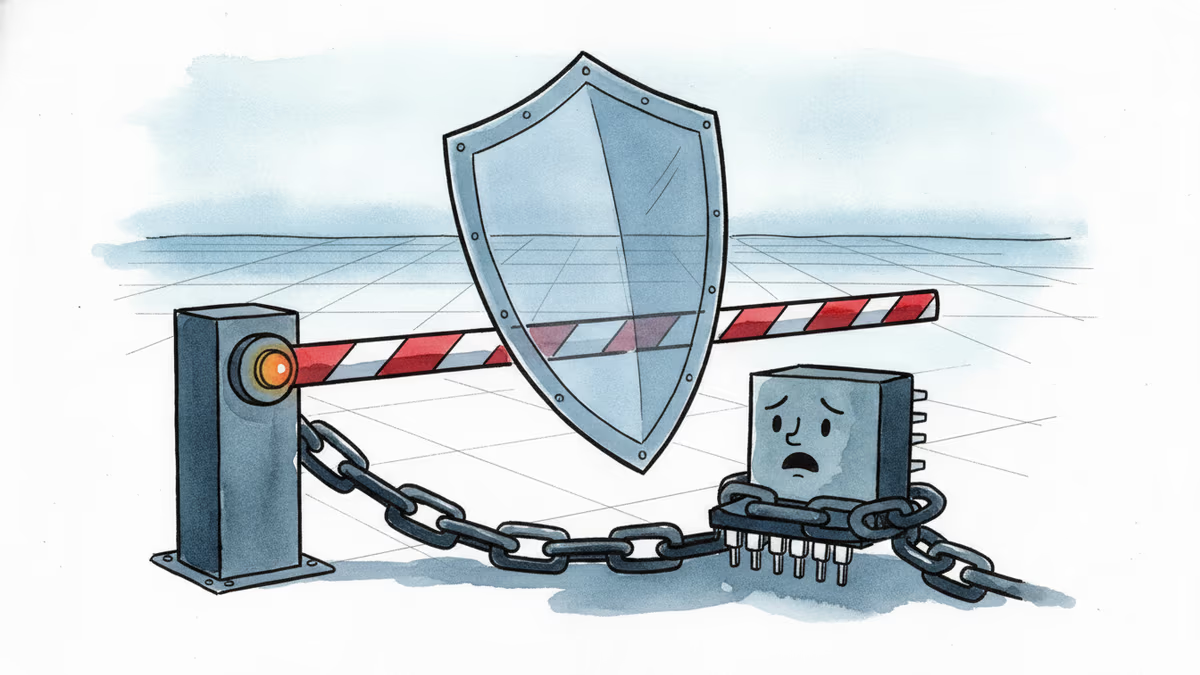
US AI-chip export controls split into three layers in the first half of 2026 — January easing, a May crackdown on circumvention, and a pending bill. Nvidia erased China from its guidance and still posted a record $81.6 billion quarter. A look at the export policy that both shields and cages it.
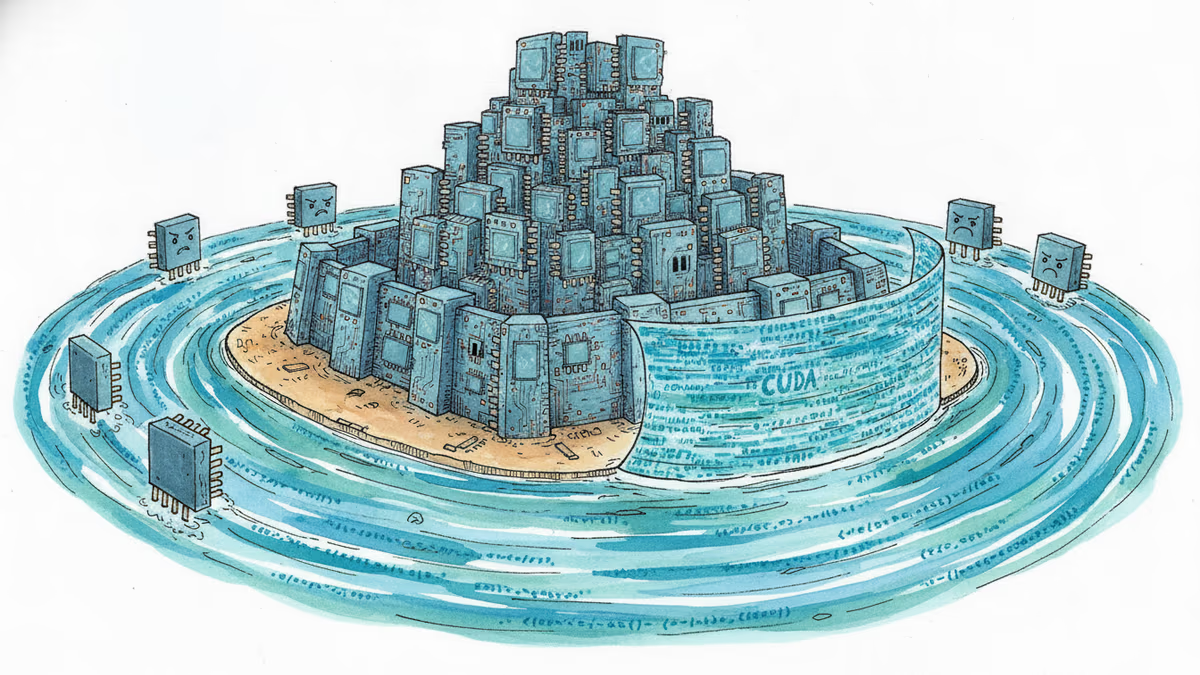
AMD's MI325X matches or beats Nvidia on memory and bandwidth — yet Nvidia's 86-92% share holds. The real moat is CUDA, 20 years in the making. Part 1 of 4.
Samsung Electronics' union branch revealed that 84% of survey respondents oppose the government's roughly $290 billion (₩400 trillion) semiconductor megaproject in Gwangju. Government, management, the union and shareholders are all reading the same national project in sharply different ways.
Nvidia shipped roughly a billion RISC-V cores in 2024, then announced it would run CUDA on the open standard. We break down how royalty-free instruction sets and open software stacks are trying to route around CUDA's lock-in. Part 2 of the Semiconductor Sovereignty series.
US AI-chip export controls split into three layers in the first half of 2026 — January easing, a May crackdown on circumvention, and a pending bill. Nvidia erased China from its guidance and still posted a record $81.6 billion quarter. A look at the export policy that both shields and cages it.
AMD's MI325X matches or beats Nvidia on memory and bandwidth — yet Nvidia's 86-92% share holds. The real moat is CUDA, 20 years in the making. Part 1 of 4.
Thoughts
Share your thoughts on this article
Sign in to join the conversation