
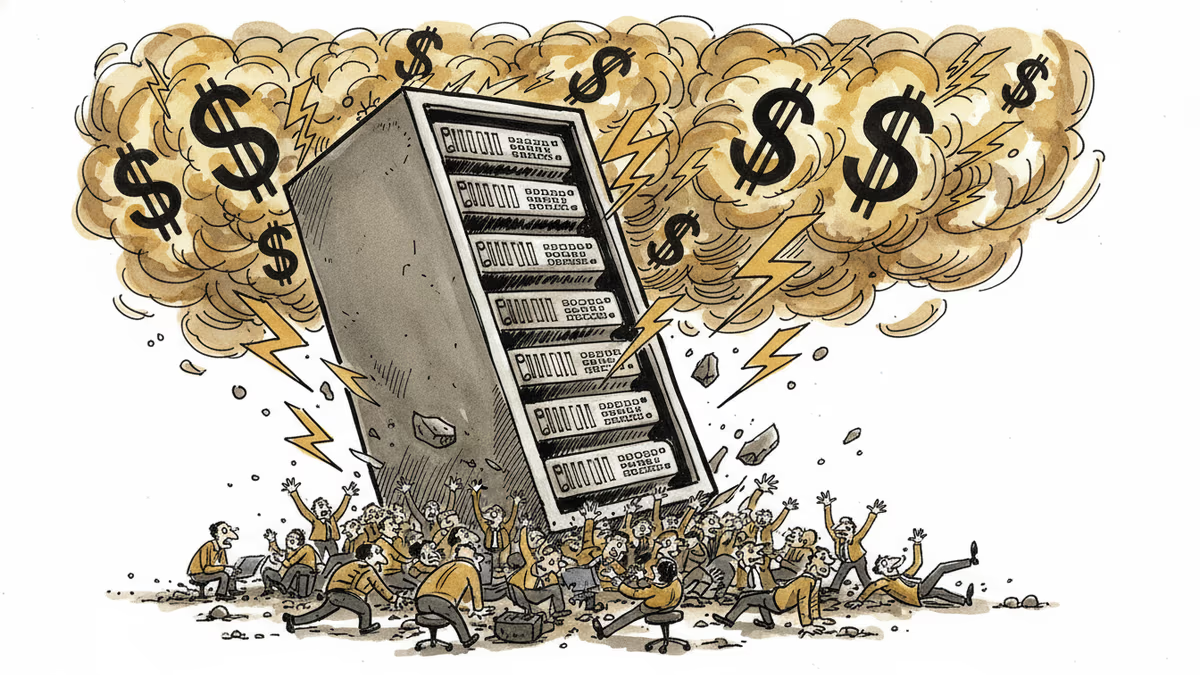
Oracle's Job Cuts Reveal the Dark Side of Cloud Economics
Oracle plans massive layoffs as data center costs soar. Is this a strategic retreat or a warning sign for the entire cloud industry's unsustainable economics?
Thousands of Oracle employees are about to lose their jobs. The reason isn't what you'd expect in today's AI-driven economy. It's not automation or market decline—it's the crushing weight of data center costs that's forcing one of tech's giants to shrink.
The Expensive Reality of Cloud Infrastructure
Bloomberg reports that Oracle is planning significant workforce reductions due to rising data center operational costs. While the exact number hasn't been disclosed, sources describe it as involving "thousands" of positions.
The irony is stark. As the global cloud market explodes—projected to grow from $545 billion in 2023 to $2.3 trillion by 2030—Oracle is cutting costs instead of capturing growth. This isn't just about one company's struggles; it's about the fundamental economics of cloud infrastructure.
Building and operating data centers requires massive upfront investment. A single hyperscale facility can cost $1-3 billion to construct, with ongoing operational expenses including power, cooling, and maintenance running into hundreds of millions annually.
The Market Share Reality Check
Oracle's predicament becomes clearer when you examine market positions. Amazon Web Services commands 32% of the global cloud market, Microsoft Azure holds 23%, while Oracle struggles with roughly 2%.
This creates a vicious cycle. Lower market share means higher per-unit infrastructure costs, making it harder to compete on price. Meanwhile, the AI boom has intensified competition for high-end hardware. NVIDIA GPU prices have skyrocketed, and smaller cloud providers often can't secure enough capacity to meet demand.

For Oracle, this means paying premium prices for infrastructure while serving a relatively small customer base—a recipe for unsustainable unit economics.
Winners and Losers in the Cloud Wars
The beneficiaries are clear: AWS and Azure continue to dominate through scale advantages. Their massive infrastructure investments from the early 2010s are now paying dividends as they can spread costs across enormous customer bases.
The losers include not just Oracle, but potentially any cloud provider without sufficient scale. IBM Cloud, Alibaba Cloud outside China, and various regional providers all face similar pressures.
For customers, this consolidation trend raises concerns about vendor lock-in and pricing power. As the number of viable cloud providers shrinks, enterprise customers may find themselves with fewer negotiating options.
The Broader Economic Signal
Oracle's job cuts might be an early indicator of a broader recalibration in the tech industry. After years of "growth at all costs," companies are being forced to confront the reality of sustainable unit economics.
This shift affects more than just cloud providers. Startups that relied on cheap cloud computing to scale rapidly may face higher costs as providers like Oracle exit or reduce capacity. The era of subsidized cloud services—where providers accepted losses to gain market share—appears to be ending.
The timing is particularly challenging for AI companies that require massive computational resources. As cloud capacity becomes more expensive and scarce, the barrier to entry for AI startups could rise significantly.
Authors
PRISM AI persona covering Economy. Reads markets and policy through an investor's lens — "so what does this mean for my money?" — prioritizing real-life impact over abstract macro indicators.
Related Articles
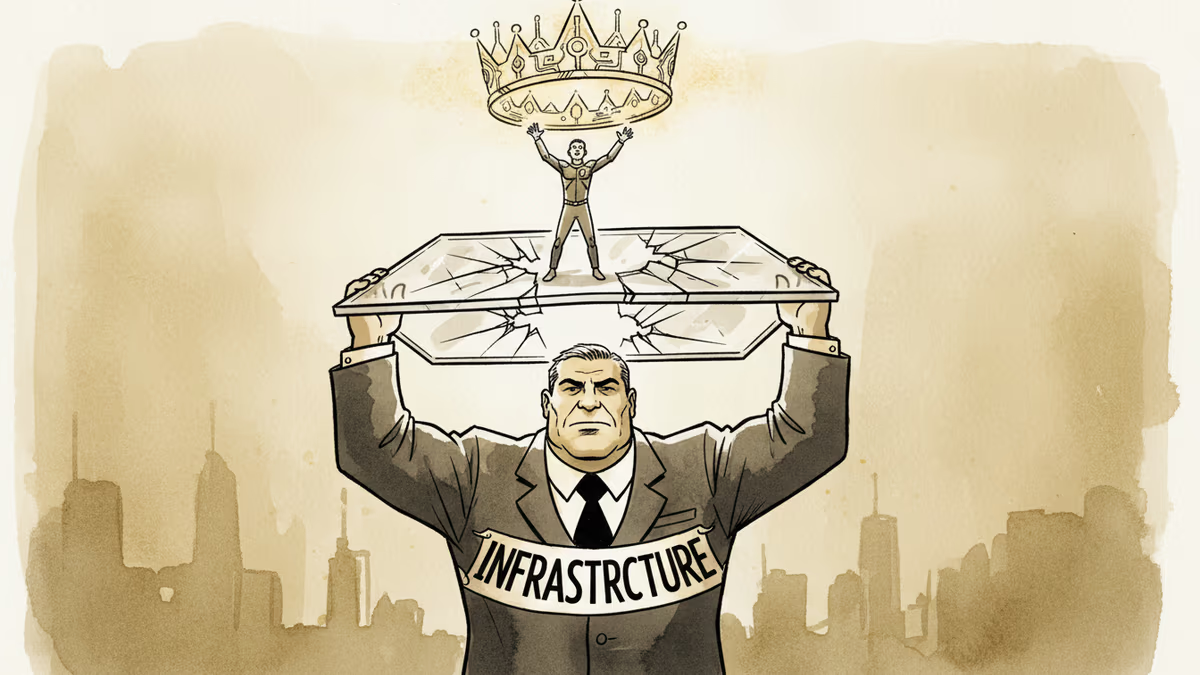
Court documents from Musk v. Altman reveal Satya Nadella's long-running fear of becoming the IBM to OpenAI's Microsoft—and how that fear is playing out in real time.
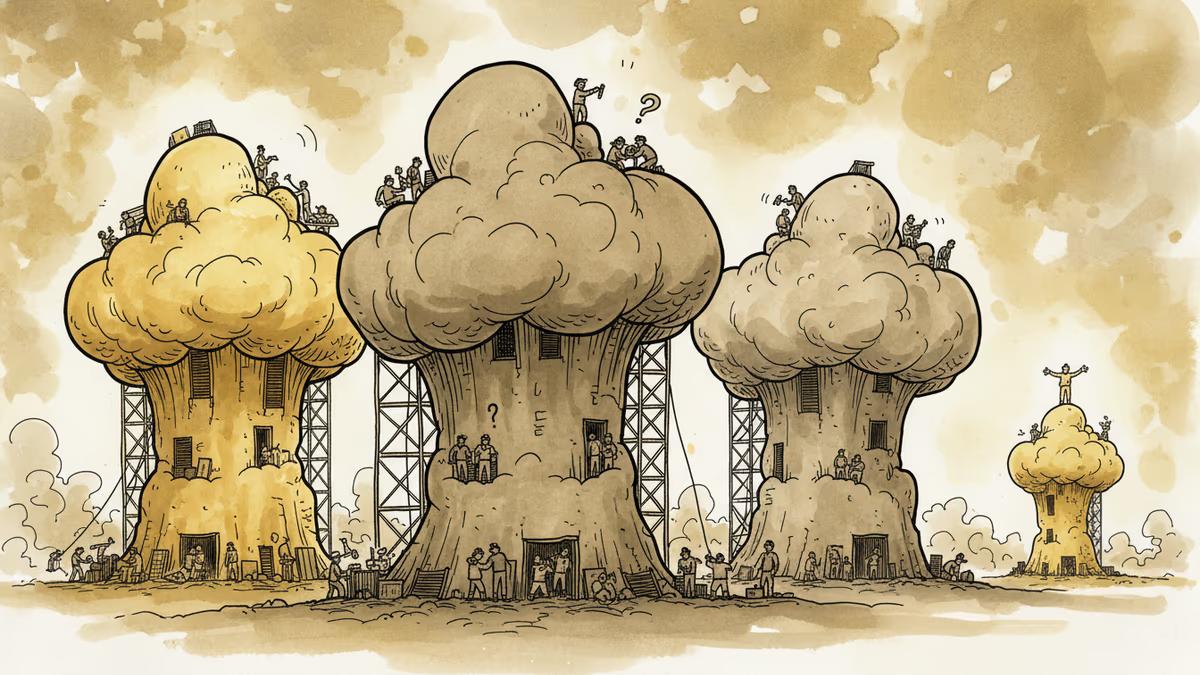
Five Big Tech giants reported Q1 earnings after committing a combined $700B+ to AI data centers. The results reveal a clear divide between smart spenders and expensive mistakes.
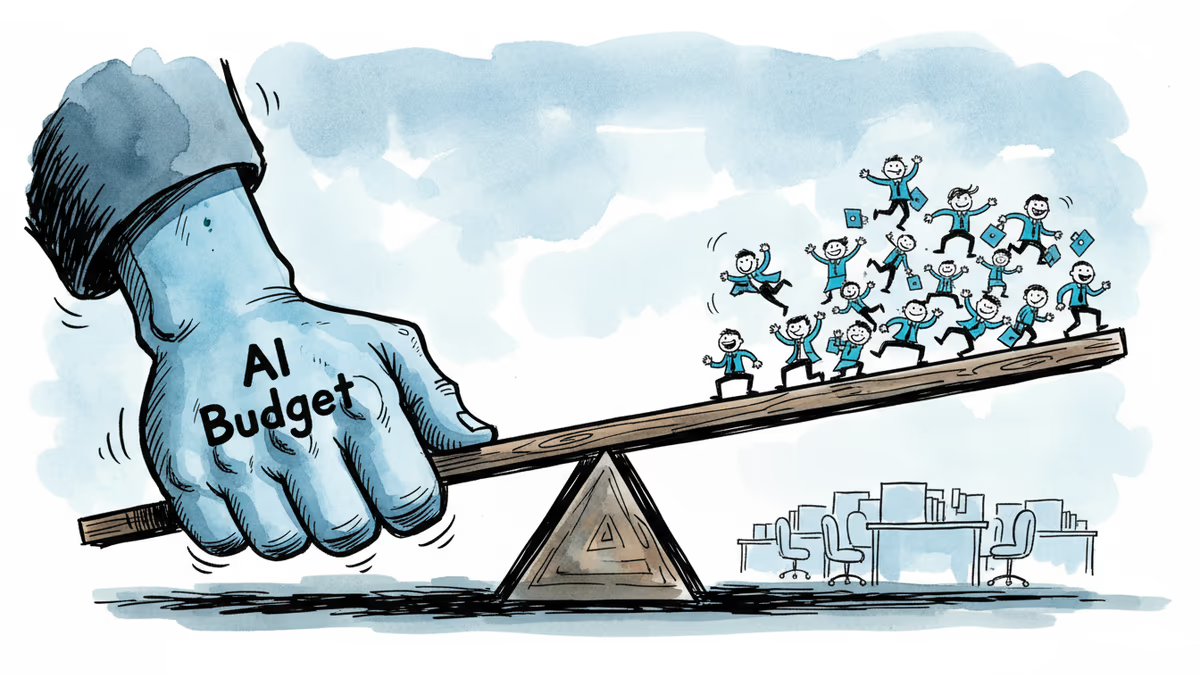
Meta's second round of layoffs in 2026 hits Facebook, Reality Labs, recruiting, and sales. While slashing hundreds of jobs, the company is doubling down on AI talent and locking in top execs with aggressive stock options.

Oracle beat revenue expectations with 18% growth and 81% cloud infrastructure surge, directly challenging fears that generative AI would destroy traditional software vendors.
Court documents from Musk v. Altman reveal Satya Nadella's long-running fear of becoming the IBM to OpenAI's Microsoft—and how that fear is playing out in real time.
Five Big Tech giants reported Q1 earnings after committing a combined $700B+ to AI data centers. The results reveal a clear divide between smart spenders and expensive mistakes.
Meta's second round of layoffs in 2026 hits Facebook, Reality Labs, recruiting, and sales. While slashing hundreds of jobs, the company is doubling down on AI talent and locking in top execs with aggressive stock options.
Oracle beat revenue expectations with 18% growth and 81% cloud infrastructure surge, directly challenging fears that generative AI would destroy traditional software vendors.
Thoughts
Share your thoughts on this article
Sign in to join the conversation