
Microsoft Spent $100 Billion on OpenAI. Why Isn't It Winning AI?
Court documents from Musk v. Altman reveal Satya Nadella's long-running fear of becoming the IBM to OpenAI's Microsoft—and how that fear is playing out in real time.
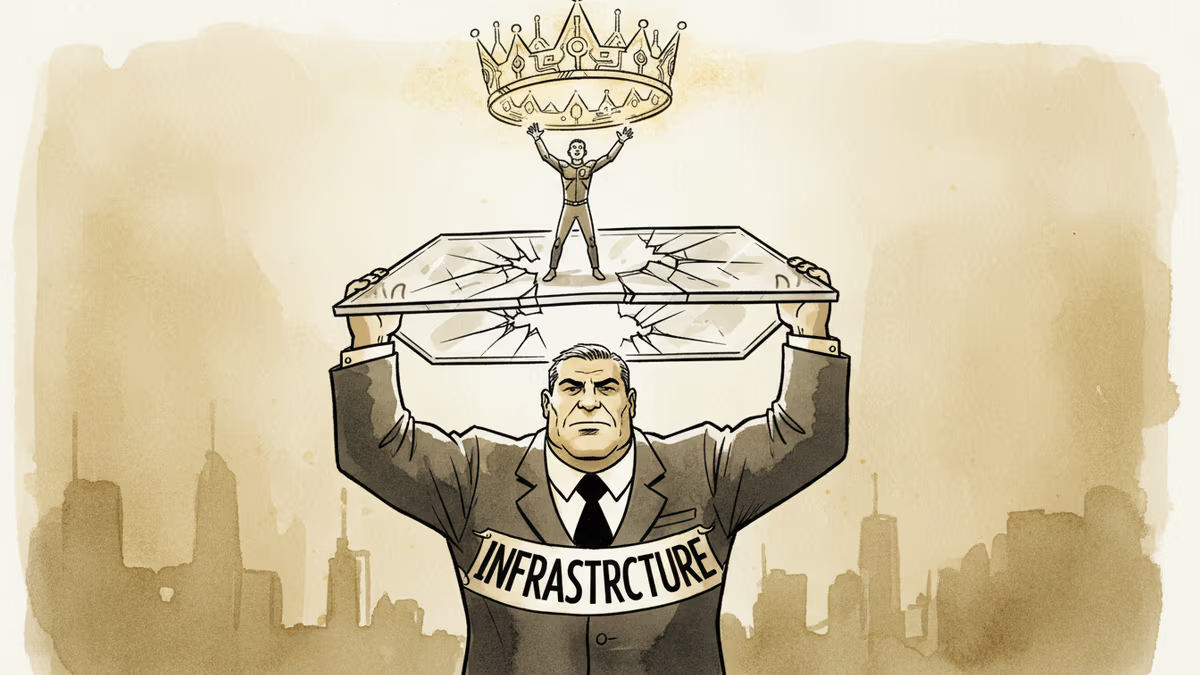
"I don't want to be IBM and OpenAI to be Microsoft." Satya Nadella wrote that line in an internal email in April 2022—seven months before ChatGPT launched, and roughly three years after Microsoft had already written its first $1 billion check to OpenAI. The CEO of one of the world's most valuable companies was worried his firm was building the infrastructure for its own obsolescence.
That email surfaced in a San Francisco courtroom last week, as Elon Musk's lawsuit against Sam Altman pulled back the curtain on one of tech's most consequential—and complicated—partnerships.
The $100 Billion Question
The numbers are staggering. By June 2026, Microsoft will have committed more than $100 billion to OpenAI across investments, infrastructure, and hosting costs. At the end of 2025, roughly 45% of Microsoft's commercial remaining performance obligations were tied to OpenAI. That's not a partnership—that's a dependency.
And yet, Microsoft's stock is down 16% this year. Amazon, Google, and Oracle—all cloud rivals—are trading higher. The company that arguably made the modern AI boom possible is not the one collecting the biggest rewards from it.
Nadella testified Monday in Oakland that the strategic logic was always about more than cloud revenue. "It was becoming even more core and important that we had real agency at every layer of the stack," he said. Translated: Microsoft needed to be more than a landlord collecting rent from OpenAI's servers.
The IBM Trap

Nadella's IBM reference isn't just corporate anxiety—it's a precise historical analogy. In 1980, IBM struck a deal to distribute Microsoft's operating system on its machines. IBM built the hardware; Microsoft wrote the software. Within a decade, Microsoft had captured the lion's share of the industry's market value, and IBM had been relegated to the lower rungs of the value chain.
Nadella watched OpenAI's trajectory and saw the same pattern forming. Azure was the hardware. OpenAI was the software. The company building the infrastructure rarely ends up owning the relationship with the customer—or the culture.
His fears have proven well-founded. OpenAI is now valued at $850 billion and has signed cloud partnerships with Google, Oracle, and Amazon—Microsoft's direct competitors. The April 2026 contract renegotiation formalized what was already becoming obvious: OpenAI can now serve its products through any provider it chooses. The exclusive window has closed.
Copilot's Identity Crisis
To avoid becoming a pure infrastructure play, Microsoft needed its own AI products to break through. They haven't—at least not at ChatGPT's scale.
Copilot, Microsoft's flagship AI assistant, has been integrated into Windows, Office, and Bing. But it hasn't produced a consumer moment that rivals the cultural footprint of ChatGPT. In January 2024, Nadella himself said models were becoming "more of a commodity"—a framing that, intentionally or not, undermined the value of his own OpenAI investment.
Two months later, he hired Mustafa Suleyman, co-founder of Google's DeepMind, to run a new Microsoft AI unit. The message: we're building our own models. But building competitive frontier models from scratch—against OpenAI, Anthropic, and Google DeepMind—is an enormously expensive, uncertain bet for a company that spent years ceding that ground to its partner.
By March 2026, Microsoft had reshuffled Copilot leadership again, bringing in former Snap executive Jacob Andreou to run consumer and commercial experiences. Suleyman was redirected toward model development. The organizational churn signals a strategy still searching for its footing.
Meanwhile, Microsoft has been hedging aggressively: $5 billion into Anthropic, xAI models distributed through Azure, and an expanding roster of third-party AI providers on its platform. It's a rational hedge. It's also an implicit admission that no single bet—including the $100 billion one—has paid off the way the company hoped.
This content is AI-generated based on source articles. While we strive for accuracy, errors may occur. We recommend verifying with the original source.
Related Articles
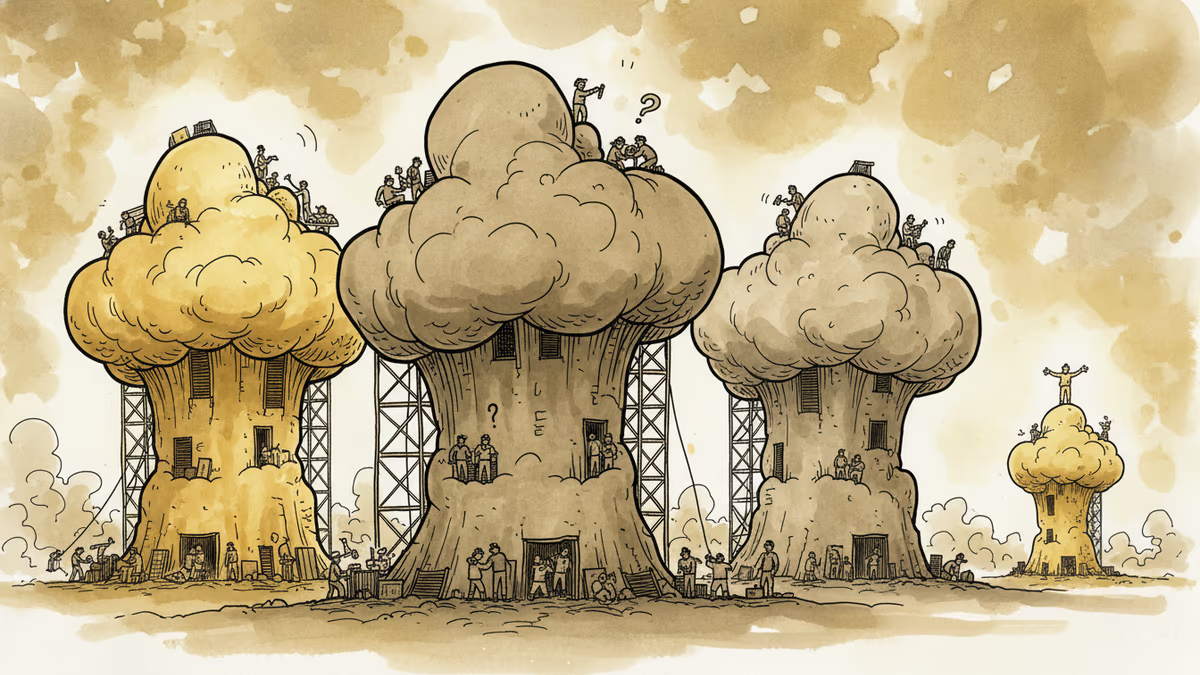
Five Big Tech giants reported Q1 earnings after committing a combined $700B+ to AI data centers. The results reveal a clear divide between smart spenders and expensive mistakes.
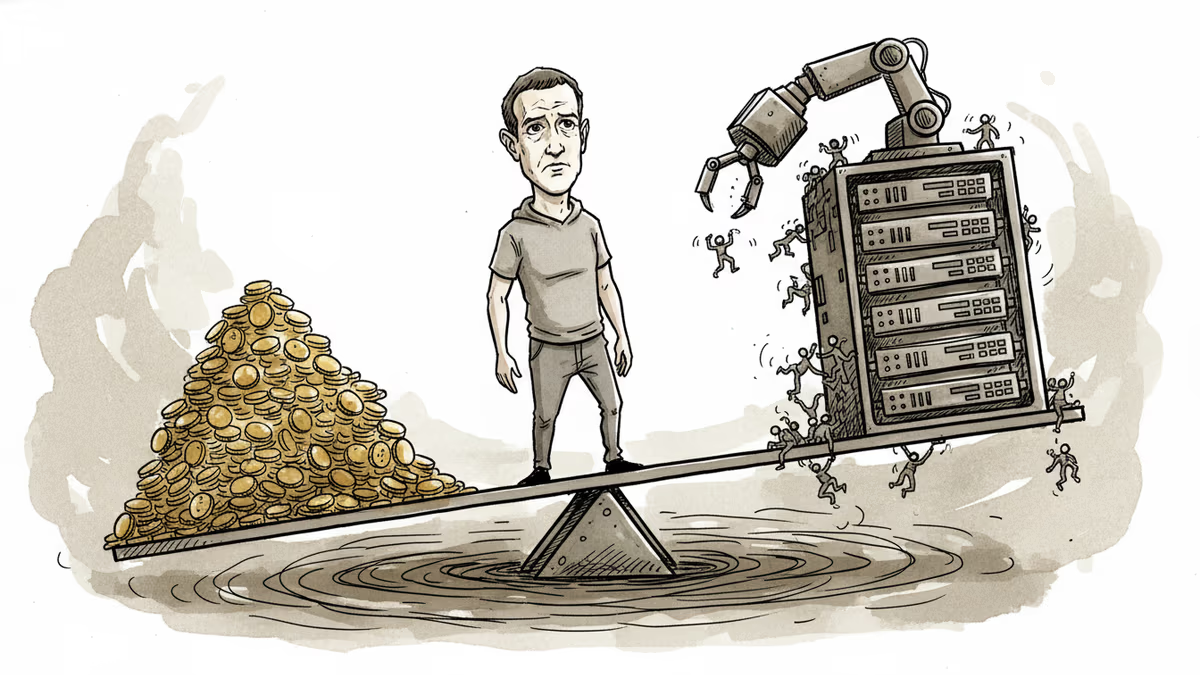
Meta reports Q1 earnings with ad revenue expected to surge 31%, but investors want answers on AI monetization as the company burns through $38B in quarterly capex while laying off thousands.
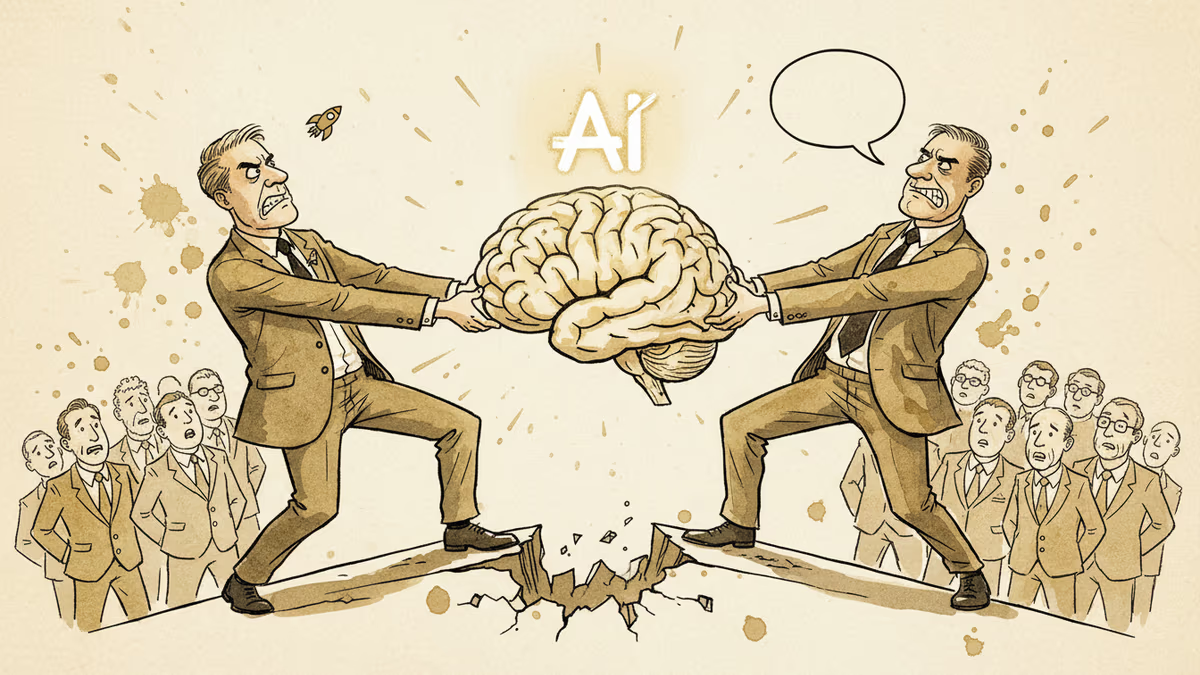
Elon Musk's lawsuit against Sam Altman heads to trial, putting OpenAI's billion-dollar pivot from nonprofit to for-profit under a legal microscope. Here's what's really at stake.
Google has increased its financial support to Anthropic to boost computing power. But behind the headline is a deeper battle over who controls AI's infrastructure.
Five Big Tech giants reported Q1 earnings after committing a combined $700B+ to AI data centers. The results reveal a clear divide between smart spenders and expensive mistakes.
Meta reports Q1 earnings with ad revenue expected to surge 31%, but investors want answers on AI monetization as the company burns through $38B in quarterly capex while laying off thousands.
Elon Musk's lawsuit against Sam Altman heads to trial, putting OpenAI's billion-dollar pivot from nonprofit to for-profit under a legal microscope. Here's what's really at stake.
Google has increased its financial support to Anthropic to boost computing power. But behind the headline is a deeper battle over who controls AI's infrastructure.
Thoughts
Share your thoughts on this article
Sign in to join the conversation