
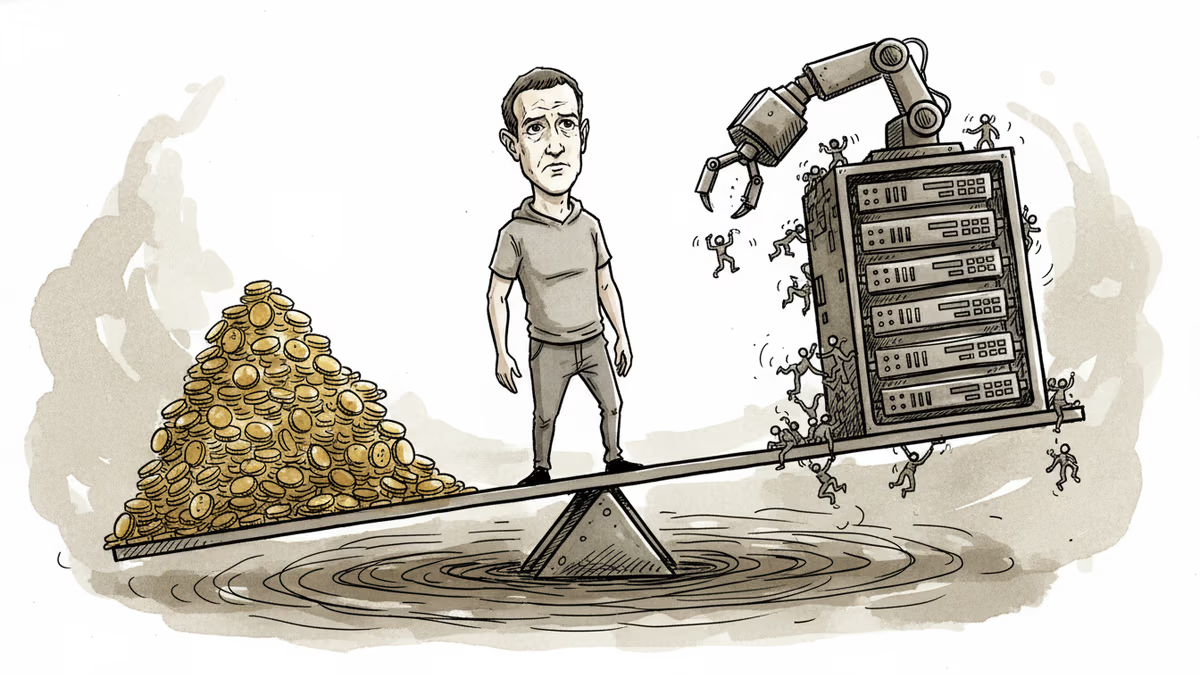
Meta Spends $38B on AI While Cutting 8,000 Jobs
Meta reports Q1 earnings with ad revenue expected to surge 31%, but investors want answers on AI monetization as the company burns through $38B in quarterly capex while laying off thousands.
Meta is firing 8,000 people and spending $38 billion in the same quarter. If that sounds contradictory, welcome to the company's 2026 investment thesis.
The Ad Machine Is Running Hot
When Meta reports first-quarter results after Wednesday's bell, analysts polled by LSEG expect revenue of $55.45 billion—a 31% jump from $42.3 billion a year ago. That would be the company's strongest quarterly growth since 2021. Earnings per share are pegged at $6.79.
Nearly every dollar of that comes from advertising. And here's the quiet story inside those numbers: Meta's AI investments are already paying off—just not in any new product. Smarter ad targeting, better feed algorithms, more precise audience modeling. The AI is making the old business work better, even as the company hunts for what comes after ads.
Wall Street has been patient. But patience has a timeline.
The Bill for Betting on AI
Capital expenditures for Q1 are expected to hit $27.63 billion, according to StreetAccount. For the full year, Meta guided between $115 billion and $135 billion—a figure that would have seemed surreal just three years ago.
The spending traces back to a strategic pivot Mark Zuckerberg made last June: a $14.3 billion investment in Scale AI, paired with the hiring of its CEO Alexandr Wang to lead Meta Superintelligence Labs. The mandate is direct—build proprietary models that can compete with OpenAI, Anthropic, and Google. Earlier this month, Meta debuted Muse Spark, its first foundation model.

The timing adds another wrinkle. The U.S.-Iran war, which began in February, has sent oil prices surging—raising energy costs for data centers across the board. Meta, Alphabet, Amazon, and Microsoft are all reporting Wednesday, and all face the same uncomfortable question about whether their infrastructure spending projections still hold.
Cutting People, Buying Machines
Last week, Meta announced it's laying off roughly 10% of its workforce—about 8,000 employees—and canceling 6,000 open roles it had been recruiting for. It's the third round of cuts this year. January took out 1,000 workers in Reality Labs. March swept through Facebook, global operations, and sales.
The pattern is deliberate, not desperate. Zuckerberg is shrinking the human headcount to fund the machine buildout. Whether that trade-off pays off depends entirely on whether AI can eventually generate revenue—not just reduce costs.
Reality Labs, the AR/VR division, is expected to post an operating loss of $4.82 billion this quarter on just $488.8 million in revenue. The metaverse bet continues to bleed, yet Zuckerberg shows no sign of pulling back.
What the Earnings Call Actually Needs to Deliver
The ad revenue growth is baked in. What investors are really listening for Wednesday is whether Zuckerberg can articulate a credible monetization path for AI—not a vision, a roadmap.
Muse Spark is a proof of concept, not a product line. Can it anchor a B2B AI services business? A subscription tier? Or does Meta remain, structurally, an advertising company that happens to be spending like a semiconductor manufacturer?
That question has an answer forming somewhere inside Meta Superintelligence Labs. Whether Zuckerberg is ready to share it publicly is the real variable heading into Wednesday's call.
This content is AI-generated based on source articles. While we strive for accuracy, errors may occur. We recommend verifying with the original source.
Related Articles
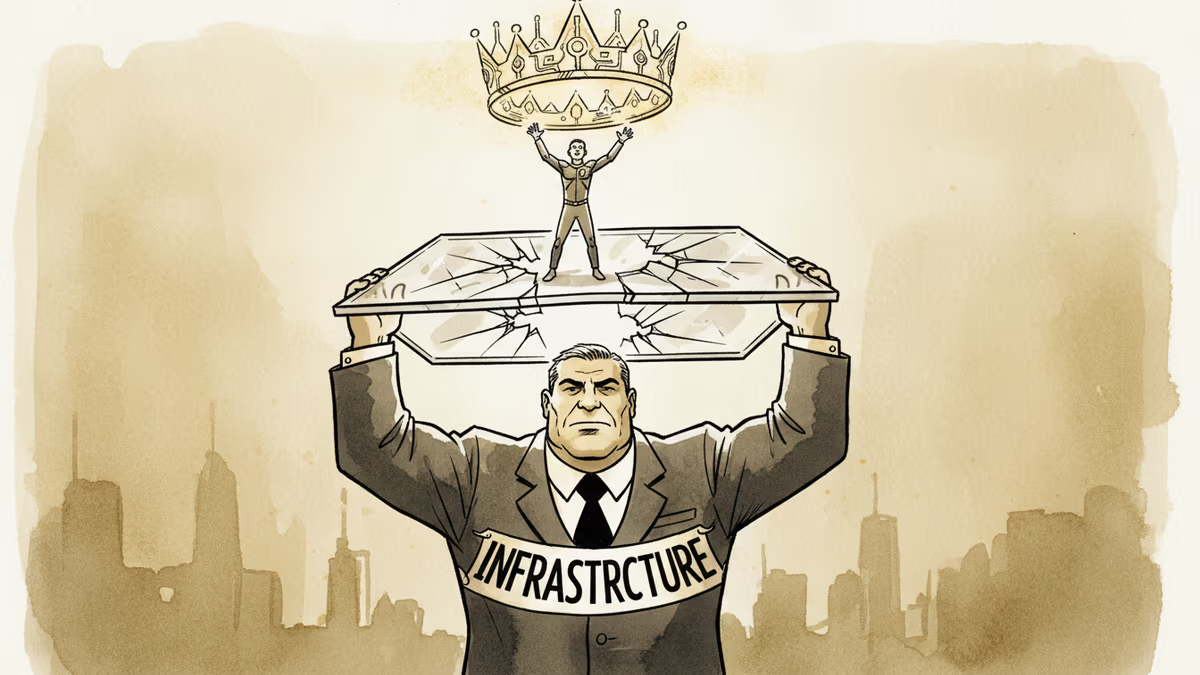
Court documents from Musk v. Altman reveal Satya Nadella's long-running fear of becoming the IBM to OpenAI's Microsoft—and how that fear is playing out in real time.
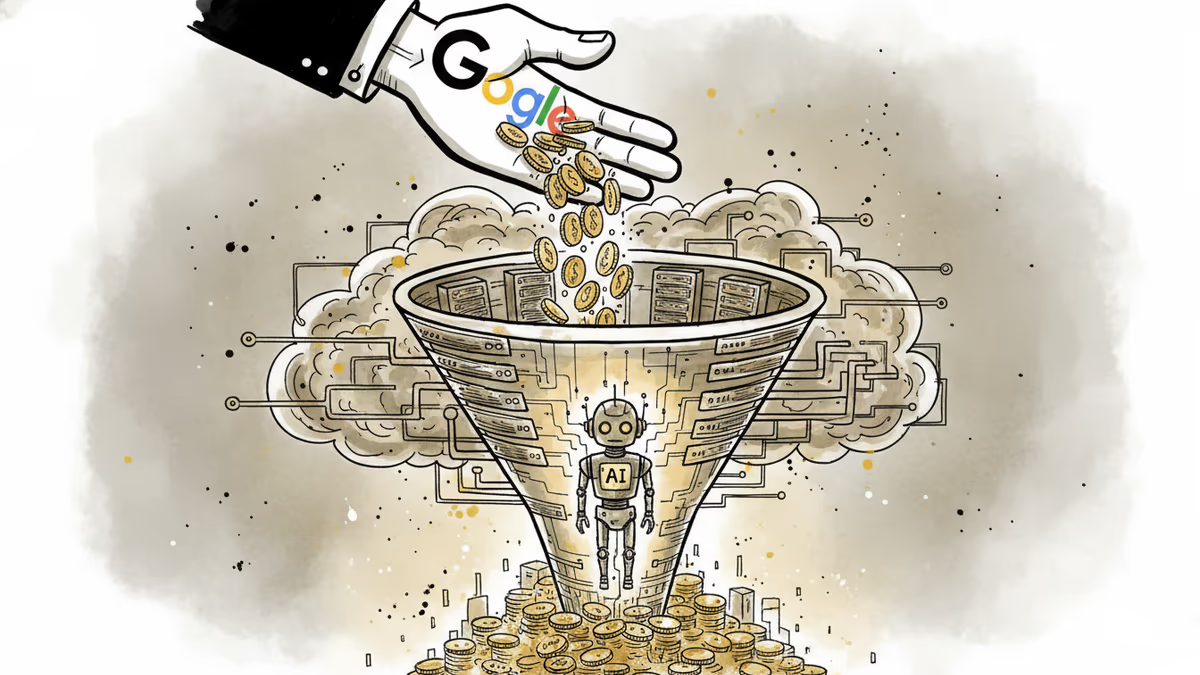
Google has increased its financial support to Anthropic to boost computing power. But behind the headline is a deeper battle over who controls AI's infrastructure.
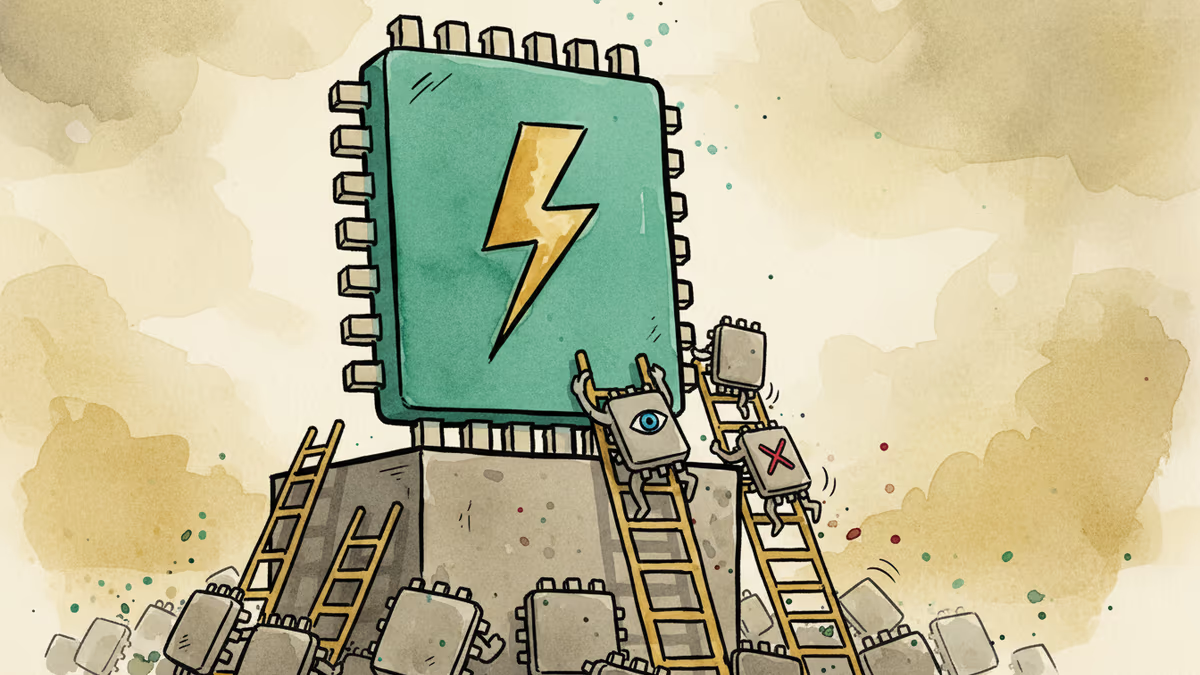
Nvidia closed at an all-time high as Intel posted its best day since 1987. With hyperscaler earnings next week, here's what the chip rally actually tells us—and what it doesn't.
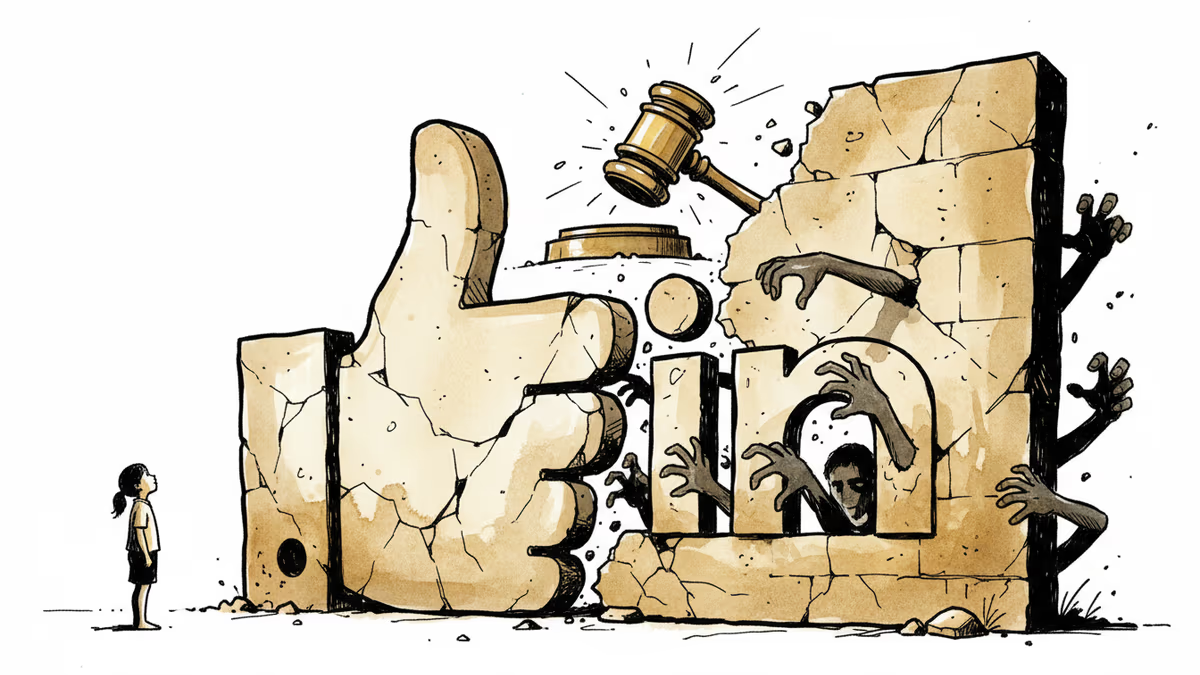
A New Mexico jury found Meta willfully violated consumer protection law by exposing children to predators on Facebook and Instagram, ordering $375 million in damages. What does this mean for Big Tech accountability?
Court documents from Musk v. Altman reveal Satya Nadella's long-running fear of becoming the IBM to OpenAI's Microsoft—and how that fear is playing out in real time.
Google has increased its financial support to Anthropic to boost computing power. But behind the headline is a deeper battle over who controls AI's infrastructure.
Nvidia closed at an all-time high as Intel posted its best day since 1987. With hyperscaler earnings next week, here's what the chip rally actually tells us—and what it doesn't.
A New Mexico jury found Meta willfully violated consumer protection law by exposing children to predators on Facebook and Instagram, ordering $375 million in damages. What does this mean for Big Tech accountability?
Thoughts
Share your thoughts on this article
Sign in to join the conversation