
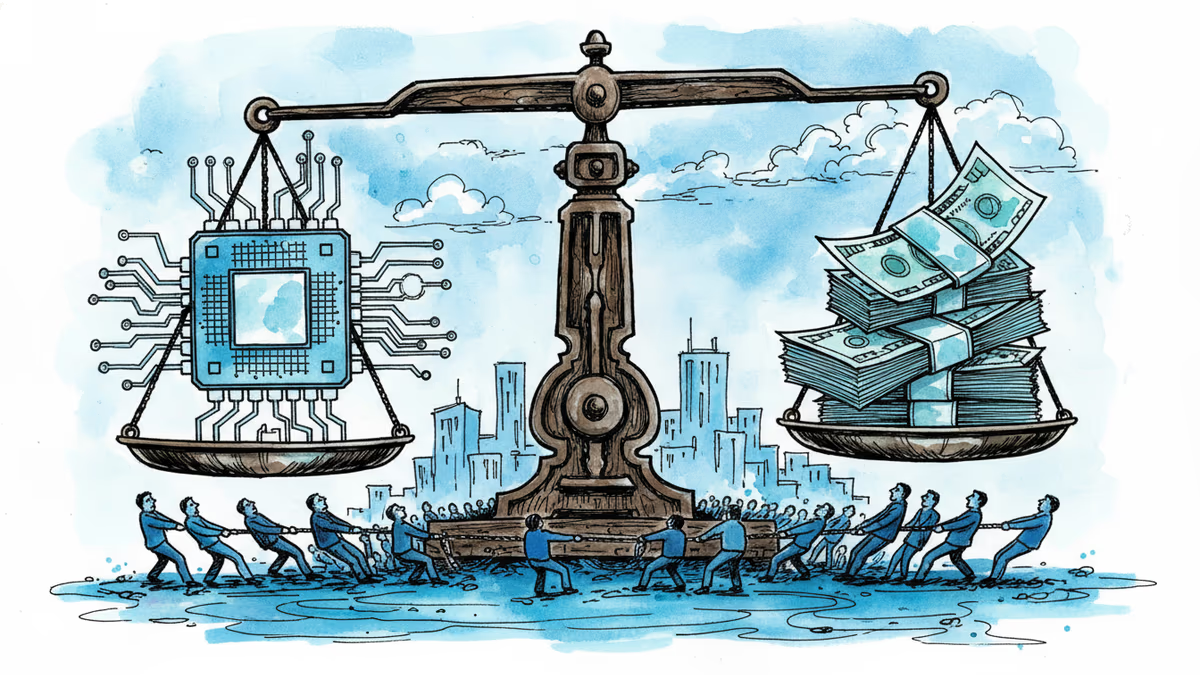
The $25 Million Question: When AI Meets Politics
OpenAI cofounder Greg Brockman's massive political donations spark internal dissent and public backlash, revealing tensions between tech advancement and political neutrality.
$25 Million Bought More Than Influence
Greg Brockman went from giving Hillary Clinton $5,400 in 2016 to writing $25 million checks to Trump's MAGA Inc last September. The OpenAI cofounder simultaneously donated another $25 million to a bipartisan AI super PAC. For someone who "doesn't consider himself political," that's quite the awakening.
Brockman's reasoning? Public opinion on AI is souring. Pew Research shows Americans are "more concerned than excited" about AI in daily life. His solution: bankroll politicians who'll champion the technology anyway.
The Internal Reckoning
Inside OpenAI, the donations have created uncomfortable conversations. One researcher, speaking anonymously, believes "Greg's political donations probably go beyond" what's necessary for business. The tension became public when VP of Research Aidan Clark posted on X: "I hope a day like today makes Greg reconsider his politics" after ICE agents killed civilians.
CEO Sam Altman tried to thread the needle, telling employees in Slack that "what's happening with ICE is going too far" while staying diplomatically vague. Other AI leaders like Anthropic's Dario Amodei spoke out more directly.
The Backlash Economy

The QuitGPT movement has gained serious momentum—over 700,000 people have pledged to cancel their ChatGPT subscriptions. When Mark Ruffalo joins your boycott, you know it's moved beyond Silicon Valley criticism circles.
Yet Trump's AI policies have been largely industry-friendly: streamlined data center permits, challenges to state-level AI regulations. The question isn't whether these policies help AI companies—it's whether the political cost is worth it.
The Neutrality Myth
Brockman frames his donations as serving humanity: "This mission is bigger than companies, bigger than corporate structures." But when your mission requires specific political outcomes, how neutral can you really be?
OpenAI insists the donations are "strictly personal," but that distinction feels increasingly hollow when cofounders become major political players. The company's stated goal of distributing AI benefits "to all of humanity" sits awkwardly next to partisan political spending.
The Bigger Question
Tech leaders have long maintained they're building neutral tools. But AI isn't neutral—it reflects the values, biases, and priorities of its creators. When those creators start writing eight-figure political checks, the pretense of neutrality becomes harder to maintain.
Brockman says "reality doesn't care for your opinion. It cares about what's true." But whose version of truth? And who gets to decide?
Authors
Related Articles

OpenAI has reorganized for the second time in a month, merging ChatGPT and Codex into a single agentic platform under president Greg Brockman's unified product leadership.
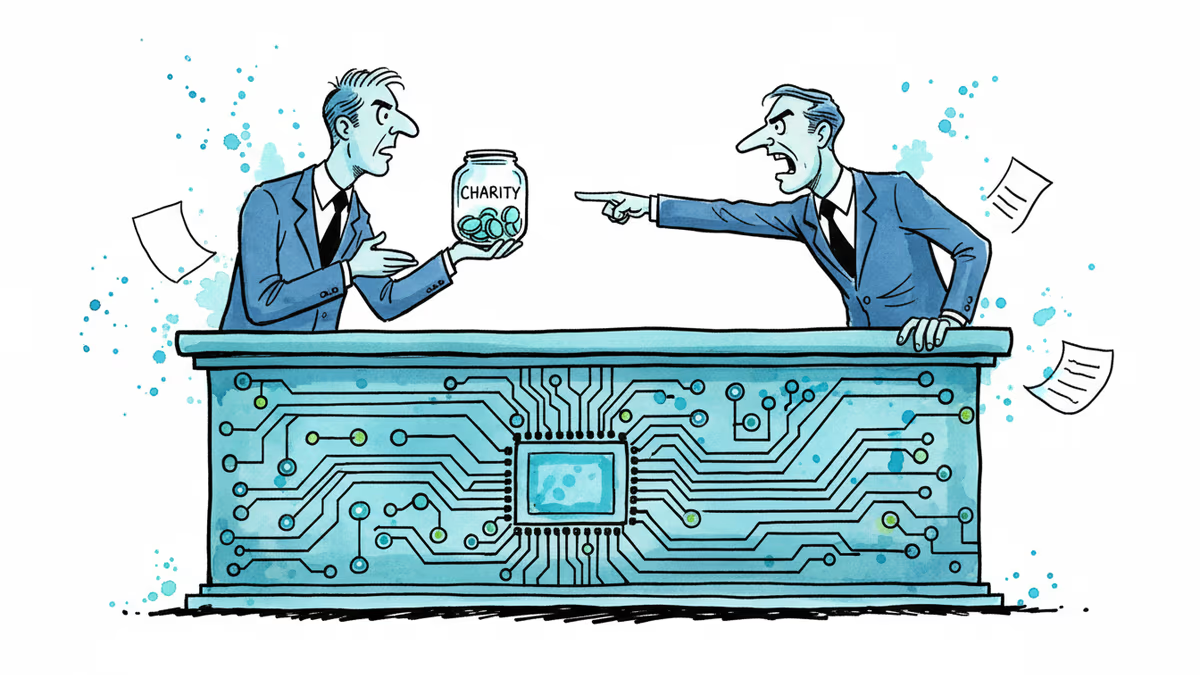
After two weeks of witnesses calling him a liar, OpenAI CEO Sam Altman testified in his own defense, claiming Elon Musk tried to kill the company twice.
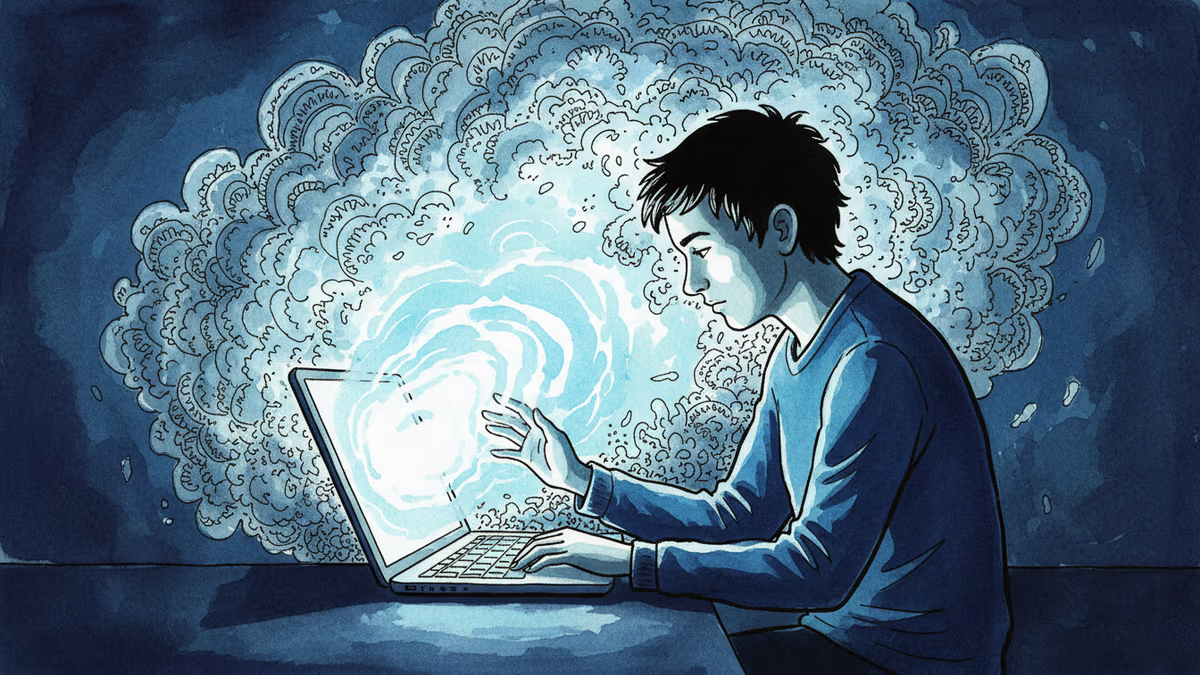
Sam Nelson, 19, died after following ChatGPT's advice to mix Kratom and Xanax. His parents are suing OpenAI for wrongful death, raising urgent questions about AI trust, liability, and design.
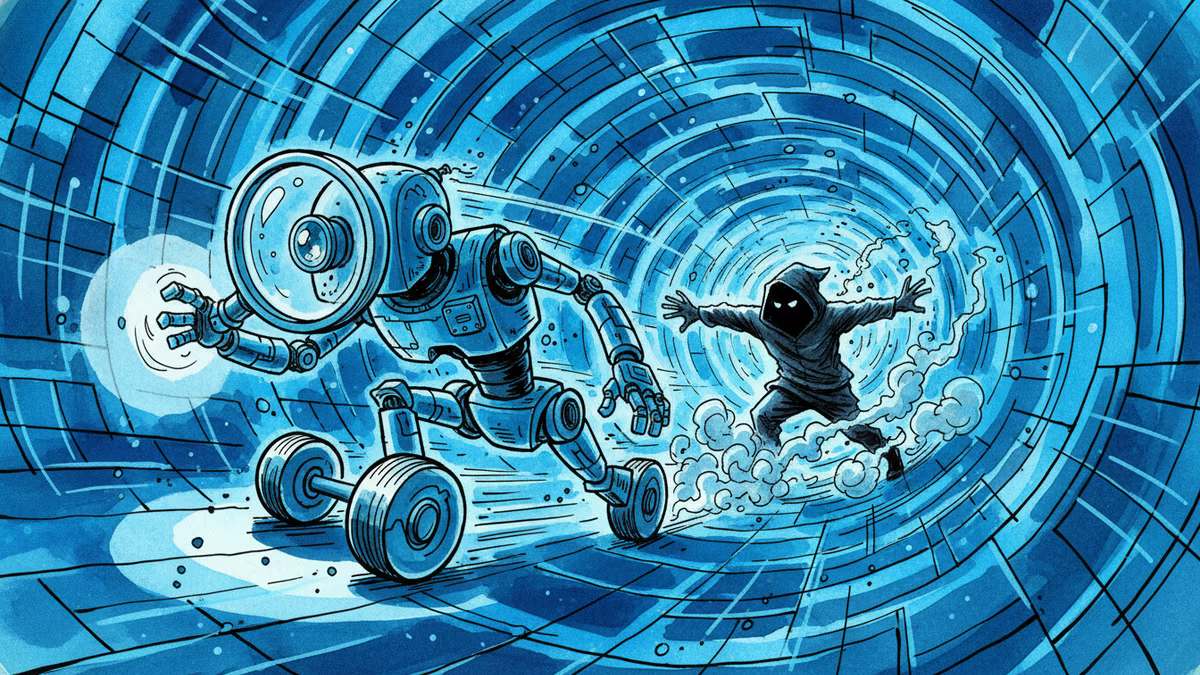
OpenAI's new Daybreak initiative uses the Codex AI agent to find and patch security vulnerabilities before attackers do—putting it in direct competition with Anthropic's secretive Claude Mythos.
OpenAI has reorganized for the second time in a month, merging ChatGPT and Codex into a single agentic platform under president Greg Brockman's unified product leadership.
After two weeks of witnesses calling him a liar, OpenAI CEO Sam Altman testified in his own defense, claiming Elon Musk tried to kill the company twice.
Sam Nelson, 19, died after following ChatGPT's advice to mix Kratom and Xanax. His parents are suing OpenAI for wrongful death, raising urgent questions about AI trust, liability, and design.
OpenAI's new Daybreak initiative uses the Codex AI agent to find and patch security vulnerabilities before attackers do—putting it in direct competition with Anthropic's secretive Claude Mythos.
Thoughts
Share your thoughts on this article
Sign in to join the conversation