

750MW of Pure Speed: OpenAI Cerebras Partnership to Turbocharge ChatGPT
OpenAI partners with Cerebras to add 750MW of high-speed AI compute, reducing inference latency for ChatGPT and real-time AI workloads.
750MW of raw power is about to redefine real-time AI. OpenAI has teamed up with Cerebras to slash latency and push ChatGPT into the fast lane.
How OpenAI Cerebras AI Compute 750MW Partnership Scales Performance
According to Reuters, OpenAI has announced a major partnership with Cerebras Systems to integrate 750MW of high-speed AI compute into its infrastructure. This move isn't just about size; it's about speed. The partnership specifically targets reducing inference latency, which is the time it takes for ChatGPT to process a query and deliver a response.

Industry analysts suggest this expansion is critical for managing the next generation of real-time AI workloads. As models become more reasoning-heavy, the demand for instant processing power has skyrocketed. By tapping into Cerebras' unique wafer-scale technology, OpenAI aims to maintain its lead in user experience as competitors catch up.
Authors
Related Articles

Five stories from late September, traced to where the paper trail stops: Korea's export record, Nvidia's Hugging Face 8-K, a US-China AI channel, the UN on AI, and rising births.

The US government invested $2 billion in quantum computing startups, but Congress says the money was never authorized for that purpose. The fate of IBM-backed Anderon hangs in the balance.
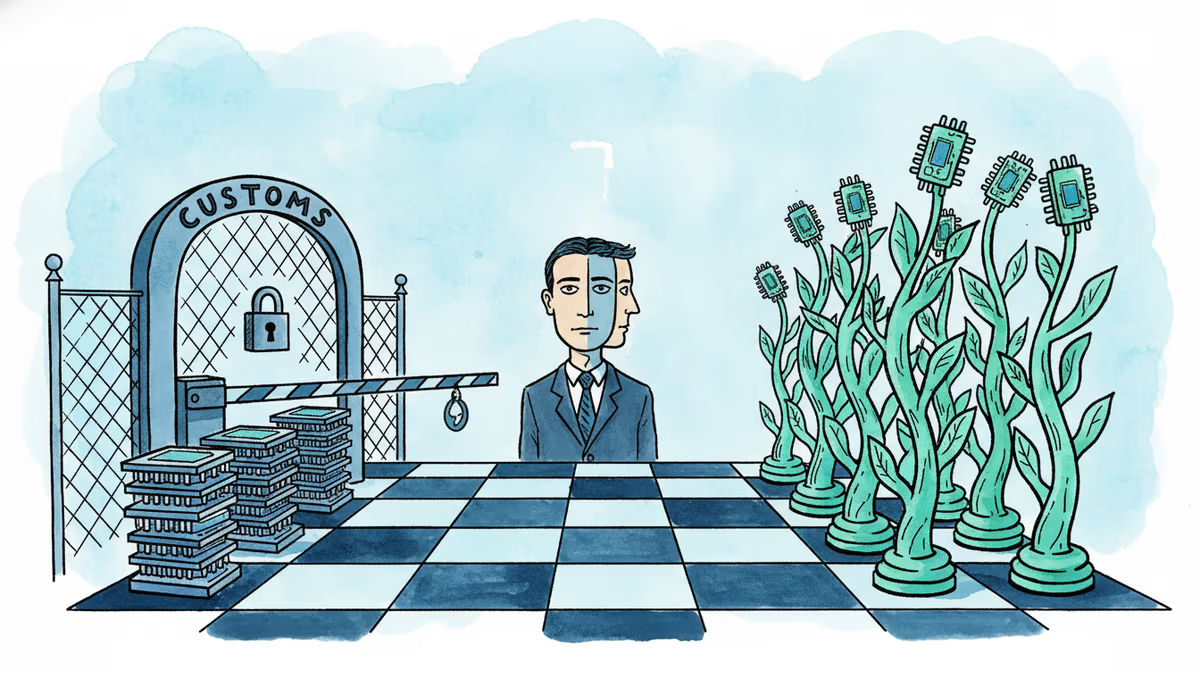
Beijing added an Nvidia gaming chip to its customs ban list the same week Jensen Huang visited China with Trump. Here's what it means for the chip war—and who actually wins.

OpenAI has reorganized for the second time in a month, merging ChatGPT and Codex into a single agentic platform under president Greg Brockman's unified product leadership.
Five stories from late September, traced to where the paper trail stops: Korea's export record, Nvidia's Hugging Face 8-K, a US-China AI channel, the UN on AI, and rising births.
The US government invested $2 billion in quantum computing startups, but Congress says the money was never authorized for that purpose. The fate of IBM-backed Anderon hangs in the balance.
Beijing added an Nvidia gaming chip to its customs ban list the same week Jensen Huang visited China with Trump. Here's what it means for the chip war—and who actually wins.
OpenAI has reorganized for the second time in a month, merging ChatGPT and Codex into a single agentic platform under president Greg Brockman's unified product leadership.
Thoughts
Share your thoughts on this article
Sign in to join the conversation