
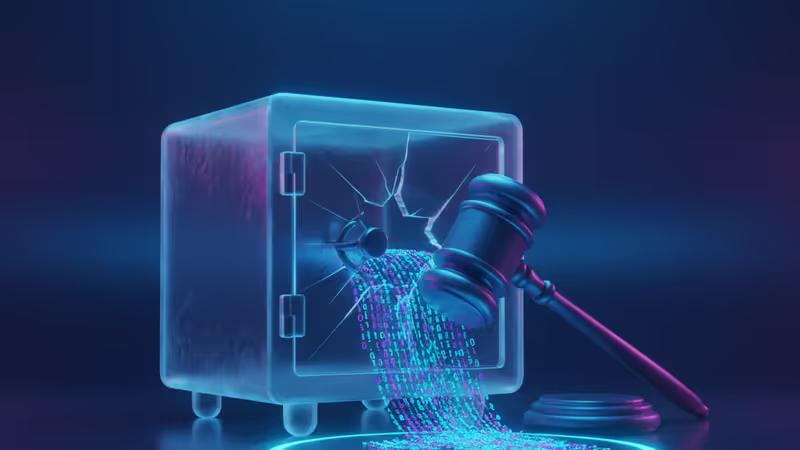
OpenAI ChatGPT Copyright Litigation Logs Access: Court Orders Discovery
OpenAI loses its bid to block news organizations from accessing 20 million ChatGPT logs in a copyright infringement case. Judge Stein upholds the discovery order.
The black box is cracking open. OpenAI just lost its high-stakes battle to prevent news organizations from digging through 20 millionChatGPT logs. The court's decision marks a pivotal moment in the ongoing war over AI and intellectual property, signaling that user privacy claims won't shield tech giants from copyright discovery.
OpenAI ChatGPT Copyright Litigation Logs Access Ordered
On Monday, US District Judge Sidney Stein denied OpenAI's objections to a previous discovery order. The company argued that Magistrate Judge Ona Wang failed to balance the privacy of millions of users when she ordered the production of the logs. OpenAI had hoped to limit the search to specific terms rather than handing over the massive dataset.

However, the court wasn't convinced. The news plaintiffs, who allege OpenAI used their copyrighted content without permission, can now proceed with an exhaustive search of the 20 million logs to find evidence of infringing outputs. This level of access is unprecedented in the burgeoning field of AI litigation.
Deleted Chats and Potential Sanctions
The legal trouble doesn't end with data sharing. OpenAI now faces intense scrutiny over millions of deleted chats. Plaintiffs are calling for sanctions, claiming these records were vital evidence that should have been preserved. If the court finds OpenAI guilty of spoliation, it could face severe penalties that might cripple its defense.
Authors
Related Articles
A law firm marketing itself on AI-powered legal success submitted fake citations in a federal appeal. Now its lawyers face sanctions — and the broader AI legal industry faces a credibility crisis.

OpenAI has reorganized for the second time in a month, merging ChatGPT and Codex into a single agentic platform under president Greg Brockman's unified product leadership.
After two weeks of witnesses calling him a liar, OpenAI CEO Sam Altman testified in his own defense, claiming Elon Musk tried to kill the company twice.
Sam Nelson, 19, died after following ChatGPT's advice to mix Kratom and Xanax. His parents are suing OpenAI for wrongful death, raising urgent questions about AI trust, liability, and design.
A law firm marketing itself on AI-powered legal success submitted fake citations in a federal appeal. Now its lawyers face sanctions — and the broader AI legal industry faces a credibility crisis.
OpenAI has reorganized for the second time in a month, merging ChatGPT and Codex into a single agentic platform under president Greg Brockman's unified product leadership.
After two weeks of witnesses calling him a liar, OpenAI CEO Sam Altman testified in his own defense, claiming Elon Musk tried to kill the company twice.
Sam Nelson, 19, died after following ChatGPT's advice to mix Kratom and Xanax. His parents are suing OpenAI for wrongful death, raising urgent questions about AI trust, liability, and design.
Thoughts
Share your thoughts on this article
Sign in to join the conversation