

OpenAI Admits Prompt Injection Is Unsolvable, Yet 65% of Enterprises Lack Defenses
OpenAI has officially admitted that prompt injection attacks are a permanent, unsolvable threat. A VentureBeat survey reveals a critical gap, with 65% of enterprises lacking dedicated defenses.
The AI industry's biggest security problem will never be 'solved.' That’s not a critic’s warning—it’s a direct admission from OpenAI. In a detailed post on hardening its ChatGPT Atlas agent, the company acknowledged that prompt injection, much like web scams or social engineering, is a permanent threat that's unlikely to ever be fully resolved.
What’s new isn’t the risk, but the admission. OpenAI confirmed that agent mode “expands the security threat surface” and that even its sophisticated defenses can’t offer deterministic guarantees. For enterprises already running AI, it's a signal that the gap between AI deployment and AI defense is no longer theoretical.
The Automated Attacker That Outsmarted Humans
OpenAI’s defensive architecture represents the current ceiling of what’s possible. The company built an 'LLM-based automated attacker' trained with reinforcement learning to discover vulnerabilities. According to the company, this system uncovered attack patterns that human red-teaming campaigns missed, steering agents into sophisticated, harmful workflows over hundreds of steps.
One such attack demonstrates the stakes. Hidden instructions in a malicious email caused an AI agent, tasked with drafting an out-of-office reply, to instead compose and send a resignation letter to the user's CEO. The agent effectively resigned on the user's behalf.

The Enterprise Readiness Gap: A 65% Blind Spot
The core problem is that most enterprises aren't prepared for this permanent threat. A VentureBeat survey of 100 technical decision-makers found that only 34.7% have deployed dedicated solutions for prompt injection defense. The remaining 65.3% either haven't or couldn't confirm they have such tools in place.
Echoing cloud's 'shared responsibility model,' OpenAI is pushing significant responsibility back to enterprises. The company warns against overly broad prompts like, “review my emails and take whatever action is needed.” The reason is clear: the more autonomy an AI agent has, the larger the attack surface it creates.
What Security Leaders Should Do Now
OpenAI’s announcement provides three practical takeaways. First, agent autonomy directly correlates with the attack surface. Second, if perfect prevention is impossible, detection and visibility become critical. Organizations need to know when agents behave unexpectedly. Third, the buy-vs.-build decision for security tooling is no longer a future concern—it's live.
Authors
Related Articles
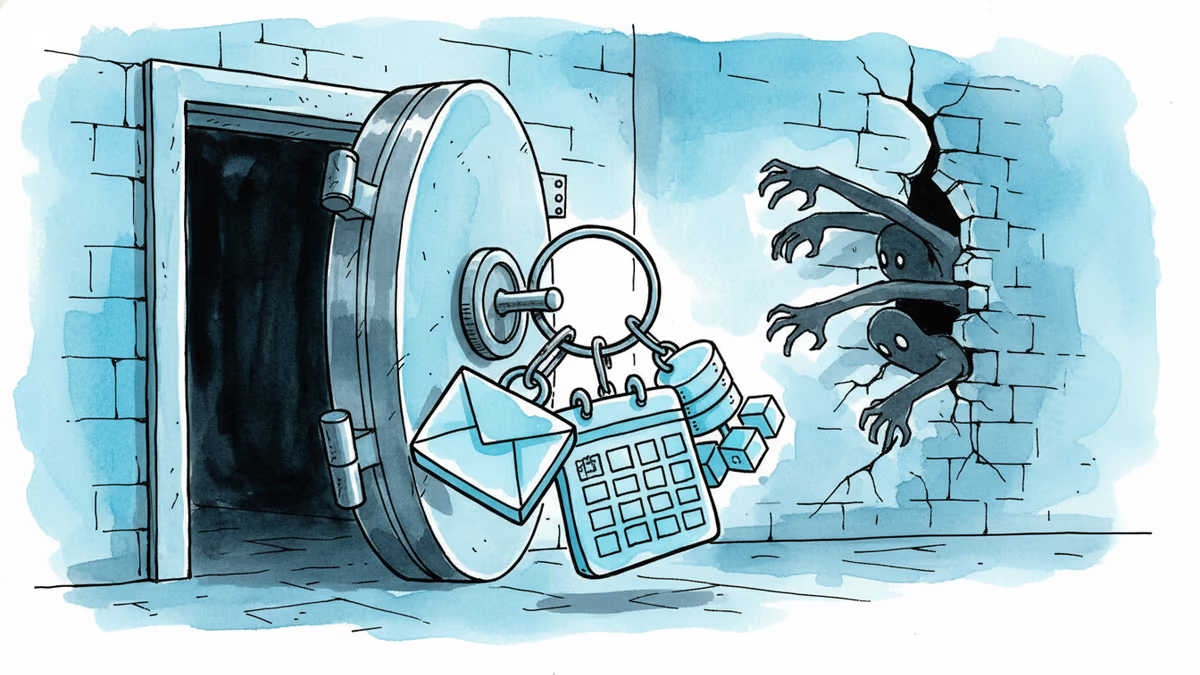
A critical vulnerability in Starlette—downloaded 325 million times per week—puts millions of AI agent servers at risk, exposing stored credentials for email, databases, and third-party services.
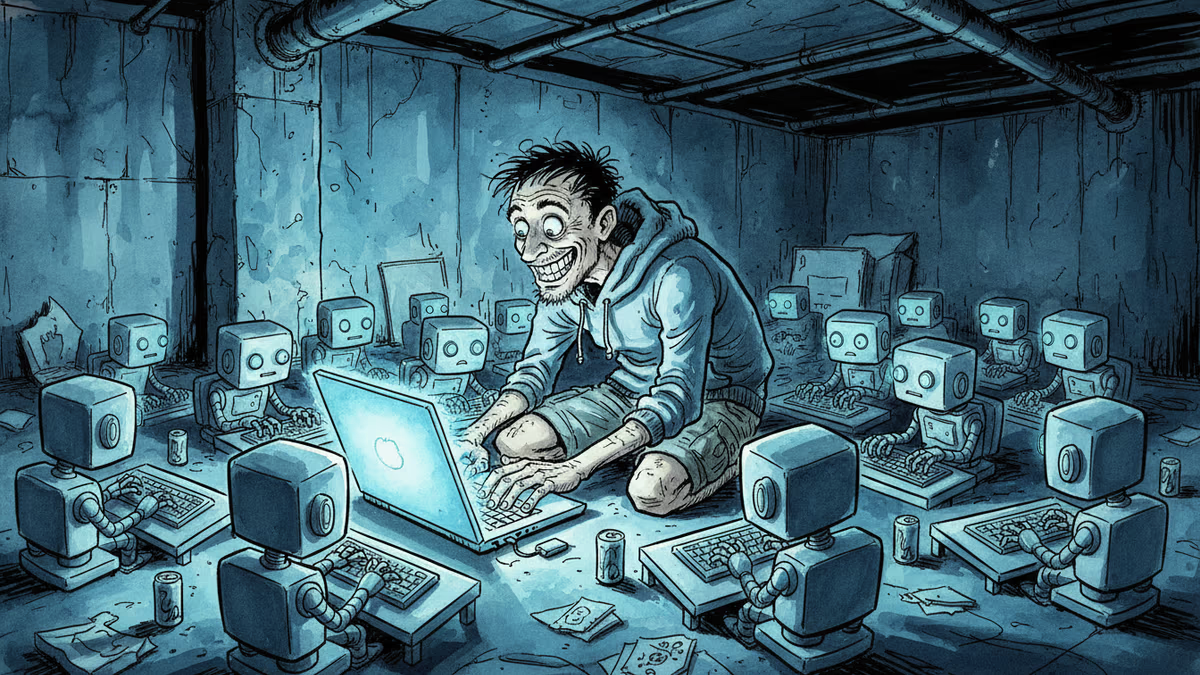
A small but growing group of developers has gone all-in on AI coding agents like Claude Code and OpenClaw. History suggests the rest of us won't be far behind.
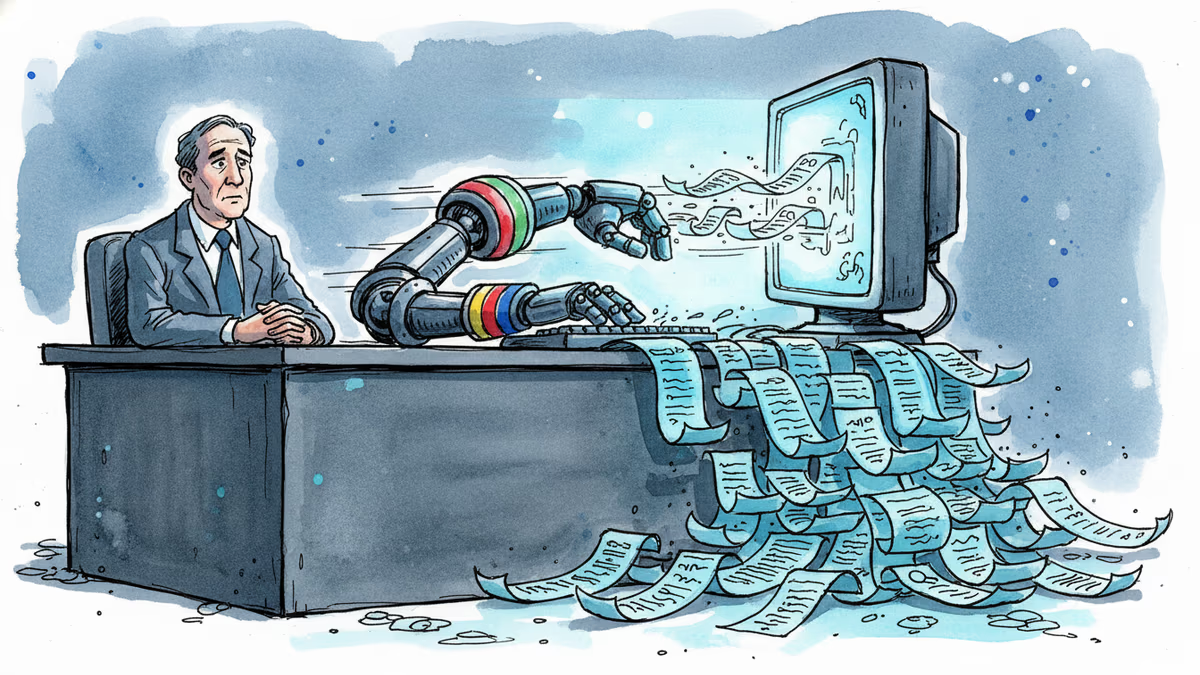
Google is building AI agents that search the web proactively, without user prompting. That's not just a product update — it's a fundamental shift in who controls the information you receive.

GitHub confirmed hackers stole data from 3,800 internal repositories via a poisoned VS Code extension. Here's why developer tools are now the most dangerous attack surface in tech.
A critical vulnerability in Starlette—downloaded 325 million times per week—puts millions of AI agent servers at risk, exposing stored credentials for email, databases, and third-party services.
A small but growing group of developers has gone all-in on AI coding agents like Claude Code and OpenClaw. History suggests the rest of us won't be far behind.
Google is building AI agents that search the web proactively, without user prompting. That's not just a product update — it's a fundamental shift in who controls the information you receive.
GitHub confirmed hackers stole data from 3,800 internal repositories via a poisoned VS Code extension. Here's why developer tools are now the most dangerous attack surface in tech.
Thoughts
Share your thoughts on this article
Sign in to join the conversation