
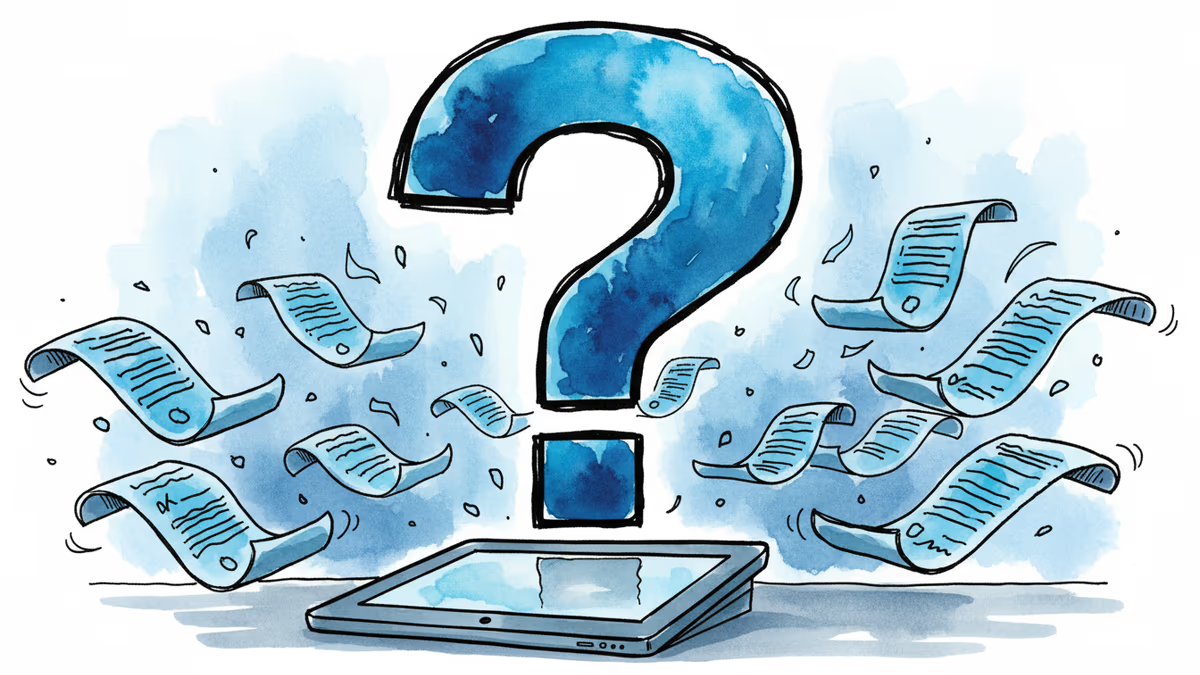
OpenAI Drops 'io' Name, Delays Hardware Until 2027
OpenAI abandons the 'io' brand for its AI hardware due to trademark disputes, pushing first device launch to February 2027 or later. The $6.5B acquisition faces legal challenges.
$6.5 billion down the drain? OpenAI just admitted it can't use the name of the company it acquired for its upcoming AI hardware line.
In a Monday court filing, the ChatGPT maker officially abandoned the "io" brand for its hardware products, bowing to pressure from audio startup iyO's trademark infringement lawsuit. The move signals deeper troubles for OpenAI's ambitious hardware push.
Timeline Keeps Slipping
What started as a second half 2026 reveal has now been pushed to February 2027 or later. That's an eight-month delay for a company that promised to revolutionize AI hardware.
Peter Welinder, OpenAI's VP and general manager, revealed in the filing that the company has "decided not to use the name 'io' (or 'IYO,' or any capitalization of either)" for its AI devices. More tellingly, OpenAI admitted it hasn't even created packaging or marketing materials yet—eight months after announcing the $6.5 billion acquisition.
The Mystery Device Takes Shape
Courtroom documents are revealing more about OpenAI's first hardware than the company probably wanted. The device is described as a screenless desktop companion that works alongside phones and laptops. Think less iPhone, more smart speaker without the screen.

The prototype Sam Altman teased in launch videos? "Not an in-ear device, nor a wearable device," according to the filing. That rules out the obvious comparisons to Apple's AirPods or Meta's Ray-Ban glasses.
Fake Ads and Real Problems
The hardware hype has gotten so intense that fake Super Bowl ads are going viral. Over the weekend, a fabricated commercial featuring actor Alexander Skarsgård with silver headphones fooled thousands, including Reddit co-founder Alexis Ohanian. OpenAI quickly denied any involvement, but the incident highlights how much speculation surrounds their hardware plans.
The Trademark Trap
iyO's lawsuit isn't just about names—it's about timing. The audio startup claims OpenAI and io executives met with them and tested their AI audio technology before announcing the acquisition. If true, it suggests OpenAI knew about potential trademark conflicts but proceeded anyway.
This kind of legal entanglement is exactly what software companies fear about hardware. In the cloud, you can patch problems with updates. In the physical world, trademark disputes can derail entire product lines.
Winners and Losers
While OpenAI stumbles, competitors are moving fast. Meta continues refining its Ray-Ban partnership, Apple pushes deeper into AI integration across devices, and Google experiments with ambient computing. Every month OpenAI delays is a month rivals can establish market position.
For investors, the delay raises uncomfortable questions about OpenAI's hardware strategy. Was the Jony Ive acquisition rushed? Did they do proper due diligence on trademark issues? And if they can't even finalize a product name, how ready are they for the complexities of manufacturing and distribution?
Authors
Related Articles

OpenAI has reorganized for the second time in a month, merging ChatGPT and Codex into a single agentic platform under president Greg Brockman's unified product leadership.
After two weeks of witnesses calling him a liar, OpenAI CEO Sam Altman testified in his own defense, claiming Elon Musk tried to kill the company twice.
Sam Nelson, 19, died after following ChatGPT's advice to mix Kratom and Xanax. His parents are suing OpenAI for wrongful death, raising urgent questions about AI trust, liability, and design.
OpenAI's new Daybreak initiative uses the Codex AI agent to find and patch security vulnerabilities before attackers do—putting it in direct competition with Anthropic's secretive Claude Mythos.
OpenAI has reorganized for the second time in a month, merging ChatGPT and Codex into a single agentic platform under president Greg Brockman's unified product leadership.
After two weeks of witnesses calling him a liar, OpenAI CEO Sam Altman testified in his own defense, claiming Elon Musk tried to kill the company twice.
Sam Nelson, 19, died after following ChatGPT's advice to mix Kratom and Xanax. His parents are suing OpenAI for wrongful death, raising urgent questions about AI trust, liability, and design.
OpenAI's new Daybreak initiative uses the Codex AI agent to find and patch security vulnerabilities before attackers do—putting it in direct competition with Anthropic's secretive Claude Mythos.
Thoughts
Share your thoughts on this article
Sign in to join the conversation