
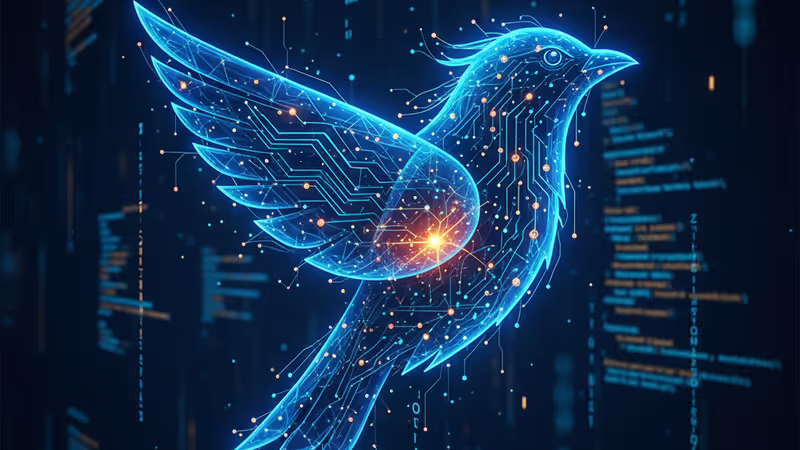
X Algorithm Open Source 2026: Real Transparency or Just a Show?
X has released its algorithm code for 2026. Discover how the Grok-based recommendation system works and why regulators are still skeptical.
He's shaking hands but keeping his fist clenched. Elon Musk is once again attempting to pull back the curtain on X's inner workings. On January 20, 2026, the social media platform formerly known as Twitter fulfilled its promise to release its recommendation algorithm on GitHub. This move follows Musk's vow just 7 days ago to provide unprecedented access to the code that dictates what users see.
X Algorithm Open Source 2026: The Grok-Powered Timeline
The latest release reveals that X's feed generation now relies entirely on a 'Grok-based transformer.' This AI system learns relevance directly from user engagement sequences. Notably, the company claims there's no 'manual feature engineering'—meaning humans aren't manually tipping the scales on what content gets promoted. Instead, the algorithm autonomously sifts through in-network and out-of-network posts, filtering for blocked accounts and violent content before ranking them for the final feed.

| Feature | Previous (2023) | Current (2026) |
|---|---|---|
| Core Engine | Hybrid / Legacy | Grok-based Transformer |
| Human Intervention | Partial Tuning | Fully Automated |
| Transparency Goal | Initial Disclosure | 4-week Recurring Updates |
Regulation Pressure and Transparency Theater
Despite the bold move, skepticism remains high. Critics recall the 2023 release, which many dismissed as 'transparency theater.' Since going private in 2022, X has faced mounting legal battles, including a $140 million fine from EU regulators for violating transparency obligations. Furthermore, Grok itself is under fire from U.S. lawmakers for its role in generating non-consensual explicit imagery, casting a shadow over this appeal to openness.
Authors
Related Articles
SpaceX's IPO filing puts AI at the center, claiming a $26.5 trillion market opportunity. But can Grok compete with OpenAI and Anthropic for enterprise customers?
SpaceX filed a nearly 400-page S-1 with the SEC, targeting an IPO as early as June 12. Here's what the filing reveals—and what it doesn't.
SpaceX has filed its S-1 with the SEC, targeting the Nasdaq under ticker SPCX. With $18.67B in revenue but a $4.9B loss, the IPO forces investors to answer one hard question.

GitHub confirmed hackers stole data from 3,800 internal repositories via a poisoned VS Code extension. Here's why developer tools are now the most dangerous attack surface in tech.
SpaceX's IPO filing puts AI at the center, claiming a $26.5 trillion market opportunity. But can Grok compete with OpenAI and Anthropic for enterprise customers?
SpaceX filed a nearly 400-page S-1 with the SEC, targeting an IPO as early as June 12. Here's what the filing reveals—and what it doesn't.
SpaceX has filed its S-1 with the SEC, targeting the Nasdaq under ticker SPCX. With $18.67B in revenue but a $4.9B loss, the IPO forces investors to answer one hard question.
GitHub confirmed hackers stole data from 3,800 internal repositories via a poisoned VS Code extension. Here's why developer tools are now the most dangerous attack surface in tech.
Thoughts
Share your thoughts on this article
Sign in to join the conversation