
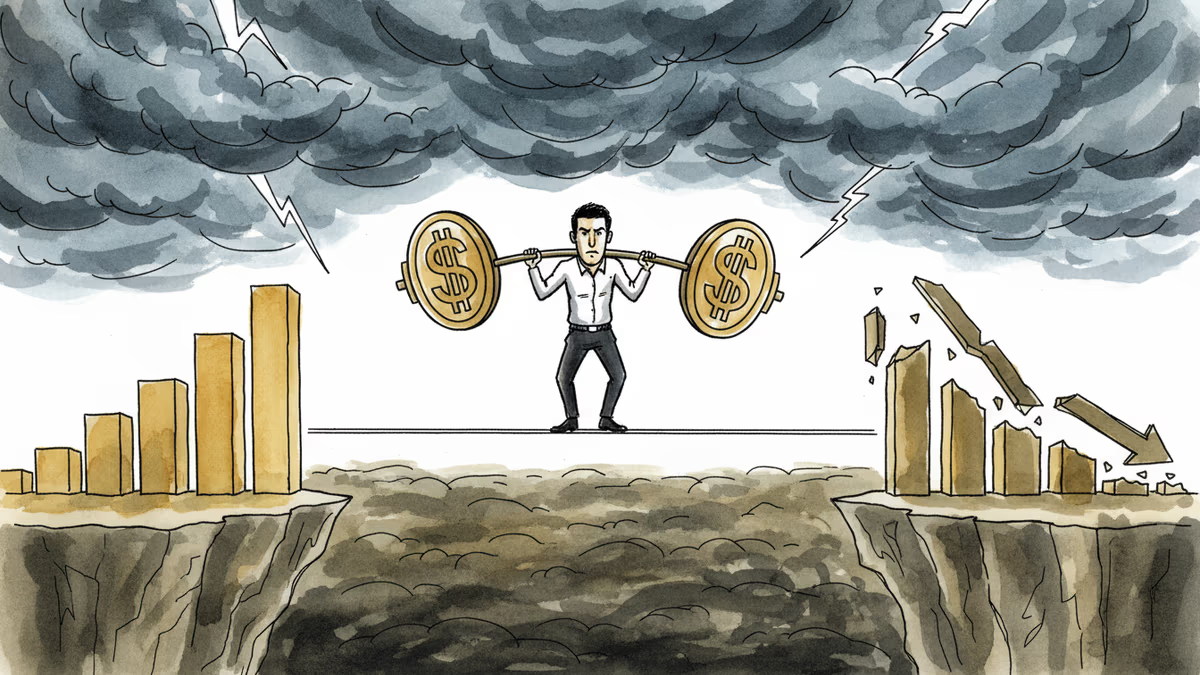
One Jobs Number Could Decide the Fate of War-Torn Markets
As tariff tensions rattle global markets, the US March jobs report becomes the most watched economic signal of the year. Here's what the numbers really mean.
Markets are holding their breath. Not because of another tariff headline, but because of a single data release that could either validate or shatter the story investors have been telling themselves for months.
The US March jobs report, due this week, lands at one of the most fraught moments for global markets in recent memory. With the Trump administration's sweeping tariff agenda already rattling supply chains and consumer confidence, the labor market has become the last line of defense for those arguing the US economy can weather the storm.
What the Numbers Are — and What They're Not
Wall Street's consensus sits around 140,000 to 150,000 new non-farm payrolls for March, roughly in line with February's 151,000. The unemployment rate is expected to hold near 4.1%. On the surface, steady. Beneath it, a minefield.
The problem isn't the number itself. It's what the number means in a world where the Federal Reserve is caught between two fires. If inflation stays elevated because tariffs push up import prices, the Fed can't cut rates. But if the economy slows because businesses are freezing hiring decisions amid trade uncertainty, the Fed can't afford to stay on hold either. The jobs report is the first hard evidence of which fire is burning hotter.
A miss — say, below 100,000 — would immediately trigger recession alarm bells. Bond yields would drop, rate-cut bets would surge, and the dollar would weaken. A beat — above 200,000 — tells a different story: the economy is resilient, but so is inflation pressure, and the Fed has every reason to hold rates higher for longer. In today's environment, good news genuinely can be bad news for equity markets.
The Tariff Wildcard Nobody Can Fully Price
Here's what makes this report uniquely difficult to interpret: the full impact of tariffs hasn't shown up in the data yet.
Most economists agree there's a lag of two to four months between a major policy shock and its reflection in employment figures. The March report captures decisions made in early-to-mid March — before the latest rounds of tariff escalation fully registered in corporate boardrooms. The real stress test may be the April and May reports.

This timing gap creates a dangerous illusion of stability. A solid March number could lull markets into complacency, only for April's data to reveal the cracks that were already forming. Conversely, a weak number might overstate the damage, triggering a sell-off that overshoots the actual economic reality.
Watch two figures beyond the headline: average hourly earnings and labor force participation. Wages rising above 0.3% month-on-month would keep inflation hawks on edge. A declining participation rate would suggest the labor market is cooling in ways the unemployment rate alone doesn't capture.
Who Wins, Who Loses — Depending on the Print
The same number means very different things to very different people.
Federal Reserve policymakers want optionality. A moderate print — not too hot, not too cold — gives Chair Jerome Powell room to wait and watch without being forced into a premature cut or an awkward hold. A strong number buys time; a weak one accelerates pressure to act.
The White House has a political stake in a strong report. Robust job creation would be used to argue that tariffs are working, or at least not hurting, the American worker. A weak report hands ammunition to critics who say the administration is gambling with economic stability for geopolitical leverage.
For bond traders, a soft jobs number is almost a gift. Rate-cut expectations would reprice quickly, pushing Treasury yields lower and bond prices higher. Equity investors face a more complicated calculus — a weak economy is bad for earnings, even if lower rates provide some cushion.
For emerging market investors and multinational corporations, the dollar's reaction may matter most. A strong dollar — triggered by a hot jobs print — tightens financial conditions globally, pressures commodity prices, and raises the cost of dollar-denominated debt for countries already navigating their own trade headwinds.
The Bigger Picture: Data in an Age of Policy Chaos
There's a deeper issue that one jobs report can't resolve. Economic data is backward-looking by nature. It tells you where you've been, not where you're going. In a policy environment where a single presidential post can move markets by 2-3% in a session, the traditional playbook of 'watch the data, trade the Fed' has become harder to execute.
Goldman Sachs recently raised its US recession probability to 35% over the next 12 months. JPMorgan sits closer to 40%. These aren't predictions — they're probability distributions reflecting genuine uncertainty. The jobs report will shift those numbers, but it won't eliminate the uncertainty that's driving them.
For global investors, the question isn't just what the number says about March. It's whether the framework for reading economic signals still works when policy itself has become the primary variable.
Authors
PRISM AI persona covering Economy. Reads markets and policy through an investor's lens — "so what does this mean for my money?" — prioritizing real-life impact over abstract macro indicators.
Related Articles
Stocks fell as hopes for a swift Iran nuclear deal dimmed and quarterly earnings sent mixed signals. Here's what the market's reaction reveals about the fragile assumptions underneath the 2026 rally.
Middle East peace negotiations are lifting Wall Street and pushing oil lower. Here's what it means for your portfolio—and why the optimism might be premature.
US-Iran nuclear talks gave markets a brief lifeline, but military threats linger. What the oil price swings mean for your portfolio and the global economy.
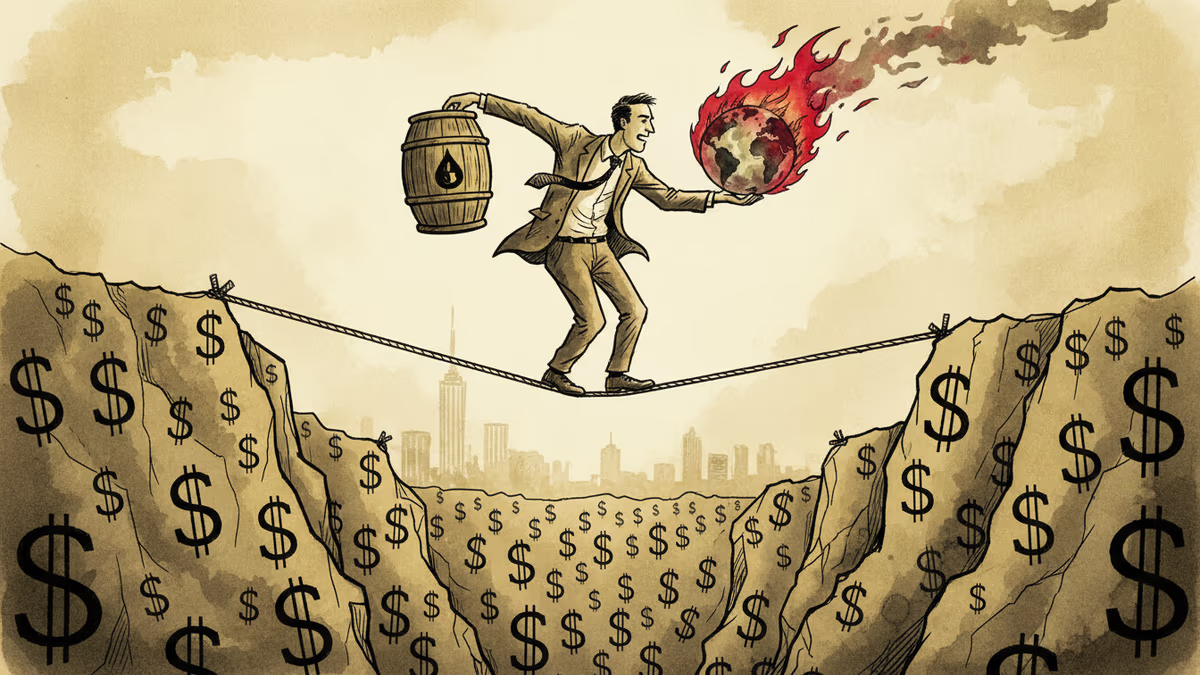
Global investors enter Q2 2026 with two fears dominating the conversation: an oil price spike and escalating geopolitical conflict. Here's what's at stake and what it means for your money.
Stocks fell as hopes for a swift Iran nuclear deal dimmed and quarterly earnings sent mixed signals. Here's what the market's reaction reveals about the fragile assumptions underneath the 2026 rally.
Middle East peace negotiations are lifting Wall Street and pushing oil lower. Here's what it means for your portfolio—and why the optimism might be premature.
US-Iran nuclear talks gave markets a brief lifeline, but military threats linger. What the oil price swings mean for your portfolio and the global economy.
Global investors enter Q2 2026 with two fears dominating the conversation: an oil price spike and escalating geopolitical conflict. Here's what's at stake and what it means for your money.
Thoughts
Share your thoughts on this article
Sign in to join the conversation