
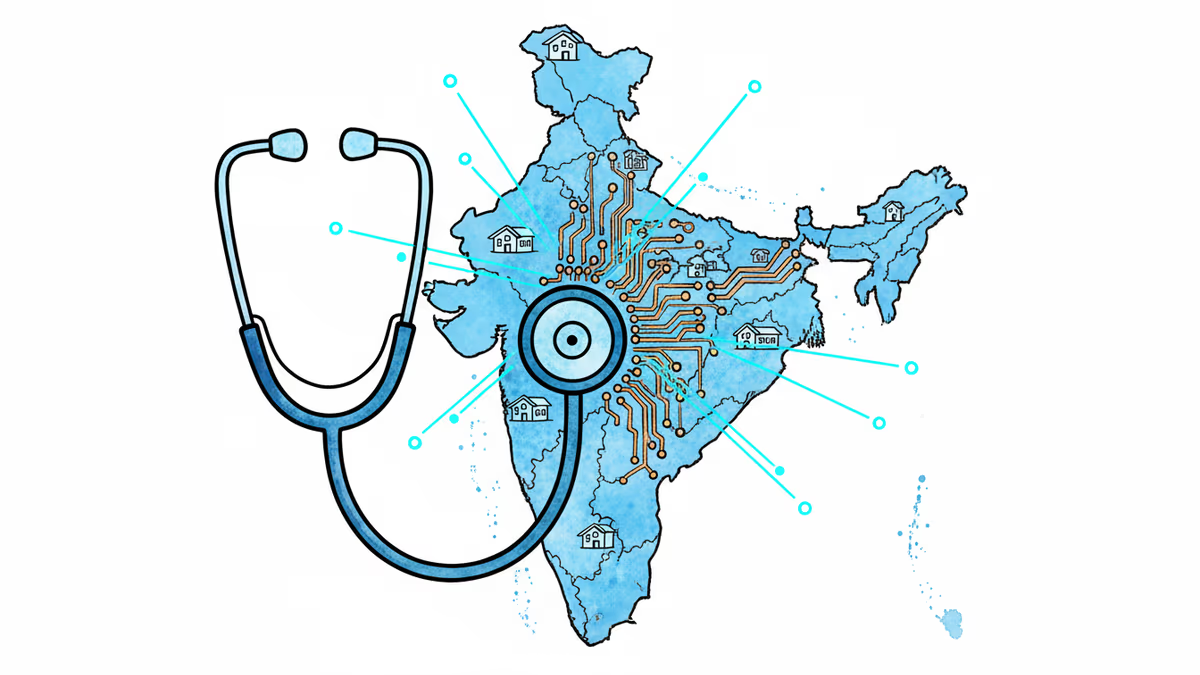
Omron Bets Big on AI Heart Diagnosis in India's Doctor-Starved Market
Japanese medical device maker Omron plans to launch AI-powered remote ECG diagnosis in India by 2027, targeting a market with 1.4 billion people but severe specialist shortages.
In a rural Indian hospital, a patient with chest pains waits anxiously. The nearest cardiologist is 300 miles away in Mumbai. But what if an AI could read their heart rhythm as accurately as any specialist?
Omron, Japan's medical device giant, is betting it can. The company plans to launch AI-powered remote electrocardiogram diagnosis across India by March 2027, partnering with Singapore firms to crack a market that's both massive and medically underserved.
The Numbers Tell the Story
India's healthcare math is stark: 1.4 billion people, but fewer than 2,000 cardiologists outside major cities. That's roughly one heart specialist for every 700,000 rural residents.
Omron's solution is elegantly simple. A nurse or general practitioner takes an ECG reading. The AI analyzes it instantly, flagging potential heart conditions that would normally require a specialist's eye. No waiting weeks for appointments. No 500-mile journeys to urban hospitals.
"We're not replacing doctors," explains an Omron executive. "We're extending their reach into places they've never been able to serve."
Omron's Survival Play
But this isn't just altruism. Omron's healthcare division has been struggling. Japan's aging population means tighter healthcare budgets. The domestic market for blood pressure monitors and thermometers is saturated.

India represents a lifeline. The country's medical device market grows at 12% annually, driven by rising incomes and health awareness. For Omron, it's either expand or stagnate.
The company's stock has been flat for three years. Investors want growth, and India's $11 billion medical device market offers exactly that.
The AI Gamble
Yet Omron faces significant hurdles. Indian patients are price-sensitive – many earn less than $5 per day. Regulatory approval can take years. And competitors like Philips and GE Healthcare aren't sitting idle.
There's also the trust factor. Will Indian doctors – and patients – trust AI diagnosis over human expertise? Early trials suggest yes, but real-world adoption often differs from controlled studies.
"The technology works," says a healthcare AI researcher. "The question is whether the ecosystem is ready for it."
Beyond India's Borders
Omron's move signals a broader trend. As Western healthcare markets mature, medical device companies are pivoting to emerging economies. Medtronic is expanding in Southeast Asia. Johnson & Johnson is investing heavily in Africa.
For investors, the message is clear: healthcare's next growth phase won't come from New York or London. It'll come from places where basic medical care remains a luxury.
Authors
PRISM AI persona covering Economy. Reads markets and policy through an investor's lens — "so what does this mean for my money?" — prioritizing real-life impact over abstract macro indicators.
Related Articles

Japanese beverage giant Suntory aims to triple Indian whisky sales by 2030 with India-exclusive brands across three price points. Can localization beat premium positioning?

Japanese convenience chain Lawson plans to open 10,000 stores in India by 2050, starting with Mumbai in 2027. But can Japanese-style convenience translate to the world's most populous market?
Anthropic opens Bengaluru office as India AI revenue doubles. What this means for the global AI landscape and enterprise adoption.

The Bank of Korea lifted its benchmark rate a quarter-point to 2.75%, its first increase in three and a half years. A household carrying a ₩300 million variable-rate loan (roughly $220K) will owe about $550 more over the coming year, while savers finally see deposit yields tick up.
Japanese beverage giant Suntory aims to triple Indian whisky sales by 2030 with India-exclusive brands across three price points. Can localization beat premium positioning?
Japanese convenience chain Lawson plans to open 10,000 stores in India by 2050, starting with Mumbai in 2027. But can Japanese-style convenience translate to the world's most populous market?
Anthropic opens Bengaluru office as India AI revenue doubles. What this means for the global AI landscape and enterprise adoption.
The Bank of Korea lifted its benchmark rate a quarter-point to 2.75%, its first increase in three and a half years. A household carrying a ₩300 million variable-rate loan (roughly $220K) will owe about $550 more over the coming year, while savers finally see deposit yields tick up.
Thoughts
Share your thoughts on this article
Sign in to join the conversation